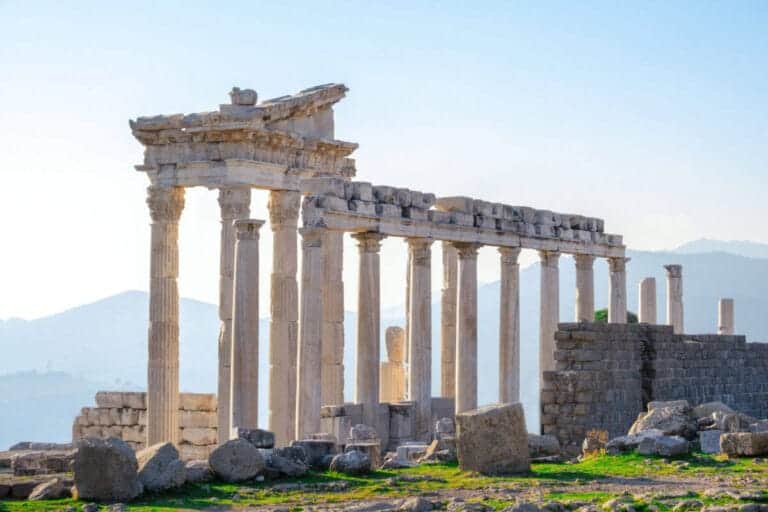

The quick answer: Turkey’s essential first-trip stops are Istanbul, Cappadocia, Pamukkale, Ephesus, Göbekli Tepe, Mount Nemrut, the Blue Mosque, Topkapi Palace, the Grand Bazaar, and Troy. For most travelers, the best route combines Istanbul with Cappadocia and either Ephesus/Pamukkale or the Aegean coast. The right choice depends less on checking every box and more on how many days you have and how much internal travel you’re willing to do.
Turkey rewards travelers who balance headline sights with sensible route planning. Istanbul alone can fill several days, while Cappadocia, the Aegean ruins, and southeastern archaeological sites are spread across a large country. If this is your first visit, prioritize a route that gives you time to enjoy each place rather than trying to cover every famous landmark in one rushed trip.
What to Know Before Choosing Your Stops
- Istanbul, Cappadocia, Ephesus, and Pamukkale make the most practical first-time combination for travelers with about a week or more.
- Göbekli Tepe and Mount Nemrut are extraordinary additions for archaeology-focused travelers, but they require more deliberate southeast Turkey planning.
- Spring and fall are usually the easiest seasons for combining cities, ruins, and outdoor landscapes; summer heat can make Ephesus and Pamukkale especially demanding at midday.
- Domestic flights can save substantial travel time between regions, while overnight buses may suit tighter budgets but reduce daytime comfort and flexibility.
- Entrance fees, balloon flights, museum access, and transfers are not automatically included in every itinerary, so check each booking’s inclusions before confirming.

The 10 Must-See Places in Turkey
1. Hagia Sophia Grand Mosque, Istanbul
Few buildings explain Istanbul’s layered past as clearly as Hagia Sophia. Completed in 537 CE as a Byzantine cathedral, it later became an Ottoman mosque, then a museum, and now functions again as a mosque. Its vast central dome, surviving mosaics, calligraphy, and architectural scale make it a priority even for travelers with only one day in Istanbul.
Visit early, dress respectfully, and allow extra time for security and worship-hour access arrangements. Pair it with the nearby Blue Mosque, Byzantine Hippodrome, and Topkapi Palace Museum rather than trying to cross the city between stops.
2. Cappadocia and Its Fairy-Chimney Valleys
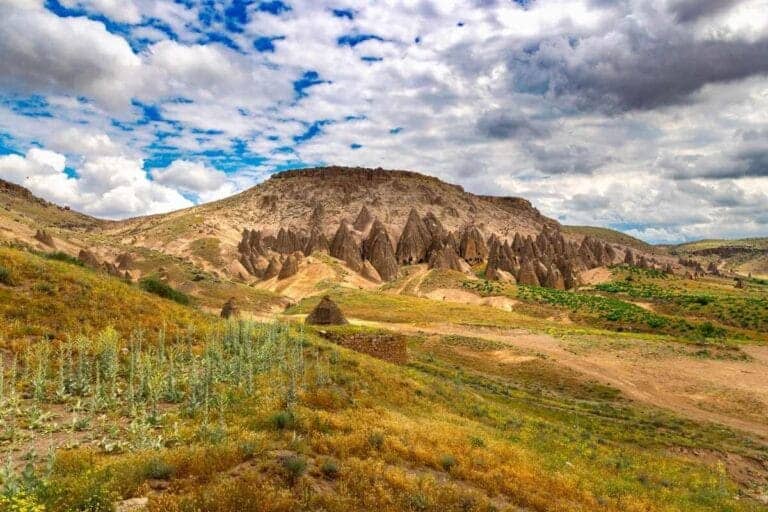
Cappadocia earns its place on nearly every Turkey itinerary because the landscape is unlike anywhere else in the country: volcanic rock formations, cave dwellings, rock-cut churches, and valleys shaped by erosion over millennia. The most practical base is usually Göreme or a nearby village, where day touring can include viewpoints, valleys, pottery workshops, and an underground city.
A sunrise hot-air-balloon flight is the signature experience, but it is weather-dependent and should never be treated as guaranteed. If it is a priority, schedule Cappadocia for at least two mornings. This creates a backup opportunity if the first flight is canceled for safety reasons. The Göreme National Park, Pasabag Monks Valley, and a Cappadocia underground city are worthwhile anchors for a first visit.
3. Pamukkale’s Travertines and Hierapolis
Pamukkale’s white mineral terraces are one of Turkey’s most distinctive natural sights. Above them sits ancient Hierapolis, where visitors can explore a theater, necropolis, and other remains of a Roman spa city. The combination matters: Pamukkale is not simply a photo stop but a full archaeological and landscape visit.
Go early or later in the afternoon when possible. Barefoot walking is required in designated terrace areas, the bright white surface can be intense in strong sun, and access rules may change to protect the site. Travelers interested in bathing should separately confirm the current arrangements for the Cleopatra Pool at Pamukkale.
4. Ephesus Ancient City
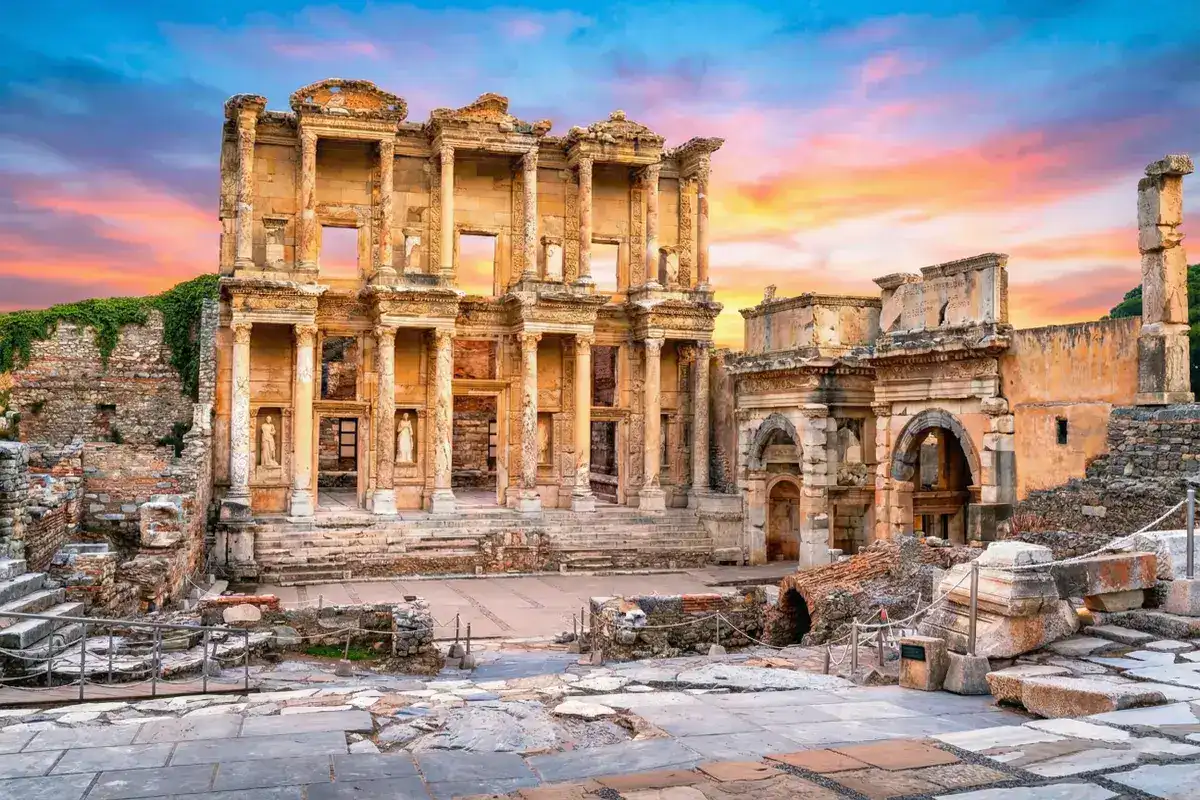
Ephesus is among the Mediterranean’s most impressive classical cities. Marble streets, the Library of Celsus façade, public fountains, temples, and the Great Theatre of Ephesus give visitors a strong sense of Roman urban life at a scale that photographs rarely convey.
Plan an early entry, especially from June through September. The site is exposed, walking is uneven in places, and the heat builds quickly. If your interests extend beyond the main ruins, allow time for the Terrace Houses in Ephesus, the House of the Virgin Mary, or nearby Selçuk. These are better treated as separate choices than squeezed into an already rushed morning.
5. Göbekli Tepe, near Şanlıurfa
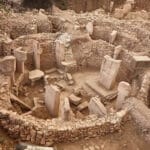
Göbekli Tepe is one of the world’s most important prehistoric sites. Its monumental T-shaped stone pillars, some carved with animal figures, date to the pre-pottery Neolithic period and have reshaped discussions about early ritual, settlement, and social organization.
This is a destination for travelers who enjoy archaeology and are willing to go beyond the standard western Turkey circuit. Combine it with time in Şanlıurfa rather than attempting it as a quick detour from Istanbul or Cappadocia. The site is best experienced with context, whether through a knowledgeable local guide or a well-paced visit that includes the regional museum collections.
6. Mount Nemrut
Mount Nemrut is known for its mountaintop sanctuary and enormous stone heads associated with King Antiochus I of Commagene. The remote setting is part of the appeal: sunrise and sunset light can be striking, but reaching the site involves more planning than Turkey’s better-connected destinations.
It suits travelers with a serious interest in ancient kingdoms, landscape photography, or southeastern Anatolia. Seasonal road conditions, access times, and the physical demands of the approach should be confirmed close to travel dates. Do not add Mount Nemrut to a short seven-day route unless you are prepared to remove another major region.
7. The Blue Mosque, Istanbul
The Sultan Ahmed Mosque, commonly called the Blue Mosque, remains an active place of worship and one of Istanbul’s defining landmarks. Its six minarets, courtyard, and interior tilework are worth seeing alongside Hagia Sophia because the two monuments represent different periods of the city’s religious and architectural history.
Visitors should plan around prayer times, use the designated visitor entrance, and wear modest clothing. A quick exterior stop is easy; an interior visit may require patience when access is limited or queues are longer.
8. Topkapi Palace Museum, Istanbul
Topkapi Palace was the Ottoman court’s administrative and residential center for centuries. Its layered courtyards, collections, kitchens, gardens, and Bosphorus views give a more detailed picture of imperial life than a single-room museum visit can offer.
Set aside at least half a day if you want to explore thoughtfully. The palace is a common place where travelers underestimate time, especially if they also want to visit the Harem section. It is best scheduled on a different half-day from Hagia Sophia and the Blue Mosque, unless your Istanbul stay is very short.
9. Grand Bazaar, Istanbul
The Grand Bazaar is more than a shopping stop: it is a living historic market district of covered lanes, workshops, textiles, ceramics, jewelry, lamps, and souvenirs. It can be enjoyable even if you have no intention of buying, especially when approached as a place to wander rather than a checklist attraction.
For purchases, compare quality and prices before deciding, and ask practical questions about shipping, materials, and returns. Bargaining can be part of the experience, but there is no need to feel pressured. Nearby, the Spice Bazaar offers a more food-focused market visit.
10. Ancient City of Troy
Troy is compelling because it joins archaeology with the long cultural shadow of Homer’s Iliad. Excavations have revealed multiple settlement layers, demonstrating that this was not one frozen legendary city but a place occupied and rebuilt over thousands of years.
Troy works especially well for travelers continuing through the northwest toward Gallipoli or Çanakkale. It is less practical as an isolated day trip from Istanbul than it appears on a map. Consider pairing it with the Gallipoli memorial landscape for a more coherent northwestern Turkey itinerary.

How Many Days Do You Need for These Places?
The main planning mistake is assuming Turkey’s highlights sit close together. Istanbul is in the northwest, Cappadocia lies in central Anatolia, Ephesus and Pamukkale are in the west, and Göbekli Tepe and Mount Nemrut are much farther southeast. A sensible route protects time for sightseeing instead of turning the trip into a sequence of airports, bus stations, and hotel check-ins.
| Trip Length | Best-Fit Route | What to Skip or Save for Later |
|---|---|---|
| 3–4 days | Istanbul plus Cappadocia, usually using flights | Pamukkale, Ephesus, Troy, and the southeast |
| 5–7 days | Istanbul, Cappadocia, and either Ephesus/Pamukkale or a relaxed Istanbul stay | Göbekli Tepe, Mount Nemrut, and Troy unless you accept a fast pace |
| 8–10 days | Istanbul, Cappadocia, Pamukkale, and Ephesus | Usually save the southeast or Troy/Gallipoli for another trip |
| 12+ days | Add Troy/Gallipoli or build a separate southeast extension around Şanlıurfa and Mount Nemrut | Nothing essential, but leave recovery time between long transfers |
For a closer look at route pacing, see how many days you need in Turkey and this practical seven-day Turkey itinerary. Travelers deciding when to go can also review the best month for a first Turkey trip.
Planning tip: Build your itinerary around overnight locations, not just attractions. A day that includes a domestic flight, hotel change, long road transfer, and a major archaeological site often feels much shorter than it looks on paper.
Practical Costs, Timing, and Booking Considerations
Turkey can work for a range of budgets, but the biggest cost differences usually come from travel style rather than attractions alone. International flights, domestic flights, hotel category, private versus small-group touring, balloon flights, and peak-season availability all affect the final total.
- Admission and activities: Museum and site fees can change, and some major attractions have separate areas or optional experiences. Confirm current pricing and access rules shortly before travel.
- Transport: Flights are often the time-saving choice for Istanbul–Cappadocia connections. Long-distance buses can cost less, but overnight travel is not ideal for everyone.
- Weather: April–May and September–October are generally comfortable for active sightseeing. Summer can be hot around Ephesus and Pamukkale, while winter may affect outdoor plans in Cappadocia and eastern Turkey.
- Footwear: Bring supportive walking shoes for stone paths, archaeological sites, and uneven terrain. Sandals alone are rarely enough for a full itinerary.
- Religious sites: Keep a scarf or modest covering available for mosque visits, and remember that visitor access can change around prayer times.
Travelers comparing independent travel with a coordinated itinerary may find it useful to read the differences between group and private tours in Turkey and practical Turkey travel tips before departure.
Which Turkey Route Is Right for You?
Choose Istanbul and Cappadocia if it is your first or shortest trip
This is the strongest choice for travelers with limited time, first-time visitors, couples, photographers, and anyone who wants a mix of imperial history and dramatic landscapes. It works best when domestic flights are used to protect sightseeing time. A two-day Cappadocia tour from Istanbul with flights, a cave hotel, and meals may suit travelers who want the core logistics arranged while keeping the overall trip compact.
Choose Istanbul, Cappadocia, Pamukkale, and Ephesus for the classic first-time route
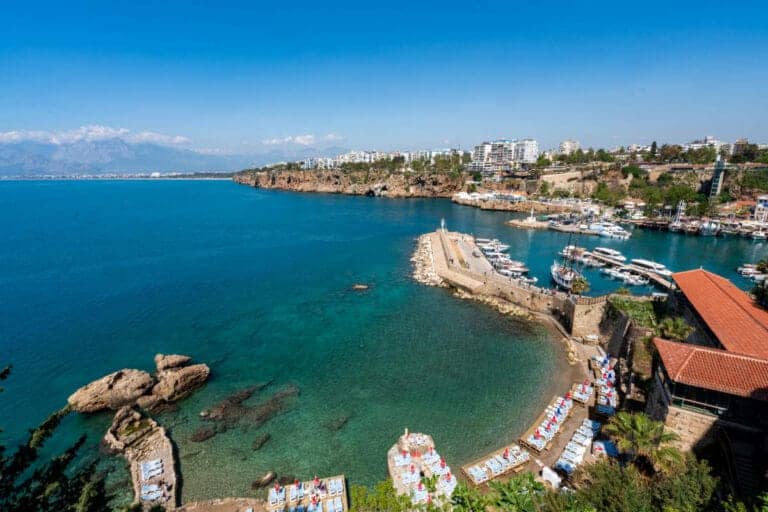
This is the best all-around option for travelers with roughly eight to ten days. It covers Ottoman and Byzantine Istanbul, central Anatolia’s valleys, Pamukkale’s natural terraces, and the Roman-era ruins of Ephesus. The trade-off is a fuller schedule with more hotel changes, so it is better for travelers who enjoy active days than for those seeking a slow vacation. The 9-Day Best of Turkey Tour follows this broad regional logic with Istanbul, Cappadocia, Antalya, Pamukkale, and Ephesus.
Choose southeast Turkey only when archaeology is your priority
Göbekli Tepe and Mount Nemrut are rewarding but not efficient add-ons to a short highlights trip. Give the region dedicated time, confirm domestic transport and road arrangements, and be realistic about early starts and longer transfers. This route is ideal for repeat visitors, history enthusiasts, and travelers who would rather see fewer locations in depth.
Before booking, verify the details that affect your trip
Ask whether domestic flights, airport transfers, site admissions, meals, hotel nights, balloon flights, and guide services are included. Confirm the airport used for Cappadocia, the sequence of hotel stays, and whether any optional activity depends on weather or minimum participation. If you need to change or cancel, notice must be given at least 5 days before the tour starts; non-refundable flight and bus ticket costs are deducted from the paid balance. With less than 5 days’ notice, or for a no-show, the full payment is non-refundable.
Choose your next step
Recommended Turkey tours
These verified options are the closest available matches for this article’s destination, route intent, and trip length.

2-Day Cappadocia Adventure with Sunrise Hot Air Balloon Ride
A 2 days Historical & Cultural Tour route covering Cappadocia.
View tour details →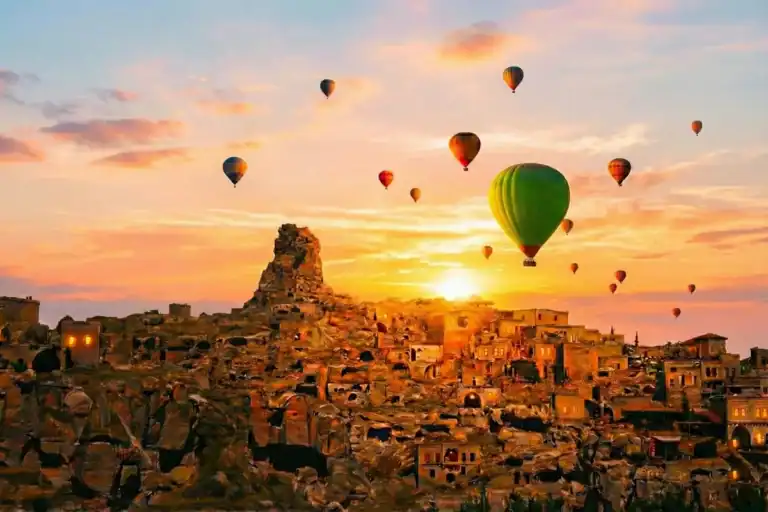
3-Day Cappadocia Tour from Antalya w/ Flights
A 3 days Historical & Cultural Tour route covering Cappadocia, Antalya.
View tour details →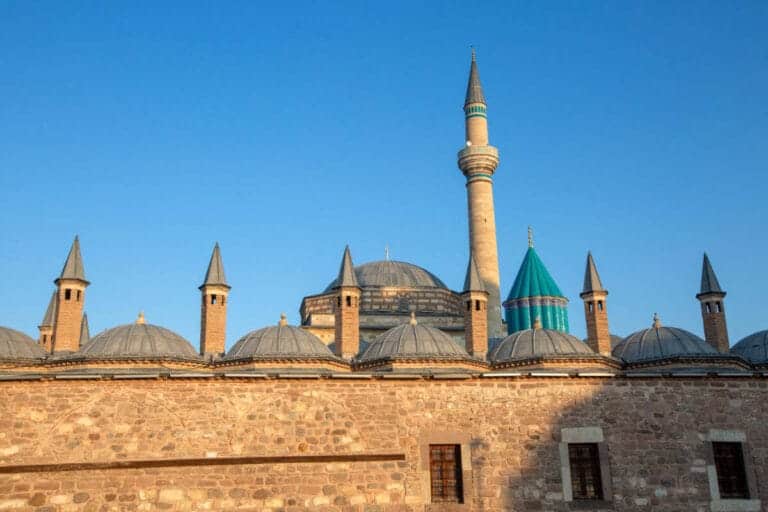
3-Day Cappadocia & Konya Tour from Istanbul
A 3 days Historical & Cultural Tour route covering Cappadocia, Konya and 1 more destination.
View tour details →
2-Day Cappadocia Tour from Istanbul by Plane with Optional Hot Air Balloon
A 2 days Historical & Cultural Tour route covering Cappadocia, Istanbul.
View tour details →Common Questions About Turkey’s Must-See Places
Is one week enough for Turkey?
One week is enough for Istanbul and Cappadocia plus one additional region, usually Ephesus and Pamukkale if you are comfortable with a busy pace. Trying to add Troy, Göbekli Tepe, and Mount Nemrut in the same week usually means too much transit.
What is the best month to visit Cappadocia and Istanbul?
April, May, September, and October are often the most comfortable months for combining city sightseeing with outdoor valleys and archaeological sites. Weather still varies by region, and balloon flights in Cappadocia always depend on safe flying conditions.
Can I visit Cappadocia without taking a hot-air-balloon ride?
Yes. Cappadocia is worthwhile for its valleys, cave churches, viewpoints, underground cities, and regional food even without a balloon flight. A balloon ride is an optional experience, not the only reason to visit.
Should I visit Ephesus or Pamukkale if I can only choose one?
Choose Ephesus if Roman history and archaeology are your main interests. Choose Pamukkale if you prefer striking natural scenery combined with ancient ruins. With enough time, they pair well on the same western Turkey route.
Make Your First Turkey Trip Feel Manageable
The best Turkey itinerary is not necessarily the one with the most stops. For most first-time visitors, Istanbul and Cappadocia are the non-negotiables, while Ephesus and Pamukkale create a well-rounded longer route. Save Göbekli Tepe, Mount Nemrut, or Troy for when the geography and pace genuinely work for your travel dates.
If you would like help matching the right route, travel pace, and service style to your available days, plan your Turkey trip with One Nation Travel. The team can help coordinate an itinerary with suitable local guides, drivers, accommodations, and transport arrangements.