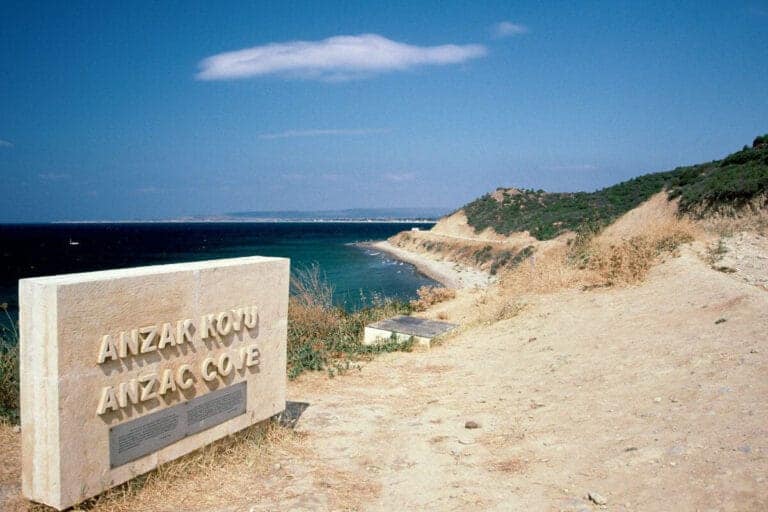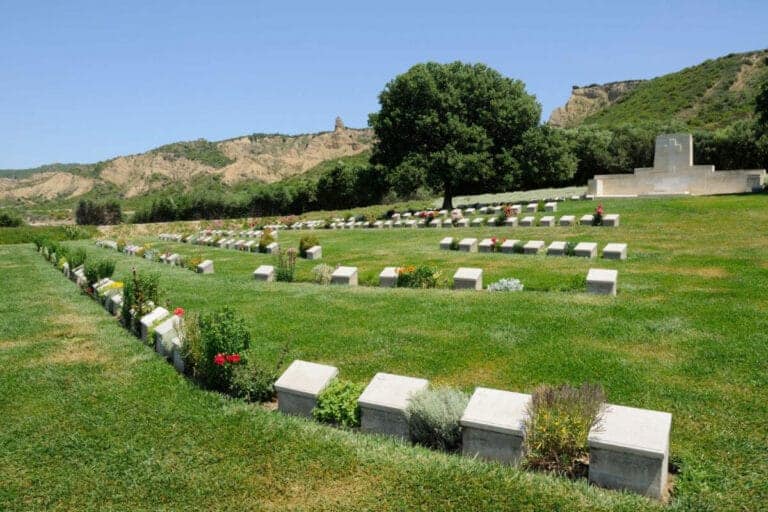
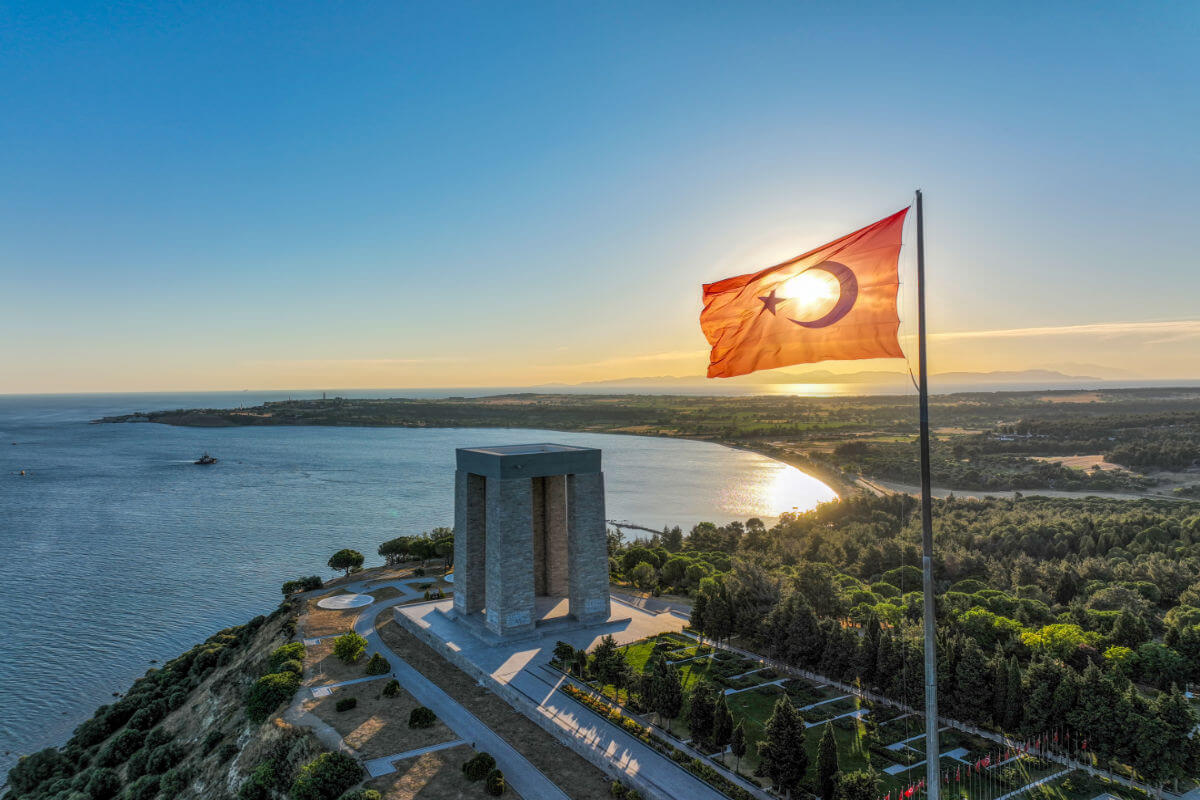
Wind moves softly through the pine-covered ridges of Gallipoli, Turkey, carrying the scent of the Aegean and the weight of memory. Across quiet coves, grassy trenches, and solemn cemeteries, the landscape feels calm today—yet every hill and shoreline around Eceabat holds stories of courage, loss, and endurance that shaped the modern history of Turkey, Australia, New Zealand, Britain, and beyond.
Historical and Cultural Context
The Gallipoli Campaign began on April 25, 1915, during World War I, when Allied forces landed on the peninsula in an attempt to open a sea route to Constantinople, then the capital of the Ottoman Empire. What followed was an eight-month struggle marked by harsh terrain, fierce resistance, and staggering casualties. Ottoman forces, including troops led by Mustafa Kemal—later Atatürk, founder of the Republic of Turkey—held the peninsula until the Allied evacuation in January 1916.
Today, the Gallipoli Peninsula is one of Turkey’s most moving historical landscapes. For Australians and New Zealanders, it is closely tied to the ANZAC legacy; for Turks, it is a place of national pride and remembrance. Gallipoli, Turkey is not only a battlefield—it is a shared place of mourning and respect.
What to See and Experience
Begin at Anzac Cove, where the shoreline curves beneath rugged hills and the waves roll in with a quiet rhythm. Nearby, cemeteries and memorials stand in careful rows, their inscriptions personal and deeply human. The silence here is powerful.
Continue to Lone Pine Australian Memorial, one of the most significant Allied sites on the peninsula, and then to the Turkish memorials, including the 57th Infantry Regiment Turkish Cemetery. The contrast between wind-swept ridges, shaded pine groves, and orderly stone markers creates an atmosphere that is both peaceful and deeply emotional.
Practical Visitor Tips
The best time to visit Gallipoli, Turkey is from April to June or September to October, when the weather is mild and walking between sites is comfortable. April 25, ANZAC Day, is especially meaningful, though it can be crowded and requires careful planning.
Allow at least a full day to explore the main battlefield sites around Eceabat. A guided visit is highly recommended, as many locations are spread across the peninsula and the stories behind them are essential to understanding what happened here.
Explore Gallipoli with One Nation Travel
Gallipoli, Turkey leaves visitors quieter than when they arrived—moved by the landscape, humbled by its stories, and reminded that remembrance is one of travel’s most powerful gifts.
Gallipoli is the Gallipoli Campaign Historical Site on Türkiye’s Gallipoli Peninsula, a dispersed landscape of memorials, cemeteries, battlefields, museums, forts, and monuments associated with the 1915 campaign. Plan for a full day or more: the sites are spread across the peninsula, and walking surfaces can be steep or uneven.
Plan your visit at a glance
- Location
- Gallipoli Peninsula, Çanakkale Province, Türkiye
- What to see
- Turkish memorials and martyrs’ cemeteries, Commonwealth and French cemeteries and memorials, Anzac Cove, Chunuk Bair, Lone Pine, Çanakkale Martyrs’ Memorial, museums, forts, and battlefield viewpoints
- Time needed
- Allow at least one full day; the historical-area authority also publishes two- and three-day suggested routes.
- Admission
- No single site-wide admission price is reliably published; individual museums or enclosed attractions may have separate conditions.
- Terrain and facilities
- Expect steep or uneven ground, potentially long walks, limited seating, and basic facilities in battlefield areas.
- Anzac Day
- Special access controls, road restrictions, and advance registration can apply around April 24–25.
What Gallipoli is
Gallipoli is not one enclosed monument but a large historical area that brings together places connected to the Gallipoli Campaign. The official visitor listing includes Turkish sites such as Çanakkale Martyrs’ Memorial and the 57th Infantry Regiment Martyrs’ Cemetery, as well as Anzac Cove, Lone Pine Cemetery and Memorial, Chunuk Bair, Cape Helles Memorial, and French military sites.
This broad layout makes the peninsula more meaningful when visited as a sequence of landscapes and commemorative places rather than as a quick stop. Choose a route based on the stories you want to follow—Anzac-sector sites, the southern Helles sector, Turkish memorials, or museums and forts—and avoid trying to cover every stop in a few hours.
How to plan a visit
Use Eceabat or Çanakkale as practical bases for exploring the peninsula. A car, driver, or organized tour is often the simplest way to link far-apart locations; for the 2026 Anzac Day program, official guidance notes that there is no public transportation from nearby towns into the protected battlefield area. (.au)
Start with a small number of priorities. A balanced day might combine a museum or orientation stop with Anzac Cove and nearby cemeteries, then continue to Lone Pine or Chunuk Bair; alternatively, focus on the southern monuments and forts around the Dardanelles. The historical-area authority provides suggested day, two-day, and three-day itineraries.
Accessibility and conditions
Gallipoli is a battlefield landscape, not a fully urbanized museum complex. Visitors should be ready for sloped roads, unpaved sections, uneven terrain, limited shade or seating at some stops, and basic services. Wear footwear suitable for walking and bring water, weather protection, and any mobility aids you need. (.au)
Some commemorative locations have constrained access. At the 2026 Anzac Day events, for example, the route between the main service locations involved several kilometers of uphill walking, while limited accessibility shuttles required advance registration. These arrangements are specific to the event but illustrate why visitors with mobility concerns should plan individual stops carefully. (.au)
Commemorations and respectful visiting
April 25 draws major commemorations at the Anzac Commemorative Site, Lone Pine, and Chunuk Bair. In 2026, attendees needed an individual attendance pass, and temporary traffic restrictions could limit access to locations in the Anzac and Helles sectors. (.au)
Outside major ceremonies, treat cemeteries, memorials, and gravesites as places of remembrance. Do not remove artifacts or objects from the historical area; official guidance warns that this is prohibited and can carry serious penalties. (.au)
Best approach for most travelers
For a first visit, reserve a full day and focus on a coherent group of sites rather than attempting the whole peninsula. Travelers seeking detailed historical context may benefit from an authorized guide or an audio guide, while independent visitors should download maps and route information before setting out because facilities and orientation points are spread widely across the area.
Confirm current hours, closures, ticket rules, event restrictions, and access conditions before visiting, especially around commemorations and public holidays.
Plan the next step
Recommended Tours for Your Gallipoli Visit
Compare tours for Gallipoli by starting point, duration and itinerary. A listed stop can change with local access conditions; check the current program before booking.

Full-Day Troy and Gallipoli Tour from Canakkale
Gallipoli day itinerary — check pickup details
Book the Full-Day Troy and Gallipoli Tour from Canakkale with One Nation Travel for expert guidance, organized transfers, and a…
View Tour Details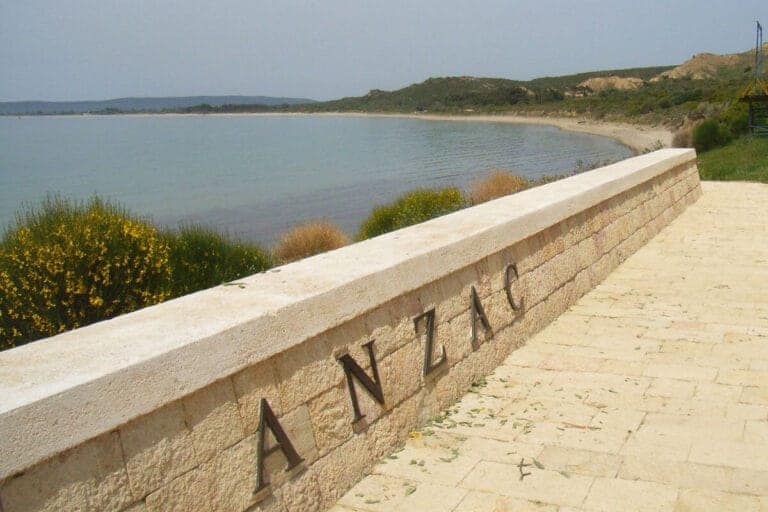
Private Gallipoli Battlefield Tour from Canakkale via Eceabat
Gallipoli day itinerary — check pickup details
Explore Gallipoli’s historic battlefields on a private tour from Canakkale via Eceabat, with a meaningful focus on history and culture.
View Tour DetailsTroy & Gallipoli Full-Day Tour from Canakkale
Gallipoli day itinerary — check pickup details
Book the Troy & Gallipoli Full-Day Tour from Canakkale with One Nation Travel for expert guidance, organized transfers, and a…
View Tour Details