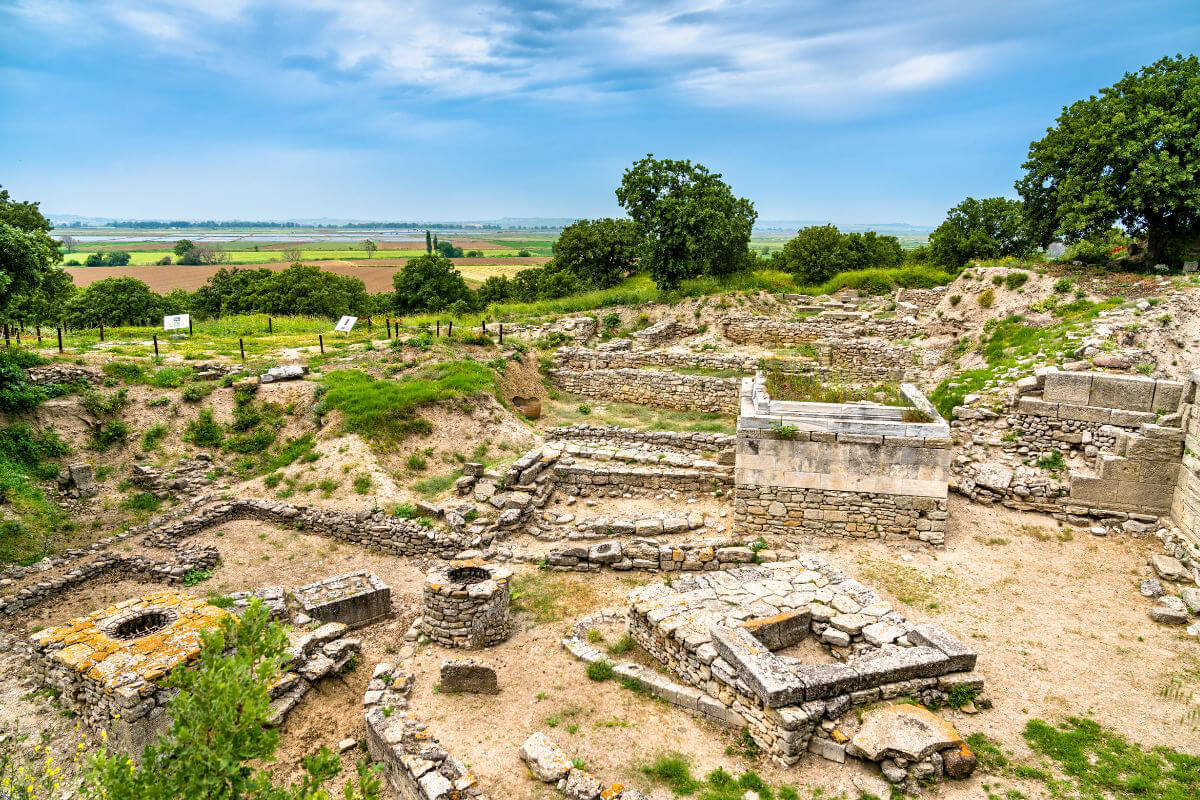
At the edge of the ancient ruins of Troy, where wind moves across sun-bleached stones and the Dardanelles glimmers in the distance, the Sacrificial Altars of Troy invite visitors into one of the city’s most atmospheric corners. Here, amid layers of myth and archaeology, it is easy to imagine smoke rising from ritual fires, prayers carried toward the gods, and a community gathering in moments of fear, gratitude, and hope.
Historical and Cultural Context
The Sacrificial Altars of Troy are part of the legendary archaeological site of Ancient City of Troy in northwestern Turkey, near modern Çanakkale. Troy’s history stretches across roughly 4,000 years, with nine major settlement layers identified by archaeologists. These layers range from the Early Bronze Age, around 3000 BC, through the Roman period, when the city was known as Ilium.
Ritual spaces such as these altars played an important role in ancient Anatolian and Aegean religious life. Offerings may have been made to deities for protection, fertility, victory, or safe passage. While Troy is often associated with Homer’s Iliad and the Trojan War, traditionally dated by ancient writers to around the 12th or 13th century BC, the archaeological site reveals a much longer and richer story than the epic alone.
What to See and Experience
Visiting the Sacrificial Altars of Troy is less about grand architecture and more about atmosphere. The stones are weathered and quiet, yet powerful. You may see carved or arranged stone features that suggest a ceremonial function, set within the wider ruins of walls, gates, ramps, and foundations.
As you walk through Troy Ancient City, listen to the crunch of gravel underfoot and the low whistle of wind across the plain. The landscape helps complete the story: open fields, distant hills, and the nearby straits that once made this city so strategically important. Nearby, interpretive signs and archaeological markers help connect the altars to Troy’s broader urban and sacred life.
Practical Visitor Tips
The best time to visit the Sacrificial Altars of Troy is in spring, from April to June, or in fall, from September to October, when temperatures are comfortable and the light is ideal for photography. Summer can be hot and exposed, so bring water, a hat, and sunscreen.
Plan to spend about 1.5 to 2 hours exploring the Troy archaeological site at a relaxed pace. Comfortable walking shoes are essential, as paths can be uneven. A knowledgeable guide can greatly enrich the visit by explaining the different settlement layers and the connection between archaeology, mythology, and ritual practice.
Explore Troy with One Nation Travel
The Sacrificial Altars of Troy may be modest in size, but they hold a powerful sense of ceremony and human memory. For travelers who want to connect Troy’s myths with its excavated reality, this quiet ritual space offers one of the site’s most thought-provoking moments.
Plan the next step
Recommended Tours for Your Troy Visit
Compare tours for Sacrificial Altars of Troy by starting point, duration and itinerary. A listed stop can change with local access conditions; check the current program before booking.

Troy & Gallipoli Full-Day Tour from Canakkale
Troy day itinerary — check pickup details
Book the Troy & Gallipoli Full-Day Tour from Canakkale with One Nation Travel for expert guidance, organized transfers, and a…
View Tour DetailsFull-Day Troy and Gallipoli Tour from Canakkale
Troy day itinerary — check pickup details
Book the Full-Day Troy and Gallipoli Tour from Canakkale with One Nation Travel for expert guidance, organized transfers, and a…
View Tour Details
Private 2-Day Gallipoli & Troy Tour from Istanbul
Starts from Istanbul
Book the Private 2-Day Gallipoli & Troy Tour from Istanbul with One Nation Travel for expert guidance, organized transfers, and…
View Tour Details