
Table of Contents
The secrets of Ancient Egypt are defined by a civilization that mastered the Nile River to fuel unprecedented engineering achievements. From Pharaoh Menes’ construction of the first recorded dam to protect Memphis, to Imhotep’s revolutionary design of the Step Pyramid and the colossal temples of the New Kingdom, these marvels tell the story of a culture obsessed with immortality. Exploring these sites reveals how architectural techniques evolved from simple mud-bricks to the massive stone monuments that still dominate the landscape today.

The Foundation: Taming the Nile
The story of Ancient Egypt’s engineering prowess begins with water. The Nile River was the lifeblood of the civilization, but its annual floods posed a significant threat. Historical records indicate that Pharaoh Menes, who unified Upper and Lower Egypt, constructed a massive masonry dam to protect the city of Memphis from inundation. This early infrastructure project established the precedent for the grand construction efforts that would follow.
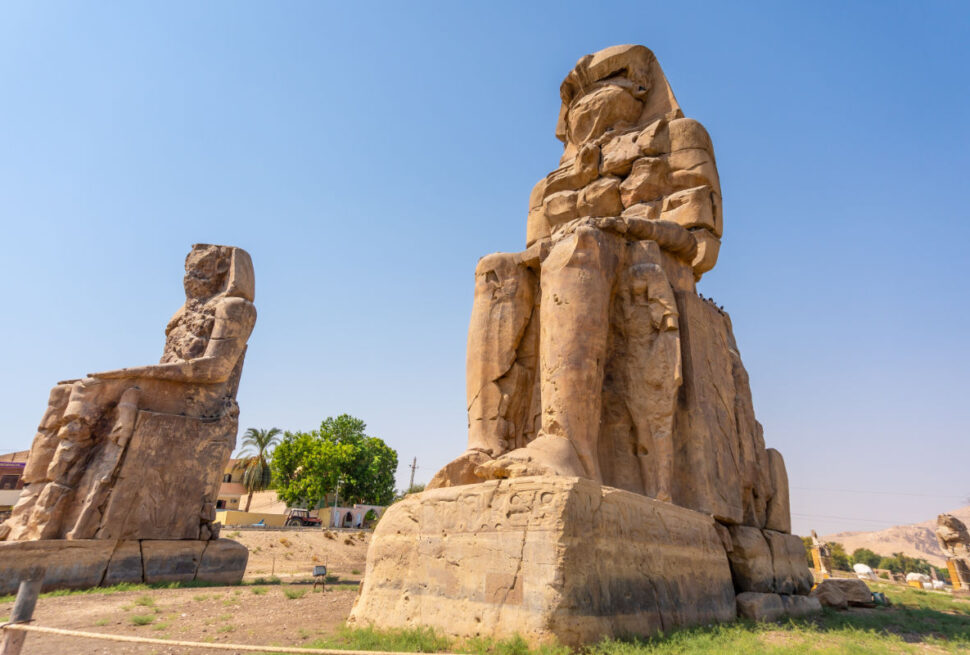
Today, travelers can visit the ruins of this ancient capital at Memphis, where the Open Air Museum displays colossal statues that hint at the city’s original grandeur.
The Evolution of the Pyramid
The journey to building the Great Pyramid was one of trial, error, and genius. It transformed royal burials from simple structures into mountains of stone.
Imhotep and the Step Pyramid
Before the smooth-sided pyramids, pharaohs were buried in flat-roofed tombs called mastabas. It was Imhotep, architect to Pharaoh Djoser, who revolutionized this design by stacking mastabas of decreasing size on top of one another. The result was the Step Pyramid located in the Saqqara Necropolis, the world’s first major stone building complex.
Achieving Perfection at Giza
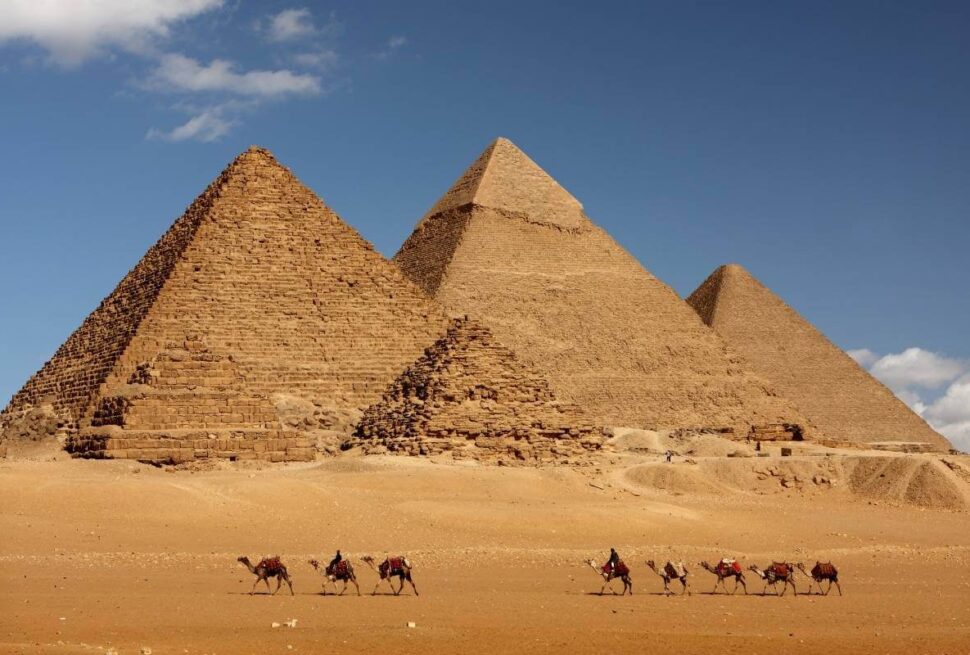
The architectural experimentation continued under Pharaoh Snefru and culminated in the Fourth Dynasty. The Pyramids of Giza represent the apex of this engineering evolution. The Great Pyramid of Cheops (Khufu) remains the only surviving Wonder of the Ancient World, showcasing a level of geometric precision that still baffles modern engineers.
The New Kingdom: Temples and Tombs
As the Old Kingdom gave way to the New Kingdom, the focus of construction shifted. Pharaohs moved away from conspicuous pyramids to grand memorial temples and hidden tombs to protect their journey to the afterlife.
- The Valley of the Kings: To deter tomb robbers, rulers like Tutankhamun and Ramses VI were buried in rock-cut tombs deep within the Valley of the Kings on the west bank of Luxor.
- Grand Temples: The east bank became a site of worship on a massive scale. The Karnak Temple complex expanded over centuries, becoming the largest religious building ever constructed. Nearby, the Luxor Temple served as a center for royal renewal.
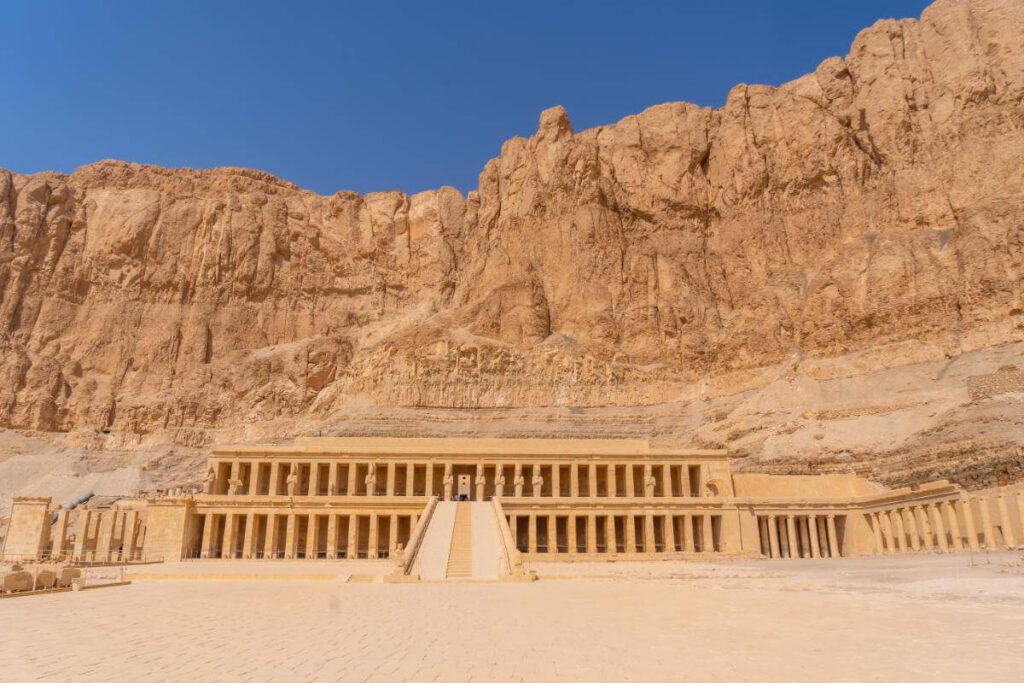
- Hatshepsut’s Innovation: One of the most unique architectural feats is the Temple of Queen Hatshepsut. Unlike traditional fortress-style temples, her mortuary temple features terraced colonnades that blend seamlessly into the limestone cliffs of Deir el-Bahari.
Comparing Engineering Eras
| Feature | Old Kingdom (e.g., Giza) | New Kingdom (e.g., Luxor) |
| Primary Structure | Pyramids | Temples & Rock-Cut Tombs |
| Engineering Focus | Mass & Geometric Height | Grandeur, Columns & Hidden Chambers |
| Key Location | Memphis / Saqqara | Thebes (Luxor) |
| Famous Builder | Khufu (Cheops) | Ramses II / Hatshepsut |
Top Experiences & Tours in Egypt
Based on One Nation Travel’s years of experience in the region, the best way to understand this engineering timeline is to visit the sites in person. We have curated specific itineraries that highlight these ancient marvels.
5-Day Cairo, Alexandria & Luxor Tour This compact yet comprehensive tour covers the essential engineering feats of Egypt. You will explore the Giza Pyramids, the Greco-Roman history in Alexandria, and the majestic temples of Luxor, including Karnak and the Valley of the Kings. See Full Itinerary and Book
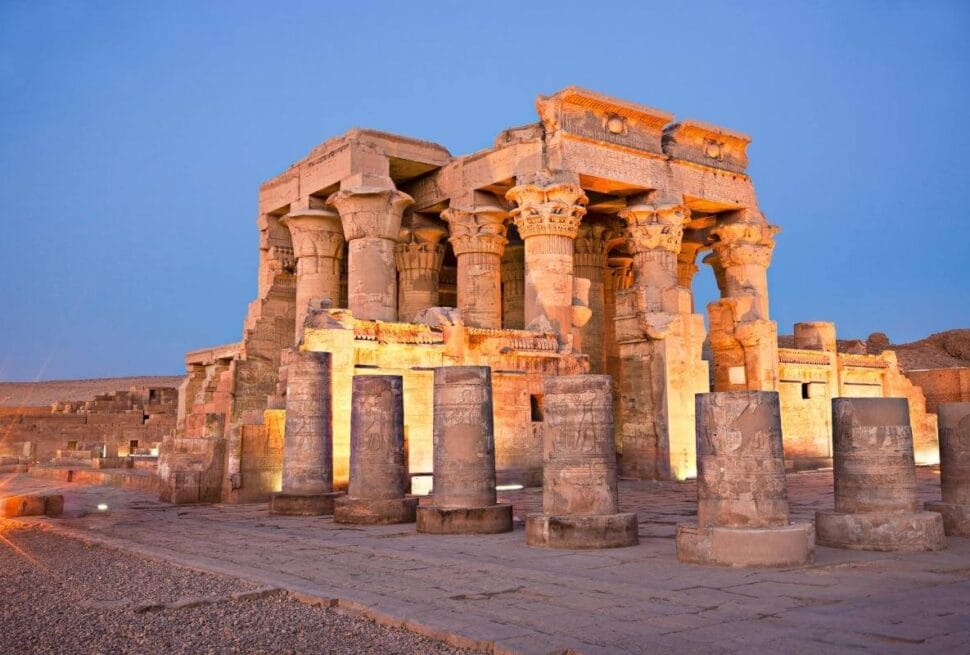
7-Day Egypt Tour: Explore Pyramids & Nile Cruise Combine the history of the Old Kingdom with the relaxation of the New Kingdom. This week-long journey takes you from the Sphinx and Pyramids in Cairo to a scenic Nile Cruise, visiting the temples of Edfu, Kom Ombo, and Aswan. See Full Itinerary and Book
5-Day Cairo and Luxor Tour Perfect for travelers short on time but eager for history. This itinerary focuses on the two most critical historical hubs: Cairo for the Pyramids and Egyptian Museum, and Luxor for an in-depth look at the open-air museum of Thebes. See Full Itinerary and Book
8-Day Egypt Highlights with Nile Cruise – Cairo, Aswan, Luxor & Alexandria A complete historical immersion. This 8-day adventure covers the entire timeline of Egyptian history, from the Pharaohs of Giza to the Ptolemaic era in Alexandria, all connected by a luxurious cruise along the Nile River. See Full Itinerary and Book
10-Day Egypt Tour: Cairo, Nile Cruise & Ancient Treasures Our most extensive exploration, designed for the true history enthusiast. Over ten days, you will witness the evolution of Egyptian civilization, from the ancient engineering of Memphis and Sakkara to the intricate temples of the south, ensuring no secret is left undiscovered. See Full Itinerary and Book
Frequently Asked Questions (FAQ)
Who built the first dam in Ancient Egypt?
Pharaoh Menes is credited with building the first major masonry dam to divert the Nile and protect the city of Memphis from annual flooding.
Why is the Step Pyramid important?
The Step Pyramid at Saqqara, designed by Imhotep, marks the transition in Egyptian architecture from simple mud-brick mastabas to the monumental stone pyramids that followed.
What is the difference between the Old and New Kingdom architecture?
The Old Kingdom focused on building massive pyramids as tombs (like at Giza), while the New Kingdom shifted to building grand temples (like Karnak) and hiding royal tombs in the Valley of the Kings to prevent looting.
Why was the Temple of Hatshepsut built into a cliff?
The Temple of Queen Hatshepsut was designed to integrate visually with the natural limestone cliffs of Deir el-Bahari, creating a unique terraced structure that differed from the enclosed temples of the time.
Is it safe to visit these ancient sites?
Yes, these historical sites are heavily guarded and safe for tourists. One Nation Travel ensures a secure experience with professional guides and private transportation throughout the journey.
Conclusion
The secrets of Ancient Egypt are not hidden in scrolls, but standing tall in the desert. From the engineering experiments of Imhotep to the majestic columns of Karnak, these structures are a testament to human ambition. One Nation Travel is ready to guide you through this history with expert insights and seamless planning.
Ready to walk through history? Explore our Egypt Attractions and plan your trip today.