
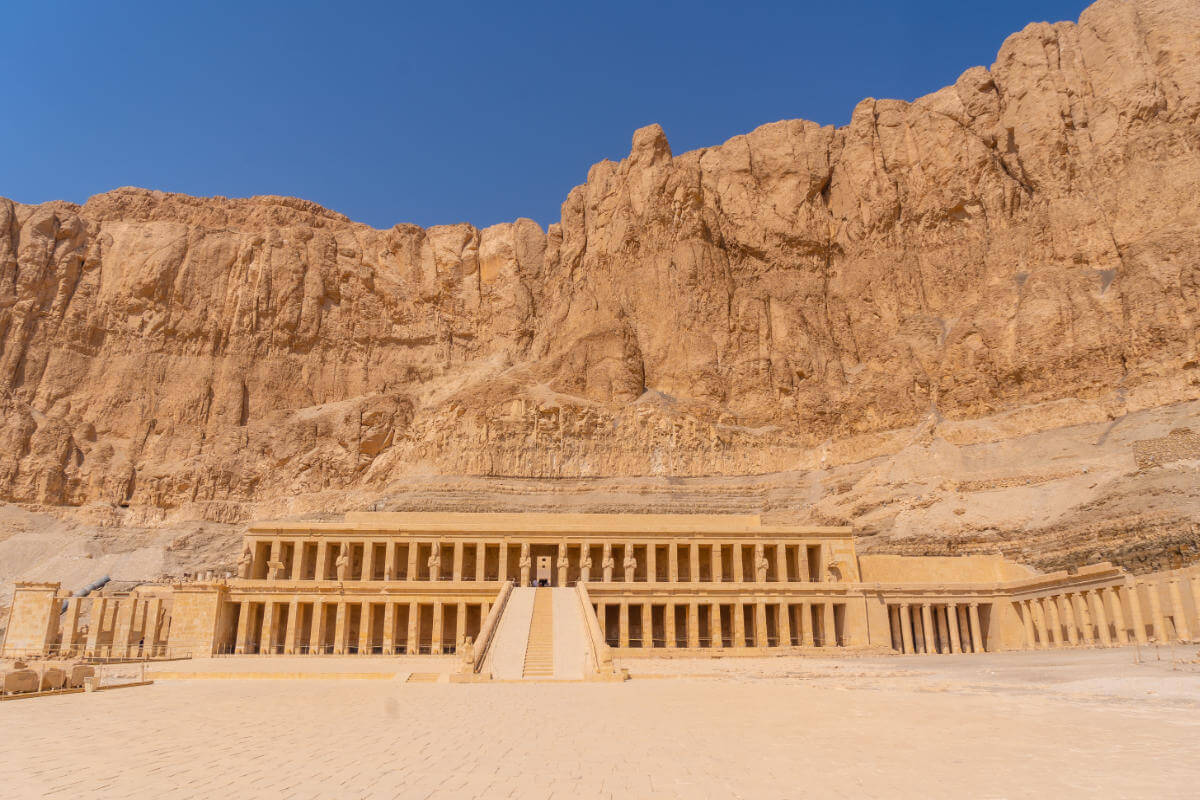
Discover the Temple of Queen Hatshepsut in Egypt
At sunrise, the cliffs of Deir el-Bahari glow rose-gold, and the limestone terraces of the Temple of Queen Hatshepsut seem to rise straight from the desert itself. Set on Luxor’s west bank in Egypt, this monumental sanctuary feels both grand and deeply personal—a place built not only for worship, but for legacy, power, and memory.
Historical and Cultural Context
The Temple of Queen Hatshepsut was constructed during the 18th Dynasty, around 1479–1458 BCE, for one of ancient Egypt’s most remarkable rulers. Hatshepsut was a female pharaoh who ruled with the authority of a king, often depicted wearing the royal false beard and traditional pharaonic regalia. Her reign was marked by prosperity, ambitious building projects, and successful trade expeditions.
Known in ancient times as Djeser-Djeseru, meaning “Holy of Holies,” the temple was designed by Senenmut, Hatshepsut’s trusted official and architect. Its terraces, colonnades, and ceremonial ramps were carefully aligned with the surrounding cliffs, creating one of the most elegant architectural compositions in ancient Egypt. Later, during the reign of Thutmose III, many of Hatshepsut’s images and names were defaced—an attempt to erase her from royal memory that ultimately failed.
What to See and Experience
Approach the Temple of Queen Hatshepsut slowly. The scale reveals itself in stages: broad ramps, clean horizontal lines, and rows of pillars standing against the desert cliffs. Look closely at the carved reliefs along the walls. Some scenes show Hatshepsut’s divine birth, while others illustrate her famous expedition to the Land of Punt, complete with ships, incense trees, and exotic goods.
The upper terrace offers a powerful sense of ceremony. Here, you can imagine priests, courtiers, and offerings moving through the sunlit colonnades toward sanctuaries dedicated to Amun, Hathor, and Anubis. Nearby, many travelers pair their visit with the Valley of the Kings and the Colossi of Memnon for a fuller west bank experience.
Practical Visitor Tips
The best time to visit is early morning, especially from October through April when temperatures are milder. Plan to spend about 60 to 90 minutes exploring the site, or longer if you enjoy photography and detailed reliefs. Wear a hat, sunglasses, and comfortable walking shoes, as shade is limited and the stone surfaces can reflect strong sunlight.
The Temple of Queen Hatshepsut is more than an ancient monument—it is the enduring voice of a ruler who shaped stone, statecraft, and memory into something the desert still refuses to forget.
Plan the next step
Recommended Tours for Your Egypt Visit
Compare tours for Temple of Queen Hatshepsut by starting point, duration and itinerary. A listed stop can change with local access conditions; check the current program before booking.
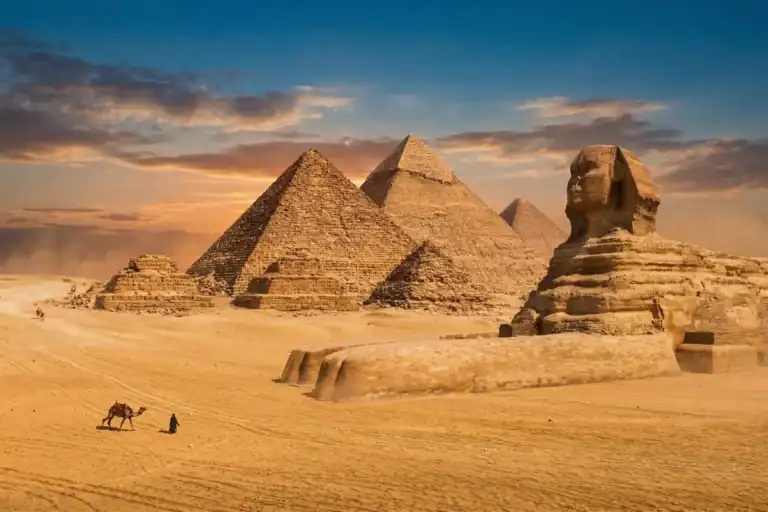
4-Day Egypt Tour: Cairo & Luxor
Explore Egypt on our 4-day Cairo & Luxor tour. Visit the Pyramids, Valley of the Kings & more. Book your…
View Tour Details
4-Day Nile Cruise from Cairo by Air: Aswan to Luxor
Experience the magic of ancient Egypt aboard a 4-day Nile cruise from Aswan to Luxor. This all-inclusive journey offers guided…
View Tour Details
2-Day Luxor Tour from Cairo (Flights Included)
Book the 2-Day Luxor Tour from Cairo (Flights Included) with One Nation Travel for expert guidance, organized transfers, and a…
View Tour Details