
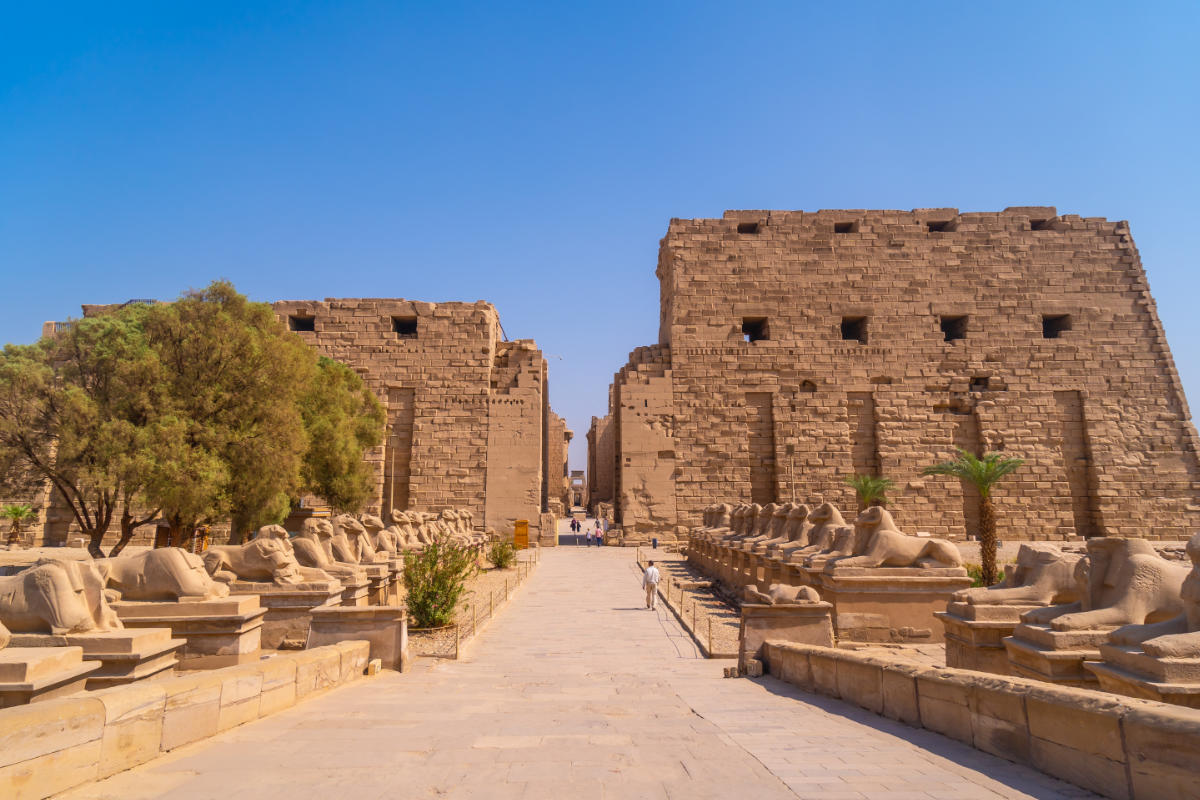
As the sun sinks behind the west bank of the Nile, the sandstone columns of Luxor Temple begin to glow in shades of honey, rose, and gold. Evening lights flicker on, shadows stretch across the ancient courtyard, and the great statues of pharaohs seem to watch silently as modern Luxor moves around them. Few places in Egypt feel so alive after dark, where ancient ritual and present-day city life meet on the same stone avenue.
Historical and Cultural Context
Luxor Temple was built primarily during the reign of Pharaoh Amenhotep III, around 1390–1352 BC, and later expanded by Ramses II in the 13th century BC. Unlike many Egyptian temples dedicated to a single god, this sacred complex was closely tied to kingship and renewal. It played a central role in the annual Opet Festival, when statues of the Theban gods were carried in procession from Karnak Temple to Luxor in a celebration of divine power and royal legitimacy.
Over the centuries, the site evolved with Egypt itself. Romans used parts of the temple as a military camp, early Christians converted sections for worship, and the Abu Haggag Mosque—still active today—was built above ancient temple walls, adding another layer to this remarkable living monument.
What to See and Experience
Begin at the grand entrance, where the massive pylon of Ramses II rises above colossal seated statues. One obelisk still stands here; its twin now watches over Place de la Concorde in Paris. Walk into the open court and notice the carved reliefs, lotus-bud columns, and worn stone surfaces polished by thousands of years of footsteps.
The highlight of Luxor Temple is its long colonnade, where towering columns create a dramatic corridor of light and shadow. At night, the temple becomes especially atmospheric. The golden lighting sharpens the hieroglyphs, the air cools, and the distant sounds of Luxor’s streets blend with the quiet presence of the ancient gods.
Practical Visitor Tips
The best time to visit is late afternoon into evening, especially between October and April when temperatures are milder. Plan to spend about 1.5 to 2 hours exploring the temple at a relaxed pace. Comfortable walking shoes are recommended, as the stone surfaces can be uneven. Bring a light jacket in winter evenings and keep your camera ready—the illuminated columns are among the most photogenic scenes in Upper Egypt.
Plan Your Visit
Plan the next step
Recommended Tours for Your Egypt Visit
Compare tours for Luxor Temple by starting point, duration and itinerary. A listed stop can change with local access conditions; check the current program before booking.

4-Day Nile Cruise from Cairo by Air: Aswan to Luxor
Experience the magic of ancient Egypt aboard a 4-day Nile cruise from Aswan to Luxor. This all-inclusive journey offers guided…
View Tour Details
4-Day Egypt Tour: Cairo & Luxor
Explore Egypt on our 4-day Cairo & Luxor tour. Visit the Pyramids, Valley of the Kings & more. Book your…
View Tour Details
2-Day Luxor Tour from Cairo (Flights Included)
Book the 2-Day Luxor Tour from Cairo (Flights Included) with One Nation Travel for expert guidance, organized transfers, and a…
View Tour Details