
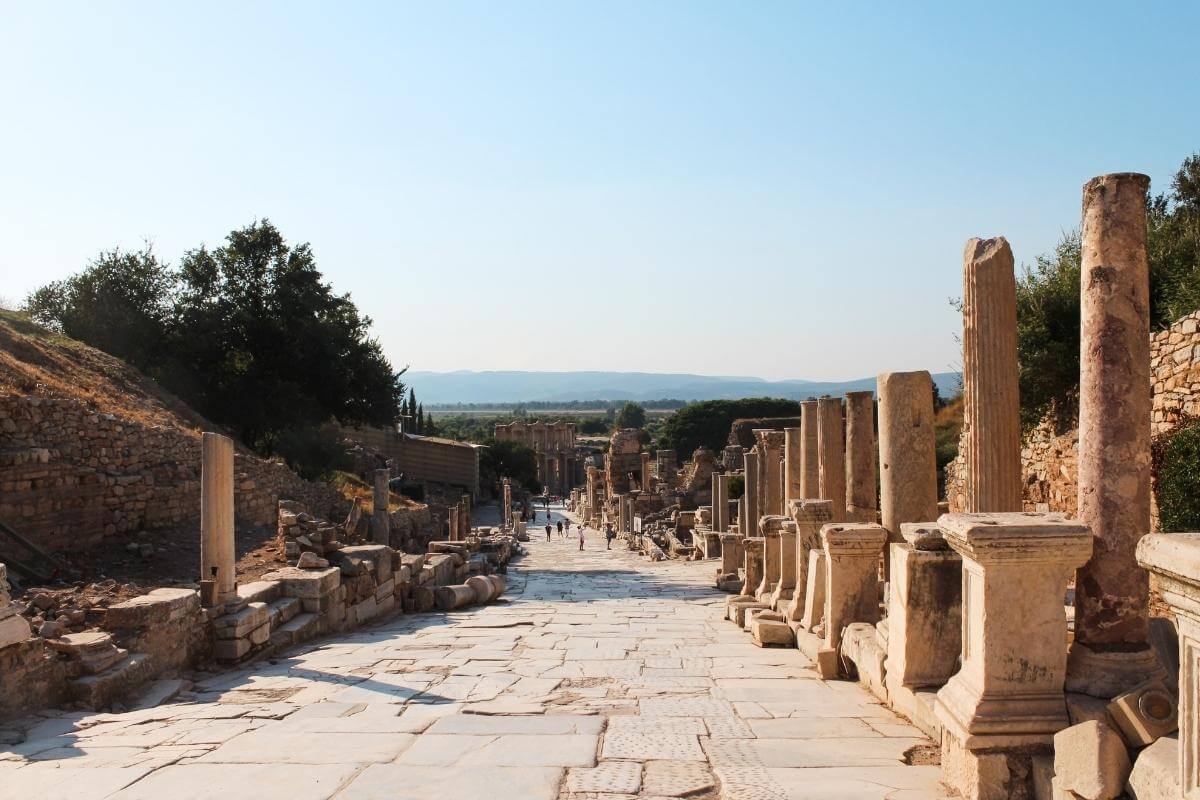
Walk the Marble Streets of Ancient Ephesus
Sunlight flashes across worn marble, cicadas hum in the dry Aegean air, and the columns of an ancient metropolis rise from the earth as if the city has only just paused for breath. Ephesus Ancient City Ruins in Izmir, Turkey, is one of the Mediterranean’s most powerful archaeological sites—a place where Roman grandeur, Greek elegance, and early Christian history meet on streets once walked by merchants, philosophers, pilgrims, and emperors.
Historical and Cultural Context
The story of Ephesus stretches back to around the 10th century BC, when Ionian Greeks established a settlement near the Aegean coast. In the 3rd century BC, Lysimachus, one of Alexander the Great’s generals, refounded the city in a more strategic location. Under Roman rule, Ephesus became the capital of the province of Asia and one of the empire’s largest cities, with a population that may have reached 250,000.
Its wealth came from trade, religion, and politics. Nearby stood the Temple of Artemis, counted among the Seven Wonders of the Ancient World. Later, Ephesus became important in early Christianity and is associated with St. Paul, St. John, and the Virgin Mary. Today, Ephesus Ancient City Ruins preserves the scale and sophistication of a city that helped shape the ancient world.
What to See and Experience
Begin with the marble-paved Curetes Street, where carved stones still show the polish of centuries of footsteps. The most photographed landmark is the Library of Celsus, built in the 2nd century AD to honor Roman senator Tiberius Julius Celsus Polemaeanus. Its two-story façade, with elegant columns and niches, glows beautifully in the morning light.
Nearby, the Great Theatre of Ephesus could hold about 25,000 spectators. Stand in the orchestra area and look up at the sweeping rows of stone seats—it is easy to imagine the roar of public gatherings and performances. Don’t miss the Terrace Houses in Ephesus, where mosaics, frescoes, and heated floors reveal the refined lifestyle of the city’s elite.
Practical Visitor Tips
The best time to visit Ephesus Ancient City Ruins is spring, from April to June, or fall, from September to October, when temperatures are milder and the light is ideal for photography. Summer can be very hot, so arrive early, bring water, and wear a hat and comfortable walking shoes.
Plan to spend at least 2 to 3 hours exploring the main ruins, or 4 hours if you want a slower pace and time for the Terrace Houses. The site is near Selçuk in Izmir province and is often combined with Pamukkale, Cappadocia, or Istanbul on a broader Turkey itinerary.
Travel Deeper with One Nation Travel
Plan the next step
Recommended Tours for Your Ephesus Visit
Compare tours for Ephesus Ancient City Ruins by starting point, duration and itinerary. A listed stop can change with local access conditions; check the current program before booking.

Ephesus & Pamukkale Private Day Tour from Istanbul by Flight
Starts from Istanbul
Visit Ephesus and Pamukkale on a private day tour from Istanbul by flight, with guided ancient ruins, thermal pools, and…
View Tour Details
7-Day Turkey Tour: Istanbul, Cappadocia, Ephesus, Pamukkale
Experience a 7-day Turkey tour from Istanbul to Cappadocia, Ephesus and Pamukkale with flights, hotels, transfers, meals and guided sightseeing.
View Tour Details
7-Day Antalya, Pamukkale, Ephesus & Cappadocia Tour with Flights
Explore Cappadocia, Pamukkale, and more highlights with expert guides on the 7-Day Antalya, Pamukkale, Ephesus & Cappadocia Tour, including smooth.
View Tour Details