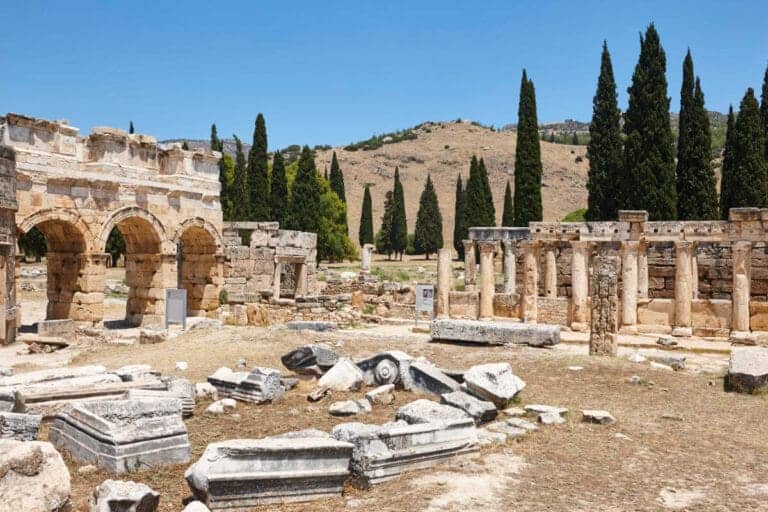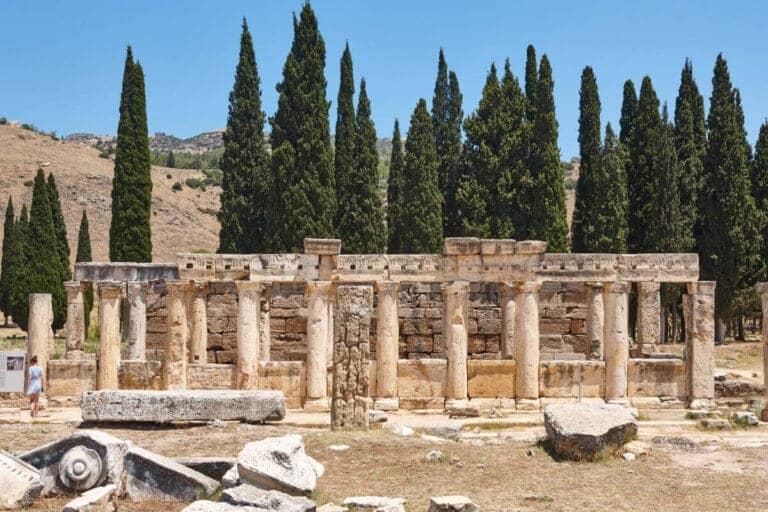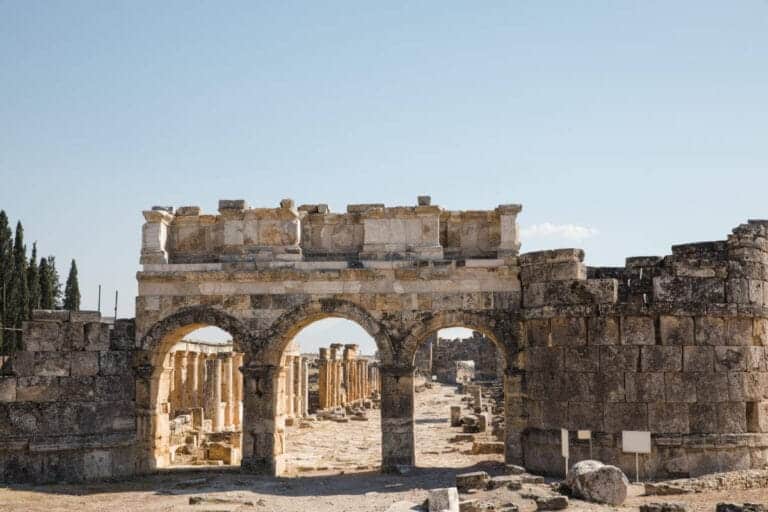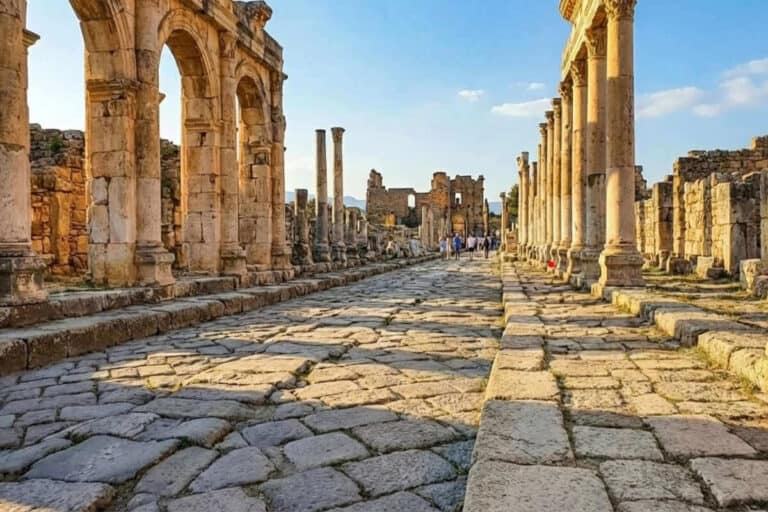
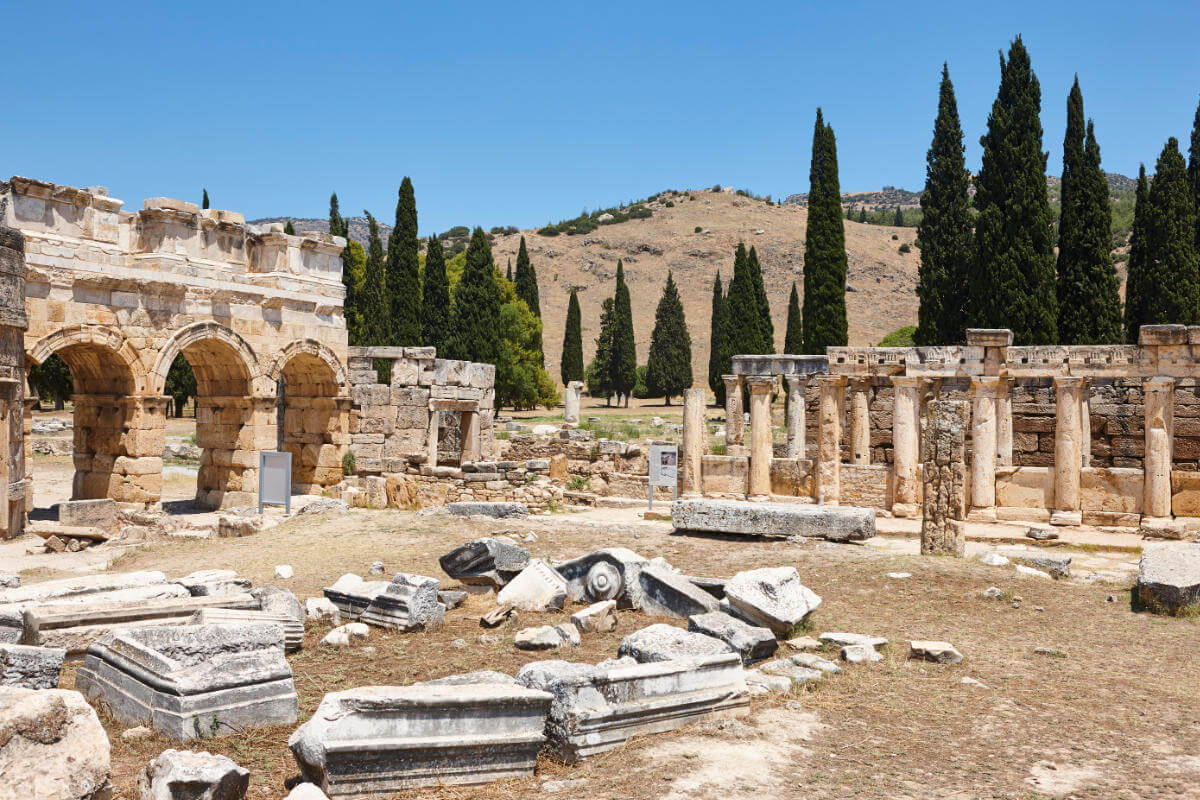
Beneath the ancient ruins of Hierapolis lies a place the Romans believed was an actual gateway to the underworld. The Plutonium, Hierapolis, named after Pluto, the god of death, was one of the most feared and revered sacred sites in the ancient world — a cave mouth that emitted deadly gases capable of killing any living creature that ventured too close.
A Portal to the Realm of the Dead
The Plutonium was first described by the Greek geographer Strabo in the 1st century BCE. He wrote of a space “full of a vapor so misty and dense that one can scarcely see the ground,” and noted that animals driven into the opening died instantly. Priests of the Cybele cult — eunuchs who served the mother goddess — would demonstrate their supposed divine power by entering the cave and emerging alive, a feat that terrified and amazed onlookers. Modern science has since revealed the secret: a fissure beneath the cave releases concentrated carbon dioxide gas from volcanic activity deep underground. The heavier-than-air CO₂ pools at ground level, suffocating small animals while humans standing upright could briefly survive in the thinner concentrations above.
Italian archaeologists rediscovered the Plutonium in 2013, confirming what ancient texts had described for over two thousand years. Researchers measured CO₂ concentrations reaching 91% at the cave’s floor — lethal within minutes.
What to See at the Plutonium
Today, the Plutonium at Hierapolis sits behind a protective barrier, but visitors can still observe the arched entrance to the cave and the remains of the marble temple that once surrounded it. The stone seating area where ancient spectators gathered to watch ritual demonstrations is partially intact, and you can feel the eerie stillness that hangs around the site. The faint, mineral-tinged warmth rising from the ground is a reminder that the geological forces Strabo documented are still very much alive. Nearby, the grand Hierapolis Theatre and the sprawling Necropolis of Hierapolis complete a picture of a city deeply preoccupied with both life and death.
Visitor Tips
The Plutonium is accessible within the broader Hierapolis-Pamukkale archaeological site. Visit early in the morning, ideally before 9 AM, to explore without crowds and in cooler temperatures — summer afternoons on the plateau can exceed 100°F. Allow at least two to three hours to walk from the Plutonium through the theatre, necropolis, and down to the famous white travertine terraces of Pamukkale. Comfortable walking shoes are essential on the uneven ancient stone paths.
Few places on earth let you stand at a spot where ancient priests performed rituals over a genuine geological phenomenon — where myth and science converge with startling precision. The Plutonium at Hierapolis doesn’t just tell a story from the past; it exhales one.
Plan the next step
Recommended Tours for Your Pamukkale Visit
Compare tours for Plutonium, Hierapolis by starting point, duration and itinerary. A listed stop can change with local access conditions; check the current program before booking.

Pamukkale & Hierapolis Full-Day Tour from Izmir
Starts from Izmir
Book the Pamukkale and Hierapolis Full-Day Tour from Izmir to see travertines, ancient ruins and hot springs at a great…
View Tour Details
2-Day Pamukkale & Ephesus Tour from Istanbul with Flights
Starts from Istanbul
Travel from Istanbul to Pamukkale and Ephesus on a 2-day tour with flights, exploring travertine terraces, Hierapolis and ancient ruins.
View Tour Details
2-Day Pamukkale & Ephesus Tour from Cappadocia (With Overnight Local Bus)
Starts from Cappadocia
Take an overnight local bus from Cappadocia to explore Pamukkale’s travertines, Hierapolis and ancient Ephesus on this guided 2-day tour.
View Tour Details