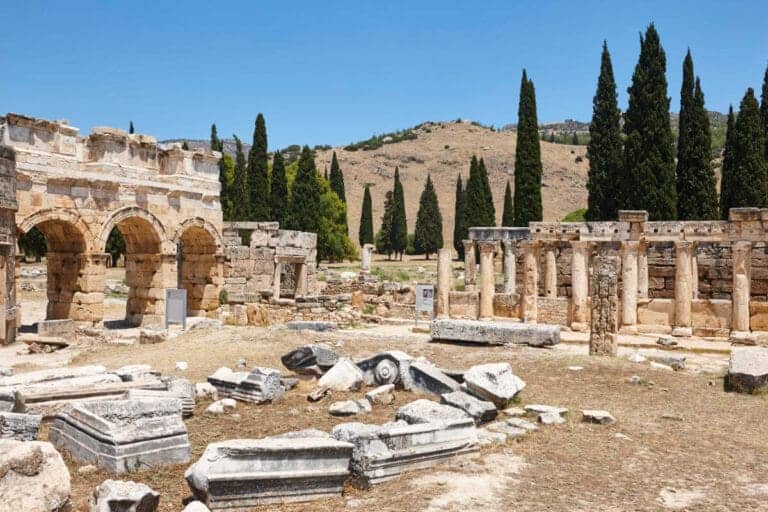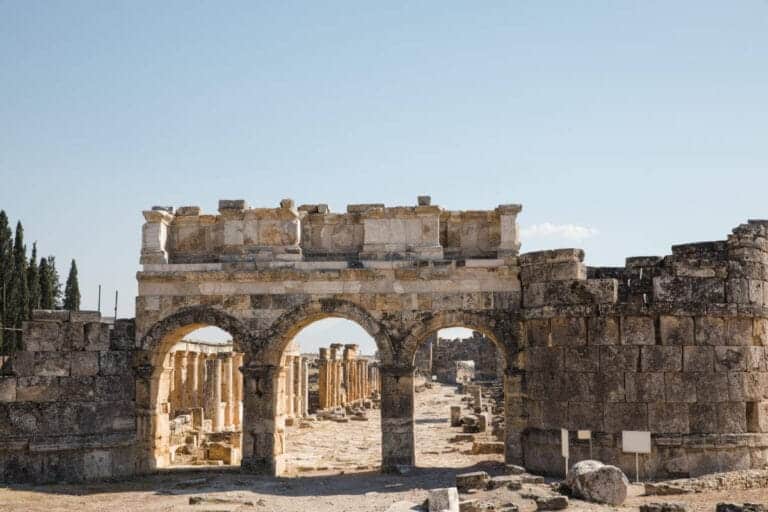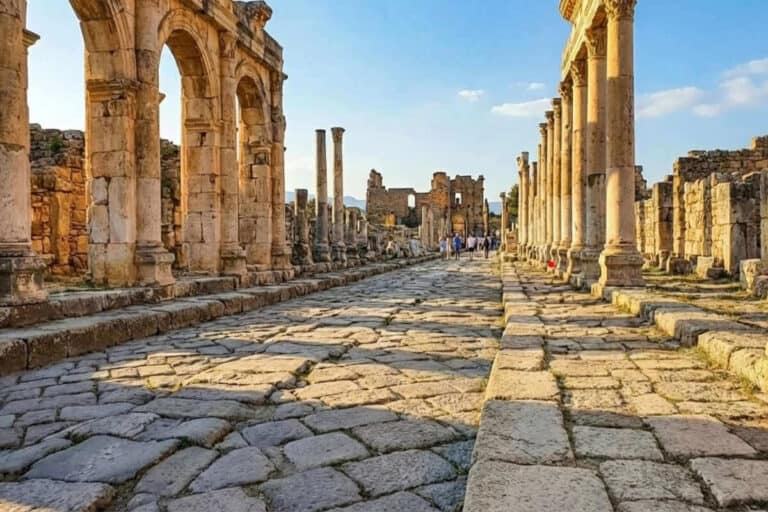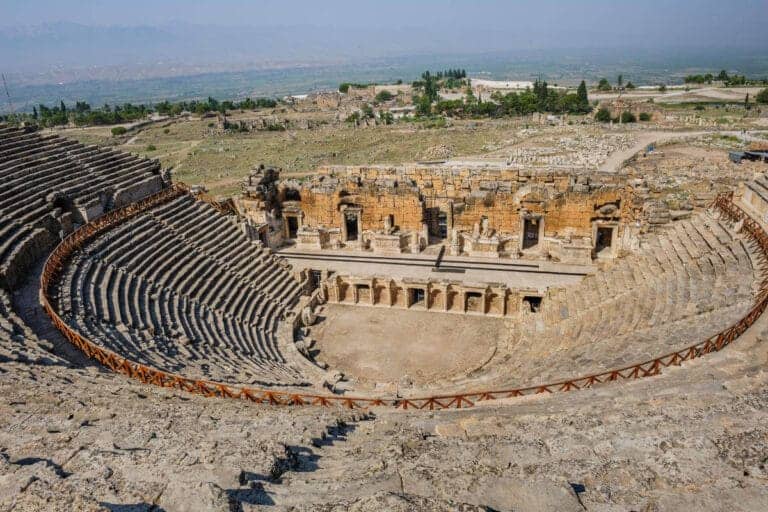
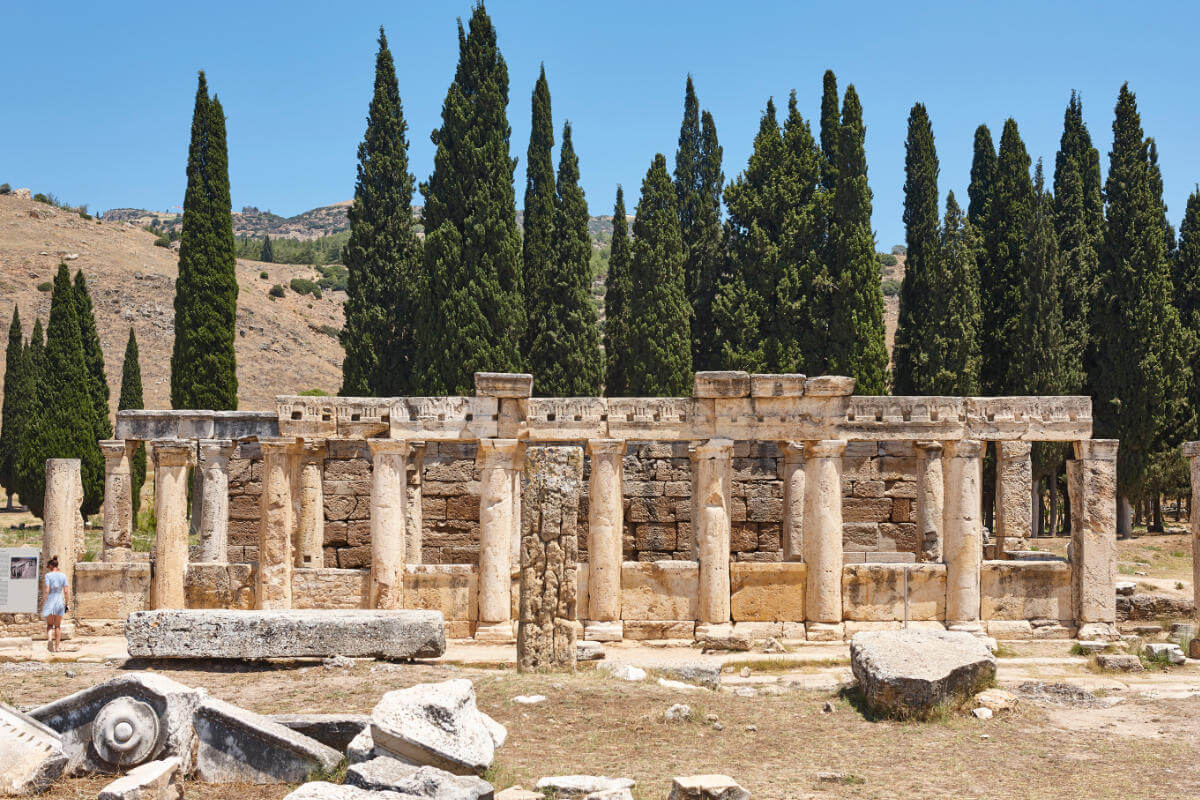
The Ancient Latrina Ruins in Hierapolis showcase the advanced public sanitation system of the Roman Empire. Built in the 2nd century AD, these communal latrines feature an elegant rectangular structure with marble seats and a water channel beneath for drainage. Located near the agora, they demonstrate the emphasis on public health and social interaction in Roman cities. The ruins offer a unique insight into daily life, highlighting the sophisticated engineering of the time. Exploring these latrines provides visitors with an authentic connection to ancient Roman culture.
In the marble streets of ancient Ephesus, even the most ordinary corners reveal the sophistication of Roman life. The Ancient Latrina Ruins may surprise first-time visitors: this was not a palace, temple, or theater, but a public restroom—designed with engineering skill, social purpose, and a level of comfort that feels remarkably advanced for its age.
Historical and Cultural Context
The Ancient Latrina Ruins are located within the ruins of Ephesus, near modern-day Selçuk in Izmir, Turkey. Dating largely to the Roman Imperial period, around the 1st century AD, these latrines reflect the city’s prosperity during a time when Ephesus was one of the most important urban centers of Asia Minor.
In Roman cities, public latrines were not merely practical facilities. They were social spaces where citizens could talk business, exchange news, and take a break from the heat of the streets. Water channels carried waste away beneath rows of marble seats, while fresh water ran in front for cleaning. The system shows how carefully Romans planned sanitation, comfort, and civic life nearly 2,000 years ago.
What to See and Experience
At the Ancient Latrina Ruins, look closely at the U-shaped arrangement of stone seats, once set above flowing water channels. The worn marble, softened by centuries of use and weather, gives the site a quiet human intimacy. You can almost imagine the sound of sandals on stone, conversations echoing off walls, and water moving steadily below.
Nearby, the grand monuments of Ephesus add context to this everyday space. The elegant Library of Celsus, the finely carved Temple of Hadrian, and the residential luxury of the Terrace Houses in Ephesus reveal the contrast between public life, private wealth, and civic pride in the Roman city.
Practical Visitor Tips
The best time to visit the Ancient Latrina Ruins is in spring or fall, when temperatures in western Turkey are comfortable and the marble streets are easier to explore. Summer visits are best early in the morning, before the midday sun becomes intense.
Plan at least 2 to 3 hours for Ephesus as a whole, allowing 10 to 15 minutes to pause at the latrines and understand their place in daily Roman life. Wear comfortable walking shoes, bring water, and consider joining a guided tour for richer stories behind the city’s smaller details.
Explore Ephesus with One Nation Travel
Small, practical, and deeply human, the Ancient Latrina Ruins remind us that history is not only found in emperors and monuments—it also lives in the everyday routines of people who walked these streets long before us.
In the marble streets of ancient Ephesus, even the most ordinary corners reveal the sophistication of Roman life. The Ancient Latrina Ruins may surprise first-time visitors: this was not a palace, temple, or theater, but a public restroom—designed with engineering skill, social purpose, and a level of comfort that feels remarkably advanced for its age.
Historical and Cultural Context
The Ancient Latrina Ruins are located within the ruins of Ephesus, near modern-day Selçuk in Izmir, Turkey. Dating largely to the Roman Imperial period, around the 1st century AD, these latrines reflect the city’s prosperity during a time when Ephesus was one of the most important urban centers of Asia Minor.
In Roman cities, public latrines were not merely practical facilities. They were social spaces where citizens could talk business, exchange news, and take a break from the heat of the streets. Water channels carried waste away beneath rows of marble seats, while fresh water ran in front for cleaning. The system shows how carefully Romans planned sanitation, comfort, and civic life nearly 2,000 years ago.
What to See and Experience
At the Ancient Latrina Ruins, look closely at the U-shaped arrangement of stone seats, once set above flowing water channels. The worn marble, softened by centuries of use and weather, gives the site a quiet human intimacy. You can almost imagine the sound of sandals on stone, conversations echoing off walls, and water moving steadily below.
Nearby, the grand monuments of Ephesus add context to this everyday space. The elegant Library of Celsus, the finely carved Temple of Hadrian, and the residential luxury of the Terrace Houses in Ephesus reveal the contrast between public life, private wealth, and civic pride in the Roman city.
Practical Visitor Tips
The best time to visit the Ancient Latrina Ruins is in spring or fall, when temperatures in western Turkey are comfortable and the marble streets are easier to explore. Summer visits are best early in the morning, before the midday sun becomes intense.
Plan at least 2 to 3 hours for Ephesus as a whole, allowing 10 to 15 minutes to pause at the latrines and understand their place in daily Roman life. Wear comfortable walking shoes, bring water, and consider joining a guided tour for richer stories behind the city’s smaller details.
Explore Ephesus with One Nation Travel
Small, practical, and deeply human, the Ancient Latrina Ruins remind us that history is not only found in emperors and monuments—it also lives in the everyday routines of people who walked these streets long before us.
Plan the next step
Recommended Tours for Your Pamukkale Visit
Compare tours for Ancient Latrina Ruins by starting point, duration and itinerary. A listed stop can change with local access conditions; check the current program before booking.

4-Day Cappadocia, Ephesus & Pamukkale Tour from Istanbul with Flights
Starts from Istanbul
A 4-day tour from Istanbul visiting Cappadocia, Ephesus and Pamukkale, with domestic flights, airport transfers, boutique hotels and guides.
View Tour Details
3-Day Pamukkale, Ephesus, Troy and Gallipoli Tour from Istanbul
Starts from Istanbul
Travel from Istanbul on a 3-day journey to Pamukkale, Ephesus, Troy and Gallipoli, combining natural wonders, ancient ruins and historic…
View Tour Details
3-Day Pamukkale, Ephesus & Cappadocia Tour from Istanbul with Flights
Starts from Istanbul
Discover Pamukkale, Ephesus and Cappadocia on a 3-day tour from Istanbul, with domestic flights, guided visits and boutique accommodation.
View Tour Details