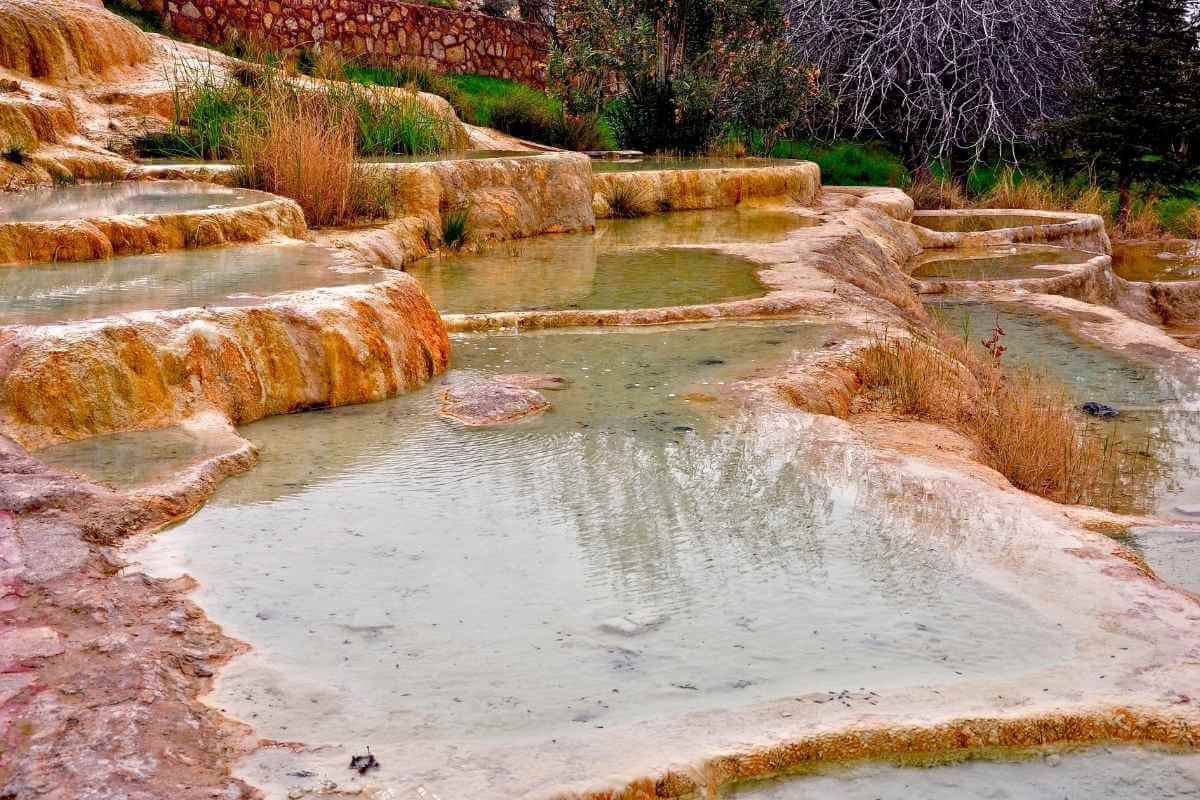
The water runs red here. Not crimson, exactly — more like the warm, rusty ochre of sun-baked earth dissolved into thermal springs. Just five kilometers north of Pamukkale’s famous white travertines, the Karahayit Red Springs offer a striking visual contrast and a completely different thermal bathing experience that most visitors never discover.
Why the Water Runs Red
The distinctive color of Karahayit Red Springs comes from exceptionally high concentrations of iron oxide and other trace minerals — including sulphur, cadmium, and arsenic — that occur naturally in the geothermal waters rising from deep underground. These waters emerge at temperatures reaching 60°C (140°F), significantly hotter than many of Pamukkale’s thermal pools. Over centuries, the mineral-rich flow has stained the surrounding rock formations in dramatic shades of rust, orange, and deep brown, creating terraced deposits that look almost otherworldly against the green Denizli countryside.
Local communities have valued these springs for generations. Residents of the Karahayit village long believed the iron-rich waters could ease joint pain, improve skin conditions, and restore vitality. While modern science remains cautious about specific health claims, the thermal composition is genuinely mineral-dense — and the tradition of bathing here stretches back to Roman times, when the broader Hierapolis region was already celebrated for its healing waters.
What You’ll Experience
Arriving at Karahayit Red Springs, the first thing you notice is the smell — a faint, sulphuric tang that sharpens as you approach. Then comes the color. Water trickles across layered rock shelves, each one painted in deepening shades of amber and rust. Small pools collect between the formations, warm to the touch. Visitors can wade into designated bathing areas where the temperature has cooled to a comfortable range. The sensation is silky, almost oily — the mineral content gives the water a smoothness ordinary hot springs lack.
Several small hotels and pensions in the village pipe this thermal water directly into private bathing facilities, offering a quieter alternative to the busier Pamukkale tourist areas.
Practical Tips for Your Visit
Karahayit Red Springs are free to visit at the public access points. Allocate roughly 30 to 45 minutes for the springs themselves, or longer if you plan to soak. Morning visits offer softer light — ideal for photographing those vivid mineral colors against the rock. Bring a towel and clothes you don’t mind staining slightly, as the iron content can leave faint marks on light fabrics. The springs pair perfectly with a full day exploring both Cleopatra’s Pool and the ancient ruins of Hierapolis.
Karahayit Red Springs remind you that Pamukkale’s geothermal story extends far beyond those iconic white terraces. The red water, the mineral warmth, the quiet village atmosphere — it all adds a dimension to your visit that the main tourist trail simply cannot replicate. If your Turkey itinerary brings you to this region, make time for both colors.
Recommended Tours
Plan the next step
Recommended Tours for Your Pamukkale Visit
Compare tours for Karahayit Red Springs by starting point, duration and itinerary. A listed stop can change with local access conditions; check the current program before booking.
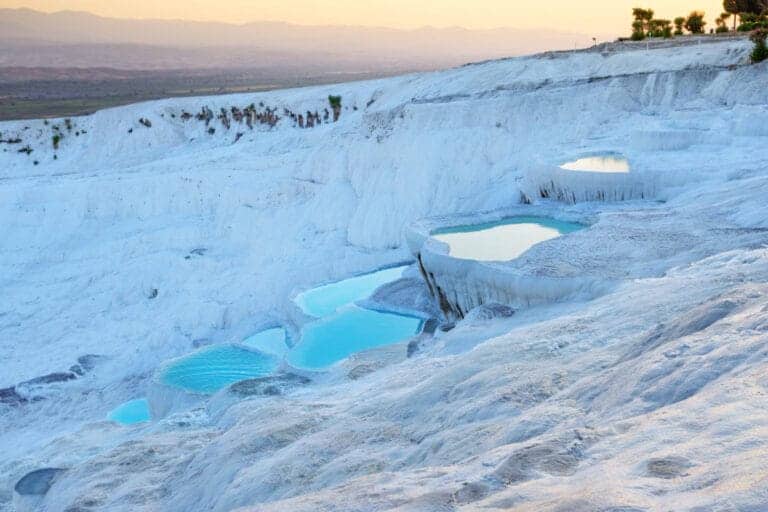
Pamukkale Tour from Istanbul – 1 Night & 1 Day
Starts from Istanbul
See Pamukkale on a 1-night, 1-day tour from Istanbul with travertine terraces, thermal waters, Hierapolis, and a professional guide.
View Tour Details
3 Days Cappadocia & Pamukkale Tour from Istanbul (Flight & Overnight Bus)
Starts from Istanbul
Explore Cappadocia and Pamukkale in 3 days from Istanbul, with a domestic flight, overnight bus transfer, and cultural highlights.
View Tour Details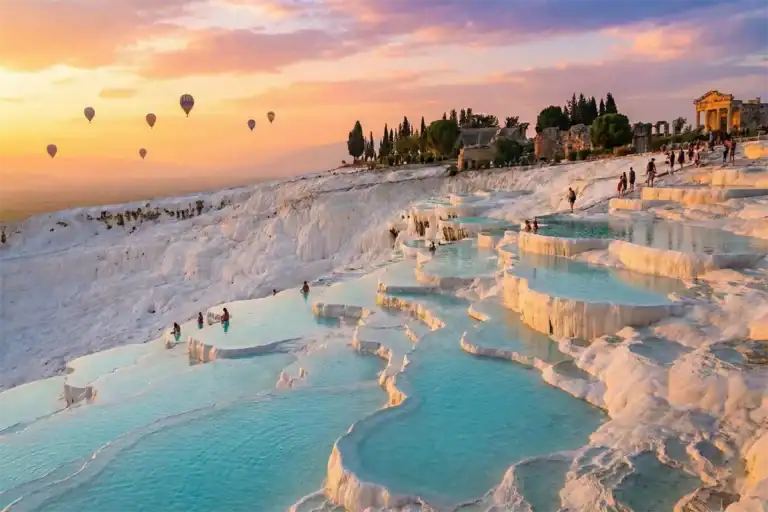
2-Day Pamukkale & Ephesus Tour from Istanbul with Flights
Starts from Istanbul
Travel from Istanbul to Pamukkale and Ephesus on a 2-day tour with flights, exploring travertine terraces, Hierapolis and ancient ruins.
View Tour Details