
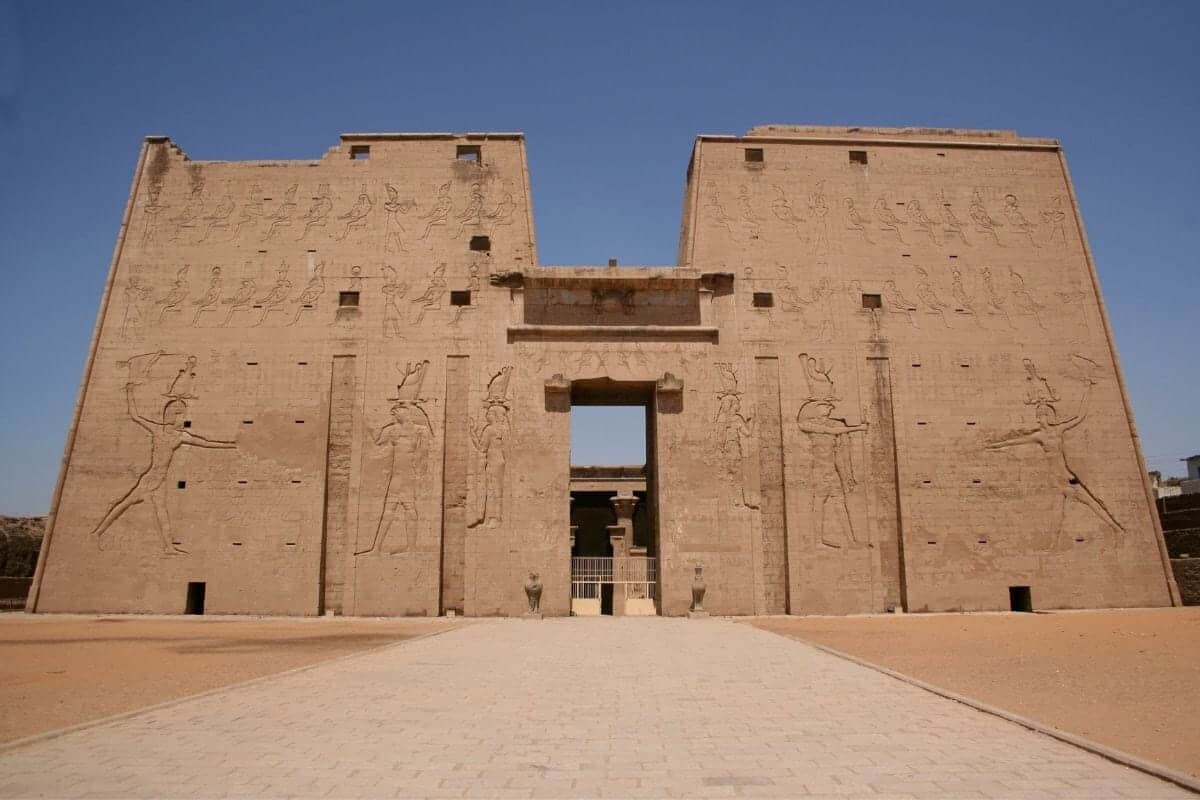
Rising from the west bank of the Nile in the small Egyptian town of Edfu, halfway between Luxor and Aswan, stands one of the most extraordinary monuments of the ancient world. The Temple of Edfu is so remarkably preserved that walking through its towering pylon feels less like visiting ruins and more like crashing a 2,000-year-old ceremony still in progress. Its sandstone walls, carved with thousands of hieroglyphs, glow honey-gold at sunset, and the scent of warm stone lingers in the air long after the desert wind dies down.
A Sacred Place for the Falcon God
Construction began in 237 BCE under Ptolemy III and continued for nearly 180 years, finally completed in 57 BCE during the reign of Ptolemy XII, father of Cleopatra VII. Dedicated to Horus, the falcon-headed god of kingship and the sky, this is the second-largest temple in Egypt after Karnak, and arguably the best preserved on the planet. For centuries it lay buried beneath sand and Nile silt, with a village built directly on top of its roof. French archaeologist Auguste Mariette began excavating in the 1860s, and what emerged was nothing short of miraculous: a complete temple complex, ceilings intact, inscriptions sharp enough to read.
What to See Inside
The 36-meter-high entrance pylon greets you first, flanked by two black granite statues of Horus as a falcon, his crown polished by centuries of pilgrim hands. Step through into the great courtyard, where 32 columns with floral capitals frame the open sky. Inside the hypostyle hall, the air cools dramatically and your eyes adjust to dim light filtering through stone slits. Look for the elaborate reliefs depicting the “Feast of the Beautiful Meeting,” when Horus’s statue traveled by river to unite with Hathor of Dendera. The inner sanctuary still holds the original polished granite shrine where the god’s statue once rested, and a replica of the sacred barque that carried him during festivals.
Visiting Tips
Plan to spend about 90 minutes to two hours exploring. Arrive early, ideally before 9 a.m., to beat both the heat and the cruise-ship crowds that arrive mid-morning from Luxor and Aswan. October through April offers the most comfortable temperatures. Most visitors stop here as part of a Nile cruise itinerary between the Temple of Kom Ombo and Karnak Temple.
Plan the next step
Recommended Tours for Your Egypt Visit
Compare tours for Temple of Edfu by starting point, duration and itinerary. A listed stop can change with local access conditions; check the current program before booking.
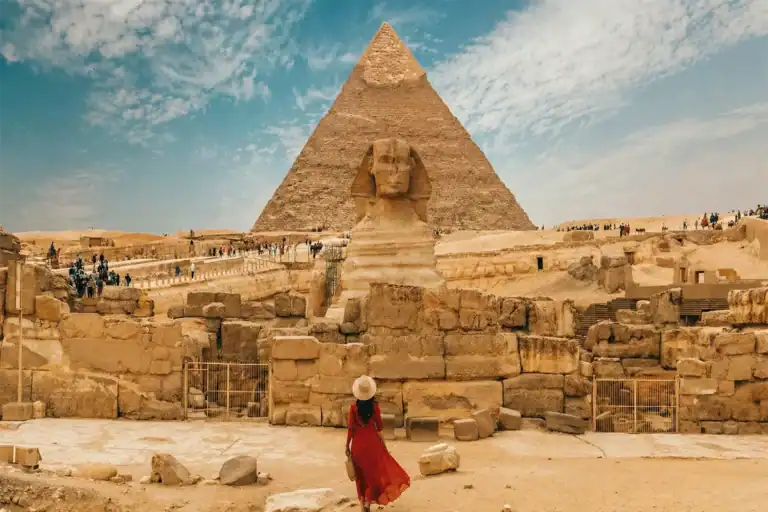
8-Day All-Inclusive Egypt Tour Package
Book the 8-Day All-Inclusive Egypt Tour Package with One Nation Travel for expert guidance, organized transfers, and a smooth travel…
View Tour Details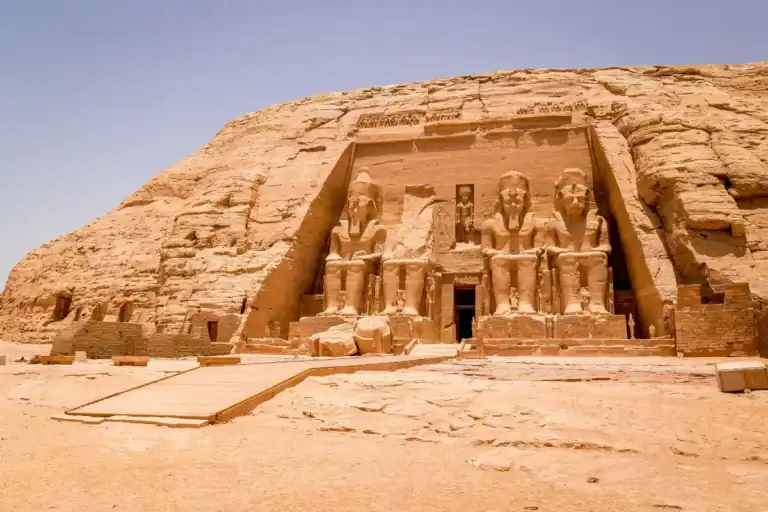
8-Day Egypt Tour with Nile Cruise, Cairo & Flights
Explore Cairo, Luxor, and more highlights with expert guides on the 8-Day Egypt Tour with Nile Cruise, Cairo & Flights,…
View Tour Details9-Day Best of Egypt Tour with 4-Night Nile Cruise
Book the 9-Day Best Egypt Tour with 4-Day Nile Cruise with One Nation Travel for expert guidance, organized transfers, and…
View Tour Details