
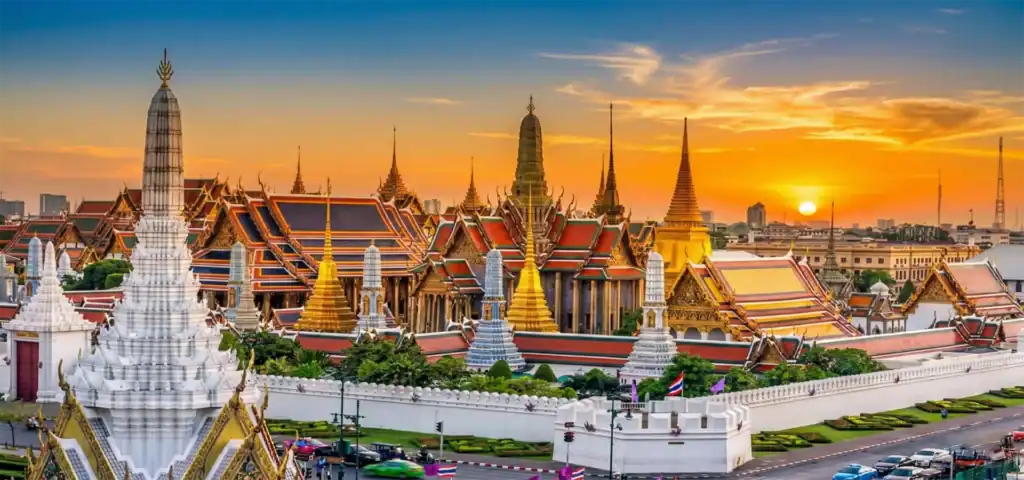
Best Time to Visit Thailand
Compare Bangkok, northern Thailand, the Andaman coast and Gulf islands before choosing your dates.
The best time to visit Thailand is generally November to February for Bangkok, northern Thailand and the Andaman coast. January and February are the simplest national compromise, but Thailand does not have one monsoon calendar: Koh Samui and the lower Gulf often have wetter conditions later in the year than Phuket and Krabi. March and April are hotter, while green-season travel requires flexible daily plans rather than an assumption of continuous rain.
🌎 Thailand Weather by Region
Thailand’s monsoons do not affect every coast at the same time. Use the region where you will spend the most beach or outdoor time as your weather benchmark.
| Region | Best window | Typical winter high | Typical summer high | Planning advice |
|---|---|---|---|---|
| Bangkok & Central Thailand | November–February | 31–33°C | 34–36°C | Hot and humid year-round; heavy showers can cause short-lived transport disruption in wetter months. |
| Chiang Mai & Northern Thailand | November–February | 28–31°C | 35–38°C | Cooler mornings occur at elevation; check current air quality in late winter and spring. |
| Northeastern Thailand | November–February | 29–32°C | 35–38°C | The dry cool period suits touring; hot-season days can be intense and rain varies locally. |
| Andaman Coast: Phuket & Krabi | December–March | 31–33°C | 31–33°C | Southwest-monsoon months can bring rough seas, rain and reduced boat schedules. |
| Lower Gulf: Koh Samui & Koh Phangan | January–April; often July–September | 29–31°C | 31–34°C | The wetter pattern often peaks later than on the Andaman side, especially around October–December. |
| Eastern Gulf: Pattaya & Koh Chang | November–April | 30–32°C | 32–34°C | Koh Chang is especially wet in the southwest monsoon; marine conditions can change quickly. |
Planning rule: For a Bangkok–Chiang Mai–Phuket route, use Phuket sea conditions and northern air quality—not Bangkok rainfall alone—as the deciding checks.
🧭 Best Time to Visit Thailand by Travel Style
Start with what you want to do, then choose the month. Regional weather and operating seasons can vary significantly.
| Travel style | Best time | Why it works |
|---|---|---|
| First-time Thailand trip | November–February | The broadest practical window for Bangkok, the north and the Andaman coast. |
| Bangkok city break | November–February | Usually the least hot period, though humidity and showers remain possible. |
| Chiang Mai culture & temples | November–January | Cooler mornings and generally drier weather; air quality still needs a live check. |
| Northern trekking | November–February | More comfortable temperatures, subject to park, trail and air-quality conditions. |
| Phuket, Krabi & Andaman islands | December–March | The core period for calmer seasonal marine conditions and fuller boat schedules. |
| Koh Samui & lower Gulf | January–April or July–September | Often avoids the lower Gulf’s wettest late-year period, but daily forecasts still matter. |
| Diving & snorkeling | Choose by coast and site | Visibility, wind, currents, park openings and operator schedules vary around Thailand. |
| Green-season landscapes | June–October, region dependent | Lush scenery and waterfalls can be rewarding with flexible plans and respect for closures. |
| Songkran trip | Mid-April | A major cultural celebration during the hottest season; plan for water, heat and transport changes. |
| Heat-sensitive travelers | December–January | These are generally the least hot months, especially in northern Thailand. |
Our pick: January and February are the simplest broad answer. If the beach is the priority, choose the coast first and then match its monsoon pattern.
📅 Month-by-Month Guide to Thailand
January
February
March
April
May
June
July
August
September
October
November
December
The monthly temperature and rainfall figures use Bangkok as a consistent reference. Northern elevations and the Andaman and Gulf coasts follow different patterns; crowd and rate labels are broad indicators rather than guarantees.
☀ Seasons in Thailand
Cool & Dry Season
- Best weather across all regions
- Low humidity and minimal rain
- Loy Krathong and Yi Peng festivals
- Ideal for beaches, trekking, and temples
- Coolest nights for comfortable sleep
- Peak tourist season with highest prices
- Popular sites crowded
- Hotels and flights book out early
- Chiang Mai can be smoky in late February
Hot Season
- Songkran water festival (April)
- Lower prices than peak season
- Sea still calm for diving
- Fewer crowds at temples
- Extreme heat and humidity
- Air quality poor in north (burning season)
- Exhausting for outdoor sightseeing
- Occasional thunderstorms begin in May
Wet Season (Southwest Monsoon)
- Lowest prices of the year
- Lush green landscapes
- Waterfalls at peak flow
- Gulf islands (Koh Samui) still relatively dry
- Fewer tourists everywhere
- Daily afternoon rain showers
- Andaman coast beaches rough
- Some island services suspended
- Humidity very high
Late Monsoon & Transition
- Cheapest month (September)
- Monsoon receding by late October
- Phuket Vegetarian Festival
- Green countryside
- Heaviest rainfall of the year
- Flash flooding risk
- Some resorts close
- Diving visibility poor on Andaman side
🎆 Events & Festivals in Thailand
Maha Songkran World Water Festival
Official dates for the 2026 Bangkok program. Songkran travel can affect transport and opening hours, while local programs differ by destination and year.
Official 2026 details →Phi Ta Khon Festival
Official 2026 dates for the Bun Luang and Phi Ta Khon tradition. Future dates should not be assumed from this edition.
Official 2026 details →Phuket Vegetarian Festival
Processions and ceremonies take place across Phuket. Exact dates, routes and access controls should be checked in the Tourism Authority event calendar.
Official event listing →Loi Krathong & Yi Peng
Local programs, lantern rules and event areas change by year. Use official destination announcements and follow all fire and access restrictions.
Official TAT event calendar →🎫 Recommended Thailand Tours
Explore current Thailand tours and check each itinerary's written inclusions, exclusions and available dates.

💡 Travel Tips for Thailand
Phuket and Koh Samui do not share one rainy season. Match your dates to the specific coast and islands in your route.
Rain may be brief or prolonged, and marine conditions can cancel boats. Leave alternate indoor activities and buffer time.
Haze can affect northern Thailand in late winter and spring. Use official real-time readings rather than a fixed annual date.
March and April require shade, hydration, slower pacing and outdoor sightseeing outside peak afternoon heat.
National parks, piers and boat operators may suspend trips for weather or seasonal conservation. Do not treat an island transfer as guaranteed.
Lunar festivals and local event routes change each year. Confirm official dates, transport and local rules before booking around them.
❓ Frequently Asked Questions
January and February are the simplest all-round choices for Bangkok, northern Thailand and the Andaman coast. Koh Samui follows a different rainfall pattern, so check the coast in your route.
December through March is the broad core window for the Andaman coast. Weather and sea conditions still vary, and boat trips can be changed or cancelled.
January to April is a useful broad choice, with another often workable period in July to September. The lower Gulf can be wetter around October to December.
November to January usually offers cooler conditions. Check real-time air quality for late winter and spring, because haze timing and severity vary each year.
Not necessarily. Green-season trips can include sunshine, short showers and occasional prolonged rain. Keep plans flexible, choose the coast carefully and accept that marine trips may be disrupted.
April is usually among the hottest periods. It is also Songkran season, so travelers who attend should plan for heat, water exposure, changed transport and busy local celebration areas.
Air-quality problems are often associated with late winter and spring, but there is no dependable start or end date. Check Thailand’s official Air4Thai readings and local advisories before outdoor plans.
Songkran can be a memorable cultural trip if you are comfortable with heat, water celebrations and transport changes. Protect electronics, dress respectfully and follow local safety instructions.
Some hotels may reduce rates in wetter periods, but savings and crowd levels are not guaranteed and vary by coast, school holiday and supplier. Compare live prices for your exact route.
Book earlier for late December–February, Songkran, major events and limited island accommodation. In wetter periods, retain flexible terms where possible because weather can alter transfers.
No. Operators and authorities can suspend services for wind, waves, storms or seasonal park closures. Keep buffer time before flights and follow official decisions.
One Nation Travel
Reviewed by our travel planning team using Thai climate, tourism, event and air-quality sources current on 22 July 2026.
How we researched this guide
Regional guidance uses rounded long-term climate patterns and official Tourism Authority of Thailand weather material; it is not a forecast. Monsoon boundaries, marine operations, air quality, crowd levels and rates vary by place and date, so no discount, quiet-site or operating guarantee is made. Event details were checked against official TAT sources available on 22 July 2026.
Ready to Plan Your Thailand Trip?
Ask One Nation Travel to plan, book and coordinate a Thailand itinerary. The selected tour page and written quote state every included transfer, hotel and guided service.