
Short answer: The most beautiful places in Turkey are Istanbul, Cappadocia, Pamukkale, Ephesus, and Antalya. Together, they cover Turkey’s best mix of skyline views, fairy-chimney valleys, white thermal terraces, ancient ruins, and Mediterranean coastline. For most first-time travelers, the smartest route is 7 to 10 days with domestic flights between key regions.
Turkey rewards travelers who plan by region instead of simply collecting famous names. The country is large, the landscapes change quickly, and the best experiences often depend on timing: sunrise in Cappadocia, late afternoon at Pamukkale, cooler morning hours at Ephesus, and ferry light in Istanbul just before sunset.
If you’re visiting for the first time, don’t try to see everything. A well-paced Turkey trip should feel rich, not rushed. Our team typically sees the best traveler feedback from itineraries that combine city culture, one major archaeological site, one natural wonder, and either Cappadocia or the Mediterranean coast. This guide explains where to go, how long to stay, what to expect logistically, and which places are worth building your route around.
What Are the Most Beautiful Places in Turkey for a First Trip?

For a first trip, focus on the destinations that show Turkey’s variety without forcing you into exhausting travel days. The classic route usually starts or ends in Istanbul, then continues to Cappadocia, Pamukkale, Ephesus, and sometimes Antalya if you have enough time for the coast.
A good rule of thumb: allow at least 2 full days for Istanbul, 2 nights for Cappadocia, 1 night for Pamukkale or nearby Denizli, 1 night near Ephesus in Kuşadası or Selçuk, and 2 nights in Antalya if beaches and Roman ruins are part of your plan. Travelers with only 5 or 6 days should choose carefully rather than trying to cover the whole country.
Operator tip: The most common planning mistake is underestimating transfer time. A flight may be 75 minutes, but hotel pickup, airport check-in, baggage, landing, and onward transfer can turn that into a 5-hour travel block.
Why Is Istanbul One of Turkey’s Most Beautiful Cities?
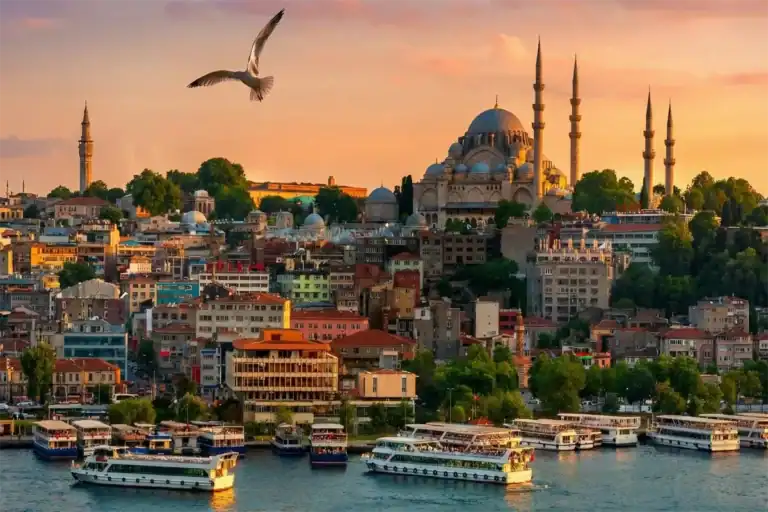
Istanbul is beautiful because it’s layered. You don’t see one version of the city; you see Roman, Byzantine, Ottoman, and modern Turkish life all sharing the same streets. The skyline is dramatic, but the real pleasure is in the transitions: a call to prayer echoing over domes, ferries crossing the Bosphorus, tea glasses on narrow sidewalks, and market streets that still work like living trade routes.
First-time visitors should stay close to the historic peninsula or in a well-connected neighborhood with easy tram or ferry access. The most efficient sightseeing area is Sultanahmet, where major landmarks sit within walking distance. The Hagia Sophia Grand Mosque is the essential stop, not just for its architecture but for what it represents: nearly 1,500 years of religious, imperial, and cultural change.
Two full days is the minimum for Istanbul. Three is better if you want a Bosphorus cruise, market time, and a slower meal schedule. If your international flight arrives late in the evening, don’t count that arrival day as a sightseeing day. Immigration, luggage, and the transfer from Istanbul Airport can easily take 90 minutes or more depending on traffic.
Best time of day to see Istanbul
Start early for historic sites, then save the waterfront for late afternoon. Istanbul’s light is often best between 4:00 p.m. and sunset, especially from ferry routes, bridge viewpoints, and neighborhoods facing the Bosphorus. In summer, midday sightseeing can be hot and crowded, so build in a long lunch or hotel break.
What Makes Cappadocia So Visually Unique?
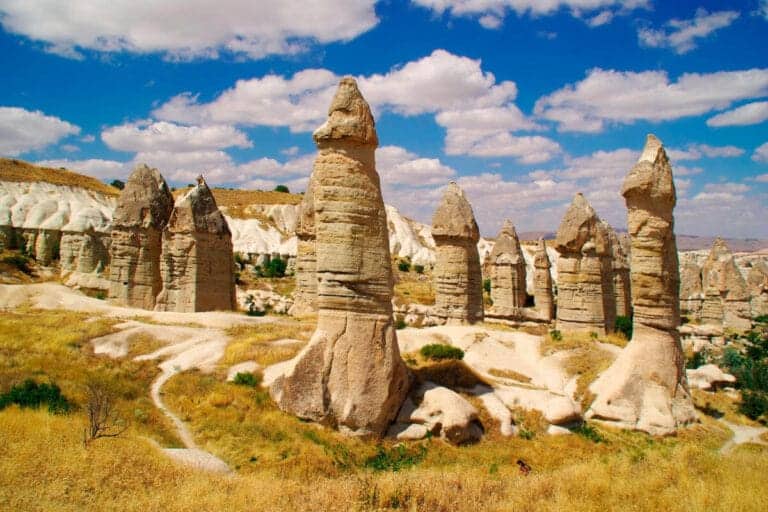
Cappadocia looks unlike anywhere else in Turkey. Wind and volcanic erosion shaped the region into soft rock valleys, cone-shaped fairy chimneys, and cave dwellings carved into the hillsides. The result is both natural and human-made: a landscape where valleys, churches, homes, and underground shelters are all part of the same story.
The best base for most visitors is Göreme, Uçhisar, or Ürgüp. Göreme is practical and scenic, Uçhisar has excellent viewpoints and higher-end cave hotels, and Ürgüp tends to suit travelers who prefer a quieter evening atmosphere. The major sightseeing area, Göreme National Park, is a UNESCO-listed landscape and one of the strongest reasons Cappadocia belongs on almost every first-time Turkey itinerary.
Most travelers should stay 2 nights. One night is risky because hot air balloon flights are weather-dependent. Balloons can be canceled due to wind, rain, snow, or civil aviation restrictions. If the balloon ride is a major reason for your trip, build in at least two sunrise opportunities.
How to reach Cappadocia
The two main airports are Kayseri Erkilet Airport and Nevşehir Kapadokya Airport. Flights from Istanbul usually take about 75 to 90 minutes. From Kayseri, hotel transfers to Göreme often take 60 to 75 minutes; from Nevşehir, closer to 40 to 50 minutes. Early morning flights are useful if you want to tour on arrival, but very early departures from Istanbul can mean leaving your hotel before 5:00 a.m.
Balloon ride cost and timing
Balloon prices vary sharply by season, aircraft capacity, and demand. For travelers who want to pre-book through One Nation Travel, the Cappadocia Hot Air Balloon Ride is currently listed from $360. Pickup is usually before sunrise, and the total experience with transfers, preparation, flight, and return can take around 3 hours.
Is Pamukkale Worth Visiting for the Scenery?

Yes, Pamukkale is worth visiting when it’s timed properly. The famous white terraces are made of travertine, a calcium-rich mineral deposit created by thermal spring water. From a distance, the hillside looks like snow or cotton; up close, it’s a series of shallow pools, ridges, and flowing channels.
The key is expectation management. Pamukkale is not a quiet spa retreat during peak hours. It’s a major landmark, and day-trippers often arrive in large waves from the coast. The best time to visit is early morning or late afternoon, when the light is softer and the crowds are thinner. Summer afternoons can be extremely bright and hot, so sunglasses and a hat are not optional.
The strongest visit combines the terraces with Hierapolis-Pamukkale, the ancient spa city above the travertines. This is what makes Pamukkale more than a photo stop. You can walk through ruins, see Roman-era remains, and understand why people came here for thermal waters long before modern tourism.
How long do you need in Pamukkale?
For most travelers, one overnight is enough. A day trip is possible from Kuşadası, İzmir, or Antalya, but it makes for a long day. The nearest airport is Denizli Çardak Airport, usually about 60 to 75 minutes by road from Pamukkale village. If you’re connecting Pamukkale with Ephesus, expect approximately 3 hours of driving between Pamukkale and the Selçuk/Kuşadası area.
Why Is Ephesus One of the Most Beautiful Ancient Sites in Turkey?
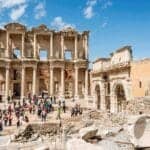
Ephesus is beautiful in a different way from Cappadocia or Pamukkale. Its beauty comes from scale, detail, and preservation. Marble streets, columns, theaters, temples, and civic buildings make it one of the easiest ancient cities in the Mediterranean to understand without needing a history degree.
The site is best visited in the morning, especially from May through October. There is limited shade, and the marble reflects heat. Comfortable walking shoes matter because the ancient paving stones can be uneven and slippery. If you’re traveling with children or older family members, plan a slower route with breaks rather than racing from one monument to the next.
The nearest airport is Izmir Adnan Menderes Airport. From the airport, Ephesus is usually about 50 to 70 minutes by road. Many travelers base themselves in Kuşadası for hotel comfort and sea views, while Selçuk is closer to the ruins and better for a quieter, history-focused stay.
How Ephesus fits into a Turkey route
Ephesus pairs naturally with Pamukkale. Many itineraries run Istanbul to Cappadocia, then fly or connect onward to western Turkey for Pamukkale and Ephesus before returning to Istanbul. Another smart option is to start in İzmir if international flights or regional connections make sense for your schedule. For more route comparisons, see our Perfect 7-Day Turkey Itinerary.
Is Antalya the Best Place in Turkey for Coastline and Relaxation?

For many travelers, yes. Antalya offers the easiest mix of Mediterranean coastline, old-town atmosphere, resort comfort, and nearby ancient sites. It works especially well at the end of a busy Turkey trip, after the walking-heavy days in Istanbul, Cappadocia, Pamukkale, and Ephesus.
The best base depends on your travel style. Kaleiçi, the old town, is ideal for travelers who want boutique hotels, restaurants, harbor views, and walkable evenings. Lara and Konyaaltı are better for beach hotels and larger resorts. If you want ruins and coastal scenery together, Side and Perge are popular day-trip options from Antalya, though travel times depend heavily on traffic and hotel location.
Antalya Airport is well connected domestically and seasonally with international flights. From Istanbul, flights take about 75 minutes. From Cappadocia to Antalya, flight options can be more limited depending on the season, so some itineraries require a connection or a longer road transfer via Konya. This is one reason Antalya is easier to include in 9- to 12-day trips than in rushed 6-day routes.
How Many Days Do You Need to See Turkey’s Most Beautiful Places?
Seven days is enough for a strong highlights trip if you accept a faster pace. Ten days is the sweet spot for most first-time travelers. Twelve to fifteen days allows a more comfortable route with Antalya, Pergamon, Troy, Gallipoli, or extra time in Istanbul.
- 5 days: Choose Istanbul plus Cappadocia, or Istanbul plus Ephesus and Pamukkale. Don’t try to include the whole country.
- 7 days: Istanbul, Cappadocia, Ephesus, and Pamukkale can work with domestic flights and careful timing.
- 9 to 10 days: Add Antalya or Pergamon without making the trip feel too compressed.
- 12 to 15 days: Best for travelers who want western Turkey, the Mediterranean coast, and Central Anatolia at a calmer pace.
If you’re still deciding on the season, our guide to the best month for a first Turkey trip gives a practical comparison of spring, summer, fall, and winter conditions.
What Is the Best Route for Beautiful Places in Turkey?
The most efficient route depends on your arrival city, flight times, and whether you prefer coast or culture. For many US-based travelers, Istanbul is the natural gateway. A classic first-time route looks like this:
- Days 1–2: Istanbul for imperial landmarks, markets, and Bosphorus views.
- Days 3–4: Cappadocia for valleys, cave hotels, and an optional balloon ride.
- Day 5: Travel toward Pamukkale, depending on available flights and connections.
- Day 6: Pamukkale and Hierapolis, then transfer toward Kuşadası or Selçuk.
- Day 7: Ephesus and nearby sites, then fly back to Istanbul or continue to Antalya.
- Days 8–10: Antalya for coastline, old town, and a slower finish.
The biggest route decision is whether to include Antalya. It’s beautiful, but it adds distance. If you only have one week, Antalya may force you to sacrifice breathing room. If you have 9 or more days, it becomes much easier to justify.
Practical Tips for Visiting Turkey’s Most Beautiful Places

Book domestic flights with realistic buffers
Turkey’s domestic flight network is useful, but airports still take time. Istanbul has two major airports: Istanbul Airport and Sabiha Gökçen Airport. They are on opposite sides of the city, and switching between them can take 90 minutes or more in traffic. Avoid same-day tight connections whenever possible.
Check what’s included in tour prices
Tour prices can look similar online but include very different things. Compare domestic flights, hotel category, airport transfers, guide service, entrance fees, meals, and balloon ride options. The cost surprise travelers mention most often is assuming balloons, museum entries, or private transfers are automatically included when they are not.
Travel in shoulder season if you can
April, May, September, and October are usually the best months for comfort. July and August bring heat, crowds, and higher coastal hotel demand. Winter can be excellent for lower crowds in Istanbul and Cappadocia, but balloon cancellations are more common due to weather.
Pack for different climates
Turkey is not one climate zone. Cappadocia mornings can be cold even when the coast is warm. Pamukkale and Ephesus can feel hot and exposed by late morning. Bring layers, sun protection, and shoes with grip for ancient stones and travertine areas.
Don’t overplan every evening
The best Turkey trips leave some open time. Travelers often underestimate how tiring full-day guided touring can be, especially when combined with early flights. A free evening in Istanbul, Cappadocia, or Antalya often becomes one of the most enjoyable parts of the trip.
For broader preparation, our Turkey Travel Tips article covers money, clothing, connectivity, safety, and common first-time questions.
Recommended Tours for Seeing Turkey’s Most Beautiful Places
If you want the major highlights arranged with hotels, transfers, guiding, and route logic handled in advance, these One Nation Travel itineraries are strong options:
- 9-Day Best of Turkey Tour: Istanbul, Cappadocia, Antalya, Pamukkale & Ephesus — from $1,670. A balanced choice for travelers who want the classic beautiful places plus the Mediterranean coast without stretching to two full weeks.
- 15-Day Best of Turkey Tour: Istanbul, Gallipoli, Troy, Pergamon, Ephesus, Pamukkale, Antalya & Cappadocia — from $2,240. Better for travelers who want a deeper historical route and a less rushed pace across western and central Turkey.
Prices are listed as starting rates and can vary by travel date, hotel category, room type, domestic flight availability, and optional experiences. Balloon rides, upgraded rooms, private guiding, and peak-season coastal hotels can change the final cost.
FAQ: Most Beautiful Places in Turkey
What is the single most beautiful place in Turkey?
For dramatic scenery, Cappadocia is often the most visually unique place in Turkey. For variety, Istanbul is the strongest single destination because it combines architecture, water views, markets, food, and layered history in one city.
Is 7 days enough to see Turkey’s highlights?
Yes, 7 days can cover Istanbul, Cappadocia, Pamukkale, and Ephesus with domestic flights and an efficient schedule. It will be active, not leisurely. If you want Antalya too, 9 or 10 days is much more comfortable.
When is the best time to visit Turkey for scenery?
April to June and September to October are usually best. Spring brings greener landscapes and pleasant temperatures, while fall offers warm light, fewer crowds than summer, and better walking weather at archaeological sites.
Are the most beautiful places in Turkey easy to visit without a car?
Yes, but you’ll need planning. Istanbul is best without a car. Cappadocia, Pamukkale, Ephesus, and Antalya can be visited with guided tours, transfers, domestic flights, and local drivers. Renting a car is optional, not required.
Should I choose Pamukkale or Antalya if I have limited time?
Choose Pamukkale if you want a unique natural landmark combined with ancient Hierapolis. Choose Antalya if you want coastline, old-town evenings, beach time, and a more relaxed finish. With 9 or more days, you can include both.
Final Thoughts: How to Experience Turkey at Its Best
The most beautiful places in Turkey are not just photo stops. Istanbul gives you skyline and soul, Cappadocia gives you landscapes that feel almost unreal, Pamukkale gives you a natural wonder tied to ancient spa culture, Ephesus gives you one of the world’s great archaeological walks, and Antalya gives you the Mediterranean finish many travelers need after a busy route.
The best trip is the one that matches your pace. If you want a highlights route, 7 to 10 days can work very well. If you want fewer early mornings, better hotel time, and room for the coast, plan closer to 12 or 15 days. For help choosing the right route, dates, hotels, and flight sequence, send your preferences through Plan My Trip, and the One Nation Travel team will help shape a Turkey itinerary that fits your style.