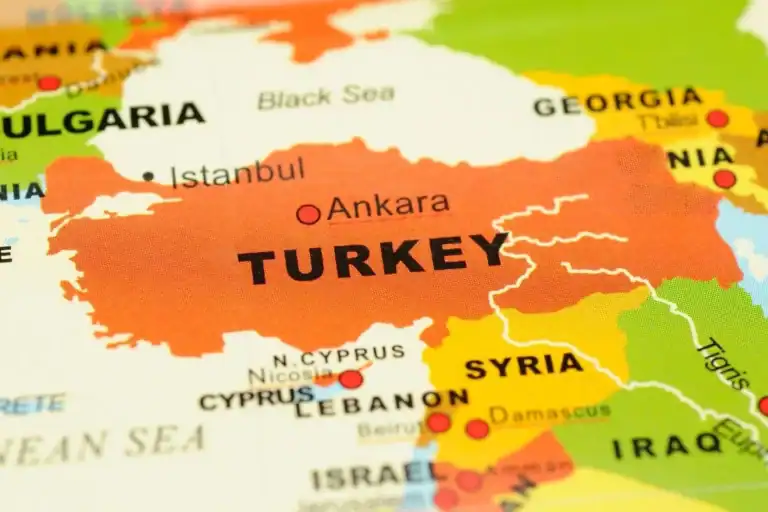

Here’s the short version: November is one of the better months to visit Turkey for cities, ruins, and landscapes—just not for reliable beach days. Expect cool rain and wind in Istanbul, near-freezing sunrise temperatures in Cappadocia, and mild afternoons around Ephesus, Pamukkale, and Antalya. Pack layers, a waterproof jacket, shoes with grip, and warm accessories for inland mornings.
This guide is for travelers deciding whether late-autumn Turkey suits their trip and how to plan around it. The core question is simple: can you accept changeable weather—a rainy Istanbul afternoon, a cold balloon morning, or a scrubbed flight—in exchange for smaller crowds, easier walking, and often better value? With a flexible route and the right clothing, those trade-offs are very manageable.
Key Takeaways
- Istanbul is usually cool, damp, and sometimes windy, so a hooded waterproof layer matters more than a heavy coat alone.
- Cappadocia can approach freezing before sunrise; thermal layers, gloves, a warm hat, and a windproof jacket are essential.
- Ephesus, Pamukkale, and Antalya are usually the most comfortable places for outdoor touring, though rain and cool evenings still happen.
- Allow at least two available mornings in Cappadocia if a hot-air balloon flight is a priority.
- Shorter daylight rewards early starts, tight transfer timing, and indoor backup plans.
- November often prices below peak season, but domestic flights, hotels, and popular activities should still be confirmed before you commit.
What Is the Weather Like in Turkey in November?
November is the handover from fall to winter, and conditions vary a lot by region. That matters when a single itinerary links Istanbul, Cappadocia, and the Aegean or Mediterranean coast. It’s entirely normal to see rain in Istanbul, frost in central Anatolia, and a mild coastal afternoon within the same week.
Seasonal patterns help with planning, but they aren’t a daily forecast. Check local conditions shortly before departure, especially when your plans include domestic flights, long road transfers, mountain roads, or weather-restricted outdoor activities.

Istanbul and the Marmara Region
Istanbul is generally cool and damp in November. Showers can arrive with little warning, and wind off the water often makes a moderate temperature feel colder. A hooded waterproof jacket, a warm mid-layer, and shoes with good grip beat relying on an umbrella in crowded lanes and on wet marble.
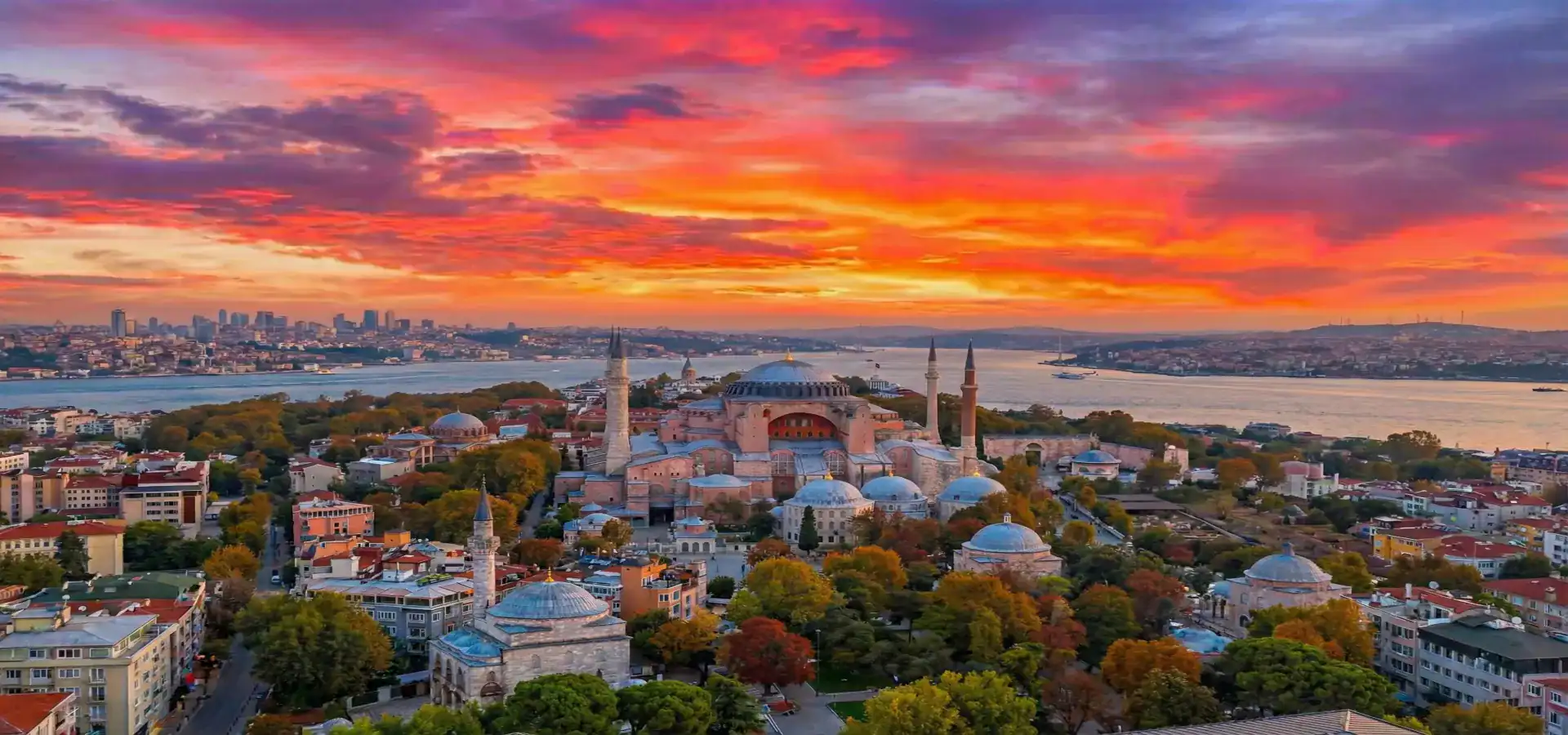
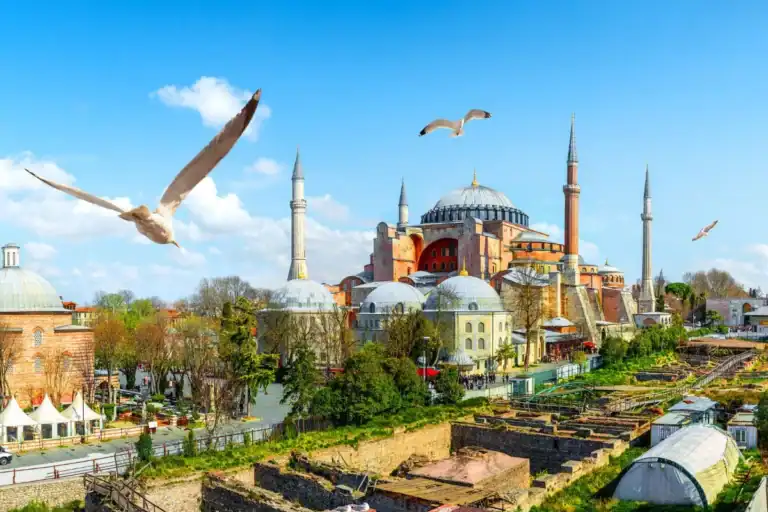
The weather doesn’t spoil the city. November suits pairing outdoor walks with covered or indoor visits like the Hagia Sophia Grand Mosque, Topkapi Palace Museum, the Grand Bazaar, and the Spice Bazaar. A Bosphorus cruise is still worthwhile—just add a layer if you plan to sit on deck.
Cappadocia and Central Anatolia
Cappadocia runs much colder than the coast, particularly around sunrise. Clear days can be crisp and bright; mornings may bring frost, and late November can occasionally bring snow. Temperatures usually climb by midday, then drop quickly after dark, so a full touring day can swing widely.
The region stays excellent for valleys, cave churches, and photography. Softer autumn light is especially flattering around Göreme National Park, Pasabag Monks Valley, and the Cappadocia Underground City. Hot-air balloons fly only when aviation authorities approve conditions, so wind, fog, low visibility, or snow can cancel a morning with little warning.
The Aegean and Mediterranean Coasts
Western and southern Turkey are often the most comfortable regions for November sightseeing. Around Ephesus, Pamukkale, and Antalya, afternoons can feel pleasantly mild, though mornings, evenings, and rainy days still call for a jacket.
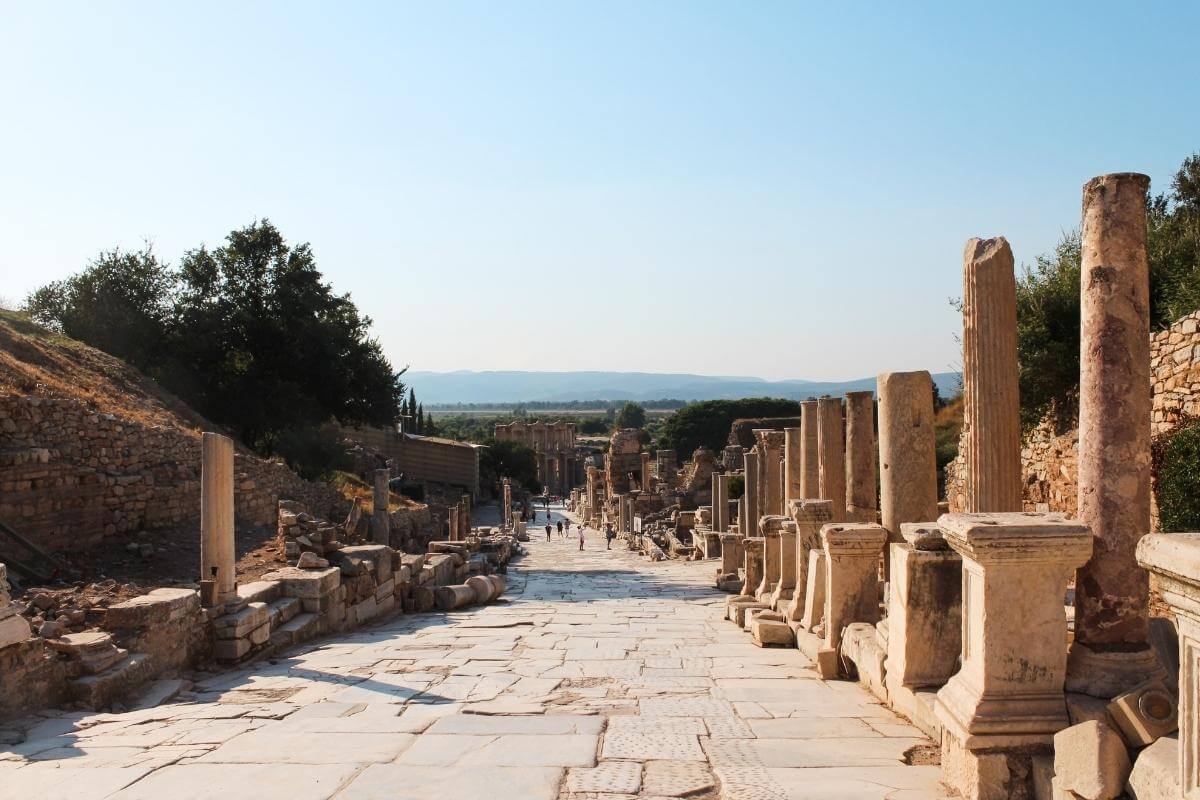
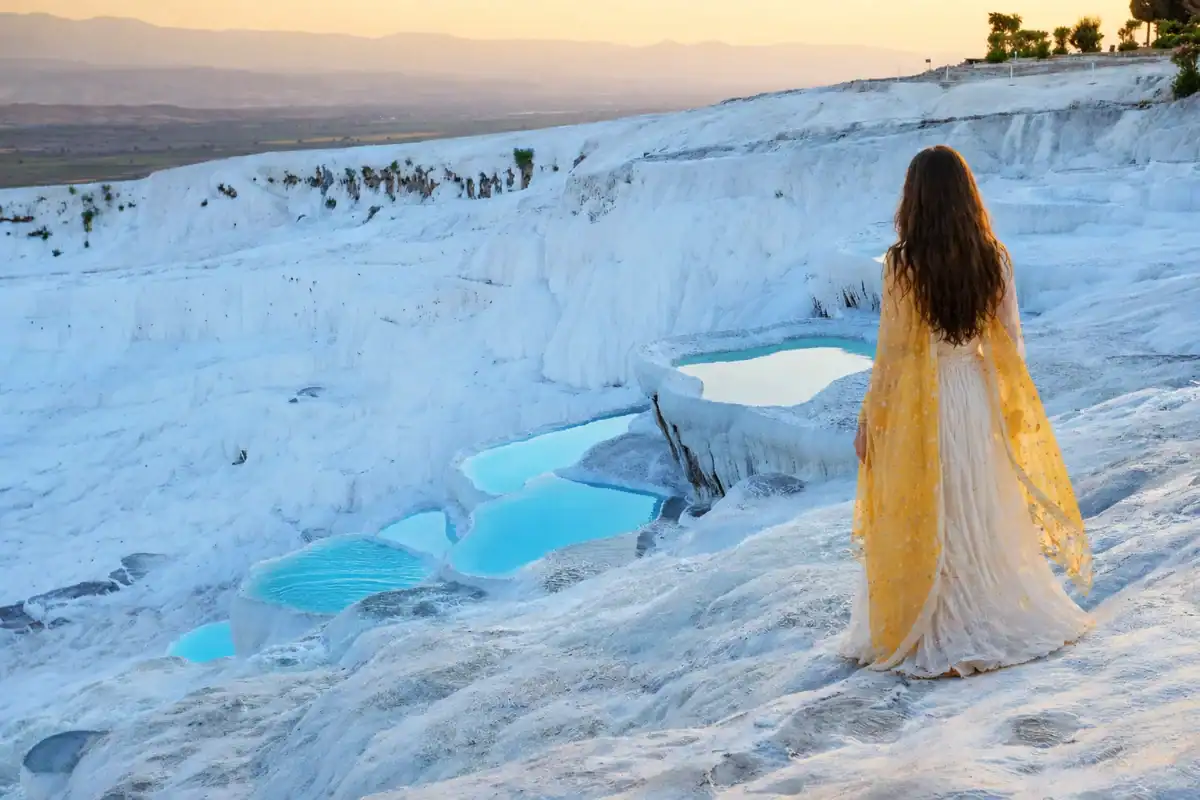
This is prime archaeology season. Ephesus’s open marble streets are far easier to walk without summer heat, and the white terraces of Pamukkale are usually quieter than in peak months. Treat the coast as a history, scenery, and food destination rather than a guaranteed swimming holiday.
What Should You Pack for Turkey in November?
Layering is the most reliable approach for a multi-stop November itinerary. A heavy winter coat feels like too much on a mild Antalya afternoon, but a thin city jacket won’t cut it at a pre-dawn Cappadocia pickup. Pack clothing you can add and shed through the day rather than dressing for one climate.
| Region | Typical November Feel | Most Useful Clothing |
|---|---|---|
| Istanbul and Marmara | Cool, damp, rainy, sometimes windy | Waterproof jacket, sweater, long pants, waterproof walking shoes |
| Cappadocia and Central Anatolia | Cold mornings, crisp days, possible frost or snow | Thermal layer, fleece, windproof outer layer, hat, gloves |
| Aegean Coast | Milder afternoons, cool starts, possible rain | Light jacket, long sleeves, comfortable walking shoes |
| Mediterranean Coast | Mild but changeable, cooler evenings | Layers, compact rain protection, closed-toe shoes |
A Practical November Packing List
- Hooded waterproof jacket: More useful than an umbrella when rain and waterfront wind arrive together.
- Two or three warm mid-layers: Sweaters or fleeces let you adjust between chilly mornings and warmer afternoons.
- Walking shoes with traction: For Istanbul’s hills, wet paving, uneven ground at Ephesus, and the paths around Pamukkale.
- Hat, scarf, and gloves: Essential for Cappadocia balloon mornings and welcome on cool inland evenings.
- Small day bag: Keep rain gear, water, snacks, and shed layers within reach.
- Plug adapter and power bank: Turkey uses Type C and Type F plugs, and full touring days drain a phone fast with photos, maps, and tickets.
Practical tip: If you’re flying onward to Cappadocia, keep your warm layer, hat, and gloves in your carry-on. A very early transfer can feel far colder than the afternoon forecast, and a checked-bag delay is never convenient when a sunrise activity is planned.
Is November a Good Time to Visit Turkey?
For culture-focused travel, November is an excellent choice. Historic sites are quieter, cities are easier to walk, and cooler weather encourages a relaxed pace through museums, cafés, markets, and restaurants. It especially suits travelers who value landscapes, archaeology, food, and photography over guaranteed sunshine. If you’re flying from the US East Coast, our 8 day turkey tour from Washington DC fits this style of trip well.
The trade-off is weather certainty. Rain, wind, and shorter days come with the season. If your trip depends on regular beach time, warm-sea swimming, or one locked-in balloon morning, late spring or early fall is a safer fit. For broader timing, see the best month for a first Turkey trip and our Turkey weather in October guide.
Why November Works Well for Historic Sites
Cooler air makes a real difference at open-air locations. There’s little shade when you walk Ephesus between the Library of Celsus, the Great Theatre of Ephesus, and the surrounding streets. Pamukkale can be windy but is far easier to explore without summer heat.
Antalya makes a pleasant coastal finish. Wander through Kaleiçi, then add nearby archaeology such as Perge Ancient City and the Aspendos Theater. You’ll still want layers, but touring is far less tiring than in the hottest months.
How to Plan a November Route Without Rushing
The best November routes respect shorter daylight and regional weather gaps. A trip linking Istanbul, Cappadocia, Pamukkale, Ephesus, and Antalya can be very rewarding, but it shouldn’t turn every other day into a long transfer. Where the itinerary allows, domestic flights preserve daylight for sightseeing rather than the road. Prefer Petra to Antalya? Our 12 day wonders of turkey and jordan tour continues to Jordan after Ephesus.
For most first-timers, Istanbul is the natural start for landmarks, museums, food neighborhoods, and the Bosphorus. Cappadocia deserves at least two nights if ballooning matters. The Aegean leg adds classical history and scenery, and Antalya offers an easier coastal finish with an old town and Roman-era sites. If you’re weighing days, the guide to 5-, 7-, and 10-day Turkey trips lays out realistic pace and cost factors. Prefer a set route? Our 7 day turkey tour packages run year-round, including quieter November departures.
Build a Real Buffer for Cappadocia Balloon Flights
Never treat a November balloon flight as guaranteed. Book at least two available mornings in Cappadocia when it’s a high priority. That won’t force good weather, but it gives your coordinator and the local balloon provider a real chance to move a canceled booking to the next flyable morning.
A common mistake is scheduling an onward flight or long transfer right after your only balloon morning. If that morning is scrubbed, there’s no recovery. Decide before you book whether ballooning is a welcome bonus or a must-have, then build the itinerary around that answer.
Use Shorter Days Deliberately
Start exposed outdoor sites earlier than you would in summer, skip long midday lunches on touring days, and save museums, bazaars, and cafés for the late afternoon. When rain is forecast in Istanbul, reorder the day rather than write it off—see indoor landmarks first, then use a drier window for the Byzantine Hippodrome, a neighborhood walk, or the waterfront. For pacing by trip length, compare the 7-day Turkey itinerary with the 10-day Turkey itinerary.
Choose the Right November Trip Style
Istanbul, Cappadocia, Ephesus, and Pamukkale: Best for a First Visit
This classic loop gives a broad introduction: imperial landmarks, Cappadocia’s volcanic valleys, and western Anatolia’s classical sites. It suits active travelers who are fine with several hotel changes and full sightseeing days. Before committing, confirm domestic flight timing, baggage allowances, airport transfers, and exactly how a weather-canceled balloon morning is rescheduled.
Istanbul and the Aegean: Best for Travelers Who Dislike Cold Mornings
If pre-dawn central Anatolia temperatures don’t appeal, spend more time in Istanbul, Selçuk, Ephesus, Pamukkale, and Antalya. It’s a sensible pick for food, museums, and archaeology at a less weather-sensitive pace. Rain gear is still needed, but daytime conditions are usually milder than in Cappadocia.
A Longer Escorted Route: Best for Seeing More Without Compressing the Schedule
A longer route is genuinely useful in November because it leaves room for weather changes, flight timing, and rest between travel days. It suits travelers adding Ankara, Gallipoli, Troy, or Antalya rather than only the headline stops. Review day-by-day routing, hotel category, included transportation, admissions, optional activities, and how much independent time you’ll have before booking.
Private Arrangements: Best for Fixed Dates and Specific Priorities
Private planning works well for families, multigenerational groups, photographers, and travelers with tight windows. The practical advantage is placing balloon-buffer mornings, gentler walking days, and preferred museum visits in the right order. Our overview of group tours versus private tours in Turkey clarifies the trade-offs.
When comparing guided options, treat listed prices as starting points and verify the departure date, hotel standard, transportation, domestic flights where applicable, site admissions, optional experiences, single-room arrangements, and what happens if weather affects an activity. As reference points, One Nation Travel’s guided packages range from the 6-Day Best of Turkey Tour from Istanbul (from USD 1,150) up to the 15-Day Grand Turkey Tour (from USD 2,849), so there’s room to match a slower November pace. If you need to adjust dates later, note that changes or cancellations require notice at least 5 days before the tour starts; non-refundable flight and bus ticket costs are deducted from the paid balance, and with less than 5 days’ notice or a no-show, the full payment is non-refundable.
Choose your next step
Recommended Turkey tours
These verified options are the closest available matches for this article’s destination, route intent, and trip length.
15-Day Grand Turkey Tour
A 15 days Cultural & Heritage Tour route covering Turkey.
View tour details →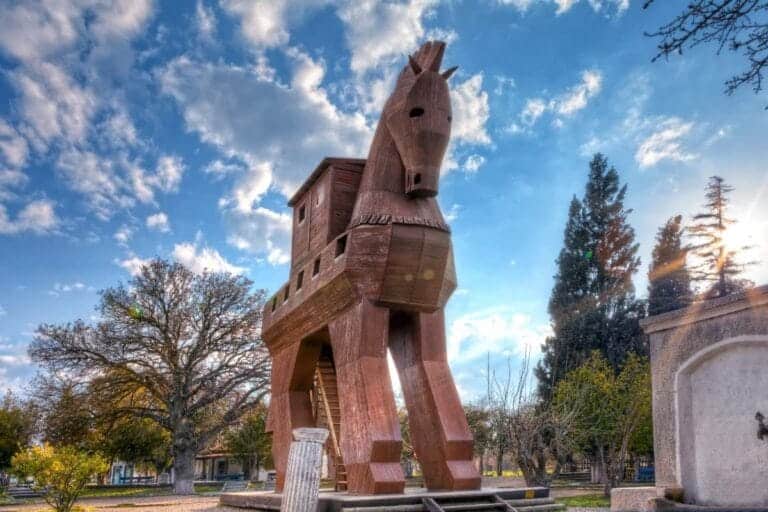
13-Day Turkey Highlights Tour
A 13 days Cultural & Heritage Tour route covering Turkey.
View tour details →
6-Day Best of Turkey Tour from Istanbul
A 6 days Cultural & Heritage Tour route covering Turkey, Istanbul.
View tour details →
10-Day Turkey & Egypt Tour Package
A 10 days Cultural & Heritage Tour route covering Turkey, Egypt.
View tour details →Common Questions About Turkey in November
Can you take a hot-air balloon ride in Cappadocia in November?
Yes, flights operate in November when aviation conditions allow. Wind, fog, snow, and poor visibility can cause cancellations, so plan at least two mornings in Cappadocia if the experience matters to you.
Can you swim in Turkey in November?
Sea swimming isn’t dependable. The Mediterranean coast can have occasional mild days, but the month is better for sightseeing than beach time. Thermal bathing near Pamukkale is a separate experience, and current access rules should be checked before visiting.
Does it snow in Turkey in November?
Snow is possible in Cappadocia, central Anatolia, and eastern regions, especially later in the month or at higher elevations. Istanbul and the coasts are more likely to see rain than snow.
What should I wear for mosque visits?
Cover shoulders and knees, and carry a scarf if needed. Removable warm layers are ideal because they keep you comfortable outdoors while meeting entry expectations indoors.
Is November cheaper for a Turkey trip?
November is often lower-demand than early fall, which can improve value in some destinations. Your final cost still depends on the route, hotel category, domestic flight availability, room type, included services, and popular activities like balloon flights.
Final Advice for Visiting Turkey in November
Turkey in November rewards travelers who pack for changing weather and keep a little slack in the schedule. Prioritize waterproof footwear for Istanbul, genuinely warm layers for Cappadocia mornings, and early starts at outdoor sites. Approach the month as a season for culture, food, landscapes, and quieter historic places—not guaranteed beach weather—and it can be one of the most satisfying times to travel.
If you’d like help matching your dates, travel style, and weather priorities to a practical route, share your plans through the Plan My Trip page. Our team can coordinate realistic transfer timing, sensible sightseeing days, and extra Cappadocia flexibility when a balloon flight is high on your list.