
Turkey’s surprises go well beyond its famous monuments. Tulips reached Western Europe through Ottoman connections, Turkish coffee refers to a preparation method rather than locally grown beans, and a beach-and-mountains vacation can require two different wardrobes. These 15 surprising facts about Turkey offer more than conversation starters: they explain what you’ll eat, how you’ll get around, and why a few small planning choices can make your trip easier.
For American travelers, the most useful approach is to treat Turkey as a country of distinct regions—not one climate, one cuisine, or one sightseeing circuit. Here’s what to know before choosing your route.
📋 Quick Facts
| Best Time to Visit | April–May and September–October for many sightseeing routes; coastal and mountain conditions vary. |
| Time Needed | 7–10 days for a selective first trip; about two weeks for a broader regional route. |
| Difficulty | Moderate: long distances, uneven historic sites, hills, and summer heat require planning. |
| Must-Bring | Supportive walking shoes, layers, sun protection, a plug adapter, and modest clothing for mosque visits. |
1. Turkey spans two continents—but crossing between them can be an everyday commute
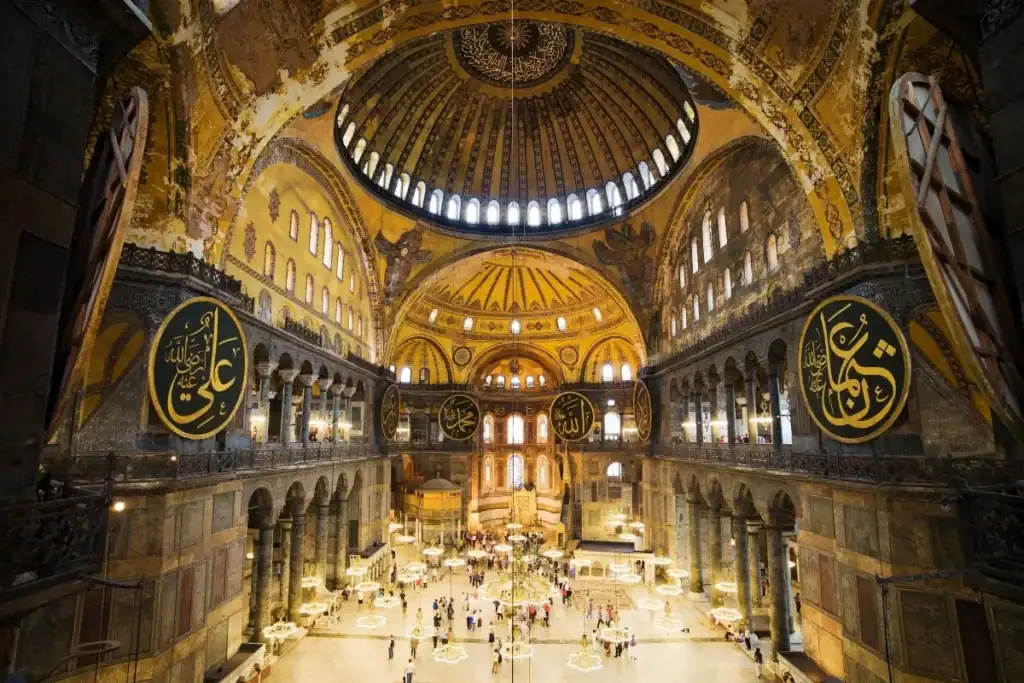
Most of Turkey lies in Asia, while a smaller portion, Eastern Thrace, is in Europe. Istanbul straddles that divide, and passenger ferries carry commuters between its European and Asian shores.
For visitors, a scheduled ferry is both transportation and a chance to see the waterfront. Don’t assume it follows a sightseeing itinerary, though: check the destination pier, return service, and payment method. A cross-continental outing is easy to arrange; returning to the wrong neighborhood can add a lengthy transfer.
2. “Türkiye” and “Turkey” refer to the same country
The United Nations adopted the name Türkiye at the country’s request in 2022. It’s the Turkish name for the country, not a newly created destination or a separate region. “Turkey” remains widely used in everyday American English and travel searches.
You’ll encounter both spellings on official documents, booking platforms, and airline materials. When checking travel requirements, focus on the issuing authority and the rules for your passport rather than treating the spelling as a sign that a website is official.
3. The Ottoman world helped make tulips famous in Europe
Tulips are strongly associated with the Netherlands, but their European popularity owes much to their introduction through Ottoman connections during the 16th century. The flowers have deeper roots across parts of Central and Western Asia; they didn’t originate in Dutch flower fields.
Tulip motifs appear on Ottoman ceramics, textiles, and architectural decoration. Spring visitors may also see extensive municipal plantings. April is a reasonable time to look for displays, but flowering dates depend on the weather, so don’t build a whole travel day around a fixed peak-bloom prediction.
4. Turkish coffee describes a method, not where the beans grow
Turkish coffee is prepared by heating finely ground coffee with water in a small pot called a cezve. The grounds stay in the cup, giving the drink its distinctive texture. Turkey isn’t a major commercial coffee-growing country.
Order your sweetness before preparation: sade means unsweetened, az şekerli lightly sweetened, and orta medium sweet. Let the sediment settle and stop before reaching the thick layer at the bottom. The accompanying water is for drinking separately, not for diluting the coffee.
5. Tea is the more constant companion
Coffee gets much of the international attention, but çay—tea—is an everyday fixture in homes, workplaces, shops, and cafés. Turkey also grows tea commercially along its humid eastern Black Sea coast, especially around Rize.
Black tea usually arrives in a small, narrow-waisted glass, with sugar offered separately. Milk isn’t the standard accompaniment. If you prefer a lighter brew, ask for açık çay. Accepting tea can be a pleasant social moment, but it doesn’t obligate you to buy something in a shop.
6. A Turkish breakfast can be a meal to plan around
The Turkish word for breakfast, kahvaltı, literally relates to eating “before coffee.” Today, an expansive breakfast may include cheese, olives, tomatoes, cucumbers, eggs, bread, honey, and preserves, with significant regional variation.
A serpme kahvaltı brings an assortment of shared dishes to the table. It suits a leisurely morning better than a tight sightseeing schedule. Before ordering, check whether the price is per person, whether a minimum number of diners applies, and whether hot dishes or extra tea cost more.
7. Turkish cuisine changes substantially from region to region
Kebabs represent only part of the food landscape. The Aegean coast is known for olive-oil vegetable dishes and herbs; the Black Sea region has strong traditions involving anchovies and corn; southeastern cooking includes distinctive kebabs, bulgur dishes, and pistachio desserts.
For a more varied food trip, ask what’s regional rather than repeatedly ordering familiar dishes. Travelers avoiding meat should still ask about broth and fillings: a vegetable-based soup or rice dish isn’t automatically vegetarian. Food allergies require clear communication, especially with mixed pastries and sauces.
8. Turkey borders four different seas
Turkey has coastlines on the Black Sea, Sea of Marmara, Aegean Sea, and Mediterranean Sea. Those shores don’t offer interchangeable vacations. The Black Sea coast is generally greener and wetter, while the Aegean and Mediterranean are more closely associated with summer beach travel.
Choose a seaside stop by the actual beach, season, and hotel location—not simply by the word “coastal.” Some waterfront accommodations overlook rocky shores or marinas rather than swimmable beaches. Outside summer, ask whether pools, beach facilities, and seasonal boat trips will be operating.
9. Snow belongs in the Turkish travel picture, too
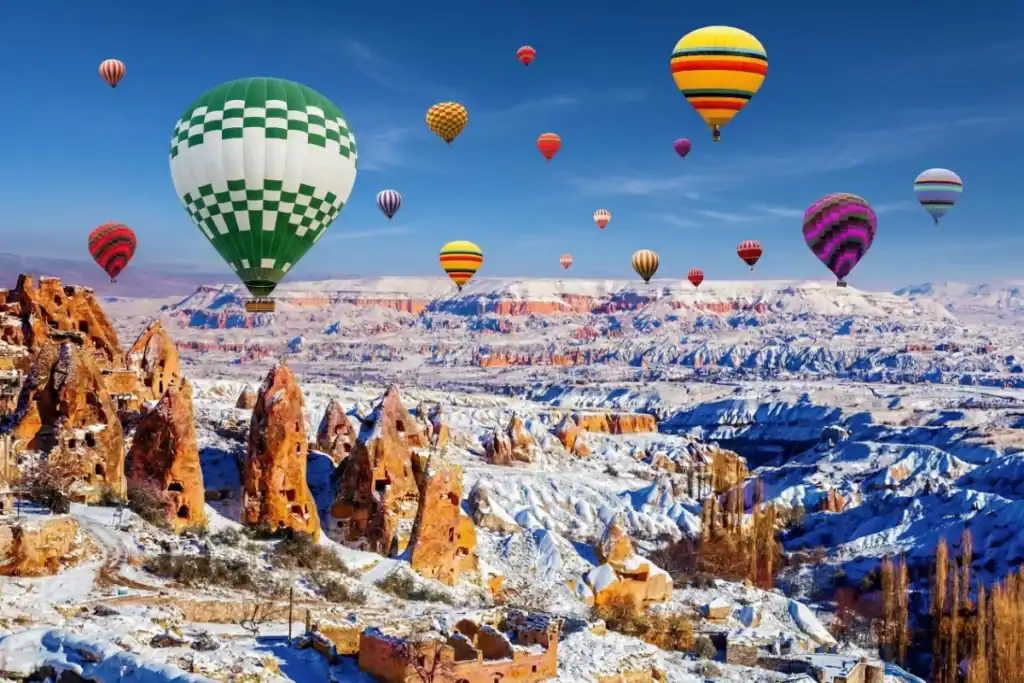
Turkey has high mountains, ski resorts, and an inland plateau with cold winters. Coastal sunshine doesn’t tell you what conditions will be like several hours inland. Spring and fall trips can also combine warm afternoons with sharply cooler mornings.
Pack for each overnight destination rather than checking a single national weather forecast. Our guide to the best month for a first Turkey trip explains how season and itinerary work together. Layers are especially useful when your plans include early departures and exposed archaeological sites.
Pro Tip
Check forecast temperatures for both your daytime stops and overnight bases. A lightweight outer layer is easier to carry than buying warm clothing after a cold early pickup. On domestic flights, check your specific baggage allowance before packing for multiple climates.
10. Göbeklitepe predates Stonehenge by thousands of years
Near Şanlıurfa, Göbeklitepe contains monumental structures dating to roughly 9600 BCE. Its carved stone pillars have changed discussions about early communities, cooperation, and ritual activity.
Calling it simply the “world’s first temple” makes a complex archaeological story sound more settled than it is; interpretation and research continue. For travelers, the practical point is geographic: this southeastern site usually requires a dedicated extension, not a quick detour from the western sightseeing circuit.
11. Troy is a real archaeological site—not just a literary setting
The Ancient City of Troy preserves multiple settlement layers built over thousands of years. Archaeology confirms a long history of occupation, but it doesn’t establish every event or character described in Homer’s epics.
Expect foundations, defensive walls, and a layered site that benefits from explanation—not an intact city from a movie. A guide or a museum visit can make the chronology much easier to understand. Go for the archaeological story rather than the expectation of dramatic standing monuments.
12. Turkish uses a Latin-based alphabet, with a few important differences
Turkey adopted its modern Latin-based alphabet in 1928. Several letters may be unfamiliar to American visitors: ş sounds like “sh,” ç like “ch,” and the dotless ı differs from i.
Exact spelling helps when searching maps, stations, and hotel addresses. Save your accommodation’s address as text or a screenshot rather than relying on pronunciation alone. Downloaded maps are also useful when mobile reception drops or your international data plan hasn’t started working.
13. Historic hammams are bathing spaces, not necessarily quiet spas
A traditional hammam experience generally centers on warmth, washing, and a scrub, sometimes followed by a foam treatment. That’s different from booking a private massage room at a hotel spa.
Before reserving, check the bathing arrangements, attendant policy, clothing expectations, and exactly which treatments are included. Some establishments have separate sections; others use scheduled sessions. Allow time afterward rather than rushing straight to an airport transfer. If heat exposure is a medical concern, seek appropriate advice before booking.
14. Cats are part of everyday street life—but they aren’t all pets
In many Turkish towns and neighborhoods, residents leave food and water for community cats. You may see animals resting beside shops, cafés, or apartment entrances. Their familiarity with people can make them seem like household pets.
Admire them without assuming they’re vaccinated or comfortable being handled. Avoid picking up unfamiliar animals, supervise children, and wash your hands after contact. Any bite or scratch deserves prompt medical advice, including assessment for rabies exposure; apparent friendliness doesn’t remove that risk.
15. Tourism prices in USD don’t mean Turkey uses the USD
Turkey’s currency is the Turkish lira. Some tourism businesses quote in USD or U.S. dollars, but everyday purchases are generally priced in lira. Confirm the payment currency and exchange-rate basis when a quotation differs from the amount you’ll actually pay.
At card terminals and ATMs, choosing lira rather than a conversion into dollars often avoids the provider’s added exchange markup. Your bank may still charge fees. Carry some local cash for smaller purchases, and don’t assume every market stall, taxi, or rural stop accepts cards.
Turn the facts into a better first trip
The best route leaves room to notice these differences. For many first-time visitors, seven to ten days works better with a few well-chosen bases than with a new hotel every night. Our guide to how many days you need in Turkey can help you decide what to leave for another visit.
For an established sightseeing option, compare the 10-Day Best of Turkey tour with your interests and preferred pace. Check the current itinerary, transfer arrangements, and inclusions before booking.
One Nation Travel is a TÜRSAB Class A travel agency (A-6073) handling trip planning, booking, support, and coordination, with listed services delivered by experienced local guides, drivers, and selected providers. Share your dates and priorities through our trip-planning form to help shape a route around what interests you most.