

Athens is compact enough for a rewarding four-day visit, but it deserves more than a rushed Acropolis stop and a sunset dinner. The best plan combines the classical center, the city’s walkable neighborhoods, one museum day, and a change of scenery beyond the main ruins. With the right order, you can see the major landmarks without spending half the trip in lines or crossing the city repeatedly.
This itinerary is designed for first-time American travelers who want a practical pace: full sightseeing days, time for unplanned café stops, and evenings that feel like part of the trip rather than an afterthought. It also works well as the Greece portion of a wider Mediterranean route; travelers pairing the two countries can consider the 10-Day Highlights of Turkey & Greece Tour: From Istanbul to Athens.
📋 Quick Facts
| Best Time to Visit | April–May and late September–October for milder weather and lighter crowds |
| Time Needed | Four full days for Athens; add one or two days for Delphi, Nafplio, or the islands |
| Difficulty | Moderate: central Athens is walkable, but the Acropolis and several neighborhoods involve hills, uneven paving, and steps |
| Must-Bring | Comfortable walking shoes, sun protection, a refillable water bottle, and a light layer for evenings |
Before you begin: where to stay and how to organize Athens
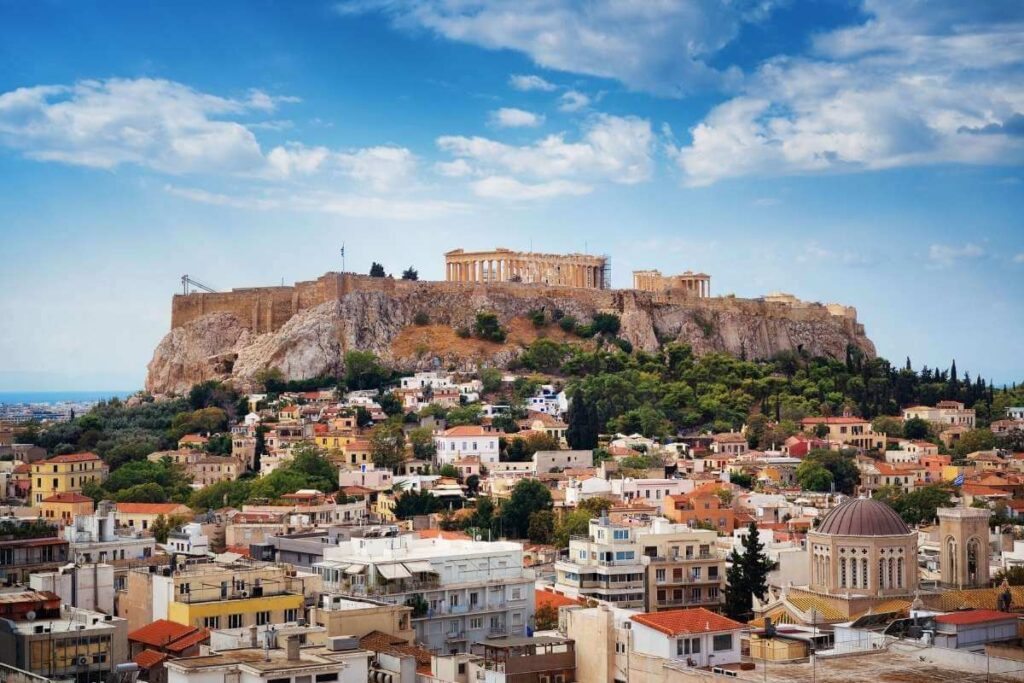
For a four-day stay, choose a hotel in or near Plaka, Monastiraki, Syntagma, Koukaki, or the Acropolis Museum area. These neighborhoods put many major sights within walking distance and reduce dependence on taxis. Plaka is central and atmospheric; Koukaki is often quieter at night; Syntagma is useful for airport transport and city connections; and Monastiraki suits travelers who want restaurants, markets, and metro access close by.
Arriving travelers generally reach central Athens from Athens International Airport by metro, bus, taxi, or pre-arranged transfer. The metro is usually the most straightforward choice for travelers staying near Syntagma or Monastiraki, while a transfer can make sense after a long international flight or for families with several bags. Confirm your hotel’s street access before booking: parts of Plaka have narrow lanes where vehicles may stop a short walk away.
Start each outdoor sightseeing day early, especially from June through August. Athens can be intensely hot by midday, and the Acropolis receives little shade. Reserve indoor museums, long lunches, or hotel rest time for the hottest hours.
Pro Tip
Plan the Acropolis for your first morning, not your final afternoon. You’ll have more energy for its uphill paths, better light for photographs, and more flexibility if heat, wind, or a large cruise-ship crowd changes the pace of the day.
Day 1: The Acropolis, Acropolis Museum, and Plaka

Make the Acropolis the first priority. Arrive around opening time, enter with pre-booked tickets where available, and give yourself at least two hours. The site is not just the Parthenon: its slopes, gates, temples, and elevated views explain why this limestone hill became the symbolic center of ancient Athens. Wear shoes with grip, as polished stone can be slippery even in dry weather.
After descending, walk to the Acropolis Museum. The museum provides the context that the hill itself cannot: original sculptures, architectural fragments, excavated homes below the building, and clear explanations of how the Acropolis changed across the centuries. It is especially helpful for travelers who don’t have a guide at the site.
Have lunch in Koukaki or near the museum, then spend the late afternoon walking through Plaka. Rather than treating it as a shopping zone only, use it as a route between landmarks. Wander uphill toward Anafiotika, a small whitewashed quarter below the Acropolis, then continue toward the Roman Agora area and Monastiraki. Allow time for a coffee stop; this is a good day to keep the schedule loose after the morning’s archaeological focus.
For dinner, stay around Plaka or walk toward Monastiraki for rooftop views. Choose a restaurant based on the menu and atmosphere rather than the most aggressive host on the street. A simple meal of grilled fish, seasonal vegetables, Greek salad, and local wine is often a better choice than a long menu designed solely for passing visitors.
Day 2: Ancient Agora, Monastiraki, and the city’s central squares
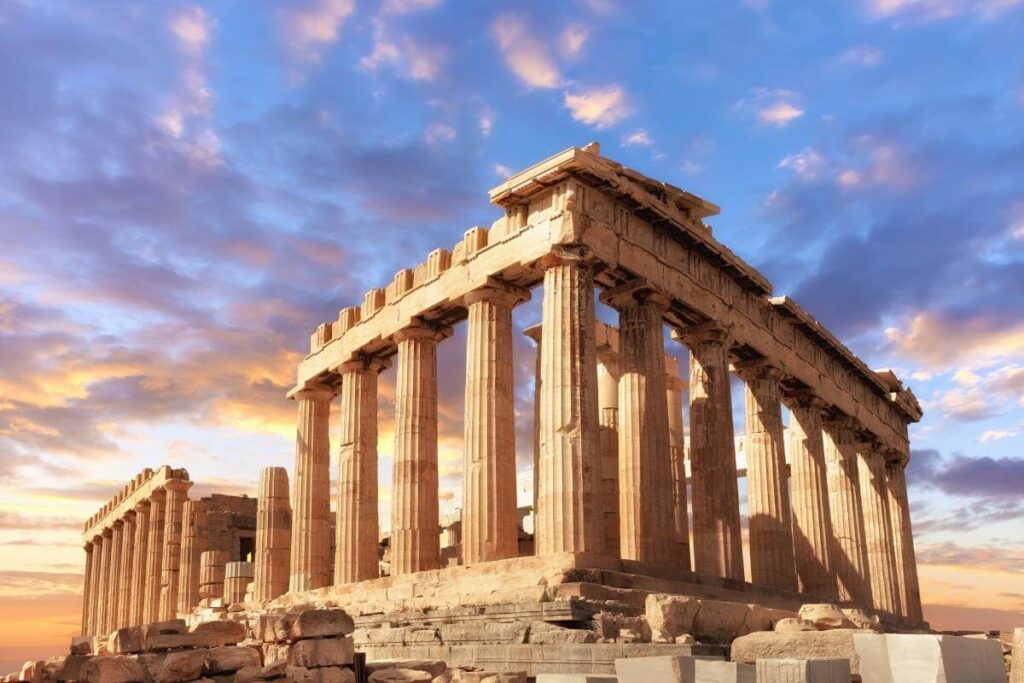
Begin at the Ancient Agora, the civic and commercial heart of classical Athens. This is where Athenians gathered for political debate, legal business, religion, and trade. The Temple of Hephaestus is one of the site’s most intact structures, and the Museum of the Ancient Agora offers a manageable introduction before you explore the grounds.
From there, walk through Monastiraki Square and browse the streets around it. The nearby flea-market district is worth a look, though quality and prices vary widely. This is a better place for small souvenirs, prints, books, and everyday objects than for major purchases. If an item matters to you, ask about its origin and compare prices at more than one shop.
Continue toward the Roman Agora and the Tower of the Winds, then follow Ermou Street toward Syntagma Square. The route gives you a clear sense of how ancient sites sit alongside modern Athens. At Syntagma, see the Parliament building and, if the timing works, the changing of the guard at the Tomb of the Unknown Soldier. The larger Sunday ceremony is more elaborate, but regular changes are easier to fit into a sightseeing day.
In the late afternoon, choose one of two directions. Travelers interested in city life can walk through Kolonaki, a polished neighborhood of cafés, galleries, and shops below Lycabettus Hill. Travelers who prefer a less formal evening can return to Psyrri, where small restaurants and bars stay active after dark. Athens rewards walking, but use a map app and avoid committing to long uphill routes during the day’s hottest period.
Day 3: Museum time, the Panathenaic Stadium, and a sunset viewpoint
Day three is the right time to slow down and add depth. Start at the National Archaeological Museum if ancient sculpture, pottery, jewelry, and material culture interest you. It is one of Greece’s most important collections, and it needs at least two to three hours to feel worthwhile. Don’t try to read every label; choose a few galleries that interest you and give them proper attention.
If you would rather stay near the historic core, use the morning for the Museum of Cycladic Art, the Benaki Museum, or more time at the Acropolis Museum. The right choice depends on your interests: Cycladic art is focused and elegant, Benaki covers Greek culture across a much broader span, and the Acropolis Museum is best for travelers who want to deepen what they saw on day one.
After lunch, visit the Panathenaic Stadium, rebuilt in marble for the first modern Olympic Games in 1896. Its scale is easy to appreciate even if you are not a sports fan. From there, walk through the National Garden toward Syntagma, or take a break before your evening plan.
For sunset, Lycabettus Hill offers a wide panorama over Athens and out toward the coast. It is a worthwhile choice if you are comfortable with a steep walk or plan to use the funicular. A lower-effort alternative is Philopappos Hill, which has Acropolis views and generally feels more relaxed. Arrive before sunset rather than at the last minute, particularly in peak season.
Day 4: Choose a local coastal day or an easy excursion beyond Athens
Your fourth day should depend on the kind of trip you want. Athens itself can fill all four days, but a final change of setting prevents the itinerary from feeling like a continuous museum visit.
Option 1: The Athenian Riviera and Cape Sounion
For sea views and a slower day, head south along the coast. Glyfada and Vouliagmeni are practical stops for a waterfront lunch, a walk, or a swim in warm weather. Continue to Cape Sounion in the late afternoon for the Temple of Poseidon and a sunset over the Aegean. This is the strongest option for travelers visiting between late spring and early fall, when daylight is long and the coast is part of the appeal.
Option 2: Delphi for ancient landscape and mythology
Delphi is a long but rewarding day trip for travelers who want to see one of Greece’s most important ancient sanctuaries. Expect a full day of road travel, mountain scenery, and uphill walking around the archaeological site. It is better suited to travelers who are comfortable with an early start and a structured day than those who want a relaxed final afternoon.
If Delphi is a priority, it may be worth extending your trip rather than compressing it into a rushed day. The 5-Day Athens & Delphi Discovery Tour is a better fit for travelers who want both destinations without sacrificing time in Athens.
Option 3: Nafplio and the Peloponnese
Nafplio is an appealing choice for travelers who want a smaller historic town, coastal scenery, and a different rhythm after Athens. It is best enjoyed with an overnight stay, particularly if you also plan to see Epidaurus or Mycenae. The 6-Day Athens and Nafplio Escape Tour gives this part of Greece the time it needs.
What four days in Athens typically costs
Costs vary sharply by travel season, hotel location, dining choices, and how many paid sites or organized excursions you add. Summer and holiday periods command higher hotel prices, while spring and fall often offer the best balance of weather and value. The ranges below are planning estimates per person, excluding international flights.
| Travel Style | Estimated 4-Day Budget | Usually Included | Usually Costs Extra |
|---|---|---|---|
| Budget | $550–$900 | Simple lodging, casual meals, metro travel, selected entry tickets | Airport transfers, guided tours, rooftop dining, day trips |
| Mid-range | $950–$1,600 | Well-located hotel, a mix of restaurant meals, museum and site admissions, local transport | Private guides, premium rooms, Cape Sounion or Delphi excursions |
| Private or premium | $1,800+ | Higher-category hotel, private transfers, guided touring, upgraded dining options | International airfare, major shopping, specialty experiences |
A packaged itinerary can simplify the moving parts, especially for travelers who prefer confirmed lodging, transfers, and sightseeing coordination. The 4-Day Athens City Break is suited to visitors looking for a concise Athens-focused stay rather than planning each component separately.
Small details that make Athens easier
Book timed entry where possible. The Acropolis is the clearest example, but popular museums and organized day trips can also sell out during high season. Verify current opening hours close to travel dates because schedules can change for public holidays, weather, or special events.
Use taxis selectively. Central Athens is walkable, and the metro is useful, but a taxi or arranged transfer can save time after dark, with luggage, or when returning from a long excursion. For taxis, use a reputable booking app or ask your hotel to arrange one.
Don’t plan every dinner near the Acropolis. The view is memorable once or twice, but neighborhoods such as Koukaki, Pangrati, Psyrri, and Kolonaki give you more variety. Make reservations for a special Friday or Saturday dinner in busy months.
Leave space for the unexpected. A transit delay, a hot afternoon, or a museum you enjoy more than planned can change the day. Athens is more enjoyable when the itinerary has priorities rather than a rigid list of hourly obligations.
How Athens fits into a wider Greece or Mediterranean trip
Four days is ideal if Athens is the main destination or the cultural starting point for a longer Greece itinerary. Add Delphi for archaeological context, Nafplio for the Peloponnese, or an island extension for a different landscape. Travelers coming from Turkey often find that the contrast is part of the appeal: Istanbul’s imperial scale and waterfront life lead naturally into Athens’ classical sites and compact central neighborhoods. For planning that earlier stop, see our Istanbul Travel Guide 2026.
For a broader look at available routes, accommodations, and planning options, explore Greece tours. A well-paced itinerary leaves room for the city itself while making the logistics of a multi-stop trip far less complicated.
If you’d like help matching hotel location, touring pace, and onward travel to your dates, plan your Greece trip with One Nation Travel.
Frequently asked questions about spending four days in Athens
Is four days too long in Athens?
No. Four days allows you to see the Acropolis and major museums without rushing, explore Plaka and central neighborhoods, and take a coastal or archaeological excursion. Travelers focused only on the headline sights can see the essentials in two days, but four days gives the city a more balanced pace.
What is the best month for Athens?
April, May, late September, and October are often the most comfortable months for walking and outdoor sites. July and August have long daylight hours but can be very hot, while winter brings fewer visitors and cooler, sometimes rainy weather.
Do you need a car in Athens?
Generally, no. A car is more hassle than help in the central city because of traffic, limited parking, and narrow streets. Use walking, metro, taxis, or arranged transfers in Athens. A car becomes more useful only for a self-driven Peloponnese itinerary or other regional travel.
Should you stay near the Acropolis?
Staying near the Acropolis, Koukaki, Plaka, or Monastiraki is practical for a first visit because you can reach many landmarks on foot. Syntagma is another strong option if airport connections and metro access matter most.
Choose your next step
Recommended Athens tours
These bookable options are the strongest verified matches for this guide. Compare the pace, focus, and current starting price before you choose.

4-Day Athens City Break
A practical route for travelers who want to include Greece Tours with the main logistics planned.
5-Day Athens & Delphi Discovery Tour
A practical route for travelers who want to include Greece Tours with the main logistics planned.

6-Day Athens and Nafplio Escape Tour
A practical route for travelers who want to include Greece Tours with the main logistics planned.
10-Day Highlights of Turkey & Greece Tour: From Istanbul to Athens
A practical route for travelers who want to include Greece Tours, Multi-Country Tours with the main logistics planned.