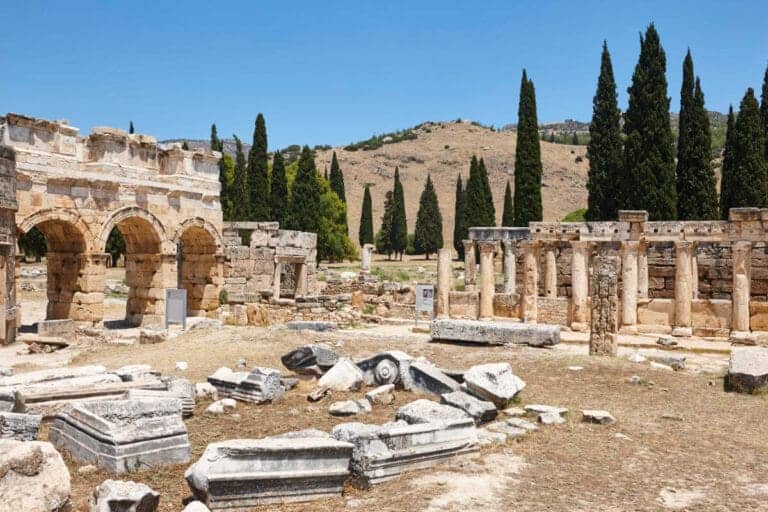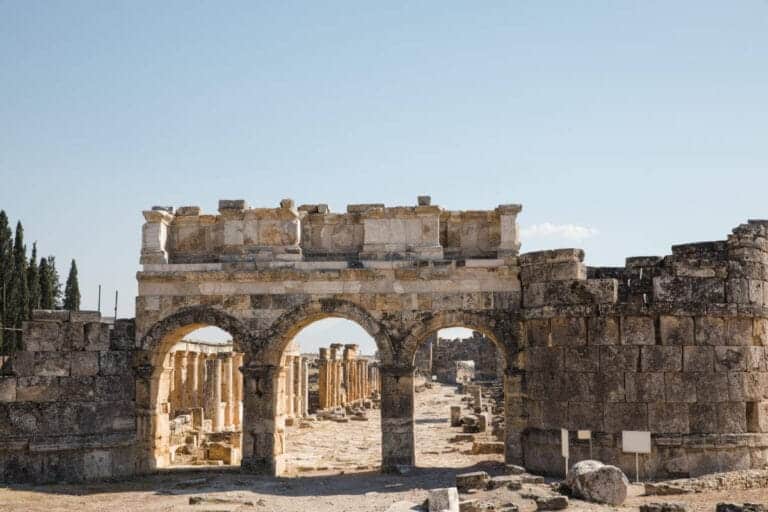
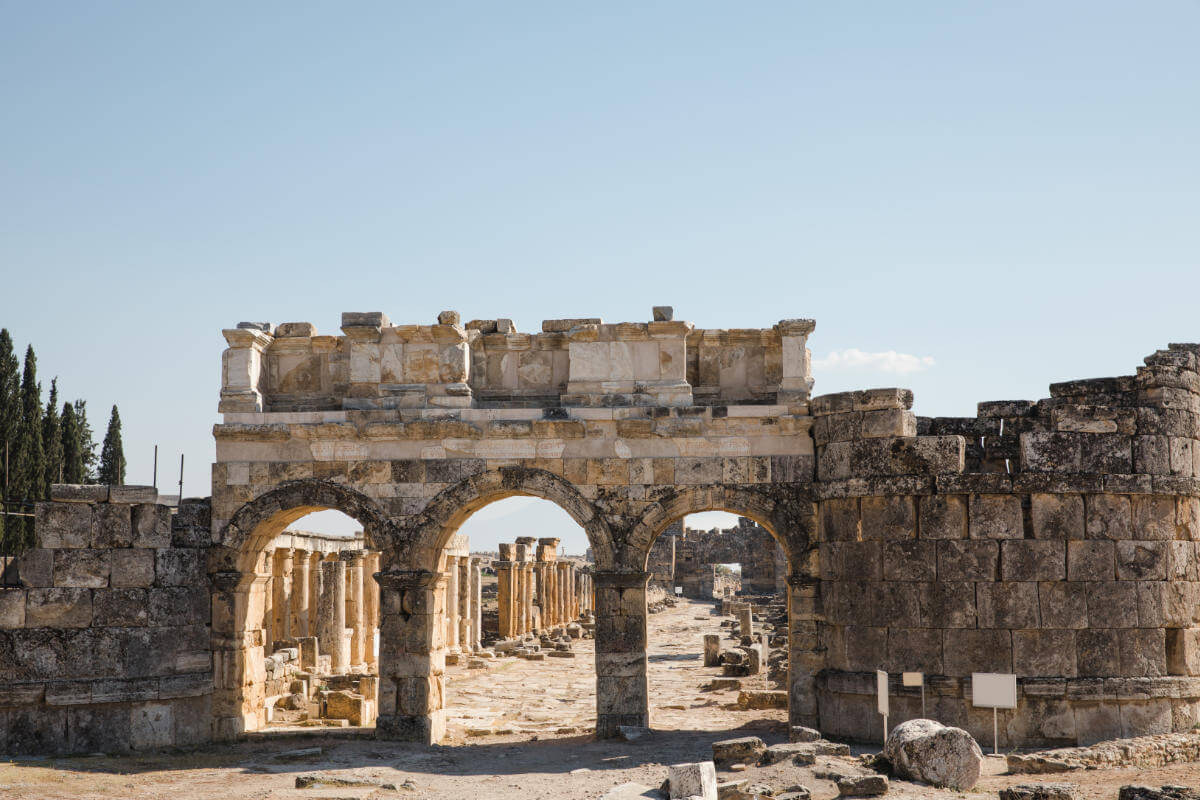
Standing among the weathered stones of Hierapolis, a monumental archway commands your attention — its massive pillars still reaching skyward after nearly two millennia. The Byzantine Gate is one of the most striking structural survivors of this ancient thermal city, a powerful reminder of the successive civilizations that shaped what we now know as Pamukkale, Turkey.
A Gateway Through Centuries of History
Originally constructed during the Roman period as a grand entrance to the city, the gate was later modified and fortified during the Byzantine era, roughly between the 4th and 6th centuries AD. The Byzantines repurposed many Roman structures throughout Anatolia, and Hierapolis was no exception. They narrowed the original passageway, added defensive walls, and transformed the ornamental entrance into a functional military checkpoint. The result is a layered monument — Roman grandeur reinforced with Byzantine pragmatism. Look closely at the stonework and you can spot where newer blocks were fitted against older Roman columns, two empires visible in a single frame.
What to See and Experience
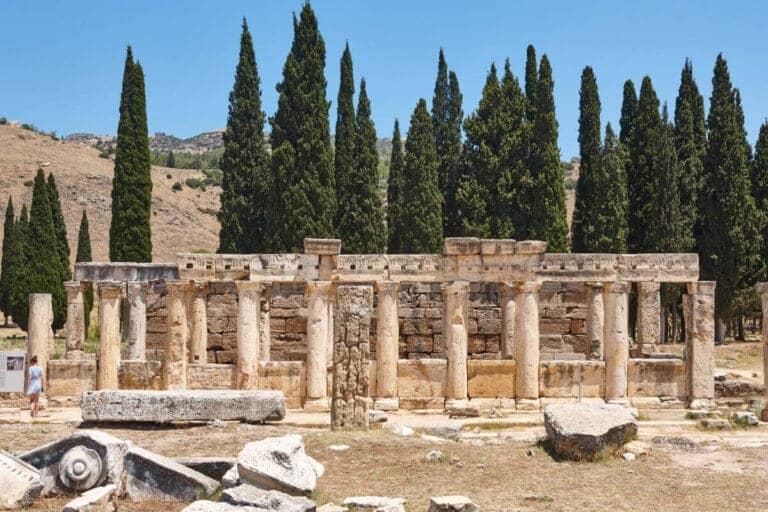
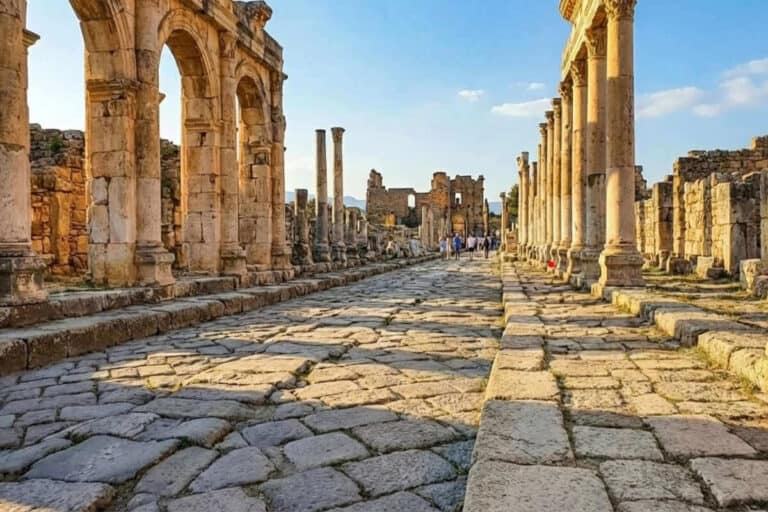
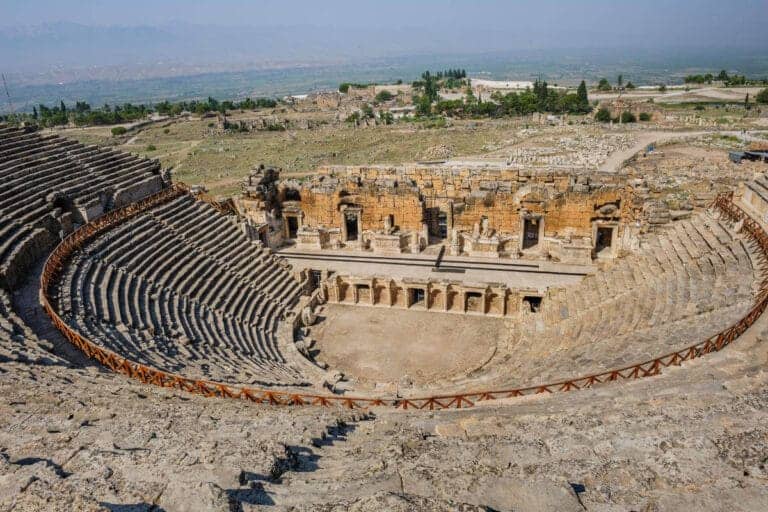
The Byzantine Gate rises along the ancient main street of Hierapolis, flanked by the remains of colonnaded walkways that once bustled with merchants and pilgrims. Walk through the archway and pause. The warm Anatolian wind carries the faint mineral scent of the nearby thermal springs. To the north, the Necropolis of Hierapolis stretches out with over 1,200 tombs. To the south, Frontinus Street leads you deeper into the ruins past the Roman baths and theater.
The gate’s thick limestone blocks glow golden at sunset, and the contrast against the white travertine terraces below creates a scene that photographers live for. Run your hand along the stone — the surface is rough, pitted by wind and rain, yet the structure holds firm.
Practical Visitor Tips
The Byzantine Gate is accessible as part of the broader Hierapolis archaeological site, included with your Pamukkale entrance ticket (approximately 700 TL as of 2025). Early morning visits, ideally before 9 AM, let you explore without the midday crowds and heat. Allocate at least two to three hours for the full Hierapolis site — the gate alone takes around 15 minutes to appreciate, but the surrounding ruins deserve a slow, unhurried visit. Wear sturdy shoes; the ancient limestone pavement is uneven in places.
The Byzantine Gate stands not merely as stone and mortar but as a threshold between empires — step through it, and you walk the same ground that Romans, Byzantines, and countless travelers before you have crossed. Few doorways in Turkey carry that kind of weight.
Plan the next step
Recommended Tours for Your Pamukkale Visit
Compare tours for Byzantine Gate by starting point, duration and itinerary. A listed stop can change with local access conditions; check the current program before booking.

Pamukkale & Hierapolis Full-Day Tour from Izmir
Starts from Izmir
Book the Pamukkale and Hierapolis Full-Day Tour from Izmir to see travertines, ancient ruins and hot springs at a great…
View Tour Details
2-Day Pamukkale & Ephesus Tour from Istanbul with Flights
Starts from Istanbul
Travel from Istanbul to Pamukkale and Ephesus on a 2-day tour with flights, exploring travertine terraces, Hierapolis and ancient ruins.
View Tour Details
4-Day Cappadocia, Ephesus & Pamukkale Tour from Istanbul with Flights
Starts from Istanbul
A 4-day tour from Istanbul visiting Cappadocia, Ephesus and Pamukkale, with domestic flights, airport transfers, boutique hotels and guides.
View Tour Details