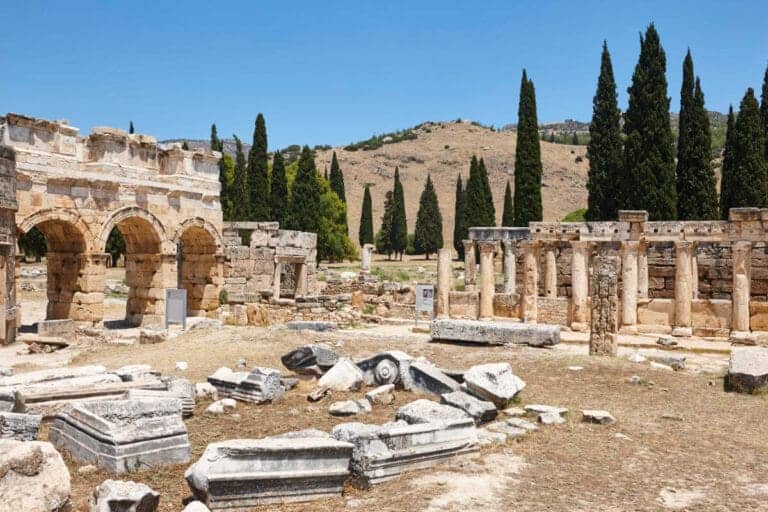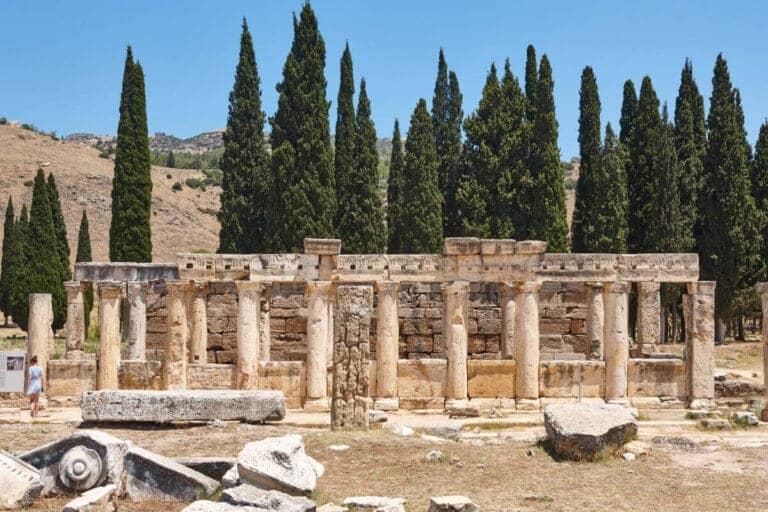
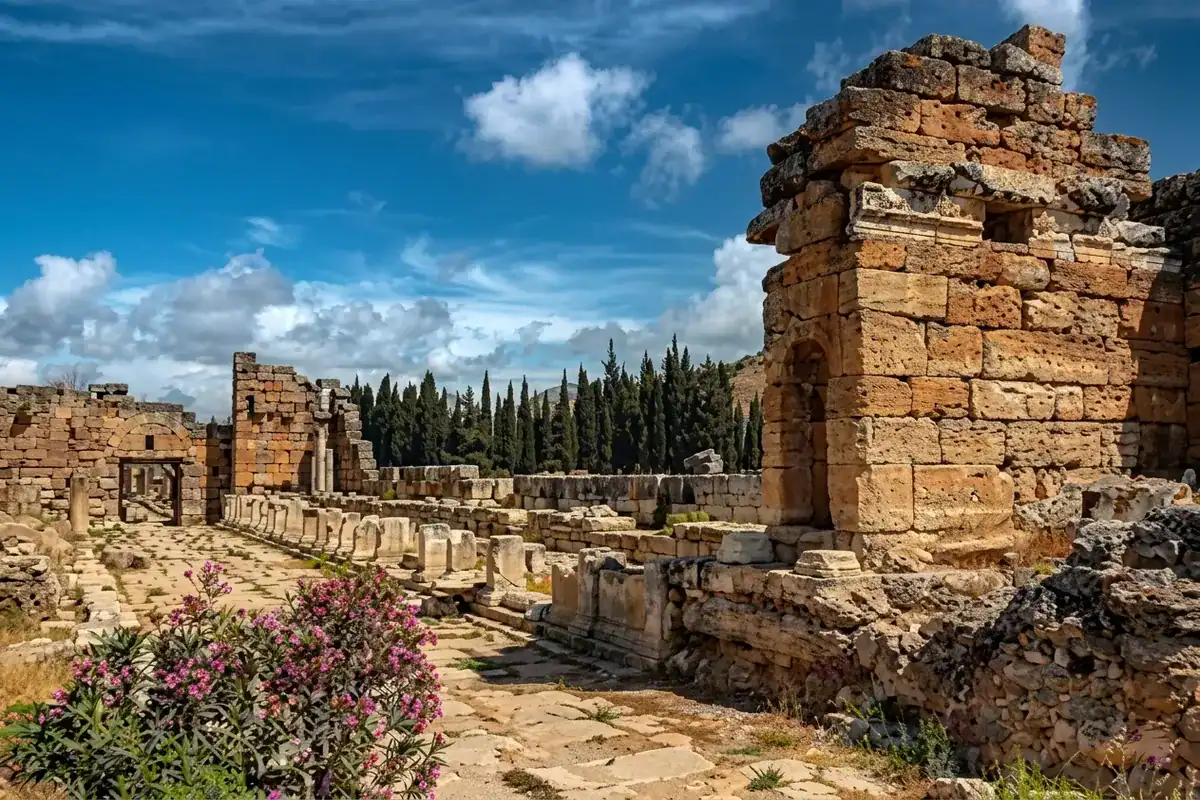
Standing amid the sun-bleached ruins of Hierapolis, you’ll find a sculptural remnant that once celebrated the raw power of water — the Triton Fountain in Pamukkale. Though centuries have worn away its original grandeur, this ancient monument still commands attention, whispering stories of Roman artistry and the sacred relationship between this city and its mineral-rich springs.
A Roman Tribute to Mythical Power
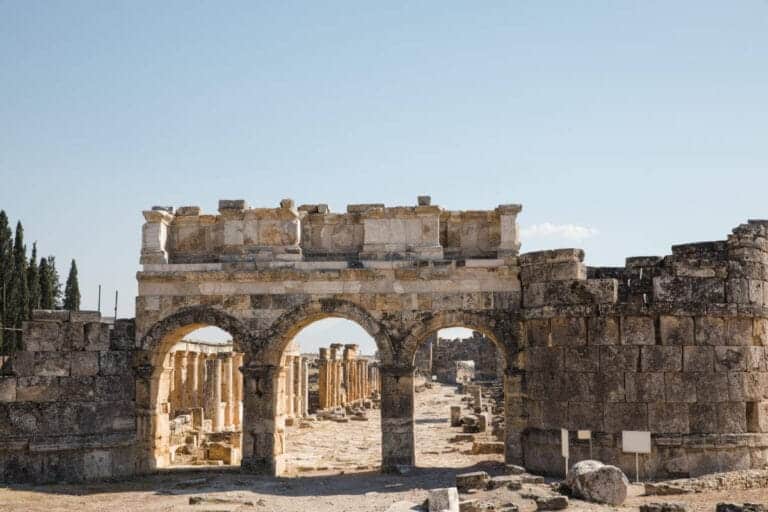
The Triton Fountain dates to the 2nd century AD, a period when Hierapolis was flourishing under Roman imperial rule. Triton — the Greek god of the sea and son of Poseidon — was a fitting subject for a fountain in a city defined by water. The thermal springs that created Pamukkale’s iconic white travertines were considered divine gifts, and the Romans honored that connection through elaborate public waterworks. The fountain once featured a carved figure of Triton surrounded by flowing water, positioned along one of the city’s prominent streets near the Frontinus Street area. It served both a decorative and functional purpose — beautifying the cityscape while providing fresh water to residents and visitors passing through Hierapolis.
What to See at the Site Today
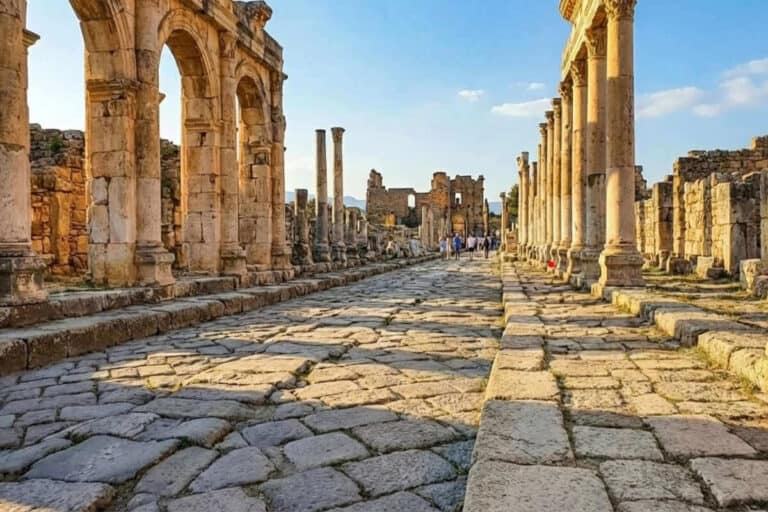
What remains of the Triton Fountain in Pamukkale is fragmentary but evocative. You can still observe carved stone blocks and sculptural elements that hint at the fountain’s original scale. The worn reliefs, softened by wind and time, reveal muscular aquatic forms typical of Greco-Roman mythological art. Walk slowly around the base and look closely — you’ll notice chisel marks and decorative details that speak to the skilled stonecutters who shaped this piece nearly two thousand years ago. The surrounding landscape of crumbled columns and ancient paving stones adds a dramatic backdrop, especially in late afternoon light when golden hues settle across the ruins.
Practical Tips for Your Visit
The Triton Fountain is located within the broader Hierapolis archaeological zone, so your entry ticket covers access to this and dozens of other monuments, including the Hierapolis Theatre and the Necropolis. Plan to spend at least three to four hours exploring the full site. Early morning visits, particularly between April and June, offer cooler temperatures and thinner crowds. Wear sturdy walking shoes — the terrain is uneven and dusty.
The Triton Fountain in Pamukkale may no longer flow, but it remains a powerful reminder that this ancient city was built on water, faith, and extraordinary craftsmanship. Standing here, you’re not just looking at stone — you’re reading a chapter of civilization carved in mineral and myth.
Plan the next step
Recommended Tours for Your Pamukkale Visit
Compare tours for Triton Fountain in Pamukkale by starting point, duration and itinerary. A listed stop can change with local access conditions; check the current program before booking.

2-Day Pamukkale & Ephesus Tour from Istanbul with Flights
Starts from Istanbul
Travel from Istanbul to Pamukkale and Ephesus on a 2-day tour with flights, exploring travertine terraces, Hierapolis and ancient ruins.
View Tour Details
4-Day Cappadocia, Ephesus & Pamukkale Tour from Istanbul with Flights
Starts from Istanbul
A 4-day tour from Istanbul visiting Cappadocia, Ephesus and Pamukkale, with domestic flights, airport transfers, boutique hotels and guides.
View Tour Details
3-Day Pamukkale, Ephesus, Troy and Gallipoli Tour from Istanbul
Starts from Istanbul
Travel from Istanbul on a 3-day journey to Pamukkale, Ephesus, Troy and Gallipoli, combining natural wonders, ancient ruins and historic…
View Tour Details