
Stand Before the Smallest Giant of Giza
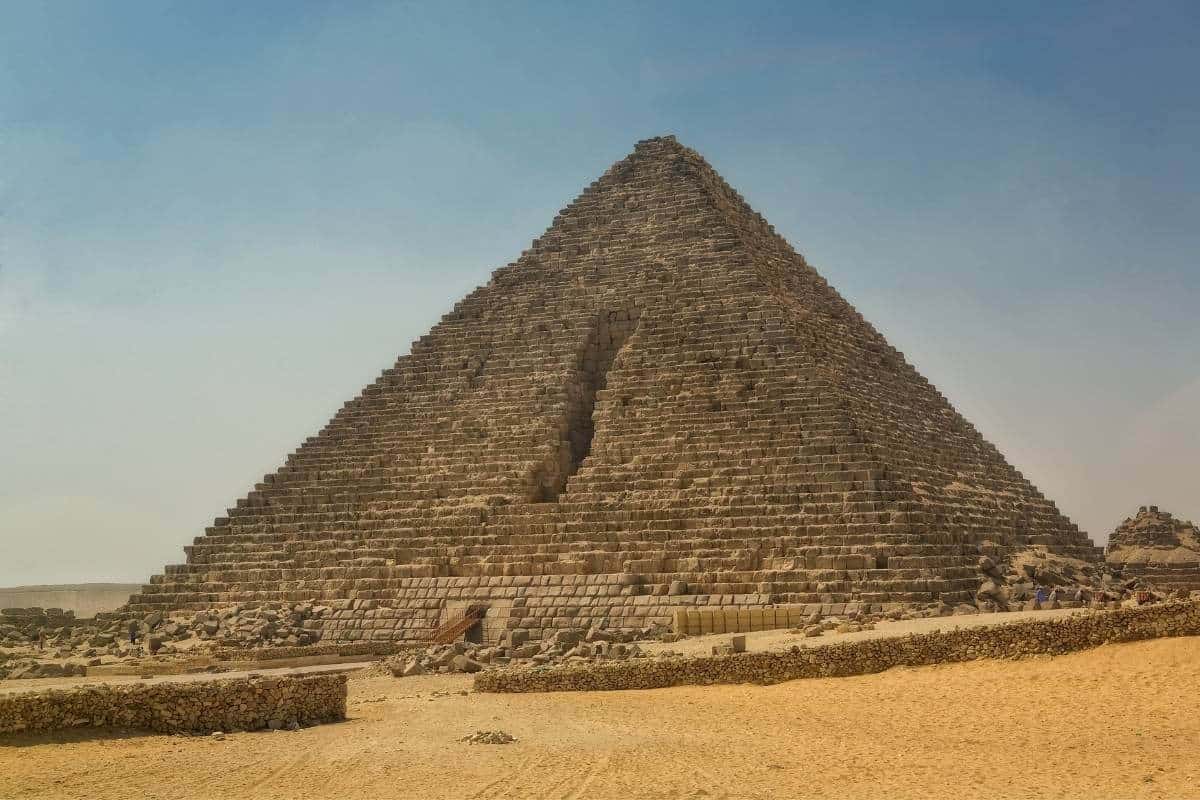
At the southwestern edge of the Giza Plateau, where desert wind carries fine gold dust across ancient stone, the Pyramid of Menkaure rises with quiet authority. It may be the smallest of Giza’s three great pyramids, but its presence is powerful—more intimate, more approachable, and deeply moving. In the shifting light of Cairo, Egypt, its weathered limestone and granite blocks seem to hold the silence of more than 4,500 years.
Historical and Cultural Context
The Pyramid of Menkaure was built for Pharaoh Menkaure, a ruler of Egypt’s Fourth Dynasty, around 2490 BC. Menkaure was the son of Khafre and grandson of Khufu, placing his monument in direct conversation with the neighboring Pyramid of Chephren and the Great Pyramid.
Originally standing about 213 feet high, the pyramid is roughly 200 feet tall today. Its base measures approximately 335 feet on each side, making it smaller than the other two major pyramids at Pyramids of Giza. Yet Menkaure’s builders used costly red granite from Aswan for the lower casing stones, a striking choice that once gave the monument a rich, polished glow. A deep scar on the north face remains from a 12th-century attempt to dismantle the pyramid—an effort that failed after months of exhausting labor.
What to See and Experience
Walk around the Pyramid of Menkaure slowly. The scale becomes clearer with each step: the enormous stone blocks, the sharp geometry, the vast openness of the desert beyond. Nearby, you can see three smaller queen pyramids, part of Menkaure’s funerary complex, along with traces of the mortuary and valley temples that once supported rituals for the pharaoh’s afterlife.
The pyramid’s location also gives you one of the most balanced perspectives of the Giza Plateau. From here, the three main pyramids align across the sand, with the city skyline shimmering in the distance. The contrast is unforgettable in the simplest sense: ancient stone, modern Cairo, and the endless Egyptian sky.
Practical Visitor Tips
The best time to visit is from October through April, when temperatures are milder. Arrive early in the morning for softer light, fewer crowds, and more comfortable walking conditions. Plan to spend 60 to 90 minutes around the Pyramid of Menkaure itself, or three to four hours if you want to explore the wider Giza Plateau, including the Great Sphinx.
Wear comfortable shoes, bring water, and expect strong sun even in winter. Photography is excellent in the morning and late afternoon, when shadows reveal the texture of the ancient stone.
Explore Egypt with One Nation Travel
The Pyramid of Menkaure proves that grandeur is not always measured by size. Sometimes, it is found in proportion, silence, and the enduring mystery of a king’s journey into eternity.
Plan the next step
Recommended Tours for Your Egypt Visit
Compare tours for Pyramid of Menkaure by starting point, duration and itinerary. A listed stop can change with local access conditions; check the current program before booking.
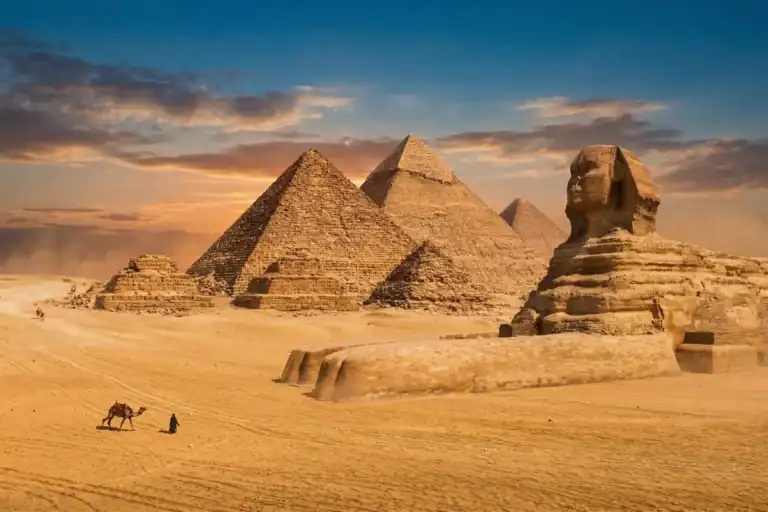
4-Day Egypt Tour: Cairo & Luxor
Explore Egypt on our 4-day Cairo & Luxor tour. Visit the Pyramids, Valley of the Kings & more. Book your…
View Tour Details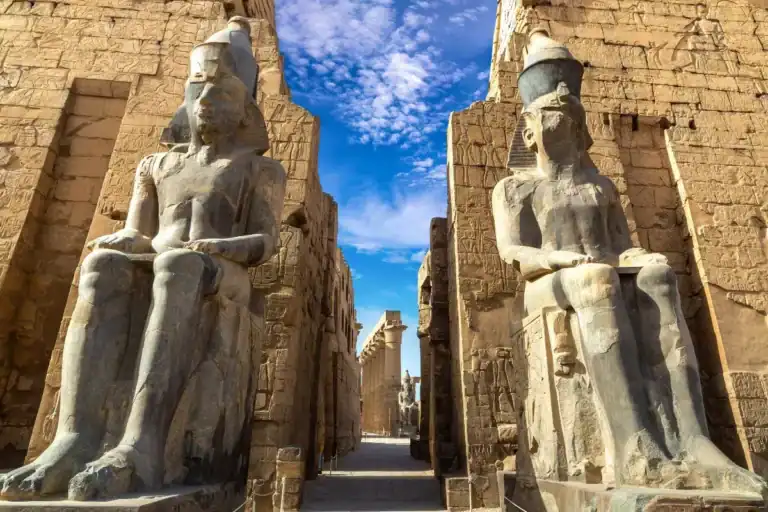
6-Day Egypt Tour Package: Cairo, Luxor & Alexandria
Book the 6-Day Classic Cairo, Luxor & Alexandria Tour with One Nation Travel for expert guidance, organized transfers, and a…
View Tour Details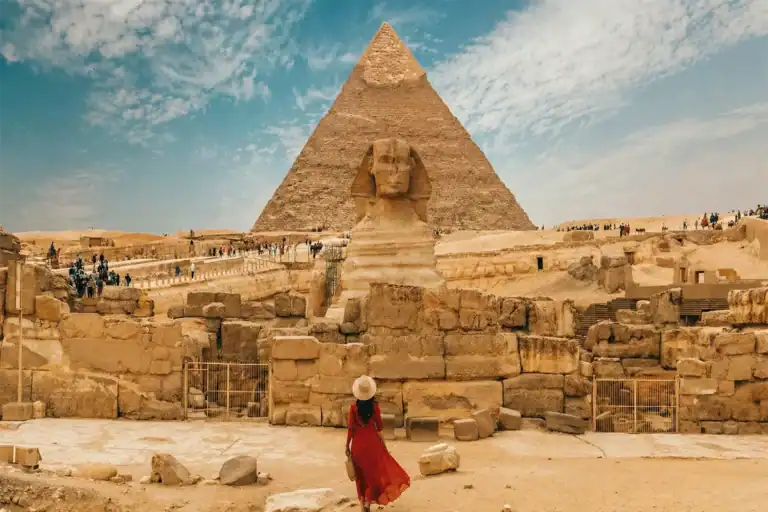
8-Day All-Inclusive Egypt Tour Package
Book the 8-Day All-Inclusive Egypt Tour Package with One Nation Travel for expert guidance, organized transfers, and a smooth travel…
View Tour Details