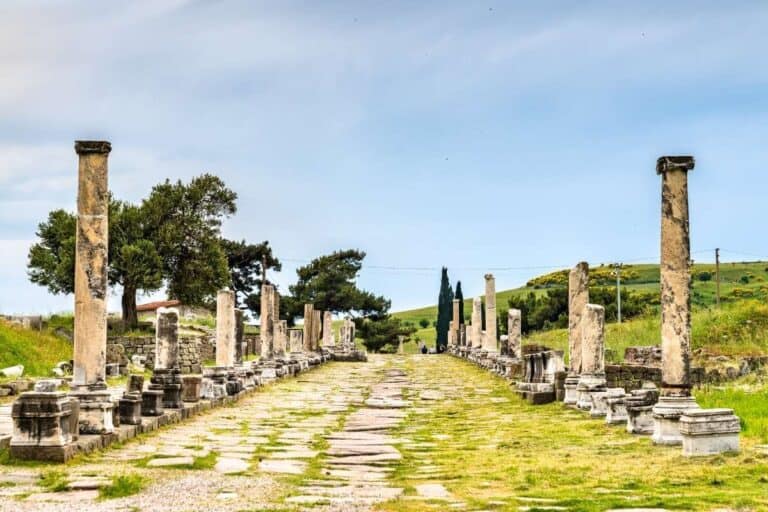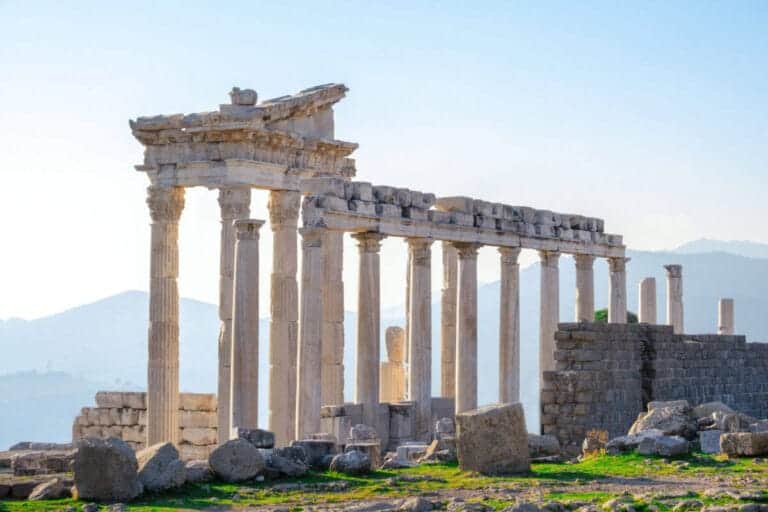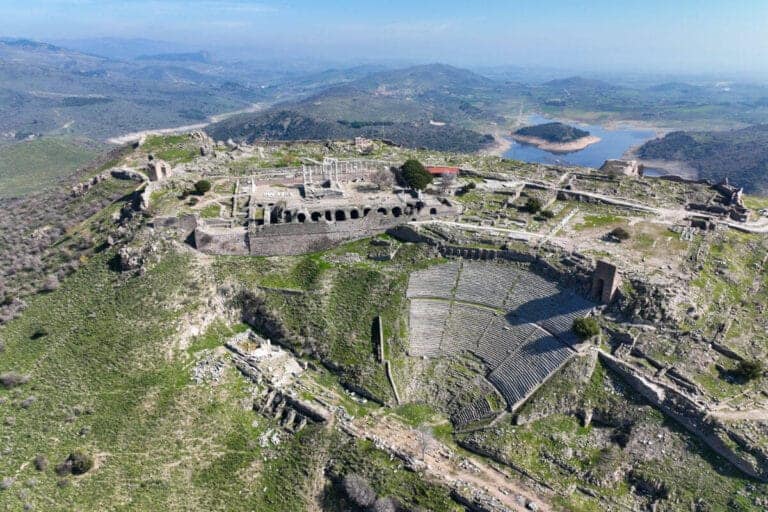
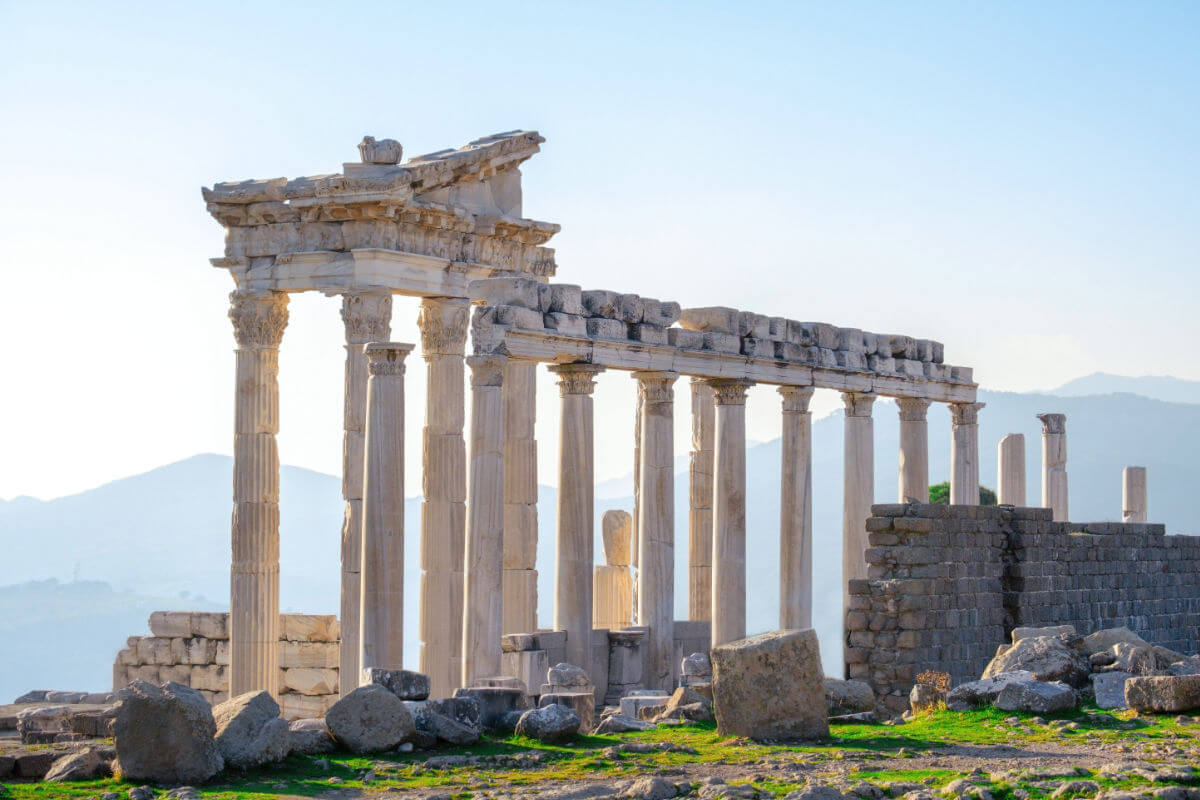
High above the modern town of Bergama in western Turkey, the Temple of Athena, Pergamon once crowned a dramatic ridge where marble columns met open sky. From this windswept terrace, ancient worshippers looked across the Kaikos Valley, hearing the shuffle of sandals on stone, the murmur of priests, and the distant noise of a powerful Hellenistic capital below.
Historical and Cultural Context
The Temple of Athena, Pergamon was built in the early 3rd century BC, during the rise of the Attalid dynasty. It honored Athena Nikephoros, “Athena the Bringer of Victory,” a fitting patron for a kingdom that used military success, art, and architecture to project influence across the ancient world.
Set within the sacred precinct of Pergamon, the temple formed part of one of the most sophisticated urban landscapes of Hellenistic Asia Minor. Later rulers, especially Eumenes II, who reigned from 197 to 159 BC, expanded the sanctuary with elegant stoas and cultural buildings. Nearby stood the famed Library of Pergamon, said to have held around 200,000 scrolls, rivaling Alexandria in prestige.
What to See and Experience
Today, visitors to the Temple of Athena, Pergamon see the surviving foundations and architectural traces rather than a fully standing temple, yet the setting is powerful. Walk slowly along the terrace and imagine a Doric temple with six columns across the front and ten along the sides, its clean geometry catching the Aegean light.
The sanctuary sits close to the Pergamon Acropolis, where the terrain drops sharply and the city seems to spill down the mountain. From this height, the relationship between religion, politics, and spectacle becomes clear. The nearby site of the Altar of Zeus adds another layer to the story, revealing how Pergamon used monumental art to announce its power to the Mediterranean world.
Practical Visitor Tips
Best Time to Visit
Spring and fall offer the most comfortable weather, with mild temperatures and clearer light for photography. In summer, arrive early in the morning or later in the afternoon, as the exposed acropolis can become hot and bright by midday.
How Long to Allocate
Plan at least 45 minutes for the Temple of Athena area, and 2 to 3 hours for the wider Pergamon Acropolis. Wear sturdy walking shoes, bring water, and allow time to pause; the site rewards quiet observation as much as quick sightseeing.
Related Tours
The Temple of Athena, Pergamon may stand in fragments, but its hilltop silence still speaks with remarkable clarity: this was a place where faith, learning, victory, and ambition met the sky.
Plan the next step
Recommended Tours for Your Pergamon Visit
Compare tours for Temple of Athena, Pergamon by starting point, duration and itinerary. A listed stop can change with local access conditions; check the current program before booking.

Full-Day Troy & Pergamon Tour from Çanakkale to Kuşadası
Pergamon day itinerary — check pickup details
Join One Nation Travel for a full-day historical tour exploring the ancient ruins of Troy and Pergamon while traveling from…
View Tour Details3-Day Gallipoli, Troy, Pergamon & Ephesus Tour from Istanbul
Starts from Istanbul
Discover Gallipoli's battlefields, ancient Troy, Pergamon's Acropolis and Roman Ephesus on a guided 3-day cultural tour starting from Istanbul.
View Tour Details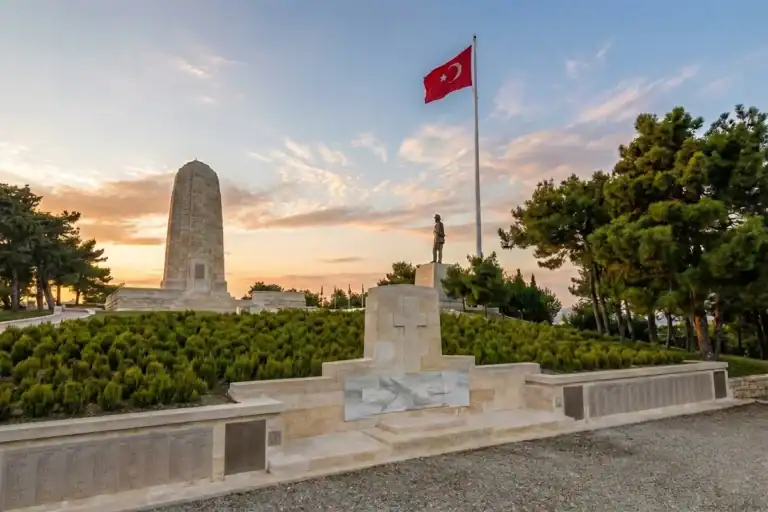
4-Day Gallipoli, Troy, Pergamon, Pamukkale & Ephesus Tour from Istanbul
Starts from Istanbul
Travel from Istanbul on a 4-day guided Turkey tour visiting Gallipoli, Troy, Pergamon, Pamukkale and Ephesus with hotels, transfers and…
View Tour Details