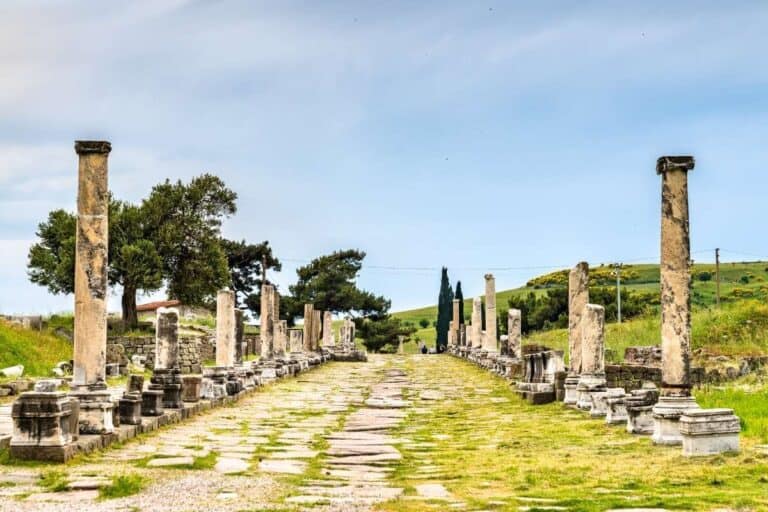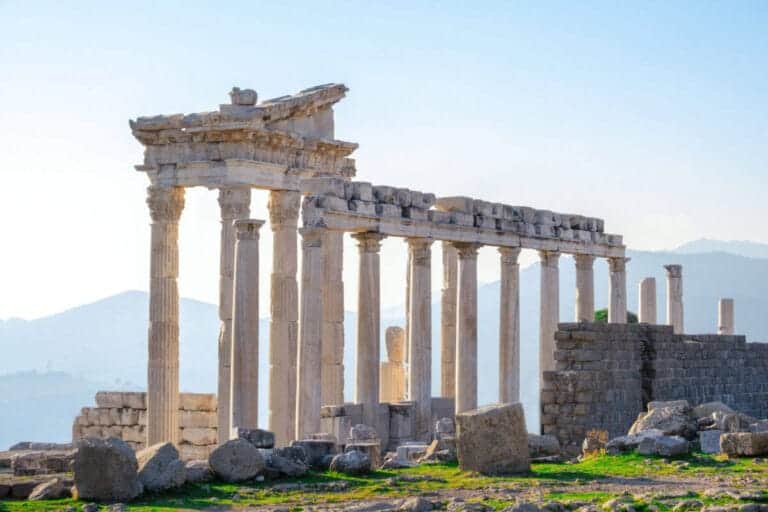
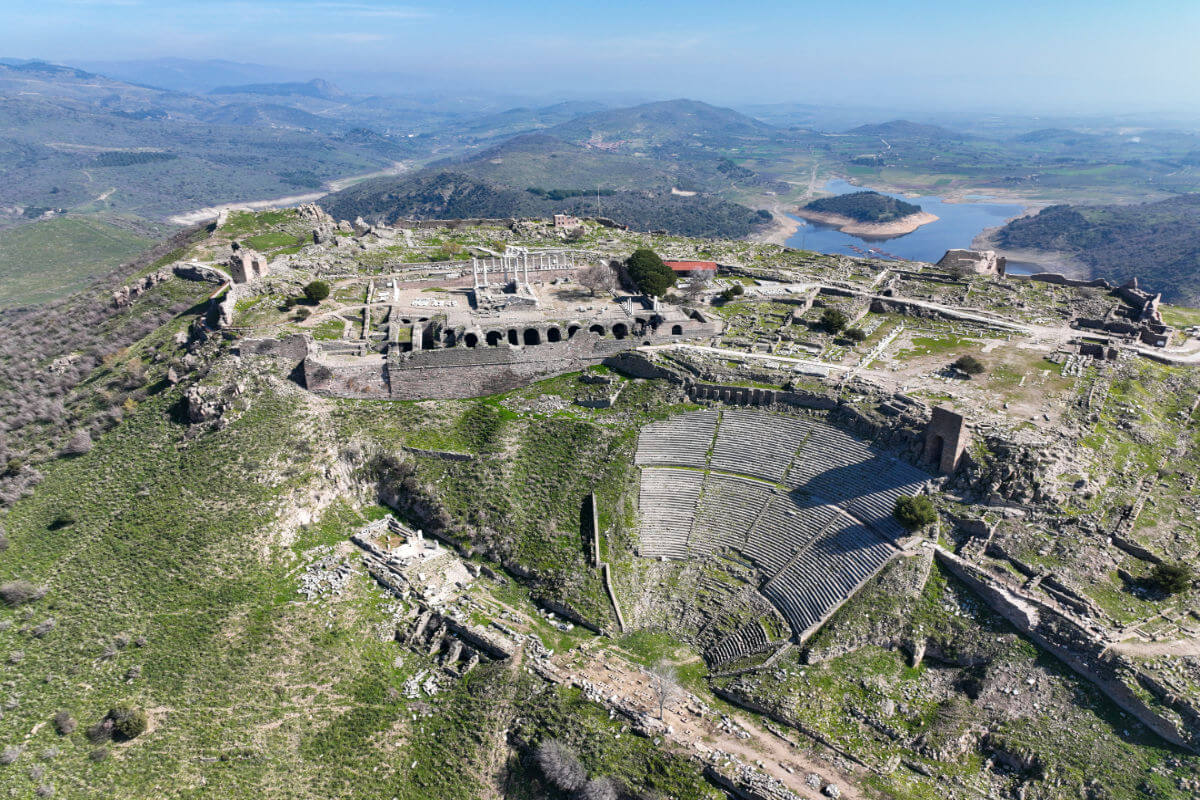
High above the modern town of Bergama in western Turkey, Pergamon Acropolis rises on a windswept hill where marble columns, ancient theater seats, and ruined temples still command the sky. The climb feels dramatic from the first glimpse: stone terraces stacked against the slope, the Aegean landscape stretching far below, and the sense that this was once one of the most powerful cities of the ancient world.
Historical and Cultural Context
Pergamon Acropolis reached its golden age during the Hellenistic period, especially under the Attalid dynasty in the 3rd and 2nd centuries BC. After the death of Alexander the Great in 323 BC, the region became a prize among competing kingdoms. Pergamon rose as a major political, cultural, and artistic capital, rivaling Alexandria in Egypt.
Under rulers such as Eumenes II, who reigned from 197 to 159 BC, the city became famous for scholarship, sculpture, and architecture. Its library reportedly held around 200,000 scrolls, making it one of the greatest intellectual centers of antiquity. The site was later absorbed into the Roman Empire in 133 BC, when Attalus III left the kingdom to Rome. Today, Pergamon is recognized as a UNESCO World Heritage Site, celebrated for its layered Greek, Roman, and Byzantine legacy.
What to See and Experience
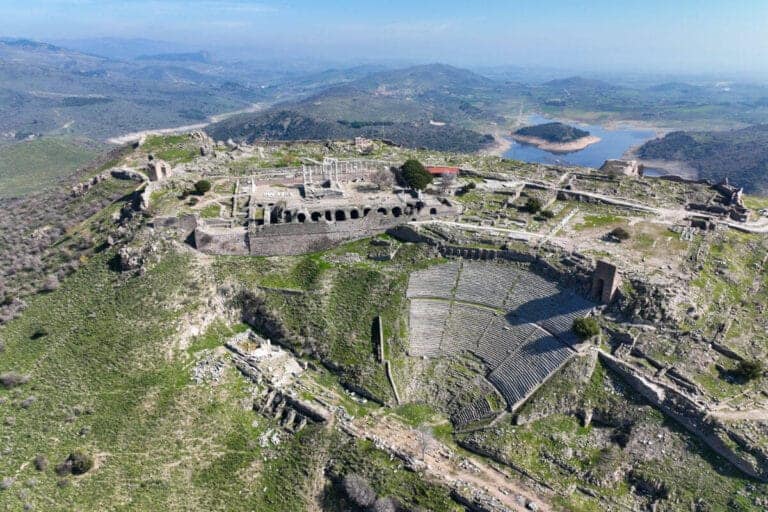
The most striking feature of Pergamon Acropolis is its steep hillside theater, one of the most dramatic in the ancient world. Built into the slope, it could seat around 10,000 spectators, with rows of stone benches dropping sharply toward the stage and valley below.
Nearby, the remains of the Temple of Athena evoke the city’s devotion to wisdom and victory. You can also trace the foundations of the royal palaces, walk through the ancient arsenal area, and imagine the grandeur of the famous Altar of Zeus, whose sculptural panels are now displayed in Berlin. The Pergamon Theatre and the remains of the library reveal a city designed not only for power, but also for learning, ceremony, and public life.
Practical Visitor Tips
The best time to visit Pergamon Acropolis is in spring or fall, when temperatures are comfortable and the hilltop light is especially beautiful. Summer can be hot and exposed, so bring water, sunscreen, a hat, and comfortable walking shoes with good grip.
Plan to spend about 1.5 to 2 hours at the acropolis itself, or longer if you enjoy photography and ancient history. Many travelers combine it with the Asclepieion of Pergamon, the city’s renowned healing center, for a fuller understanding of ancient Bergama.
Explore Pergamon with One Nation Travel
Plan the next step
Recommended Tours for Your Pergamon Visit
Compare tours for Pergamon Acropolis by starting point, duration and itinerary. A listed stop can change with local access conditions; check the current program before booking.
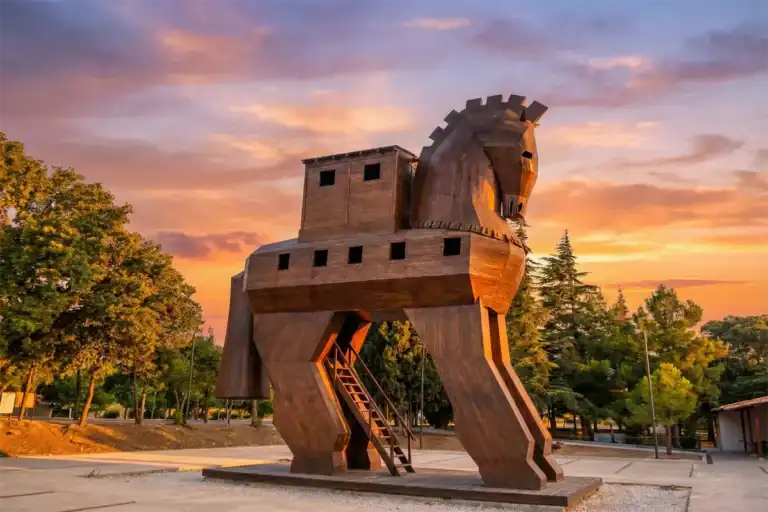
Full-Day Troy & Pergamon Tour from Çanakkale to Kuşadası
Pergamon day itinerary — check pickup details
Join One Nation Travel for a full-day historical tour exploring the ancient ruins of Troy and Pergamon while traveling from…
View Tour Details3-Day Gallipoli, Troy, Pergamon & Ephesus Tour from Istanbul
Starts from Istanbul
Discover Gallipoli's battlefields, ancient Troy, Pergamon's Acropolis and Roman Ephesus on a guided 3-day cultural tour starting from Istanbul.
View Tour Details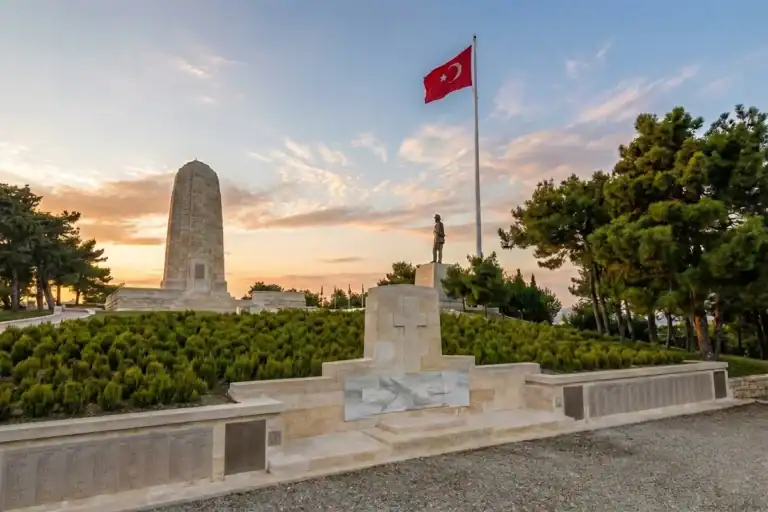
4-Day Gallipoli, Troy, Pergamon, Pamukkale & Ephesus Tour from Istanbul
Starts from Istanbul
Travel from Istanbul on a 4-day guided Turkey tour visiting Gallipoli, Troy, Pergamon, Pamukkale and Ephesus with hotels, transfers and…
View Tour Details