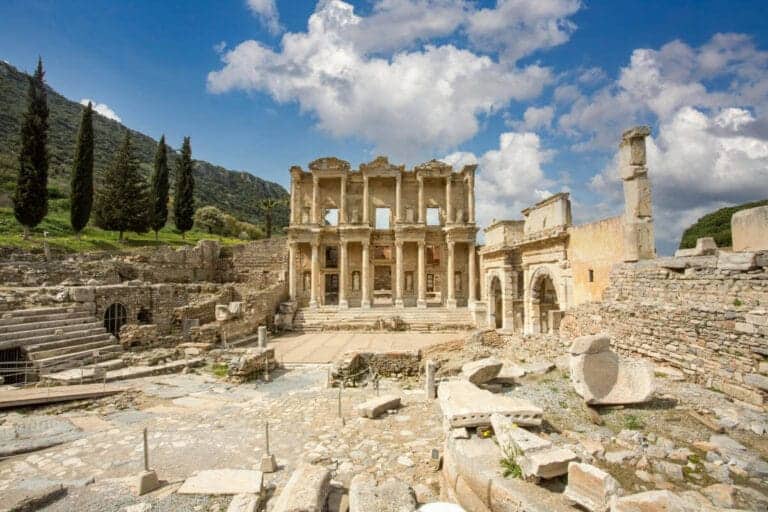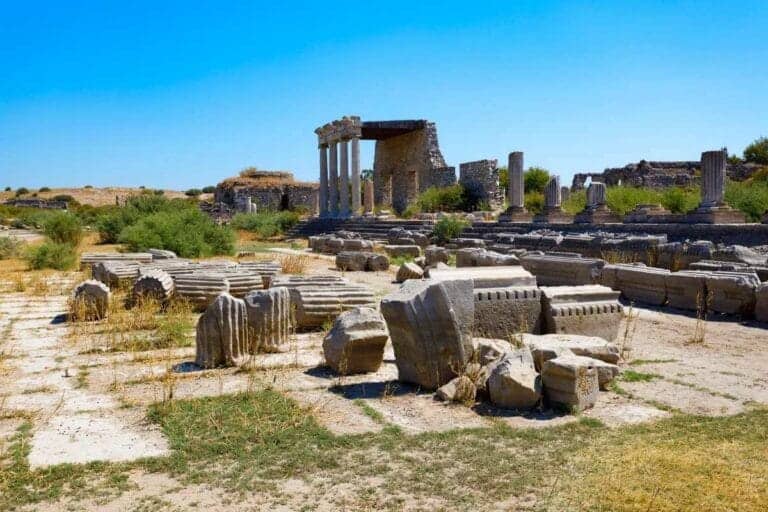
Imagine 25,000 ancient voices rising in unison, their cheers echoing off marble seats as gladiators clash below. At The Great Theatre of Ephesus, this scene played out countless times over centuries, making it one of the most spectacular performance venues of the ancient world. Today, standing before this colossal structure in Turkey, you can almost hear the ghosts of those long-ago spectators.
A Monument to Roman Engineering
Built during the Hellenistic period around the 3rd century BC, the theatre underwent major renovations under Roman rule between 41-117 AD. Emperor Claudius initiated the expansion, and Emperor Trajan completed the ambitious project, transforming it into the architectural marvel we see today. With a capacity of 25,000 spectators — larger than Madison Square Garden — this was the largest theatre in Turkey and all of Asia Minor.
The Romans didn’t just build for entertainment. The Great Theatre of Ephesus served as the city’s political heart, where citizens gathered for civic meetings and heated debates. It was here, according to the Acts of the Apostles, that silversmiths staged their famous riot against St. Paul, chanting “Great is Artemis of the Ephesians!” for two straight hours.
Architectural Brilliance on Display
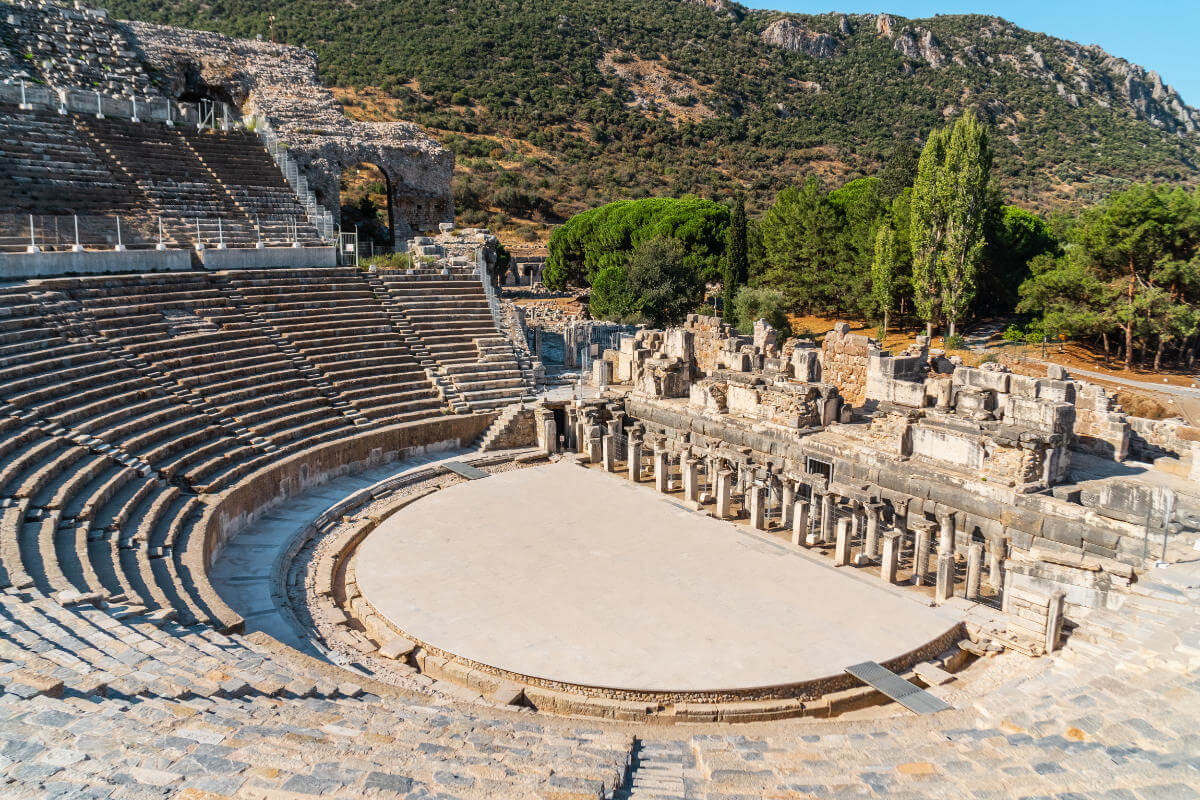
The theatre rises 18 meters high with 66 rows of seats divided into three sections. The acoustics remain so perfect that a coin dropped on the stage can be heard from the highest row — no microphones needed. The stage building once stood three stories tall, decorated with elaborate columns, statues, and reliefs that proclaimed Ephesus‘s wealth and sophistication.
Look closely at the marble seats and you’ll spot ancient graffiti — love notes, political slogans, and even advertisements carved by spectators two millennia ago. The orchestra pit, where musicians and chorus members performed, forms a perfect semicircle paved with marble.
Planning Your Visit
Visit early morning or late afternoon when golden light bathes the stone and tourist crowds thin out. Allow 30-45 minutes to explore thoroughly and climb to the top tier — the panoramic view rewards the effort. The theatre faces west, making sunset particularly magical for photographers.
Standing in The Great Theatre of Ephesus today, surrounded by its towering stone tiers, you don’t just observe history — you inhabit it. This is where emperors addressed their subjects, where dramatic tragedies moved audiences to tears, and where the clash of cultures shaped the ancient world.
Plan the next step
Recommended Tours for Your Ephesus Visit
Compare tours for The Great Theatre of Ephesus by starting point, duration and itinerary. A listed stop can change with local access conditions; check the current program before booking.

3-Day Pamukkale and Ephesus Tour from Istanbul with Flights
Starts from Istanbul
Discover Pamukkale's Cotton Cliffs, Hierapolis and Ephesus on a 3-day trip from Istanbul, with flights, hotels and guided sightseeing included.
View Tour Details
4-Day Gallipoli, Troy, Pergamum, Ephesus and Pamukkale Tour from Istanbul
Starts from Istanbul
Discover Gallipoli, Troy, Pergamum, Ephesus and Pamukkale on a 4-day guided tour from Istanbul with accommodation and transport included.
View Tour Details
2-Day Private Ephesus & Pamukkale Tour from Istanbul by Flight
Starts from Istanbul
Visit Ephesus and Pamukkale on a private 2-day tour from Istanbul by flight, with expert guides and convenient transfers included.
View Tour Details