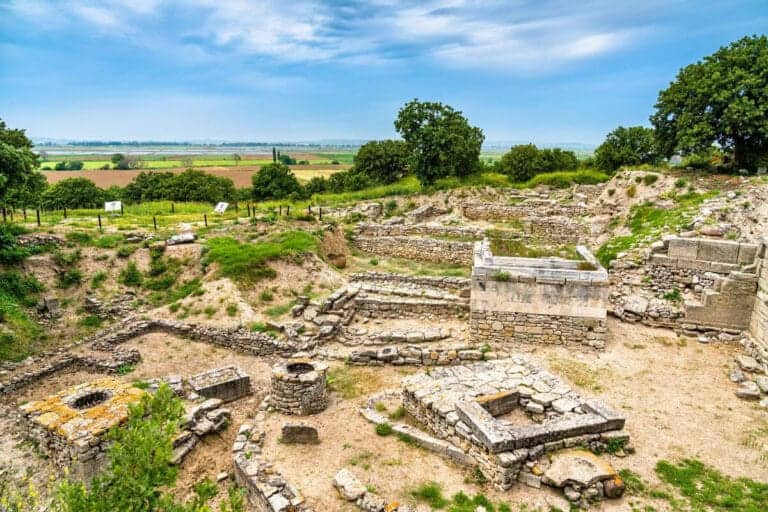
Stand on the windswept plains of Çanakkale, and the legend comes alive. Troy — the city Homer immortalized in the Iliad, where gods chose sides and heroes fell — is not myth alone. It’s a real archaeological site with over 4,000 years of continuous human settlement layered into the earth beneath your feet.
A City Built Nine Times Over
What makes Troy extraordinary isn’t a single ruin but rather nine distinct cities stacked upon one another, spanning from roughly 3000 BCE to 500 CE. Archaeologists have labeled these layers Troy I through Troy IX. The layer most associated with Homer’s epic — Troy VII, dating to around 1200 BCE — shows clear evidence of fire and violent destruction, lending tantalizing credibility to the ancient tale of war between Greeks and Trojans. Heinrich Schliemann first excavated the site in the 1870s, and while his methods were notoriously aggressive, his work put this corner of Turkey on the world’s archaeological map.
What to See and Experience
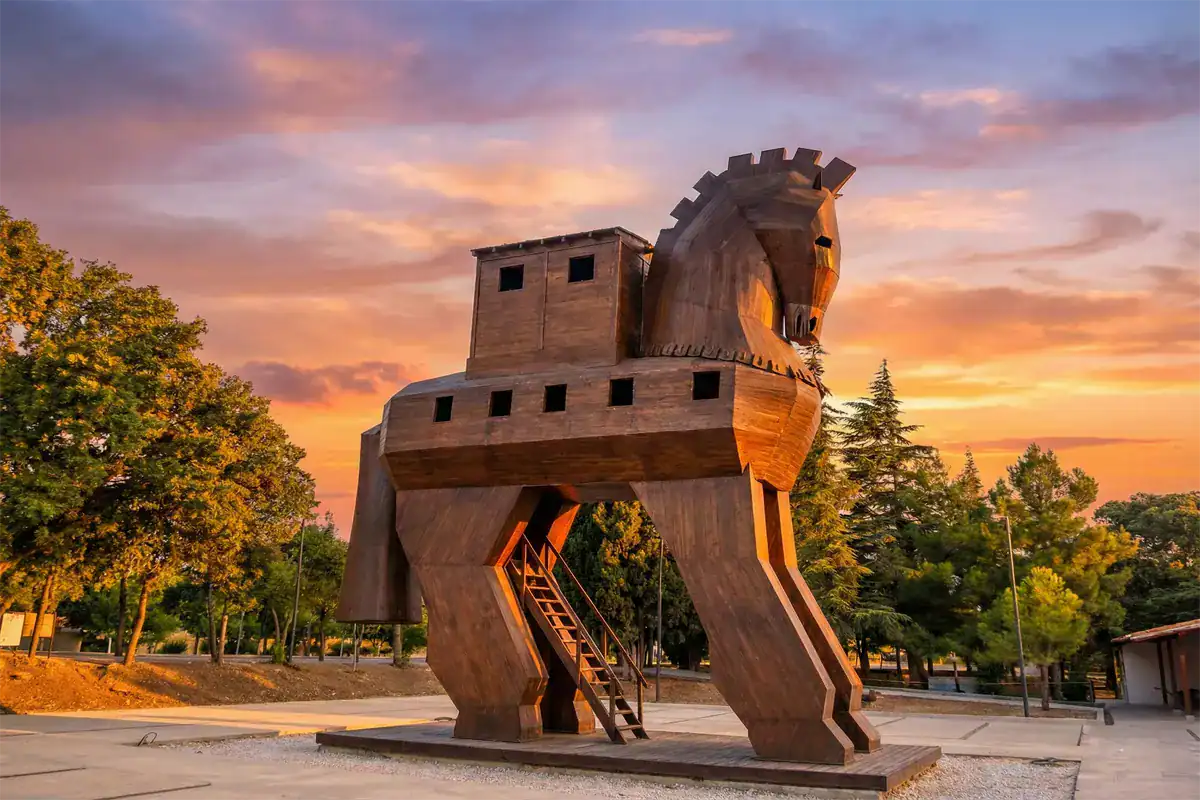
Arriving at the entrance, you’ll immediately spot the iconic replica Trojan Horse — a towering wooden structure you can actually climb inside for a view across the site. Beyond it, a walking path loops through the excavation layers. Look for the massive stone walls of Troy VI, built with a precision that still impresses engineers today. The sacrificial altars and the houses of Troy I reveal how daily life unfolded millennia ago. The ramp leading to the citadel gate, worn smooth by centuries of use, gives you a physical connection to the thousands who once walked here. Dry grass crunches underfoot, the Aegean breeze carries the salt of the nearby Dardanelles, and the scale of time becomes almost dizzying.
The on-site museum, opened in 2018 and award-winning in design, houses artifacts spanning Troy’s full timeline — pottery shards, bronze weapons, gold jewelry, and detailed models that help you visualize what each city layer looked like at its peak.
Practical Tips for Visitors
Plan at least two to three hours to explore the ruins and museum thoroughly. Spring (April–May) and early autumn (September–October) offer the most comfortable weather — summers in Çanakkale can push well past 90°F with little shade on-site. Bring water, sunscreen, and sturdy shoes. An expert guide transforms the experience entirely, turning scattered stone foundations into vivid scenes of ancient commerce, siege warfare, and Homeric drama.
Troy pairs naturally with a visit to the nearby Gallipoli Peninsula, making for a powerful day of history spanning Bronze Age legend to World War I sacrifice.
Walk Where Legends Fought
Few places on earth carry the weight of Troy. This is where literature, archaeology, and mythology converge on a single hilltop overlooking the Trojan plain. Whether you come as a classicist, a history enthusiast, or simply a curious traveler, the ruins ask you to look closely — and imagine deeply.
Troy is the archaeological site at Tevfikiye near Çanakkale, Turkey, where visitors follow the remains of a long-lived ancient settlement through multiple occupation layers. The official visitor listing currently shows daily opening, with the ticket office closing before the site itself; confirm the day’s conditions before setting out.
Plan your visit at a glance
- Location
- Tevfikiye Köyü, 17100, Çanakkale, Turkey.
- Hours
- Daily 8:30 a.m.–8:00 p.m.; ticket office closes at 7:30 p.m.
- Admission
- The official listing says the Turkish Museum Pass is accepted for eligible Turkish citizens. It does not state a current standard foreign-visitor price, so confirm the applicable ticket rule and fee directly before arrival.
- On-site service
- Audio-guide service is available.
What to see at Troy
Troy is an outdoor archaeological site rather than a reconstructed ancient city. Its visible remains represent nine principal settlement layers spanning more than 3,000 years, an unusually long sequence that helps explain the site’s archaeological importance.
Allow time to move between the excavated areas and to use the audio guide if you want more context for the remains. The official listing also identifies the nearby Troy Museum as a separate museum option, which can be useful for travelers who want to see excavated objects alongside the site.
Planning a practical visit
Arrive well before the ticket-office cutoff, especially if you want an unhurried walk through the site. Wear stable walking shoes suitable for an archaeological landscape, carry water in warm weather, and plan for outdoor exposure rather than relying on extensive indoor shelter.
Troy can work as a focused stop for travelers based in Çanakkale or as part of a wider exploration of the Troad. Keep the site visit and any separate Troy Museum visit distinct when checking ticket eligibility and timing.
Historical context
The official site description dates Troy’s earliest settlement layer to approximately 3000–2500 BCE and describes later occupation continuing through the Roman period. Archaeological work at the site is ongoing, so the presentation and accessible areas may change.
Please confirm current hours, closures, ticket rules, and access conditions before visiting Troy.
Plan the next step
Recommended Tours for Your Troy Visit
Compare tours for Troy by starting point, duration and itinerary. A listed stop can change with local access conditions; check the current program before booking.
Troy & Gallipoli Full-Day Tour from Canakkale
Troy day itinerary — check pickup details
Book the Troy & Gallipoli Full-Day Tour from Canakkale with One Nation Travel for expert guidance, organized transfers, and a…
View Tour DetailsFull-Day Troy & Pergamon Tour from Çanakkale to Kuşadası
Troy day itinerary — check pickup details
Join One Nation Travel for a full-day historical tour exploring the ancient ruins of Troy and Pergamon while traveling from…
View Tour DetailsFull-Day Troy and Gallipoli Tour from Canakkale
Troy day itinerary — check pickup details
Book the Full-Day Troy and Gallipoli Tour from Canakkale with One Nation Travel for expert guidance, organized transfers, and a…
View Tour Details