Menu
Travel Guide · FAQ

Frequently Asked Questions About Egypt

Plan your Egypt trip with clear answers about visas, travel seasons, Cairo and Luxor, Nile cruises, money and practical travel arrangements. Follow the city guides for detailed sightseeing advice.

28 questions answered Updated September 2026 Prepared by travel specialists
For a first visit, we suggest 7–10 days if you want Cairo plus Luxor and Aswan, with time for a Nile cruise. Four or five days work better for a focused Cairo stay or a faster Cairo–Luxor itinerary. Count sightseeing days separately from arrival and departure days; a late arrival does not provide a full day at the pyramids. See our Egypt trip-length guide.
Start with Cairo and Giza for the pyramids and museums, then continue to Luxor for temples and royal tombs. Add Aswan if you want a multi-night Nile cruise or more time in southern Egypt. Build your route around flight times and the actual cruise departure date before adding beach nights or a second country.
For a sightseeing-focused trip, October through April is generally the most comfortable period to consider. Luxor and Aswan can be intensely hot in summer, so shorter outdoor visits and early starts matter. Winter evenings can feel cool. Choose dates using your specific route and the month-by-month Egypt travel guide, rather than assuming Cairo and the Red Sea have identical conditions.
Yes, but plan for the heat rather than using a winter sightseeing schedule. Put exposed archaeological sites early in the day, leave time for indoor visits or hotel breaks, and avoid packing every available hour with walking. A shorter list of priorities is especially helpful for families and travelers who find high temperatures difficult.
Yes, provided you allow enough time for each country and the connecting flights. An international travel day also involves transfers, check-in and entry formalities. Check the visa rules for every passport and country on the route. For a shorter holiday, one well-paced Egypt itinerary may be more rewarding than three rushed stops.
Visa requirements depend on your nationality, passport type and purpose of travel. Start with the official Egypt e-Visa requirements and, where needed, the Egyptian consulate responsible for your application. Do not assume that a rule for US or UK passport holders applies to every traveler, or that everyone can obtain a visa on arrival.
The official e-Visa portal advises submitting an application at least seven days before departure. Allow additional time to check eligibility and correct any application problems. Use passport details exactly as printed and retain the approved document; submitting an application is not the same as receiving approval.
For e-Visa travelers, the official portal lists a passport valid for at least six months from arrival, an e-Visa printout, a travel itinerary and accommodation details among the entry requirements. Keep accessible copies of your flight and service confirmations as well. Verify requirements for your own passport and circumstances before departure; the Egyptian authorities make the entry decision.
Safety conditions and travel advice vary by region and can change. Review your own government’s current guidance for the exact route, including any transit or side trips, and check the effect on insurance. The UK Egypt travel advice is one public reference. Arrange reliable transport, protect valuables and follow local instructions; no itinerary can guarantee freedom from risk.
Choose breathable clothing, comfortable shoes and sun protection for sightseeing. Carry a layer for cool evenings and air-conditioned interiors. Modest clothing is appropriate in religious places and many local settings; follow the individual venue’s dress rules. Resort swimwear is best kept to the pool or beach. Our Egypt packing and clothing guide has more practical detail.
The local currency is the Egyptian pound (EGP). Keep some small local notes for everyday purchases and tips, and read the currency shown on each ticket or invoice. One Nation Travel tour cards display prices in USD; an attraction fee stated in EGP is a different currency and should not be read as a US-dollar amount.
Carry a combination of a payment card and local cash. Hotels, larger businesses and ticketing services may accept cards, while smaller purchases can require cash. Check your bank’s overseas fees and keep a backup payment method. If a card terminal offers currency conversion, compare it with paying in EGP and letting your bank convert the charge.
Allow a separate budget for discretionary tips, and check whether any gratuities are expressly included in your chosen services. Drivers, guides, hotel staff and cruise crews perform different roles; ask whether a cruise uses a shared crew-tip arrangement so you avoid paying twice. There is no single compulsory percentage that applies to every travel situation.
Check that your phone supports the chosen SIM or eSIM and is unlocked before purchasing. Compare coverage for your route, the data allowance, validity period and whether calls are included. Buy through an official provider or reputable seller, follow any identification requirements, and save hotel addresses and essential confirmations for offline access.
Compare a domestic flight with the rail options available for your dates. Flights can save time on a short itinerary, but airport transfers and check-in still take part of the day. Rail journeys take longer and need their own schedule planning. Do not treat Cairo–Luxor as a short road excursion or confuse a Nile cruise segment with transport all the way from Cairo.
No. Inclusion depends on the exact package, route and written confirmation. Compare the named flight sectors, airport transfers and baggage allowance, rather than relying only on the word “flights” in a headline. International flights and domestic flights are separate items. Leave room for airline schedule changes when arranging independently booked connections.
The usual classic sightseeing cruise route is between Luxor and Aswan. A package advertised “from Cairo” may use a domestic flight to reach the ship; it does not necessarily sail from Cairo. Read the embarkation city, disembarkation city and transfer arrangements before choosing a cruise. The official Egypt tourism cruise guide explains the different river experiences.
Compare nights aboard, direction and the day-by-day sightseeing, not just the trip title. Our four-day cruise package lists three nights from Aswan to Luxor; our five-day cruise package lists four nights from Luxor to Aswan. These are specific package arrangements, not a rule for every ship or departure.
No. A Cairo dinner cruise is a local evening experience and does not replace a multi-night Luxor–Aswan itinerary. Before reserving either, look at the actual sailing area, duration, meals, transfers and entertainment or sightseeing included. A short boat ride should not be counted as several days visiting Upper Egypt’s temples.
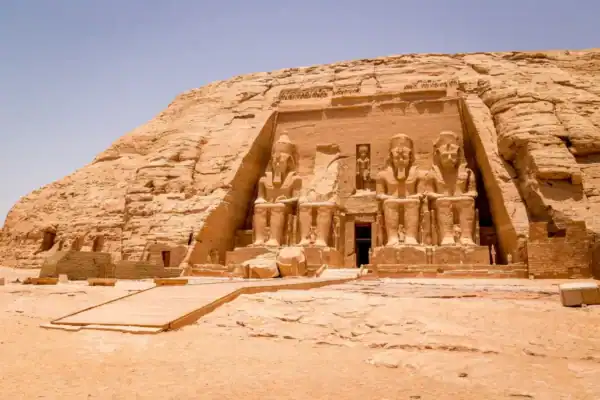
No. Abu Simbel is a separate excursion from the usual Luxor–Aswan cruise visits and requires additional time and transport from the Aswan area. Some packages include it; others offer it at an extra charge or omit it. Check the named itinerary and its inclusions before assuming that “Nile cruise” covers Abu Simbel.
Yes, but allow separate transfer or flight time and enough nights to enjoy the stay. Choose the resort area after deciding whether your sightseeing finishes in Cairo, Luxor or Aswan. Do not assume that different Red Sea resorts are nearby or interchangeable. Confirm the actual transport route before reserving independently arranged hotels.
The Grand Egyptian Museum (GEM) near Giza, the Egyptian Museum in Tahrir Square and the National Museum of Egyptian Civilization (NMEC) in Fustat are different venues with separate admissions. GEM lists the Tutankhamun Galleries in its current visitor offer; NMEC has the Royal Mummies Gallery. Our Cairo FAQs explain how to choose and group these visits.
Not necessarily. The Giza Plateau ticket does not automatically include admission inside a pyramid, and selected Luxor tombs require extra tickets beyond standard entry. A guide, transfer, general entrance and optional interior visit are different services. For each must-see experience, check both the venue’s current rules and the named inclusions of your tour.
A family itinerary works best when it balances sightseeing with rest and realistic travel days. Choose fewer major stops, avoid assuming children will enjoy long tomb or museum visits, and discuss room arrangements and child ages before requesting a quote. Check child ticket conditions and transfer seating separately; one age policy does not apply to every venue or service.
It depends on the person’s needs and the specific route. Ancient sites can involve uneven paving, sand, steps and narrow passages; a modern museum and an ancient tomb present different access conditions. Before confirming services, share walking limits, wheelchair dimensions and assistance needs, then request specific information about vehicles, hotels, cruise access and individual sights.
A guided itinerary can simplify transport and help explain large archaeological sites. Independent travel offers flexibility but requires you to arrange tickets, transfers and connections yourself. Compare what a proposal actually provides: a sightseeing guide is not necessarily present throughout the trip, and a driver’s service is different from a licensed guide’s service.
Compare the daily route, hotel and cruise nights, room or cabin type, named museums, domestic flight sectors, meals, entrance tickets, transfers and exclusions. Then review the applicable payment and cancellation terms before committing. A lower headline price may cover a different set of services; use the Egypt tour collection to compare the published itineraries.
Use our Cairo travel FAQs for Giza, museum choices, airports and city sightseeing. Use our Luxor travel FAQs for the East and West Banks, temple visits, tomb tickets and cruise connections. Keeping the detailed city questions together makes it easier to turn a broad Egypt route into a practical day-by-day plan.
Handpicked for you

Popular Egypt Tours

Compare current itineraries; guided services apply only where the selected tour page and written confirmation list them.

Still have questions about Egypt?

Ask a booking question through the published contact channels. Replies follow the stated business hours; tour availability, providers, price and inclusions are confirmed in writing.