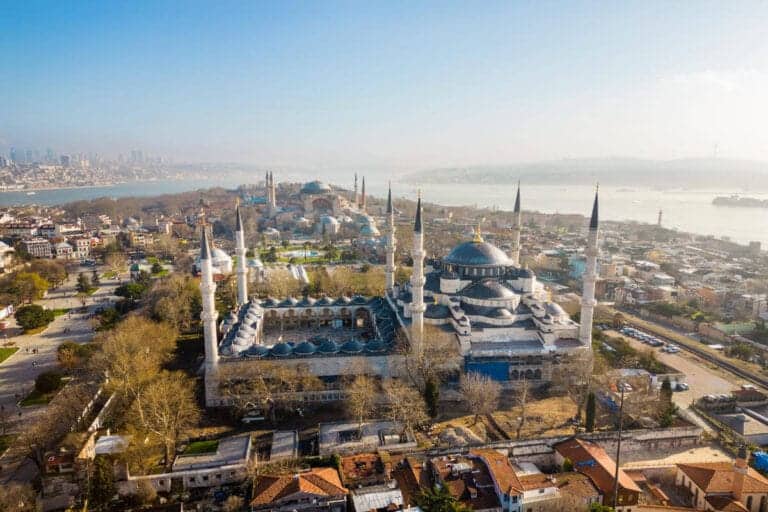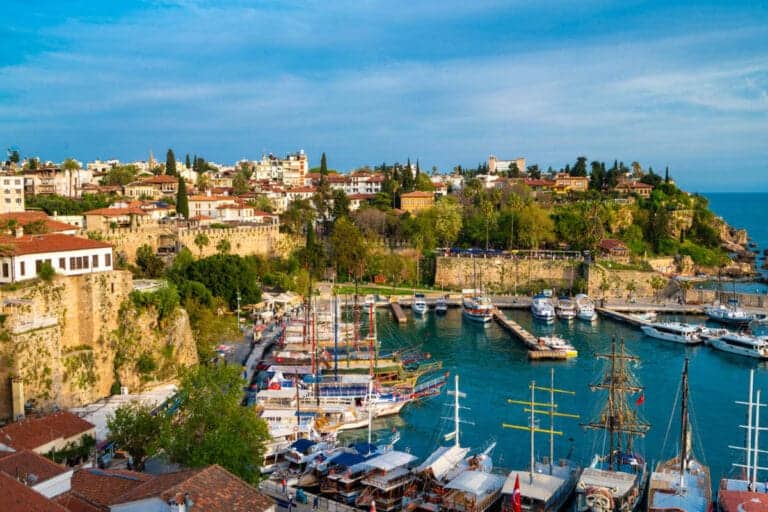

For many American travelers, a guided Turkey tour is the easier choice when the itinerary includes several regions—especially Istanbul, Cappadocia, Ephesus, Pamukkale, and the Mediterranean coast. Independent travel can cost less on a simple city break or a slow-paced route, but the savings narrow once you add domestic flights, airport transfers, regional transport, guides, entry fees, and the time needed to coordinate each move.
The practical difference is not simply “tour versus no tour.” It is about how much of your trip involves logistics. Turkey is large, and the famous sights are spread across the country. A guided itinerary is often best for first-time visitors who want to cover multiple destinations without spending vacation hours comparing bus schedules or arranging separate transfers. Independent travel works well for travelers who prefer flexibility, enjoy planning, and are comfortable staying longer in fewer places.
📋 Quick Facts
| Best Time to Visit | April–May and September–October for comfortable sightseeing weather and fewer extreme temperatures. |
| Time Needed | 7–10 days for Istanbul, Cappadocia, and western Turkey; 4–6 days for a shorter two-region trip. |
| Difficulty | Moderate independently; easier with a guided itinerary when changing regions. |
| Must-Bring | Comfortable walking shoes, a light layer, a payment card, and modest clothing for mosque visits. |
What a guided tour solves that independent travel does not
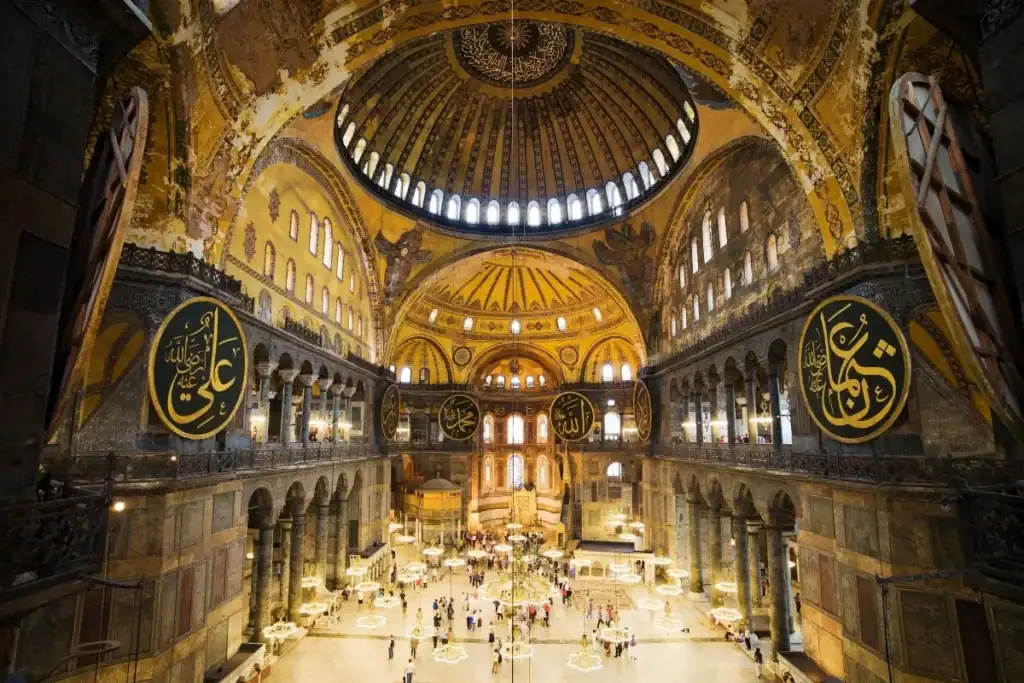
A guided tour turns a multi-stop Turkey trip into one connected route. Instead of separately booking hotels, transfers, internal flights, local day tours, and museum visits, you receive an itinerary with the major components coordinated in advance. This matters most when you are moving between regions with different airports and transport patterns.
For example, a typical first-time route may begin in Istanbul, fly to Cappadocia, continue toward Pamukkale and the Aegean coast, then finish near İzmir or return to Istanbul. On paper, that can look straightforward. In practice, each connection has details: hotel pickup times, baggage limits on domestic flights, airport distance, which Cappadocia airport is used, tour departure locations, and whether a long road transfer is worthwhile.
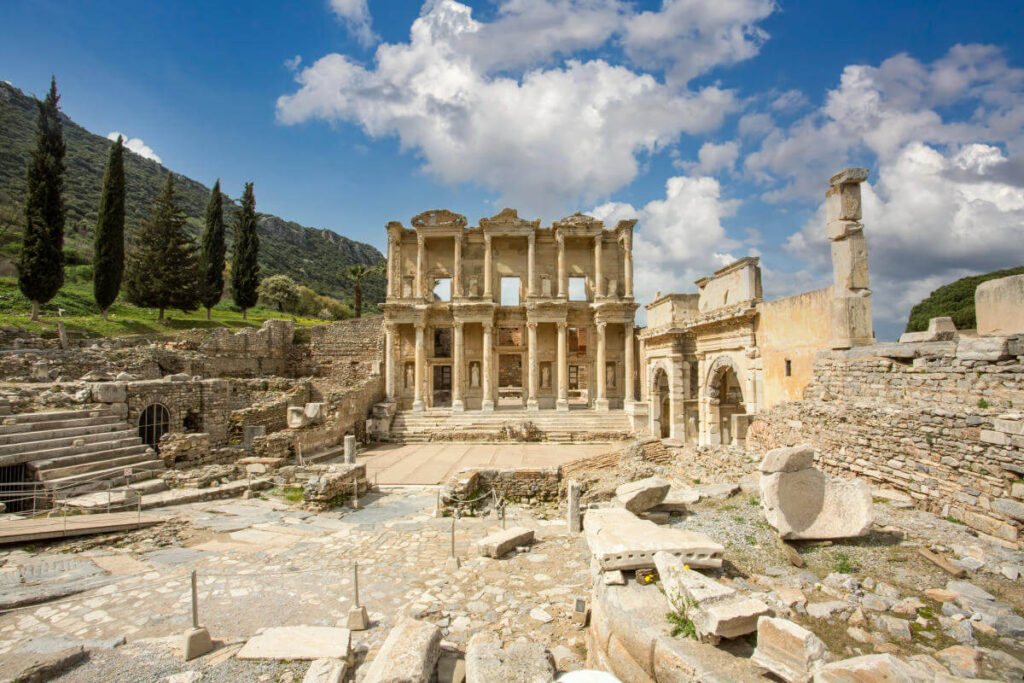
Guided travel also provides historical context where it has the most value. At Ephesus, for instance, a knowledgeable local guide can explain how the commercial streets, public buildings, houses, and theater fit together. Without that context, many independent visitors see impressive ruins but miss why the site was once one of the Mediterranean’s leading cities.
A tour does not remove every decision. You will still choose meals, optional activities, souvenir stops, and how to spend free time. The advantage is that the travel framework is already organized, leaving you more energy for the places themselves.
How the costs compare in real travel terms
Independent travel is not automatically cheaper. It can be less expensive if you use overnight buses, choose basic hotels, avoid private transfers, and keep your route compact. But a comfortable independent trip that mirrors a guided program’s pace can become costly once all individual bookings are added.
The table below uses broad planning ranges per person for a 7- to 10-day Turkey itinerary, excluding international airfare. Prices vary by season, hotel category, domestic flight availability, currency movement, and how early you book. Treat these as budgeting guidance rather than fixed quotations.
| Travel Style | Typical Cost Range | Usually Included | Usually Costs Extra |
|---|---|---|---|
| Independent budget trip | $900–$1,500 | Simple hotels or guesthouses, public transport, selected domestic flights or buses, meals chosen independently | Private transfers, guided site visits, premium hotels, hot-air balloon rides, some museum entries |
| Independent mid-range trip | $1,500–$2,600 | Comfortable hotels, domestic flights, some airport transfers, paid day tours, restaurant meals | Private guides, frequent taxis, upgraded rooms, optional activities, itinerary changes made close to travel dates |
| Small-group guided tour | $1,600–$3,000+ | Coordinated route, selected hotels, transport listed in the itinerary, local guiding, and scheduled sightseeing | International flights unless specified, personal expenses, some meals, tips, optional activities, and some entry fees depending on the program |
| Private guided trip | $3,000–$5,500+ | Flexible pacing, private transport arrangements, local guides, tailored sightseeing, and higher-category accommodation choices | Premium hotel upgrades, special experiences, meals not listed, and international airfare unless specifically included |
The biggest independent-travel cost surprise is usually transportation. A low domestic airfare can stop looking inexpensive after adding checked baggage, airport transfers, a hotel night near an early flight, and the cost of getting from the arrival airport to the next tour or hotel. A route with three or four internal flights can also become tiring, particularly if connections are not planned around realistic transfer times.
Pro Tip
When comparing a guided tour with a self-booked plan, price the entire route—not only hotels and flights. Add airport transfers, local guided excursions, entry fees, luggage costs, intercity transport, and the hotel nights needed to make early departures practical. That is where the apparent independent-travel discount often disappears.
Independent travel is strongest when you stay longer in fewer places

Independent travel is a smart fit for travelers with a simple plan. Spending four nights in Istanbul, for example, gives you time to see the major landmarks, ride a ferry, explore neighborhoods, and adjust your day around weather or energy levels. You are not under pressure to pack and move every morning.
The same is true in Cappadocia. If you plan to stay three or four nights in Göreme or a nearby town, you can book a Red Tour, Green Tour, hiking day, or balloon flight separately. This approach gives you flexibility if winds postpone balloon flights or if you decide to spend an extra morning in a valley rather than on a scheduled excursion.
Independent travel becomes more demanding when the route includes several one-night stops. A traveler trying to cover Istanbul, Cappadocia, Pamukkale, Ephesus, Antalya, Gallipoli, and Troy in one week will spend a substantial amount of time in airports, buses, transfer vehicles, and hotel check-ins. That is a situation where a planned tour route generally offers better value than trying to piece everything together.
For travelers building their own first trip, our guide to a practical 7-day Turkey itinerary helps show how Istanbul, Cappadocia, Ephesus, and Pamukkale can fit together without excessive backtracking.
Guided group tours versus private tours
Choosing a guided tour still leaves an important question: group or private?
Group tours: better value and shared logistics
A group tour usually offers the lower price because transport and guiding costs are shared. It is a practical option for solo travelers, couples, and friends who want a structured route without paying for a private vehicle. The trade-off is a fixed daily schedule. Pickup times, sightseeing duration, and hotel locations are determined by the program and the needs of the group.
Group travel is especially useful for destinations where road distances are long or a site benefits from interpretation. A route through Cappadocia, Pamukkale, and Ephesus is easier when someone else is managing departure timing and luggage movement.
Private tours: more control over the day
A private itinerary generally costs more but can be worthwhile for families, multi-generational groups, travelers with mobility considerations, photographers, or anyone who wants to control the pace. You can often spend more time at a museum, take a later morning start, include a particular restaurant, or reduce walking where possible.
The key is to be clear about what “private” means before booking. Confirm the hotel category, which services are private, whether guides vary by destination, what entrance fees are included, and how much flexibility is possible once the route is underway. For a fuller comparison, see our guide to group tours versus private tours in Turkey.
Local Flavor Alert
Turkey’s food is highly regional, so leave some unplanned meal time even on a guided schedule. Try a traditional Turkish breakfast in Istanbul, pottery kebab or local wines around Cappadocia, olive-oil dishes on the Aegean coast, and fresh seafood near the Bosphorus. A tightly scheduled itinerary should not mean every meal is rushed.
The practical trade-offs: time, comfort, and flexibility

The best choice depends on what you value most during limited vacation time.
Choose independent travel if: you enjoy researching, prefer slow travel, are comfortable using domestic transport, want spontaneous free days, and plan to focus on one or two regions. It also works well if you have visited Turkey before and already know the rhythm of the country.
Choose a guided tour if: this is your first visit, you want to see several regions efficiently, you have limited time, or you would rather not troubleshoot transport changes. A guided route is also helpful when visiting locations such as Pamukkale, where the white terraces and ancient city are best understood as part of a broader journey through western Turkey rather than an isolated stop.
Choose a private trip if: timing matters more than the lowest price. This can be the right choice for honeymooners, families, travelers celebrating a special occasion, or groups who can share the cost of private arrangements.
One common mistake is booking a tour only by the number of destinations listed. More stops do not always create a better trip. Look at the daily driving time, the number of hotel changes, flight timing, and how long you will have at each major site. A good itinerary gives Istanbul, Cappadocia, and the Aegean archaeological zone enough time to feel distinct rather than rushing through each one for a photo.
A balanced option for first-time visitors
Many travelers do best with a hybrid approach: arrange a guided multi-day route through the regions, then add independent nights in Istanbul at the beginning or end. This gives you time to choose your own restaurants, visit museums at your pace, and recover from international flights, while the more complicated cross-country portion is coordinated for you.
For a classic first trip that connects several major regions, consider the 10-Day Best of Turkey: Istanbul, Pamukkale, Ephesus, Cappadocia. It is suited to travelers who want a coherent introduction to Turkey without trying to arrange every flight, transfer, and intercity connection themselves.
Questions to ask before booking either option
Before deciding, compare the trip on practical details rather than headline price alone:
- How many hotel changes are involved, and are any nights spent on buses or in transit?
- Which airports are used for Cappadocia and western Turkey?
- Are domestic flights, checked baggage, airport transfers, and hotel transfers included?
- Which meals, entrance fees, optional activities, and tips are extra?
- How much free time is built into Istanbul and Cappadocia?
- Does the itinerary include long driving days that might affect your comfort?
- For a private trip, which services are actually private and which are shared local activities?
There is no single best format for every traveler. Independent travel can be rewarding and economical when your route is simple and your schedule is flexible. A guided trip is usually the more practical investment when you want to cover Turkey’s major regions in one vacation with less logistical uncertainty.
If you would like help comparing a small-group route, private itinerary, or a customized combination of both, plan your Turkey trip with One Nation Travel. We can help match the pace, hotel level, and route to the time you actually have.