
Short answer: May in Morocco is warm, dry, and one of the best windows of the year for a mixed city-and-desert trip. Expect roughly upper 70s to upper 80s°F in Marrakech, 70s in Fes, cooler and breezier 60s to low 70s°F on the Atlantic coast, and Sahara afternoons that can pass 95°F near Merzouga. Nights cool off noticeably in the mountains and desert, so pack layers.
This guide is for travelers planning a first or second trip to Morocco in May and trying to decide how to sequence cities, mountains, coast, and Sahara around the weather. The single decision that shapes your comfort is not what you pack — it’s where you spend the middle of the day and how much driving you accept between regions.
Key Takeaways
- May is a shoulder-to-high season month: good weather, longer daylight, and more competition for well-located riads in Marrakech and Fes.
- The country splits into four weather zones in May — inland cities (warm to hot), Atlantic coast (mild and windy), High Atlas (mild days, cold nights), and Sahara (hot afternoons, cool nights).
- Early May is noticeably gentler inland than late May, which matters if you’re heat-sensitive or traveling with kids or older parents.
- Desert activities should follow the light, not the clock: camel rides and dune walks at sunrise and sunset, rest or air-conditioned driving at midday.
- Verified May-friendly options start at USD 972 for a 3-day private desert route and USD 2,840 for a 5-day Casablanca-to-Marrakech itinerary.
- Book international flights, city accommodations, and any desert overnight first; those are the hardest pieces to replace on short notice in May.
What is the weather actually like across Morocco in May?
May sits between Morocco’s wetter spring and its demanding summer. Rain is possible but usually brief and limited to the north and the mountains. Daylight is long, valleys still hold some green from winter rain, and the light is excellent for photography in both the medinas and the dunes.
What catches people out is the spread. It’s normal to leave a 62°F windy morning in Essaouira, sightsee in 85°F heat in Marrakech two days later, and then need a fleece after dark at a desert camp. There isn’t one Morocco forecast in May — there are four.
| Region | Typical May daytime feel | Mornings and evenings | Plan around it by |
|---|---|---|---|
| Marrakech and inland south | Warm to hot; commonly upper 70s to upper 80s°F, with hotter spells | Pleasant; early mornings can feel cool in shade | Walking the medina before noon, resting mid-afternoon, returning at 5 p.m. |
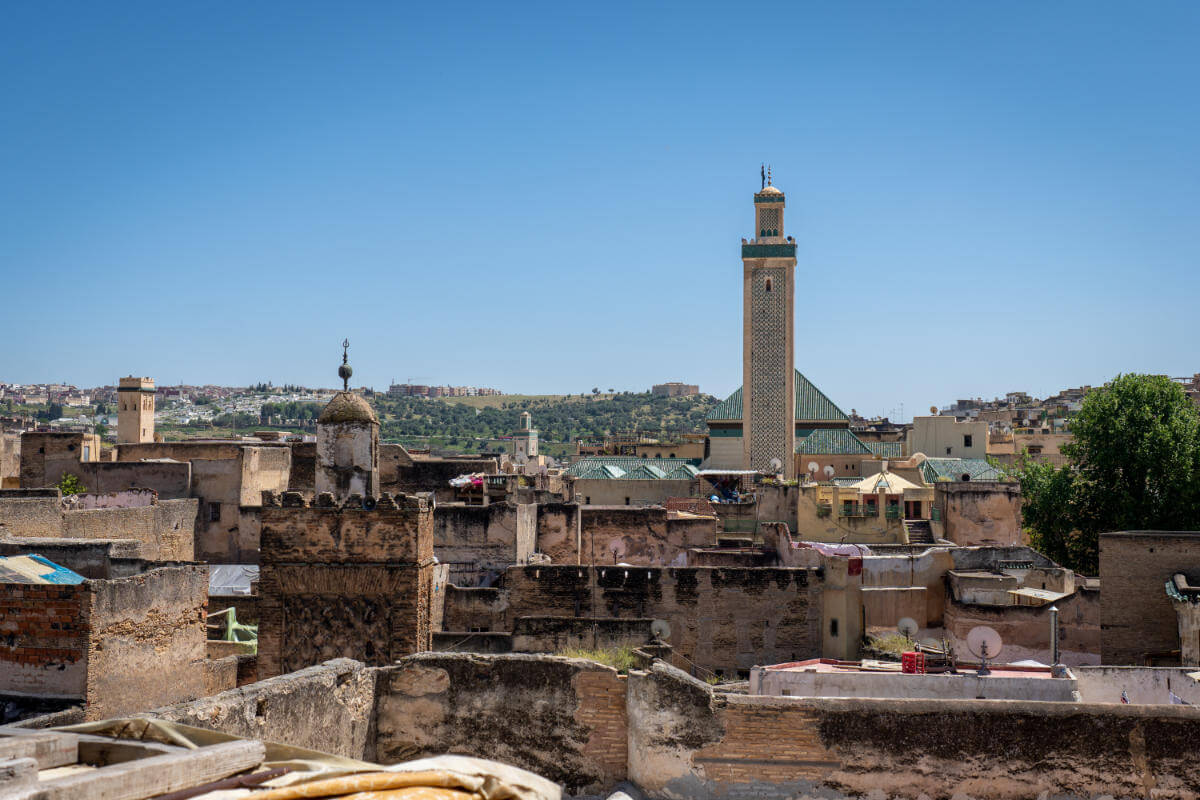
| Fes, Meknes, northern interior | Warm; often 70s to low 80s°F | Comfortable, occasional cool breeze | Full-day guided walks, which are realistic here in May |
| Essaouira, Casablanca, Atlantic coast | Mild; often 60s to low 70s°F with steady wind | Cool and damp-feeling after sunset | Packing a windbreaker and treating the beach as scenery, not swimming |
| High Atlas and mountain passes | Sunny and mild in valleys; cooler with elevation | Cold after dark at altitude | Layering, and checking road conditions before a mountain crossing |
| Merzouga, Erg Chebbi, Sahara routes | Hot; afternoons can reach the mid-90s°F or higher | Much cooler after dark, sometimes genuinely chilly | Sunrise and sunset activity, shade and water at midday |
Treat these as planning ranges rather than promises. A spring heat spike, a strong coastal wind event, or a short mountain shower can reshape a single day. Check the forecast for each overnight stop — not just the country — in the week before you fly.
Marrakech in May: the timing rhythm that makes it enjoyable
Marrakech is warm in May without the relentless quality of July and August. It’s a strong month for the medina, the souks, the gardens, and the palaces, provided you don’t fight the middle of the day. Dry heat plus reflected light off stone and tile makes 86°F feel stronger than the same number back home.
The rhythm that works: main outdoor sightseeing from roughly 8 a.m. to noon, a long lunch and a real break through the hottest stretch, then back out around 5 p.m. as the squares fill up. Travelers who try to cover everything in one continuous daytime loop usually finish the day irritable and behind schedule.
Accommodation matters more in May than in March. Riad rooms vary a lot depending on courtyard shade, window orientation, and whether air conditioning is in every room or only the salon. Ask specifically — “air-conditioned property” and “air-conditioned room” are not the same sentence.
Carry a refillable bottle, sunscreen, and a light long-sleeved overshirt. The overshirt does double duty: modest cover at religious and traditional sites, and sun protection during long medina walks.
For route ideas beyond the city, our guide to the 10 must-visit places in Morocco helps put the cities, mountain landscapes, and desert regions into a realistic order rather than a wish list.
Can you visit the Sahara in May?
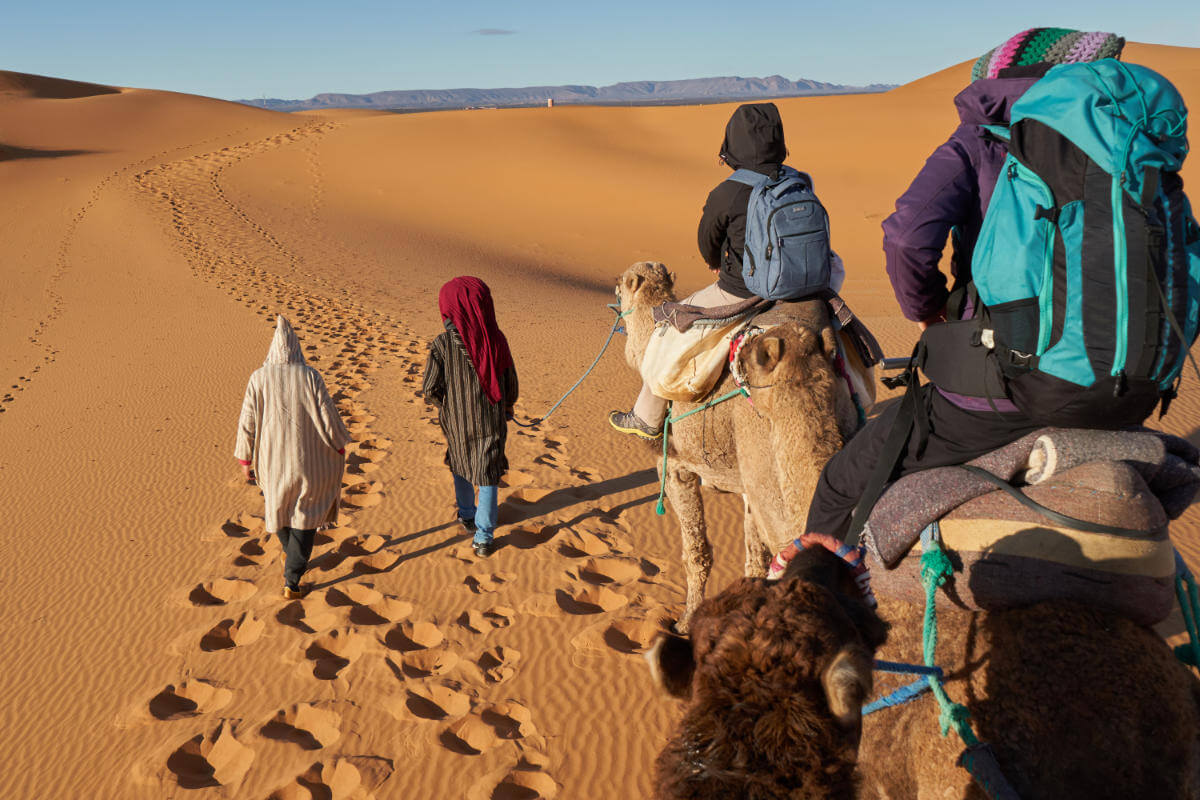
Yes — and for many travelers May is the last comfortable month before summer desert heat becomes a real constraint. Skies are usually clear, nights are cooler than in June through August, and the dunes photograph beautifully in the long May light.
The trade-off is straightforward. Afternoons near Merzouga can run 10 degrees or more above Marrakech. Sand reflects light hard, so sunglasses, sunscreen, and a head covering matter as much as they would on a boat. Camel treks, dune climbs, and sandboarding belong to the first and last two hours of daylight.
The other thing to plan for is distance. A Sahara itinerary involves long road days over mountain passes and through valleys before the dunes appear. Before you commit, ask three questions: how many hours are on the road each day, exactly where the overnight camp or hotel sits, and what cooling arrangements the camp has for a warm evening. A camp described as “luxury” tells you nothing about ventilation.
If you’re already in the southeast and want to finish in Marrakech, the 3-Day Private Desert Tour from Errachidia to Marrakech via Merzouga (from USD 972) is a practical fit for May, because a private vehicle lets you shift departure times around the heat instead of waiting on a group.
The Atlantic coast is cooler than most visitors expect
Essaouira, Casablanca, and the coastal strip behave differently from the interior. May there is mild and windy — often a relief after Marrakech, and a surprise for anyone who packed only shorts and T-shirts. The wind is the defining feature: a bright, sunny afternoon can feel cool by 4 p.m.
That wind is exactly why Essaouira draws kitesurfers and windsurfers. For everyone else, it means bringing a windbreaker and a long-sleeved layer, plus shoes that handle uneven medina lanes and sandy waterfront paths. Ocean temperatures stay cool in May, so treat the coast as a walking, seafood, and ramparts destination rather than a swimming one.
High Atlas and mountain roads: where layers actually matter
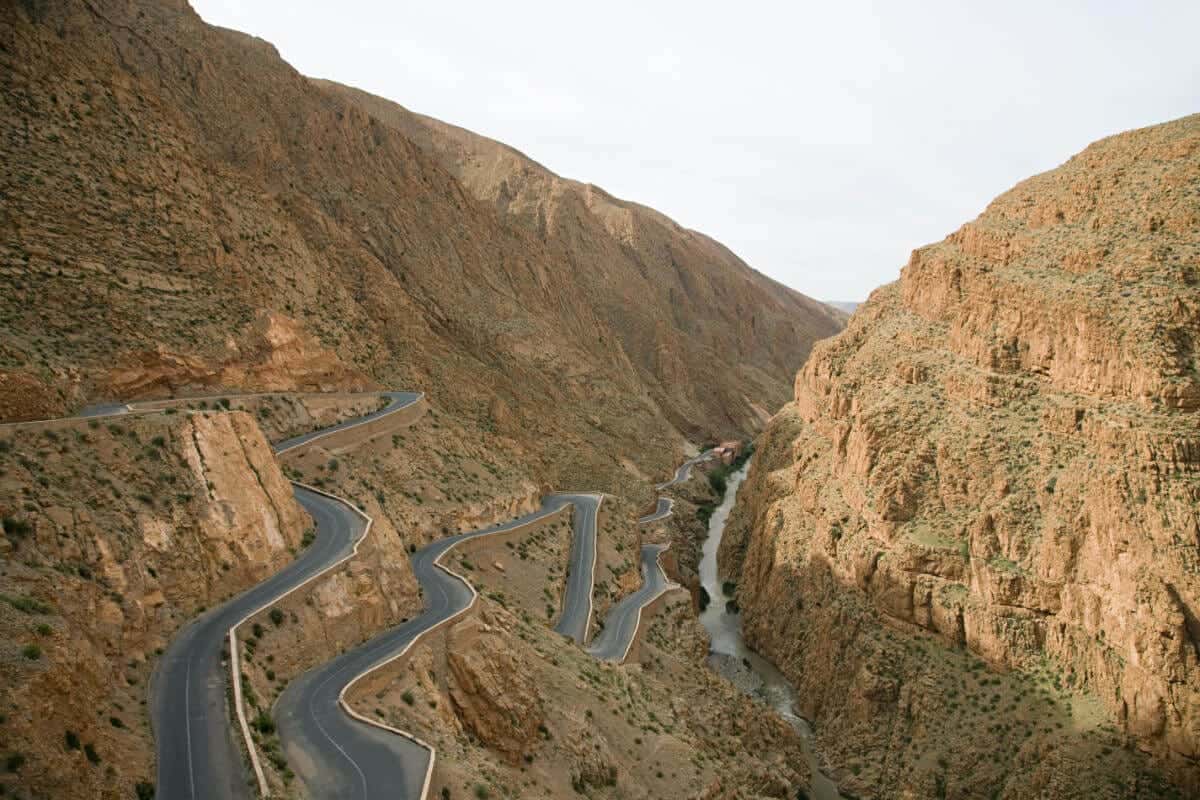
May is a rewarding period in the High Atlas. Lower slopes and valleys can still show spring color, snow lingers on the highest peaks for photos, and the worst winter road conditions have generally passed. But elevation changes the weather faster than distance does. A warm 9 a.m. departure from Marrakech does not mean the same outfit works at a pass two hours later.
Pack one genuinely warm layer — a light insulated jacket, fleece, or wool overshirt — rather than a thin cardigan you’ll regret. Closed-toe walking shoes beat sandals on rocky viewpoints and village paths, and they’re also better for dune walking than flip-flops.
If your route crosses mountain roads, confirm departure time, realistic drive duration, luggage handling, and planned stops. Morocco’s distances look modest on a map and drive long in practice, because the roads wind and the viewpoints are hard to skip. Building slack into the schedule is more useful than trying to hit every stop on the minute.
What to pack for Morocco in May
Pack for heat, strong sun, and a 25-degree daily swing — not for a uniform beach holiday. Breathable cotton, linen blends, and moisture-wicking fabrics work better than heavy denim once the afternoon warms up, and loose cuts are more comfortable than fitted ones.
- Sun protection: high-SPF sunscreen, sunglasses, a brimmed or wrap-style hat, SPF lip balm.
- Daytime clothing: light tops, breathable pants or longer skirts, plus something that covers shoulders when you want it.
- One real warm layer: essential for the coast, mountain evenings, and desert nights.
- Footwear: supportive sneakers or walking shoes; sandals only as a secondary pair.
- Small day bag: water, charger, tissues, sunscreen, and that extra layer.
- Electrolyte packets: genuinely useful on long desert drives and back-to-back walking days.
Skip the formalwear. Smart-casual covers restaurants and riad terraces, and modest, practical clothing is the most comfortable choice in rural areas and conservative neighborhoods. The aim is to stay cool while dressing respectfully.
Which May itinerary style fits you?
May weather rewards two kinds of trips: short and focused, or longer and properly paced. The version that goes wrong is the six-day sprint through Casablanca, Fes, the desert, and the coast, which turns into four long driving days with heat exposure at both ends.
| Travel style | Best for | May trade-offs | Verify before booking |
|---|---|---|---|
| Independent, budget-minded | Flexible travelers comfortable with shared transfers, buses, and simple riads | Cheapest option, but midday heat is harder to manage without a vehicle; group departures rarely shift for weather | Whether transport is air-conditioned, pickup points, and total road hours per day |
| Planned multi-region route | First-timers who want cities plus Sahara without arranging each leg themselves | Good balance of cost and comfort; some fixed timing you can’t change on a hot day | Which meals are included, camp facilities, and whether transfers are private or shared |
| Private itinerary | Families, heat-sensitive travelers, photographers, and anyone wanting early starts | Highest cost per person, but the most control over pace, rest stops, and sunrise timing | Vehicle type and size, driver hours, and exactly which guided visits are included |
For a 5-day framework that connects Casablanca, the Sahara, and Marrakech without a punishing pace, the 5-Day Morocco Tour (from USD 2,840) is designed for first-time visitors. If you have more time and want Fes and Chefchaouen in the same trip, the 9-Day Morocco Tour (from USD 3,160) spreads the driving across more days, which is exactly what late-May heat calls for.
On costs: May is popular, so flights and centrally located riads price higher than in January or February. Prices above are starting points and can change with dates, group size, and room category. When you compare quotes, compare inclusions — “desert tour” covers everything from a shared minibus and a basic tent to a private 4×4 and a camp with proper ventilation. Independent travel can undercut a package on paper and still cost more once you add transfers, entry fees, and guides; our comparison of platform pricing versus direct booking walks through how those gaps usually appear.
One practical note on terms: if you need to cancel or change dates, notice must be given at least 5 days before the tour starts, and non-refundable flight and bus ticket costs are deducted from the paid balance. With less than 5 days’ notice, or for a no-show, the full payment is non-refundable.
Choose your next step
Recommended Morocco tours
These verified options are the closest available matches for this article’s destination, route intent, and trip length.
3-Day Private Desert Tour from Errachidia to Marrakech via Merzouga
A 3 days Cultural & Heritage Tour route covering Morocco.
View tour details →
5-Day Morocco Tour: Casablanca to Sahara & Marrakech
A 5 days route covering Morocco.
View tour details →
Common May planning mistakes
The most frequent one is treating all of Morocco as equally hot. Shorts-only packing fails on the Atlantic coast and again after dark at a desert camp. The mirror-image mistake is scheduling a full afternoon of medina walking in late May as if the temperature will stay mild — it usually won’t.
The second is underestimating road time and stacking one-night stops. Each move costs you a morning and an evening. For a first visit, Marrakech plus the desert, or Marrakech plus the coast, beats a checklist of every imperial city.
The third is relying on monthly averages. Early May and late May can feel like different months inland. Look at the actual forecast for each overnight location a few days out — Marrakech, a High Atlas village, and Merzouga may call for three different clothing decisions on the same trip.
Morocco in May: traveler questions
Is early May or late May better?
Early May is generally more comfortable inland and in the Sahara, with softer afternoons and cooler nights. Late May brings more reliable coastal sun and warmer sea breezes, but Marrakech and the desert can get genuinely hot by then. If heat is your main concern, aim for the first half of the month.
Does it rain in Morocco in May?
Rain is much less frequent than in winter or early spring, but short showers are still possible in the north and the mountains. Coastal mist and overcast mornings are more common than sustained rain. A packable light jacket handles almost every May scenario.
How cold does the desert get at night in May?
Enough that a single fleece or light jacket is the difference between enjoying the stars and going to bed early. Desert nights drop sharply after sunset, even after a 95°F afternoon. Camps vary widely in bedding and ventilation, so ask what’s provided rather than assuming.
What should women wear in Morocco in May?
Lightweight, loose, and modest works best: breathable pants or longer skirts, short- or long-sleeved tops, and a light scarf or overshirt for sun, mosque courtyards, and cooler evenings. Comfort in the heat plus one layer for the night covers nearly every setting.
Is May crowded in Marrakech and the Sahara?
It’s one of the busier months, and well-located riads and popular desert camps fill up in advance. That doesn’t mean the medina feels overwhelming, but it does mean the accommodation you actually want may be gone if you book late.
So is May the right month for your trip?
For most travelers, yes. May gives you long daylight, low rain risk, workable desert conditions, and mountain scenery at its greenest — as long as you respect the afternoons and build the route around fewer, longer stops. Heat-sensitive travelers should lean toward the first half of the month or consider October. Anyone dreaming of hot beach days will find the Atlantic still cool.
If you’d rather have the route, accommodations, and daily timing matched to May conditions instead of guessing, tell us your dates and we’ll plan a Morocco trip around them. Share how many days you have and which regions matter most, and we’ll shape the driving and the sightseeing hours to keep the trip comfortable.