
I’m going to let you in on something that’s been bothering me for years. Every week, I watch American travelers arrive in Amman having paid $3,000, $4,000, sometimes even $5,000 for a Jordan tour they booked through a massive online platform — the same tour that costs a fraction of that when you book with the right people. I’ve guided travelers through Petra for over a decade, and the pricing gap between what the internet charges and what Jordan actually costs has become almost absurd. Let me pull back the curtain on how this works.
📋 Quick Facts
| Average Online Markup | 30-40% above local operator prices |
| Peak Booking Season | October–April (prices highest Sept–Nov) |
| Biggest Cost Trap | Multi-platform reselling chains |
| Best Booking Window | 2-4 months ahead, directly with a specialist operator |
The Middleman Chain You Don’t See
Here’s how the online booking world actually works for Jordan tours. A local ground operator in Amman creates a 6-day itinerary covering Petra, Wadi Rum, and the Dead Sea. They price it at, say, $1,200 per person. Fair price. Good hotels. Experienced guides. Then a regional wholesaler picks it up and adds their 15% margin. Then a global online travel agency (OTA) lists it and adds another 20-25% on top. By the time you see it on your screen in New Jersey or California, that $1,200 tour is now $1,800 or more — and you haven’t even added flights yet.
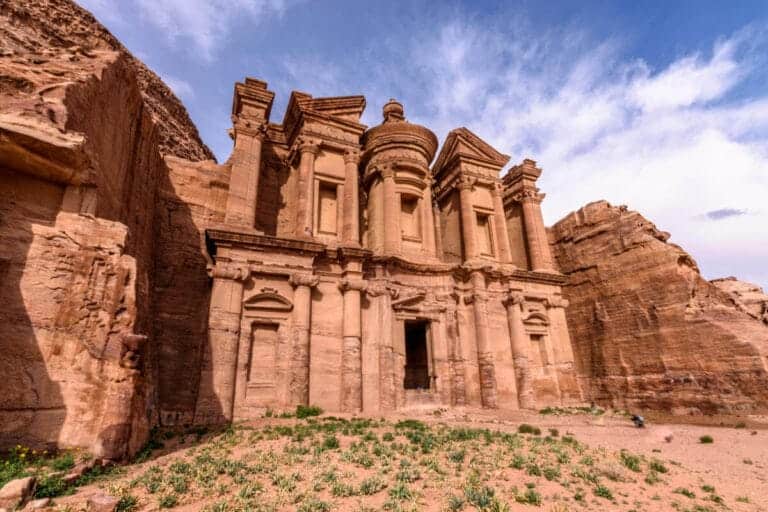
I’ve watched this happen with my own eyes. The same Bedouin camp in Wadi Rum, the same driver, the same guide standing outside the Treasury at dawn — but the price tag varies wildly depending on how many digital hands touched the booking before it reached you.
Laila’s Secret
The biggest online platforms don’t own a single vehicle or employ a single guide in Jordan. Every tour you see listed is subcontracted to local operators — often the exact same ones you could book with directly. The platform’s value is visibility, not expertise. When you book through a specialist operator like One Nation Travel, you’re cutting out the reseller chain entirely and getting someone who actually knows the difference between a good Petra guide and a mediocre one.
Where Exactly Does the 40% Go?
Let me break this down the way my Bedouin grandfather would — simply and honestly. That extra money you’re paying doesn’t buy you a better room in Wadi Musa. It doesn’t get you a more knowledgeable guide at the Monastery. It goes to:
Platform commissions: Major OTAs charge operators between 20-30% commission per booking. That cost gets passed straight to you.
Advertising spend: Those “top result” listings you see when you Google “Jordan tours”? Companies pay $8-15 per click for those ads. Thousands of clicks add up, and guess who absorbs that cost.
Reseller layers: Some tours pass through three or four intermediaries before reaching the ground. Each one adds margin. None of them have ever poured you Bedouin tea under the stars.
Dynamic pricing algorithms: Large platforms use demand-based pricing. Search for Petra tours in September, and watch the same itinerary jump $200 in a week as the algorithm detects peak interest.
Price Alert (2026)
A quality 6-day Jordan tour (Amman, Jerash, Petra, Wadi Rum, Dead Sea) with 4-star hotels runs approximately $1,200-$1,600 per person through a specialist operator. The same itinerary on major OTAs often lists at $1,900-$2,400+. Jordan Pass (which covers Petra entry and visa fees) costs 70-75 JD (~$99-106 USD) and is a genuine money-saver — make sure your operator includes it or advises you to purchase it in advance.
The “Comparison Trap” That Gets Smart Travelers
I know what you’re thinking: “But Laila, I compared prices across five websites.” Here’s the thing — most of those websites are pulling from the same inventory. I’ve seen the same tour description, word for word, listed on three different platforms at three different prices. The photos are identical. The itinerary is identical. The actual experience on the ground is identical. The only difference is who’s taking a cut.
It’s the same pattern I covered when discussing how major platforms compare to specialist operators on pricing. The economics don’t lie.
Even worse, some platforms bundle in “free cancellation” or “best price guarantees” that sound protective but are actually baked into a higher base price. You’re pre-paying for flexibility you may never use.
📊 Best Times to Visit
| Time | Crowd Level | Tip |
|---|---|---|
| March–May | 🟢 Low | Perfect weather, wildflowers in Wadi Rum, best prices from specialist operators |
| October–November | 🔴 High | Peak season, highest online markups — book direct to save the most |
| December–February | 🟡 Medium | Cool but magical; Petra without crowds, lower prices across the board |
What a Specialist Operator Actually Does Differently
When I work with travelers through a company like One Nation Travel, the difference isn’t just price — though saving 30-40% is nothing to dismiss. It’s what happens when something goes wrong or when something could go more right.
Last spring, I was guiding an American couple through Petra when a sudden rainstorm closed the Siq for two hours. Their specialist operator had the itinerary adjusted within 30 minutes — we spent the morning at Little Petra instead, completely empty, drinking sage tea with a local family. A platform booking? You’d be on hold with a call center in another country while your guide shrugs.
Specialist operators also know which hotels actually deliver. I’ve stayed in “4-star” properties in Wadi Musa that I wouldn’t wish on anyone, and I’ve slept in modest Bedouin camps in Wadi Rum that changed travelers’ lives. The star rating means nothing without someone who’s personally inspected the rooms.
Local Flavor Alert
Before you leave Petra, ask your guide to take you to a place that serves galayet bandora — tomatoes slow-cooked with garlic, olive oil, and green chili, scooped up with fresh taboon bread. There’s a family-run spot near the Petra Visitor Center that makes it perfectly. It costs about 3 JD ($4 USD) and it’s more satisfying than any hotel buffet dinner. This is the food Bedouin families actually eat, and it’s the kind of recommendation you’ll never find on a platform’s auto-generated itinerary.
How to Actually Save That 40%
I’ll be direct because I respect your time and your money:
Book with a specialist operator, not an aggregator. Companies that focus specifically on Jordan, Turkey, and Egypt — rather than listing 10,000 tours in 90 countries — have direct relationships with ground teams. No middlemen, no inflated commissions.
Book 2-4 months in advance. Not six months (too early, prices aren’t set), not two weeks (last-minute markups). The sweet spot for Jordan is 8-16 weeks out.
Combine destinations. If you’re already flying to the region, adding Jordan to a combined Egypt and Jordan itinerary drops your per-day cost significantly because transfers and logistics are bundled efficiently.
Ask about the actual ground operator. Any reputable company will tell you who’s running the tour on the ground. If they can’t or won’t answer, that’s your sign.
Pro Tip
If you’re considering a multi-country trip, I’d recommend looking at a 15-Day Turkey, Egypt & Jordan itinerary. The per-day cost drops dramatically compared to booking each country separately through different platforms, and you get one team coordinating everything. I walked through the planning logic in my 15-day itinerary guide if you want the details.
Private Airport Transfer
When you land at Queen Alia International Airport (AMM), please do yourself a favor and skip the taxi negotiation game. Airport taxis to downtown Amman run 30-40 minutes, but drivers know you’re tired and jet-lagged — prices get creative. If you’re heading straight to Petra, that’s a 3-3.5 hour drive, and having a private transfer waiting with your name on a sign and cold water in the back seat makes all the difference after a transatlantic flight. I arrange these for every traveler I work with because it sets the tone for the whole trip.
The Bottom Line From Someone Who Lives This
I’m not telling you that online platforms are evil. They serve a purpose — discovery, comparison, convenience. But once you’ve decided on Jordan, the smartest financial move is stepping off the platform and talking to someone who actually knows the difference between the tourist Petra and the real one. Someone who can tell you which Wadi Rum camp serves the best zarb and which one just microwaves yesterday’s lamb.
That 40% you save? Put it toward a hot air balloon over Wadi Rum at sunrise, or an extra night in a Dead Sea resort, or a cooking class in Amman’s downtown. Put it toward the experience, not the intermediary.
About Laila — The Desert Nomad Guide
This article was written by our Jordan expert, Laila. A warm female guide with Bedouin hospitality running through her veins. Expert in Petra and Wadi Rum, she weaves desert adventures with cultural insights and personal warmth. She whispers Petra’s crowd-escape routes and Bedouin hospitality secrets in a warm, intimate tone.
✈ Recommended Tour
Our 6-Day Highlights of Jordan covers Petra, Wadi Rum, and the Dead Sea with local expert guides — no middlemen, no inflated platform pricing. It’s the exact itinerary I’d design for my own family visiting Jordan for the first time.
Frequently Asked Questions
Why are Jordan tours more expensive on large booking platforms?
Large online travel agencies charge local operators 20-30% commission per booking. This cost is passed directly to travelers through higher tour prices. Additionally, some tours pass through multiple resellers before reaching you, with each layer adding its own margin. Booking with a specialist operator eliminates these intermediary costs.
Is it safe to book Jordan tours directly with a specialist operator?
Absolutely. Reputable specialist operators like One Nation Travel are licensed, insured, and have direct relationships with vetted hotels, drivers, and guides in Jordan. They often provide better support than platforms because they have direct communication lines with ground teams rather than routing everything through a call center.
How far in advance should I book a Jordan tour to get the best price?
The ideal booking window is 2-4 months before your travel dates. Booking too far in advance means prices may not be finalized, while last-minute bookings often carry premium pricing. For peak season travel (October-November), consider booking 3-4 months ahead for the best availability and rates.
What is the Jordan Pass and does it save money?
The Jordan Pass bundles your tourist visa fee (40 JD) with entry to over 40 attractions including Petra. At 70-75 JD depending on how many days you want at Petra, it saves you money if you were going to visit Petra anyway. Purchase it online before arriving in Jordan to use it for visa-free entry at the airport.
Can I combine Jordan with Egypt or Turkey to save on costs?
Yes, combining destinations significantly reduces per-day costs because flights, logistics, and guide arrangements are bundled. A 15-day Turkey, Egypt, and Jordan tour typically costs 25-35% less per day than booking each country separately. The regional proximity makes multi-country itineraries very efficient.