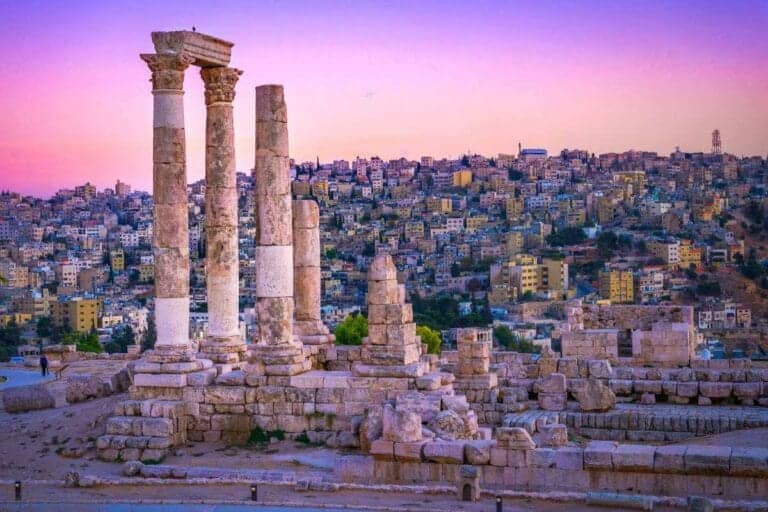

Short answer: Pick Egypt if you want the deepest concentration of ancient monuments on earth — the Pyramids, Luxor’s tombs and temples, and a Nile cruise that moves your hotel with you. Pick Jordan if you’d rather have one spectacular archaeological site, desert landscapes, and short driving distances. With 10 days or more, combining both is realistic and usually better value per flight.
Most travelers weighing these two countries aren’t really asking which one has better ruins. They’re asking which one fits the number of days they have, how much walking and driving they’re willing to do, and whether the trip needs to feel restful or ambitious. Those are different questions, and they push toward different answers.
Below is a straight comparison of five headline wonders in each country, plus the planning details that actually change your experience: internal flights, ticket structures, seasonal heat, and where a combined itinerary saves money instead of burning it.
Key Takeaways
- Egypt rewards longer trips. Cairo plus Luxor and Aswan needs roughly 7–10 days to avoid feeling rushed; a Nile cruise absorbs travel time instead of adding to it.
- Jordan is compact. Amman, Jerash, Petra, Wadi Rum, and the Dead Sea all connect by road, so 5–7 days genuinely covers the country’s highlights.
- Egypt has more sites per day; Jordan has more scenery per hour. Choose based on whether you want tombs and temples or canyons, desert camps, and salt water.
- Both are best in spring and fall. Upper Egypt in July and August regularly runs brutally hot; Petra in winter is cold, and Wadi Rum nights drop sharply.
- Combining is efficient. Cairo–Amman is a short regional flight, and packaged Egypt and Jordan itineraries start from USD 2,680 for eight days, so a two-country trip often costs less than two separate long-haul vacations.
- Verify what’s actually included — domestic flights, Nile cruise meals, Petra and Giza entrance tickets, tipping, and visa fees vary widely between operators.
Egypt: More Monuments Than Any Single Trip Can Hold
Egypt is the more demanding of the two countries — bigger distances, bigger crowds, bigger sites — and also the more astonishing one. The trade-off is that you need to plan the route properly or you’ll spend your vacation in transit.
1. The Pyramids of Giza
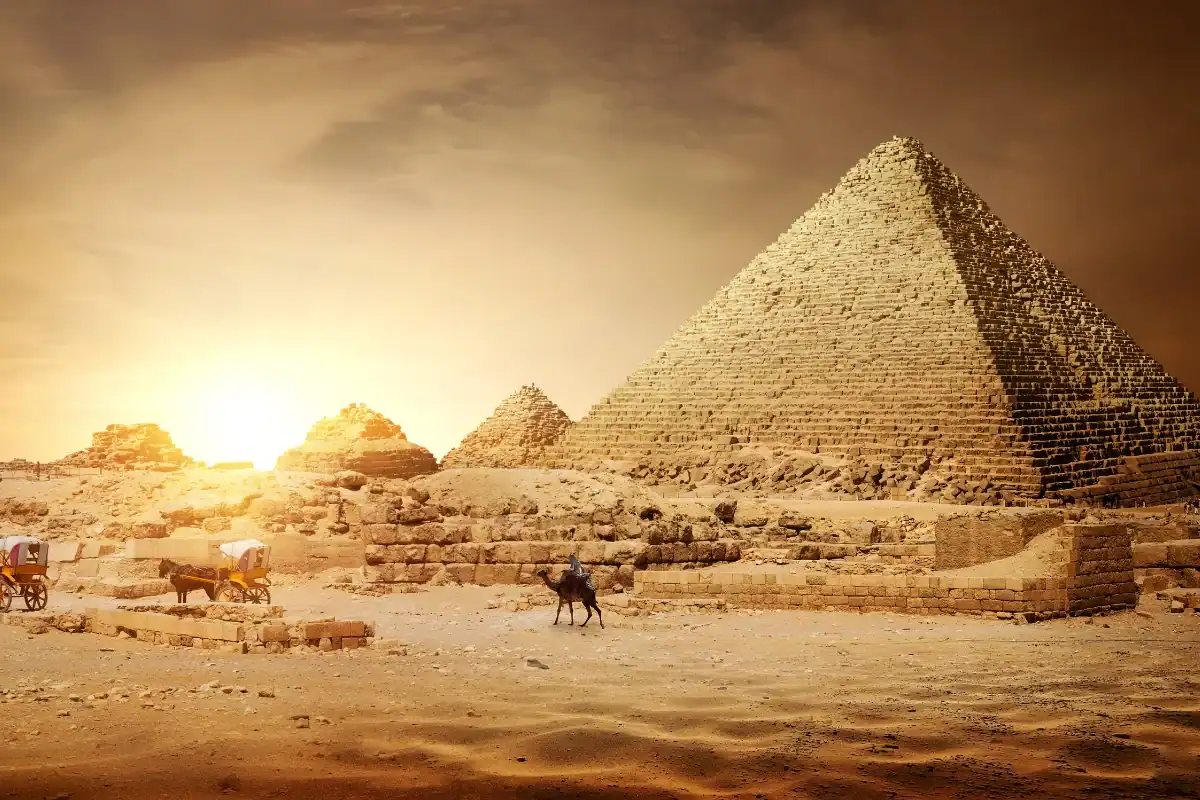
The Pyramids of Giza are the reason most people book Egypt in the first place, and they don’t disappoint at close range. The plateau holds the Great Pyramid of Khufu, the Pyramid of Khafre, the smaller Pyramid of Menkaure, and the Great Sphinx.
Practical detail that matters: entering a pyramid’s interior is a separate ticket from the plateau ticket, the passages are steep and airless, and there is nothing decorative inside. Skip it if you’re claustrophobic. Many travelers get more out of pairing Giza with Saqqara and Memphis the same day, which shows how pyramid design evolved.
Go early. Giza is at its most bearable in the first two hours after opening, before the tour bus wave and the midday glare.
2. The Valley of the Kings in Luxor
Luxor is where Egypt stops being a photograph and starts being overwhelming. The Valley of the Kings holds the rock-cut tombs of New Kingdom pharaohs, with painted ceilings that still hold their color. Standard tickets typically admit you to a set number of tombs, with Tutankhamun and a few others sold separately — worth confirming with your guide on the day rather than assuming.
The same west-bank morning usually includes the terraced Temple of Hatshepsut and the Colossi of Memnon. On the east bank, Karnak Temple and Luxor Temple are the largest religious complexes you’ll ever walk through.
3. Abu Simbel
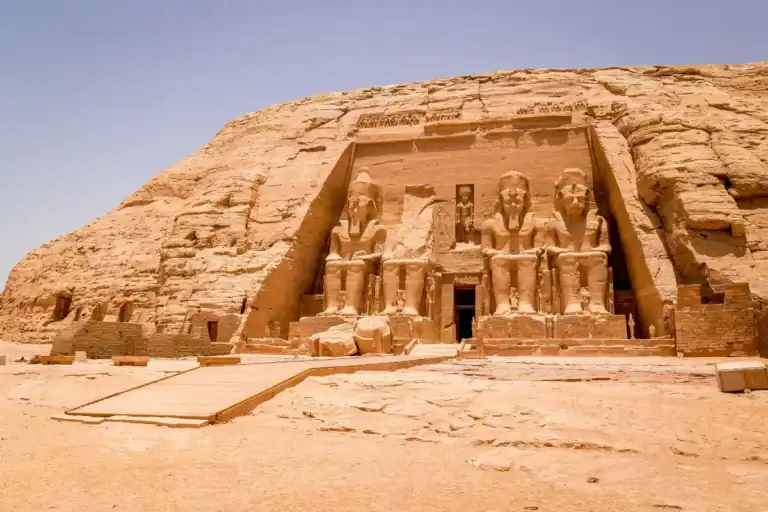
The Abu Simbel Temples sit far south near Lake Nasser, and getting there is the whole question. Options are a long road convoy from Aswan or a short domestic flight; the flight costs more but returns most of a day to you. It’s an add-on, not a default inclusion, so check whether your itinerary lists it.
4. Cairo’s Museums
Cairo’s museum situation has changed significantly in recent years, with collections split between the historic downtown Egyptian Museum on Tahrir Square and the vast newer museum complex out near Giza. Ask your operator which museum your ticket covers and where the Tutankhamun collection is displayed on your travel dates, since displays have been moving.
Old Cairo is the underrated half-day: the Hanging Church, the Ben Ezra Synagogue, and the lanes of Khan El Khalili Bazaar.
5. A Nile Cruise
The Nile cruise between Aswan and Luxor is Egypt’s best logistical trick. You unpack once, and the boat carries you to Kom Ombo, the Temple of Edfu, and the island setting of Philae Temple without a single hotel change. Three- and four-night sailings are standard; four nights gives you a calmer pace and usually includes a fuller southern program around the Aswan High Dam.
What’s rarely spelled out clearly: drinks are almost never included, shore-excursion tickets may or may not be, and boat categories vary far more than star ratings suggest. Our breakdown of what a Cairo and Nile cruise trip actually includes covers the line items that catch people out.

Jordan: Fewer Sites, Shorter Drives, Bigger Landscapes
Jordan is roughly the opposite proposition. You won’t see five thousand years of continuous monumental architecture, but you’ll spend far less time moving and far more time outdoors.
1. Petra
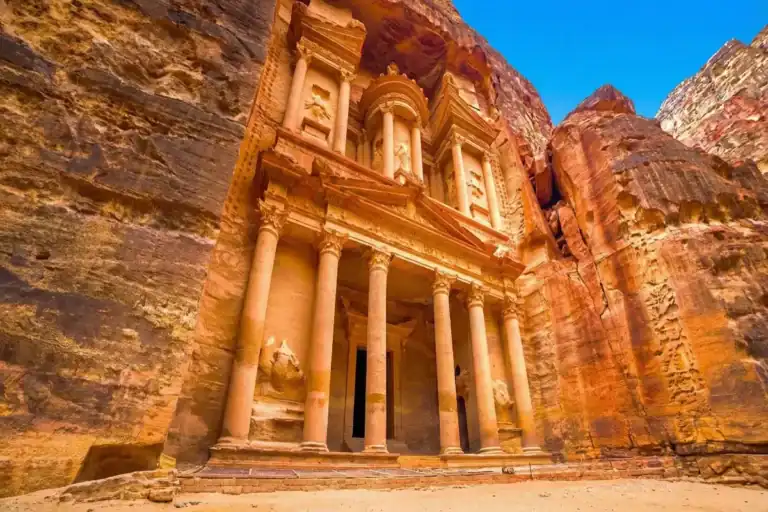
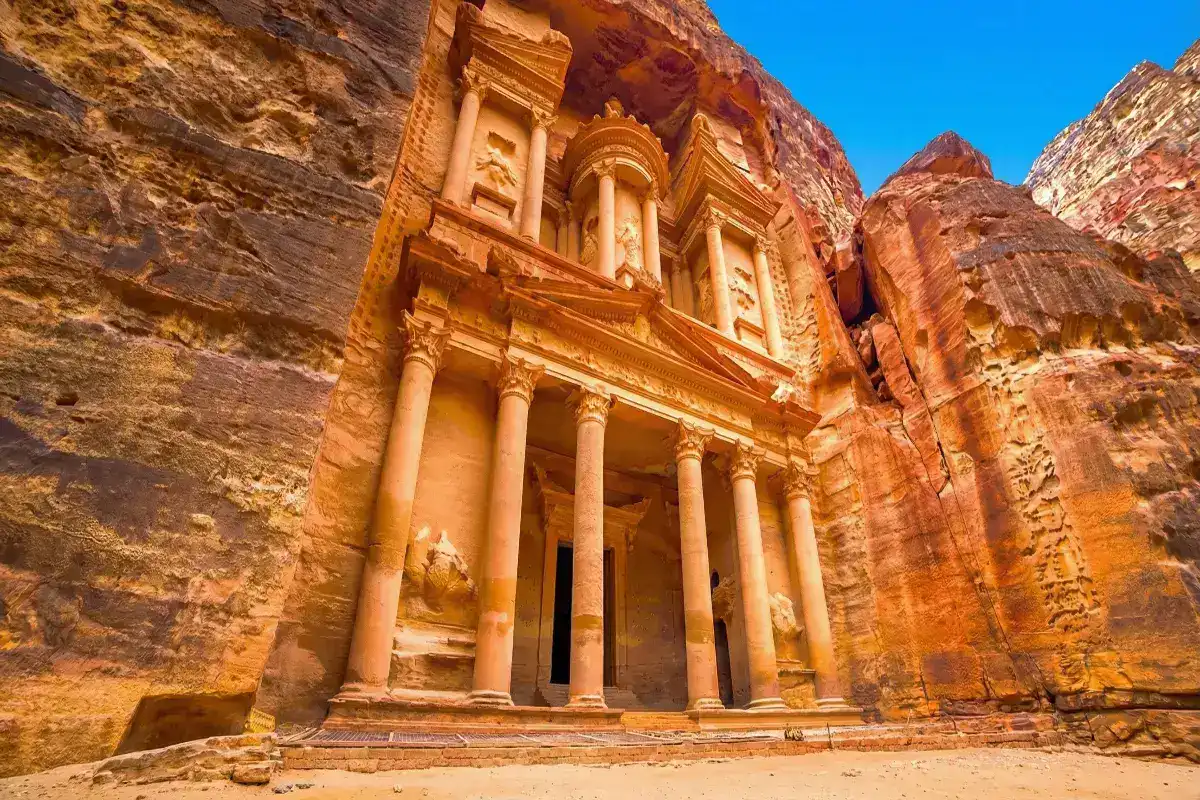
Petra is the single most impressive archaeological site in the region that isn’t in Egypt. You enter through the Siq, a narrow rock corridor that opens onto the Treasury facade, then continue past the Royal Tombs, the colonnaded street, and — if your legs agree — up several hundred steps to the Monastery.
Be honest about walking. A superficial visit is about four hours; a proper one is a full day, and Petra by Night runs only on selected evenings. One day is the minimum, two days is what committed hikers should book.
2. Wadi Rum
Wadi Rum is sandstone towers, red gravel plains, and Bedouin camps. A half-day 4×4 route plus one night in a desert camp is the sweet spot. Camps range from basic shared facilities to bubble domes with private bathrooms, and the price difference is real — confirm the camp category before you book, not after.
3. The Dead Sea
The Dead Sea is the lowest point on land, and floating in it takes about ten minutes to enjoy and photograph. What makes it worth a night is the resort strip: it’s the one place in a Jordan itinerary where you’re expected to do nothing. Don’t shave beforehand, and keep the water away from your eyes.
4. Jerash
Jerash, north of Amman, is one of the best-preserved Roman provincial cities anywhere — an oval forum, a hippodrome, colonnaded streets, and two theaters. It pairs neatly with an arrival or departure day in Amman rather than needing its own slot.
5. Mount Nebo and Madaba
Mount Nebo, where Moses is said to have looked out over the Promised Land, and Madaba, home to the sixth-century mosaic map of the Holy Land in St. George’s Church, sit conveniently on the King’s Highway route toward Petra. They’re short stops that break up the drive rather than destinations in themselves.
Which One Should You Actually Book?
Use the trip length you already have, not the country you like the sound of.
| Factor | Egypt | Jordan |
|---|---|---|
| Minimum satisfying trip | 7–8 days | 5 days |
| Internal travel | Domestic flights and/or Nile cruise | Road transfers only |
| Physical demand | Long days, heat, uneven ground | Sustained walking and climbing at Petra |
| Site density | Very high — several major sites daily | Moderate — one major site per day |
| Crowds | Heavy at Giza and Luxor’s top tombs | Concentrated in Petra’s first two hours |
| Best for | Ancient history, museums, river travel | Landscapes, hiking, desert nights, slower pace |
Choose Egypt if…
Ancient Egypt is the reason you’re traveling at all, you have at least a week, and you like the idea of a floating hotel doing your transfers. It’s also the better choice for multigenerational groups, because a cruise reduces packing days and gives non-walkers somewhere comfortable to wait. Our guide to how many days to spend in Egypt maps out what fits into 3, 5, 8, and 14 days.
Choose Jordan if…
You have five to seven days, you want scenery as much as ruins, and you’d rather sleep in three hotels than six. Jordan is also easier for first-time Middle East travelers who want minimal internal flying. See Jordan tour options from the USA for how those routings are usually built.
Do both if you have 10+ days
This is where the math turns in your favor. Cairo and Amman are a short regional flight apart, so a combined trip adds one flight rather than a second intercontinental round trip. Packaged Egypt and Jordan itineraries start from USD 2,680 for eight days and around USD 3,690 for a fuller 14-day version with Alexandria and a Nile cruise. Compare that against booking two independent trips and the case is usually clear.
Before you pay, confirm these five things
- Domestic flights: Cairo–Aswan/Luxor and Amman connections included, or quoted later?
- Entrance tickets: which Valley of the Kings tombs, whether Abu Simbel and pyramid interiors are extra, and how many days your Petra ticket covers.
- Cruise category and meal plan: nights on board, drinks policy, and shore-excursion tickets.
- Group size and guiding: private guiding versus a shared coach changes the day more than hotel category does. Our comparison of private versus group tours in Egypt is worth reading before you decide.
- Change terms: for our tours, cancellations or date changes must be made at least 5 days before the tour starts; non-refundable flight and bus ticket costs are deducted from the paid balance. With less than 5 days notice, or a no-show, the full payment is non-refundable.
Choose your next step
Recommended Egypt tours
These verified options are the closest available matches for this article’s destination, route intent, and trip length.
17-Day Türkiye, Egypt & Jordan Highlights Tour
A 17 days Cultural & Heritage Tour route covering Turkey, Egypt and 1 more destination.
View tour details →
14-Day Egypt & Jordan Grand Tour
A 14 days route covering Egypt, Jordan.
View tour details →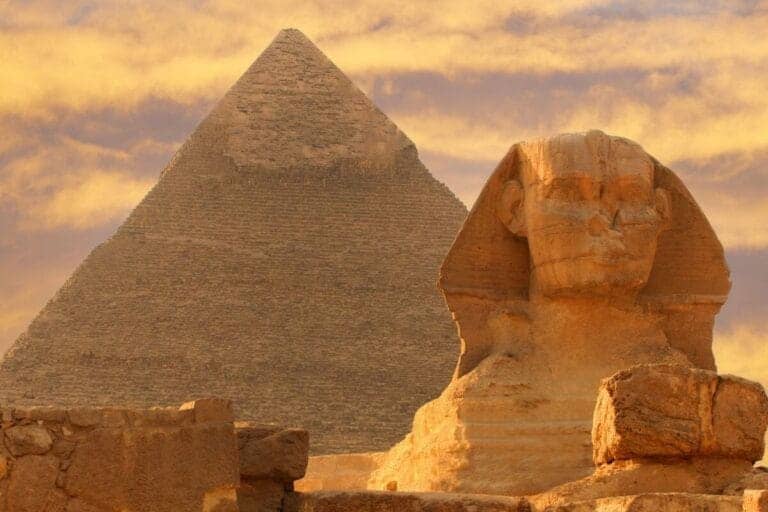
8-Day Private Egypt Tour with Nile Cruise
A 8 days Cultural & Heritage Tour route covering Egypt.
View tour details →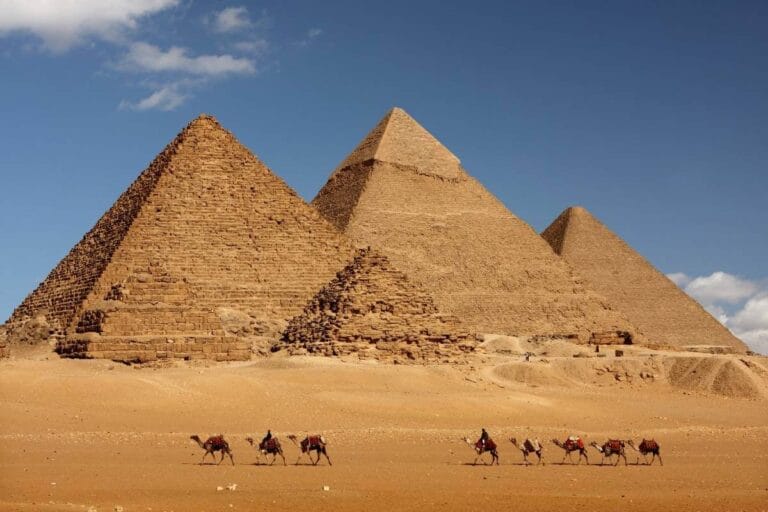
10-Day Egypt Tour: Cairo, Nile Cruise & Ancient Wonders
A 10 days Historical & Cultural Tour route covering Egypt.
View tour details →Questions Travelers Ask Us Most
When is the best time to visit Egypt and Jordan?
October through April is the comfortable window for both. March–May and October–November hit the sweet spot of warm days and manageable crowds. Upper Egypt in July and August is extremely hot, and Petra and Amman get genuinely cold and occasionally wet in January and February. Wadi Rum nights are cold from November through March regardless of the daytime temperature.
Which country is cheaper?
Day-to-day costs in Egypt tend to be lower, but Egypt’s distances mean domestic flights and cruise nights add up, so total package prices land closer together than people expect. A private Egypt tour with a Nile cruise starts from USD 1,940 for eight days. What moves the number most is hotel category, cruise class, private versus shared guiding, and whether Abu Simbel is included. Our Egypt tour cost breakdown goes through it line by line.
How do you get from Egypt to Jordan?
Almost everyone flies Cairo to Amman — it’s a short regional hop and the simplest option. Land and sea crossings exist but eat a day and add paperwork. On a combined itinerary the flight is normally built into the package, so confirm whether it’s included in your quoted price or added separately.
Is either country difficult for first-time visitors?
Neither is difficult with a guide. Egypt asks more of you — bigger crowds at major sites, more persistent vendors, longer days — while Jordan feels quieter and easier to navigate independently. Most first-timers to Egypt are glad they had a guide handling tickets and timing. If safety is your main hesitation, our overview of how to read Egypt travel advisories puts the warnings in context.
Can I add Türkiye to the same trip?
Yes, and it’s a common request. Istanbul connects well to both Cairo and Amman, and three-country itineraries running around 15–20 days cover Istanbul and Cappadocia alongside the Nile and Petra. It’s a lot of ground, so it suits travelers with genuine flexibility on dates rather than anyone squeezing a two-week limit.
The Bottom Line
If you only get one shot and ancient history is the draw, go to Egypt — the sheer volume of what survives there has no equivalent. If your window is short, your energy is better spent outdoors, and you want to feel like you’re on vacation rather than on a schedule, Jordan delivers more satisfaction per day. And if you can find ten days or more, do both, because the connecting flight is short and the two countries complement each other rather than repeat each other.
Whichever way you’re leaning, the details that make or break the trip are the ones in the fine print: which flights are included, how many nights on the boat, which tombs your ticket opens, and how big the group is. Tell us your dates, trip length, and pace, and we’ll map out a route that fits — start with Plan My Trip and we’ll take it from there.