
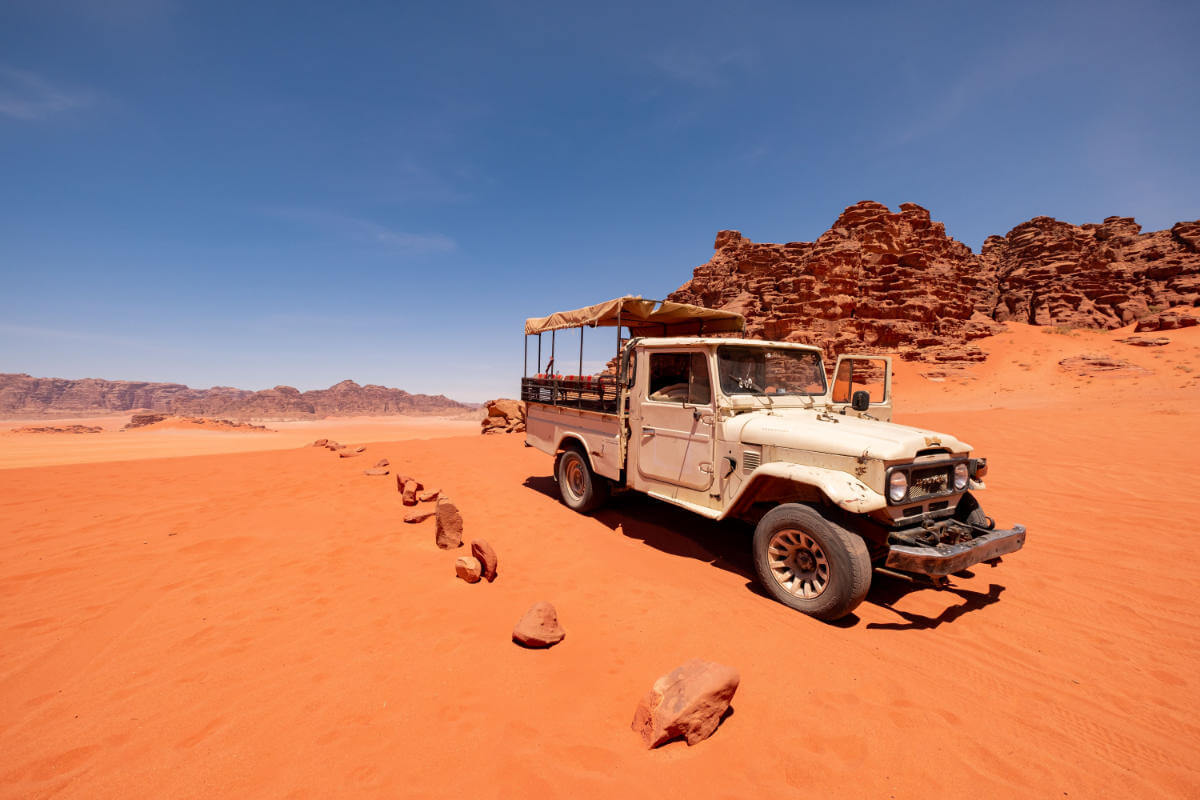
The desert stretches endlessly before you—rust-red sand, towering sandstone cliffs, and a silence so deep you can hear your own heartbeat. This is Wadi Rum, a landscape so otherworldly that filmmakers chose it to stand in for Mars. But long before Hollywood arrived, this vast valley in southern Jordan shaped the lives of civilizations stretching back thousands of years.
A Desert Written in History
Wadi Rum has been inhabited for over 12,000 years. Petroglyphs carved into its canyon walls by the Nabataeans—the same people who built Petra—date back more than 2,000 years, depicting hunting scenes, caravans, and ancient scripts. The desert served as a critical trade route linking Arabia to the Mediterranean. In 1917, it gained modern fame when T.E. Lawrence (Lawrence of Arabia) used Wadi Rum as a base during the Arab Revolt against Ottoman forces. His writings described the valley as “vast, echoing, and godlike,” and that description still holds.
What to See and Experience
Nothing prepares you for the scale of Wadi Rum. Sandstone mountains rise 1,750 meters above the desert floor, their surfaces streaked with orange, violet, and deep crimson as the sun shifts across the sky. The Seven Pillars of Wisdom—a massive rock formation named after Lawrence’s autobiography—greets visitors at the entrance like a geological cathedral.
A 4×4 jeep tour through the protected area reveals ancient rock bridges like Burdah and Um Frouth, where you can scramble up weathered stone arches suspended high above the sand. Bedouin camps dot the landscape, and spending a night under the stars here—where light pollution simply doesn’t exist—offers a canopy of thousands of visible stars and the Milky Way in startling clarity. The tea brewed over open coals by your Bedouin hosts, fragrant with sage, tastes better than any café in Amman.
Practical Tips for Your Visit
The best months to visit Wadi Rum are March through May and September through November, when daytime temperatures hover between 20°C and 30°C. Summer months push past 40°C, making extended desert excursions uncomfortable. Plan at least one full day and one overnight stay to fully absorb the landscape—a rushed half-day visit barely scratches the surface. Bring layers: desert nights can drop to near freezing between December and February.
Wadi Rum is a UNESCO World Heritage Site, and entrance fees to the protected area are approximately 5 JD (about $7 USD). Most visitors arrange jeep tours, camel rides, or guided hikes through local Bedouin operators inside the reserve.
Explore Wadi Rum with a Guided Tour
Ready to walk in the footsteps of ancient Nabataeans and Lawrence himself? Let us help you plan your perfect Jordan itinerary.
Plan the next step
Recommended Tours for Your Jordan Visit
Compare tours for Wadi Rum by starting point, duration and itinerary. A listed stop can change with local access conditions; check the current program before booking.

4-Day Private Jordan Tour: Petra, Wadi Rum & Dead Sea
Discover Petra, Wadi Rum and the Dead Sea on a 4-day private Jordan tour featuring desert landscapes, ancient history and…
View Tour Details
3-Day Dead Sea, Petra, Wadi Rum Tour from Amman
Book the 3-Day Dead Sea, Petra, Wadi Rum Tour from Amman with One Nation Travel for expert guidance, organized transfers,…
View Tour Details
4 Day Jordan Tour from Amman
Discover Jordan's top sites on our 4 Day Jordan Tour from Amman. Visit Petra, Wadi Rum & the Dead Sea.…
View Tour Details