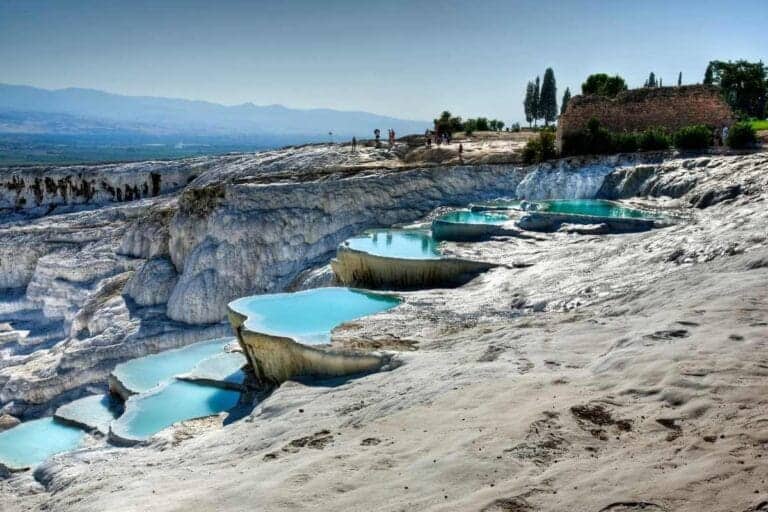

Pamukkale is a UNESCO World Heritage Site in southwestern Turkey famous for its cascading white travertine terraces and mineral-rich thermal waters. Often called the “Cotton Castle” for its snow-white limestone formations, Pamukkale attracts over 2 million visitors annually and ranks among Turkey’s most photographed natural wonders. The site sits directly above the ancient Greco-Roman city of Hierapolis, creating a rare combination of geological marvel and archaeological treasure.
Located in Denizli Province, approximately 600 kilometers (370 miles) southeast of Istanbul and 250 kilometers (155 miles) east of the Aegean coast, Pamukkale has drawn travelers seeking healing waters for more than 2,000 years. The thermal springs that feed the terraces maintain a year-round temperature between 35°C and 100°C (95°F–212°F), and the calcium carbonate deposits they leave behind have built up over millennia into the dramatic white cliffs visible today.
Whether you’re planning a day trip from Ephesus or building an extended Turkey itinerary, understanding what makes Pamukkale special — and how to visit it properly — will make the difference between a rushed photo stop and an unforgettable experience. This guide covers everything from the geology and history to practical tips and the best ways to get there.
What Makes Pamukkale’s Travertine Terraces So Unique?
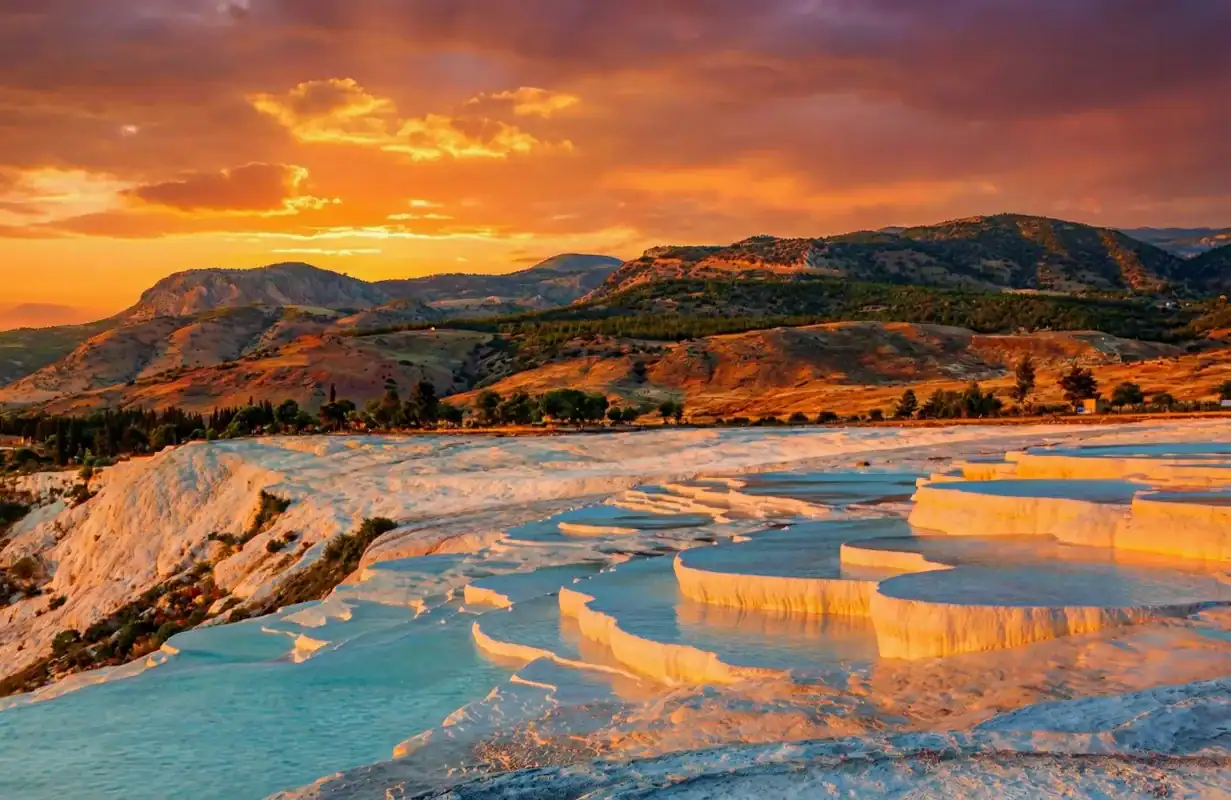
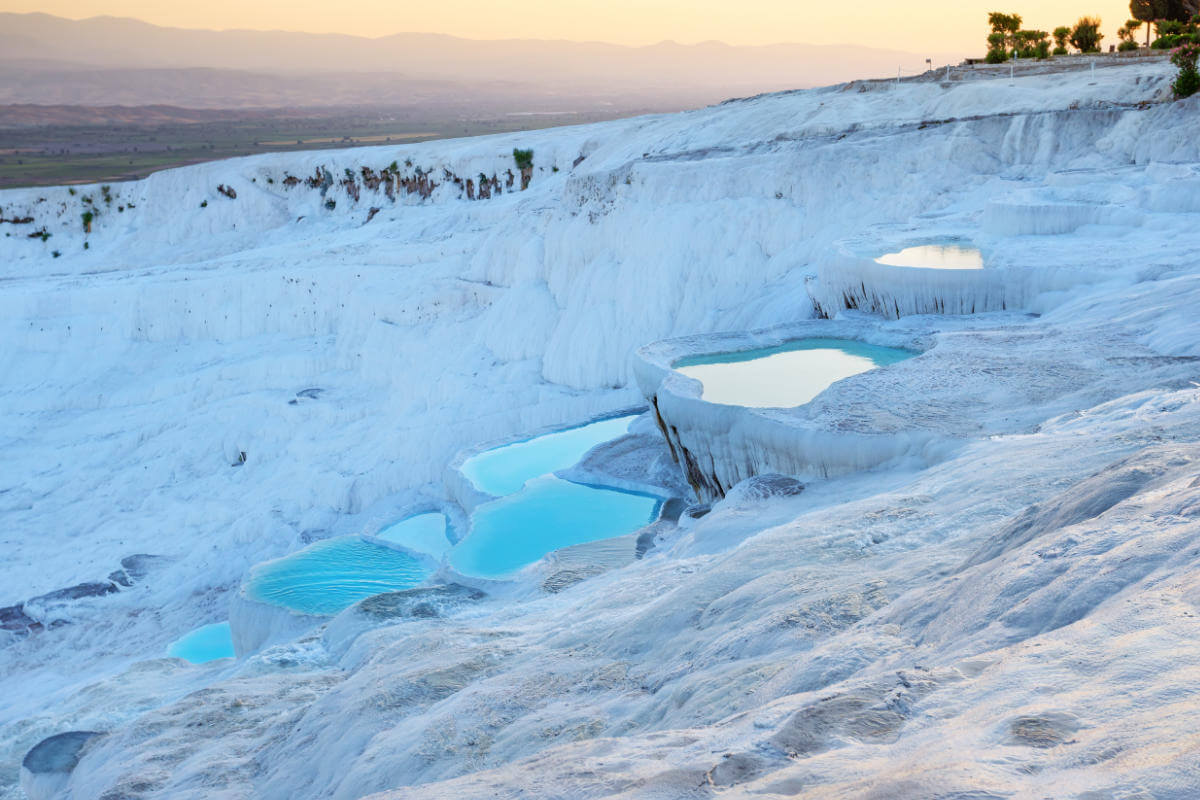
Pamukkale’s white terraces are the result of a geological process that has been ongoing for approximately 400,000 years. Hot, calcium-saturated water rises from underground springs, flows down the hillside, and cools as it reaches the surface. As the water loses carbon dioxide to the atmosphere, calcium carbonate precipitates out and hardens into travertine — the brilliant white mineral that forms the terraces, pools, and stalactites.
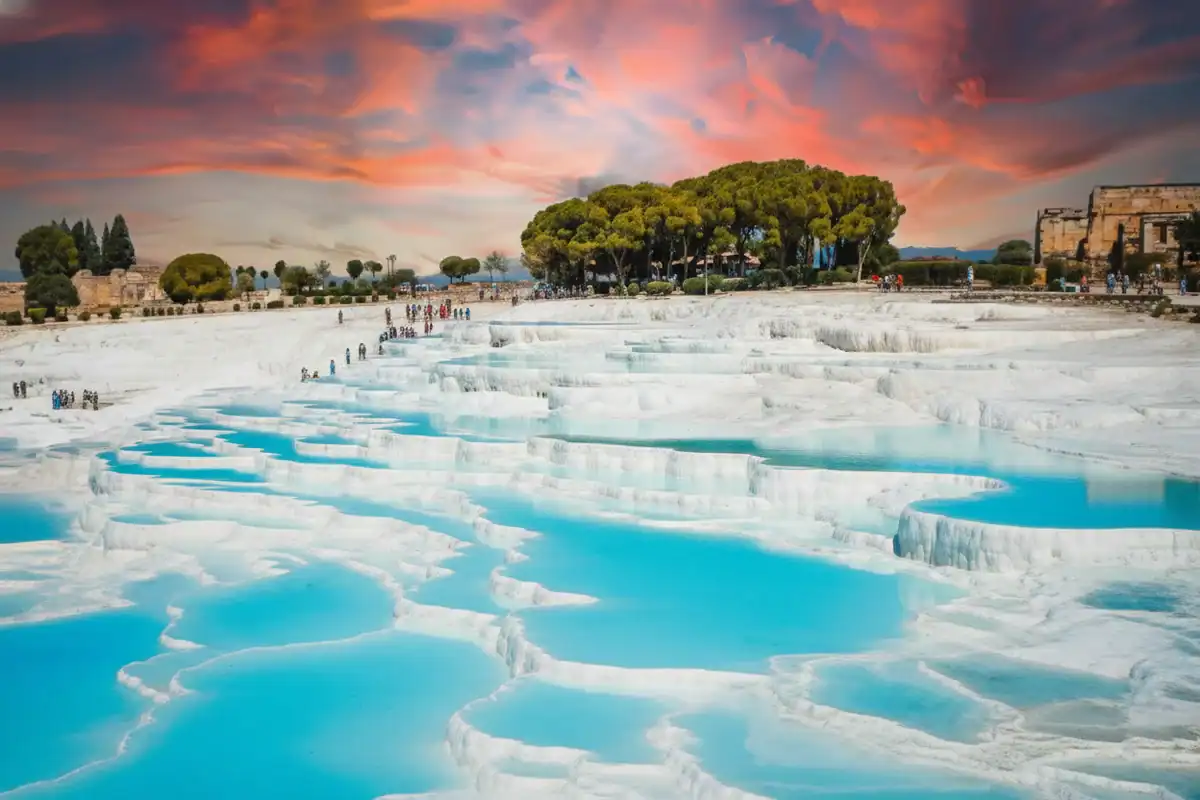
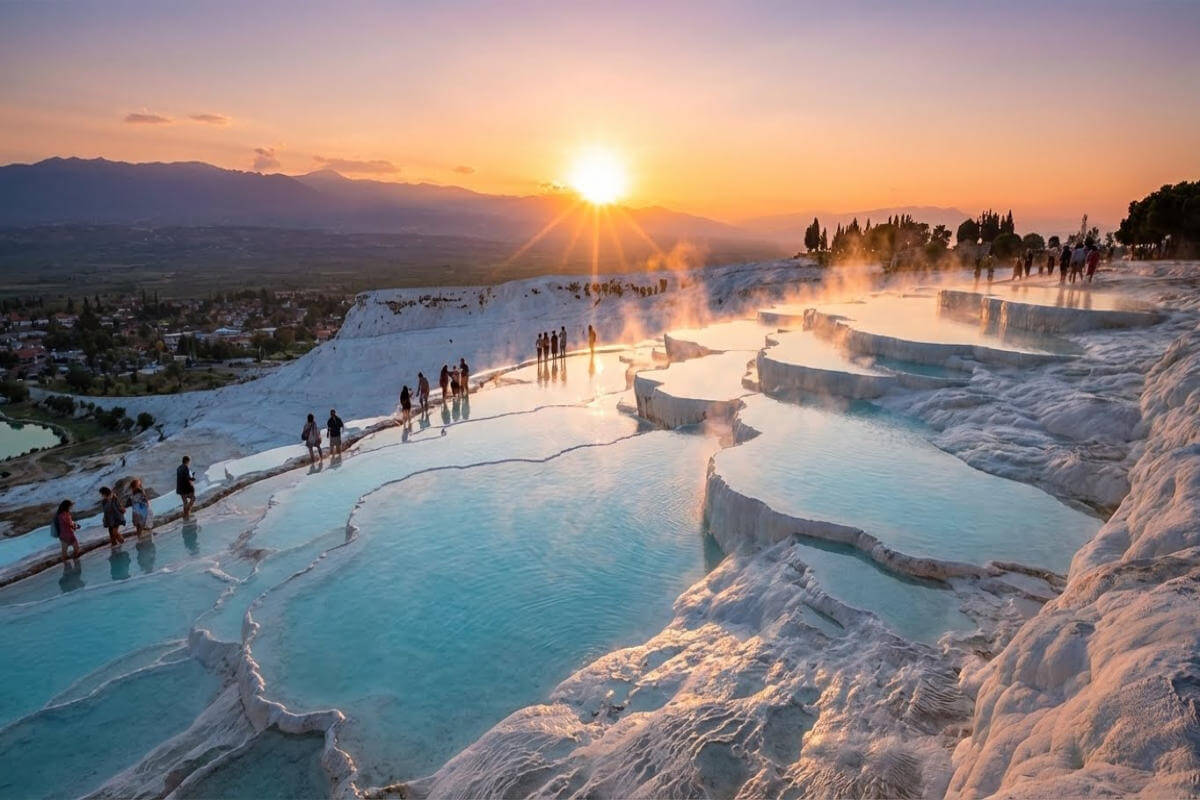
The travertine formation stretches roughly 2,700 meters (8,860 feet) in length, stands 160 meters (525 feet) tall, and covers an area of about 1,077 hectares. Seventeen active hot-water springs feed the system, with the largest producing approximately 240 liters of water per second. The terraces contain a series of shallow pools — some only a few inches deep — that create a staircase effect down the hillside. The water’s mineral content gives it a milky turquoise color that contrasts dramatically with the white calcium deposits.
The Cotton Castle: How Pamukkale Got Its Name
The Turkish name “Pamukkale” translates literally to “Cotton Castle” — “pamuk” meaning cotton and “kale” meaning castle or fortress. The name derives from the site’s appearance: from a distance, the white cliffs resemble massive cotton bales stacked against the hillside. Some local legends also connect the name to the region’s historical cotton production, but the geological explanation is the most widely accepted. The Pamukkale thermal pools remain the site’s primary draw, offering visitors the chance to wade barefoot through the warm mineral water while looking out over the Çürüksu Valley below.
Hierapolis: The Ancient City Above the Terraces
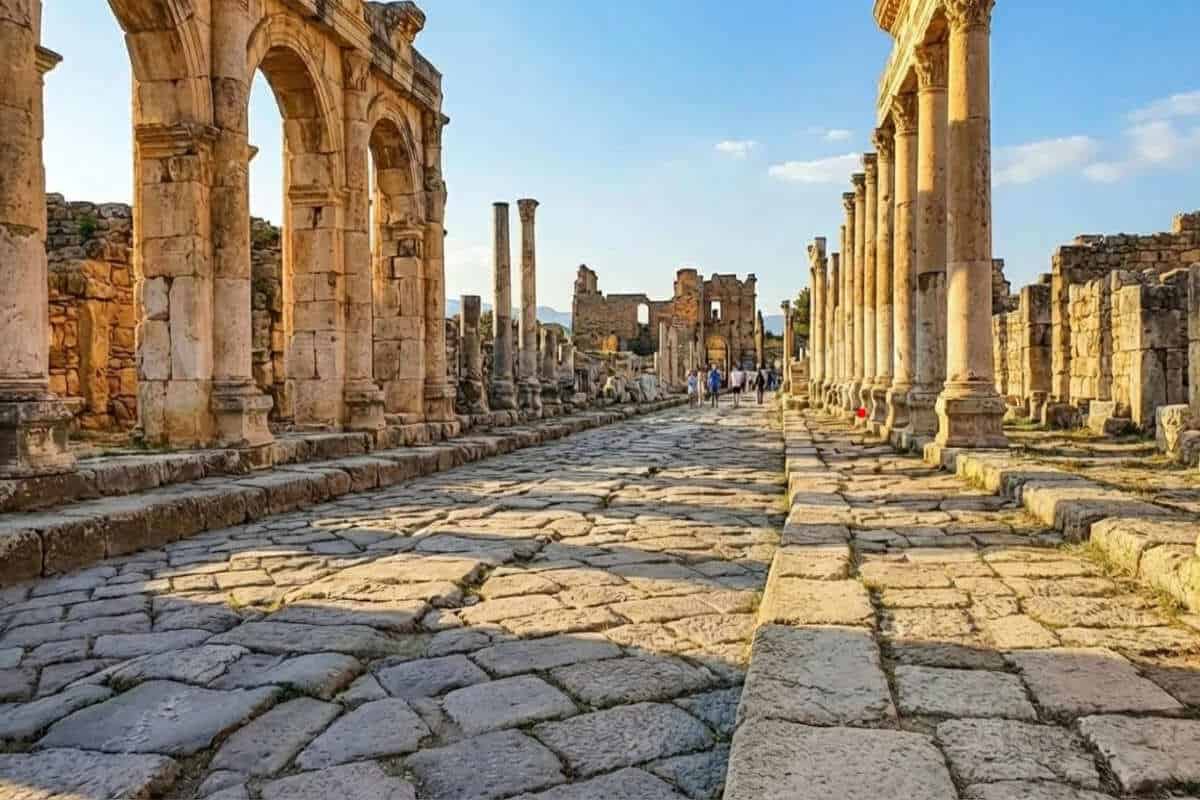
What many visitors don’t realize is that Pamukkale is only half the story. Sitting directly on top of the travertine plateau is Hierapolis, a remarkably well-preserved Greco-Roman city founded around 190 BC by the Attalid kings of Pergamon. The city thrived for centuries as a thermal spa destination — ancient Romans traveled great distances to bathe in the same mineral waters that visitors enjoy today.
Hierapolis was designated a UNESCO World Heritage Site in 1988 alongside Pamukkale’s natural formations. The ruins sprawl across a large area and include several significant structures that reward exploration.
Hierapolis Ancient Theater
The Hierapolis Ancient Theater is the site’s most impressive single monument. Built during the reign of Emperor Hadrian in the 2nd century AD and later expanded under Septimius Severus, the theater could seat between 12,000 and 15,000 spectators. Its cavea (seating area) consists of 50 rows divided into upper and lower sections by a horizontal walkway. The stage building features elaborate relief carvings depicting mythological scenes, including images of Dionysus and Apollo. The theater’s elevated position also offers panoramic views across the valley — a practical reason to climb the steps even if ancient architecture isn’t your primary interest.
The Necropolis of Hierapolis
The Necropolis of Hierapolis is one of the largest and best-preserved ancient cemeteries in Anatolia. Stretching for nearly 2 kilometers along the road north of the city, it contains more than 1,200 tombs spanning the Hellenistic, Roman, and early Christian periods. Tomb styles range from simple earth-covered graves to elaborate sarcophagi, tumuli, and house-shaped mausoleums. The diversity of burial traditions reflects the cosmopolitan nature of Hierapolis, which attracted residents and visitors from across the ancient world.
Cleopatra’s Antique Pool
Inside the Hierapolis archaeological zone, the Cleopatra Antique Pool lets visitors swim among submerged Roman columns in naturally heated mineral water (approximately 36°C / 97°F). Despite its name, there’s no verified historical connection to Cleopatra — the branding is purely commercial. However, the pool is genuinely ancient, formed when an earthquake toppled nearby structures into a thermal spring. Entry to the pool costs an additional 130 Turkish Lira (approximately $4 USD as of early 2025) on top of the general Pamukkale admission. It’s a surreal experience: floating in warm, slightly carbonated water while marble column fragments rest on the pool floor beneath you.
How to Visit Pamukkale: Getting There and Getting Around
Pamukkale is accessible from several major Turkish cities, though it requires some planning since there’s no major international airport in Denizli.
- By air: The nearest airport is Denizli Çardak Airport (DNZ), which receives domestic flights from Istanbul (approximately 1 hour). From the airport, Pamukkale is a 65-kilometer (40-mile) drive, typically taking about 1 hour by shuttle or taxi.
- By bus: Overnight buses run from Istanbul to Denizli (approximately 10–12 hours). From Denizli’s bus terminal, minibuses run to Pamukkale village every 20–30 minutes during the day.
- By organized tour: Many travelers combine Pamukkale with Ephesus on a multi-day tour, which eliminates all transportation logistics. This is the most efficient option for first-time visitors.
- By car: Driving from Izmir takes approximately 3.5 hours via the E87 and D320 highways. From Antalya, expect about 3 hours via the D685.
For a deeper look at planning your route, our guide on how to visit Pamukkale from Istanbul or Izmir covers every option in detail.
What Are the Best Times to Visit Pamukkale?
Pamukkale is open year-round, but the experience varies significantly by season.
- Spring (April–May): Ideal conditions — warm but not hot, fewer crowds than summer, and the surrounding countryside is green and in bloom. Daytime temperatures average 20–25°C (68–77°F).
- Summer (June–August): Peak tourist season. Temperatures regularly exceed 35°C (95°F), and the white terraces reflect intense sunlight. Bring sunscreen, a hat, and sunglasses. The terraces can feel uncomfortably hot underfoot by midday.
- Autumn (September–October): Similar advantages to spring — pleasant temperatures and thinning crowds. September can still be warm.
- Winter (November–March): The quietest period. Temperatures drop to 5–10°C (41–50°F), but the thermal water stays warm. Some visitors enjoy the contrast of cool air and hot pools, though shorter daylight hours limit sightseeing time.
Pro Tip: Arrive early in the morning or in the late afternoon. The terraces face west, meaning sunset lighting creates the most dramatic photographs. Early arrivals also avoid the tour bus crowds that typically arrive between 10:00 AM and 2:00 PM.
Practical Tips for Visiting Pamukkale
- Admission: General entry to Pamukkale and Hierapolis costs 700 Turkish Lira (approximately $21 USD as of early 2025, though prices are updated regularly). The Museum Pass Turkey also covers entry.
- Footwear: Shoes must be removed before walking on the travertine terraces. The calcium surface can be slippery when wet and uneven in places — watch your step, especially with children.
- Sun protection: The white travertine reflects UV radiation intensely. Sunburn can happen quickly, even on overcast days.
- Water and snacks: Bring your own. Options inside the site are limited and overpriced.
- Time needed: Allow at least 3–4 hours to explore both the terraces and Hierapolis properly. Most organized tours allocate 2–3 hours, which feels rushed.
- Photography: Drone use is prohibited. Tripods are generally fine but can be restricted during peak hours.
Our detailed article on whether Pamukkale is worth visiting offers an honest breakdown of pros and cons, including what to expect versus what the Instagram photos promise.
Other Nearby Attractions Worth Visiting
Pamukkale’s location in the Denizli region puts several other notable sites within easy reach:
- Karahayit Red Springs — Located just 5 kilometers north of Pamukkale, these iron-rich thermal springs produce striking red and orange travertine formations. Much less crowded than Pamukkale itself.
- Roman Baths of Hierapolis — The ruins of the city’s large public bath complex, now partially restored and housing an archaeological museum with artifacts from the site.
- Laodikeia — An ancient city mentioned in the Book of Revelation, located only 6 kilometers from Pamukkale. Active excavations continue to reveal impressive mosaics and public buildings.
Recommended Tours That Include Pamukkale
Pamukkale pairs naturally with other major Turkish destinations, especially Ephesus and Cappadocia. Here are curated multi-day tours that include Pamukkale with all logistics handled:
- 5-Day Pamukkale, Ephesus and Cappadocia Tour from Istanbul — Domestic flights included. Covers three of Turkey’s top destinations in a compact itinerary.
- 7-Day Turkey Tour: Istanbul, Cappadocia, Ephesus, Pamukkale — A week-long journey through Turkey’s highlights with guided visits at each stop.
- 3-Day Cappadocia and Pamukkale Tour from Istanbul — Domestic flights included. The fastest way to see both destinations from Istanbul.
- 5-Day Istanbul and Pamukkale Tour — Combines Istanbul sightseeing with a dedicated Pamukkale visit for travelers who want more time in each location.
Frequently Asked Questions About Pamukkale
Is Pamukkale worth visiting in 2025?
Yes. Despite increased tourism, Pamukkale remains one of Turkey’s most visually striking natural sites. The combination of the travertine terraces, thermal pools, and the Hierapolis ruins offers a unique experience you won’t find anywhere else in the world. Timing your visit for early morning or late afternoon significantly improves the experience. For a balanced perspective, read our guide: Is Pamukkale worth visiting?
How long do you need at Pamukkale?
A minimum of 3 hours is recommended to walk the terraces and see the main Hierapolis ruins. If you plan to swim in Cleopatra’s Antique Pool and explore the necropolis and theater thoroughly, allocate 4–5 hours. Half-day visits are standard on organized tours, though a full day allows a more relaxed pace.
Can you swim in the Pamukkale thermal pools?
You can wade through the shallow travertine pools on the terraces at no extra charge (included with general admission). For actual swimming, Cleopatra’s Antique Pool requires a separate ticket. The terrace pools are typically only ankle- to knee-deep.
What should I wear to Pamukkale?
Wear comfortable clothing you don’t mind getting slightly wet. Bring a swimsuit if you plan to use Cleopatra’s Pool. Shoes are removed on the terraces, so slip-on footwear is practical. A small bag for carrying shoes and belongings is helpful since there are no lockers on the terraces.
How do I combine Pamukkale with other destinations in Turkey?
Pamukkale is commonly paired with Ephesus (3 hours by road) and Cappadocia (connected by domestic flight via Istanbul or Kayseri). Multi-day tours from Istanbul typically cover Pamukkale alongside two or three other major sites. Our ultimate guide to visiting Pamukkale and Hierapolis includes detailed routing options.
Start Planning Your Pamukkale Visit
Pamukkale delivers something few destinations can: a place where natural wonder and ancient history occupy the same ground. Walking barefoot across warm, mineral-laden terraces while gazing out at the ruins of a 2,200-year-old city is an experience that photographs alone can’t capture. Whether you visit as part of a broader Best of Turkey itinerary or as a standalone side trip, this is a destination that rewards proper planning.
Ready to build your trip? Contact our travel specialists at One Nation Travel to design a custom itinerary that includes Pamukkale, with all flights, transfers, and guided tours arranged for you. Our team specializes in Turkey travel and will ensure you see the Cotton Castle at its best — not just as another tour bus stop.