
The practical answer: Ephesus is much more rewarding than a quick photo stop at the Library of Celsus. Its best lesser-noticed experiences are the Terrace Houses, Curetes Street details, Roman public spaces, and nearby Selçuk landmarks. Allow at least three to four hours for the ruins, arrive early when possible, and confirm whether separate-entry sites are included before booking.
Ephesus is a strong choice for travelers who want a substantial ancient city rather than a single monument. The important planning decision is whether you want a focused half-day ruins visit or a full day that also includes early Christian sites and Selçuk. Trying to fit every stop into a short shore excursion is the most common way to make a memorable place feel rushed.
What to Know Before Visiting Ephesus
- Plan three to four hours inside the main archaeological site if you want to see the principal monuments and the Terrace Houses without hurrying.
- Entering from the upper gate generally creates an easier, mostly downhill route through the city.
- The Terrace Houses usually require separate admission, so check that detail before assuming they are part of a tour price.
- Morning visits are usually more comfortable in warmer months and can reduce the impact of larger late-morning groups.
- For a full historical day, combine Ephesus with the House of the Virgin Mary and Selçuk’s Basilica of Saint John and Isa Bey Mosque.
- Wear supportive shoes, carry water, and be realistic about uneven marble, slopes, steps, and limited shade.
Why Ephesus Feels Different From Other Ancient Ruins
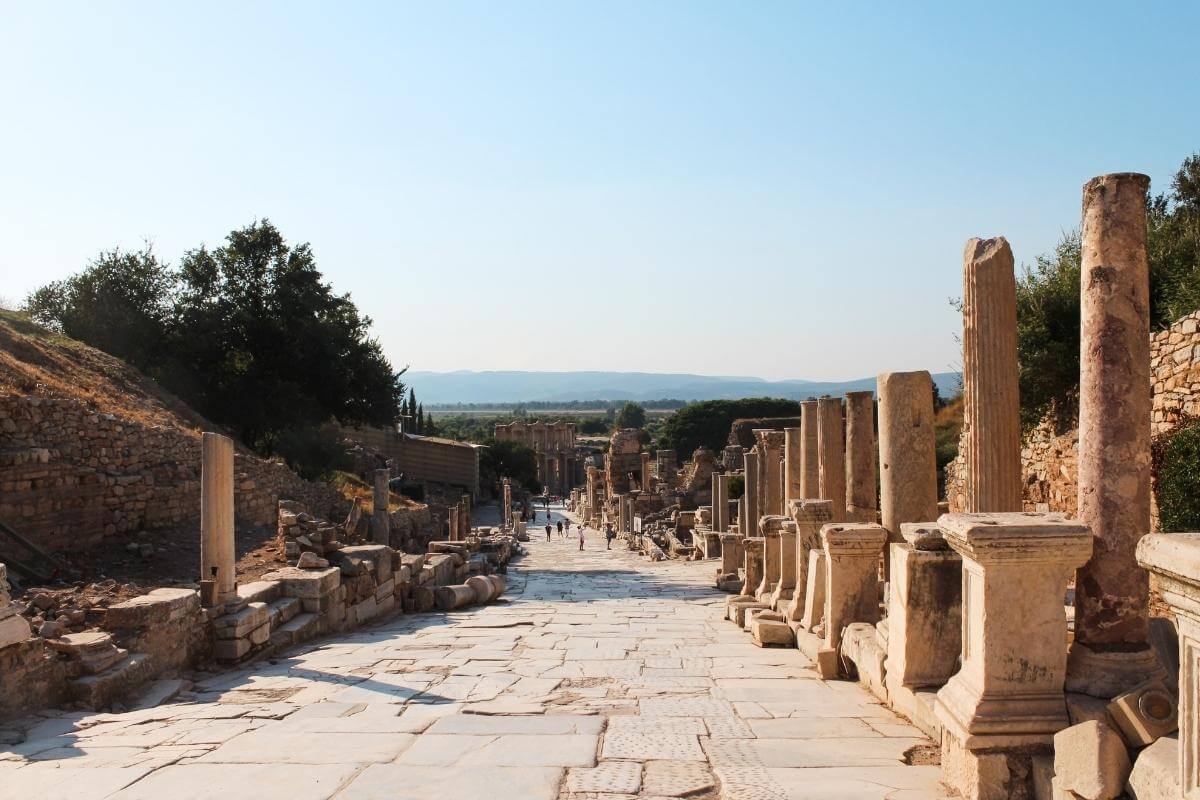
Ephesus was a major Roman port city, commercial center, and religious center on the western coast of what is now Turkey. The ancient harbor has gradually silted up, leaving the site inland near Selçuk. What makes the visit especially satisfying is that the ruins still read as a city: streets connect public buildings, shops, fountains, homes, baths, and gathering places in a logical sequence.
Rather than treating the site as a checklist, follow the urban story. From the upper entrance, visitors move from the civic and administrative area down Curetes Street toward the Library of Celsus, commercial agora, and theater. That route helps explain how people moved through the city—and why Ephesus was so influential in the Roman world.
Travelers who want historical background before arriving may find The History of Ephesus: From Ancient Greece to Roman Glory useful. For a monument-by-monument overview, see the Ephesus Travel Guide: 7 Ruins You Must See.
Start With the Famous Sights, Then Slow Down
Library of Celsus
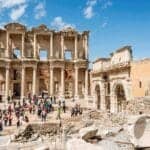
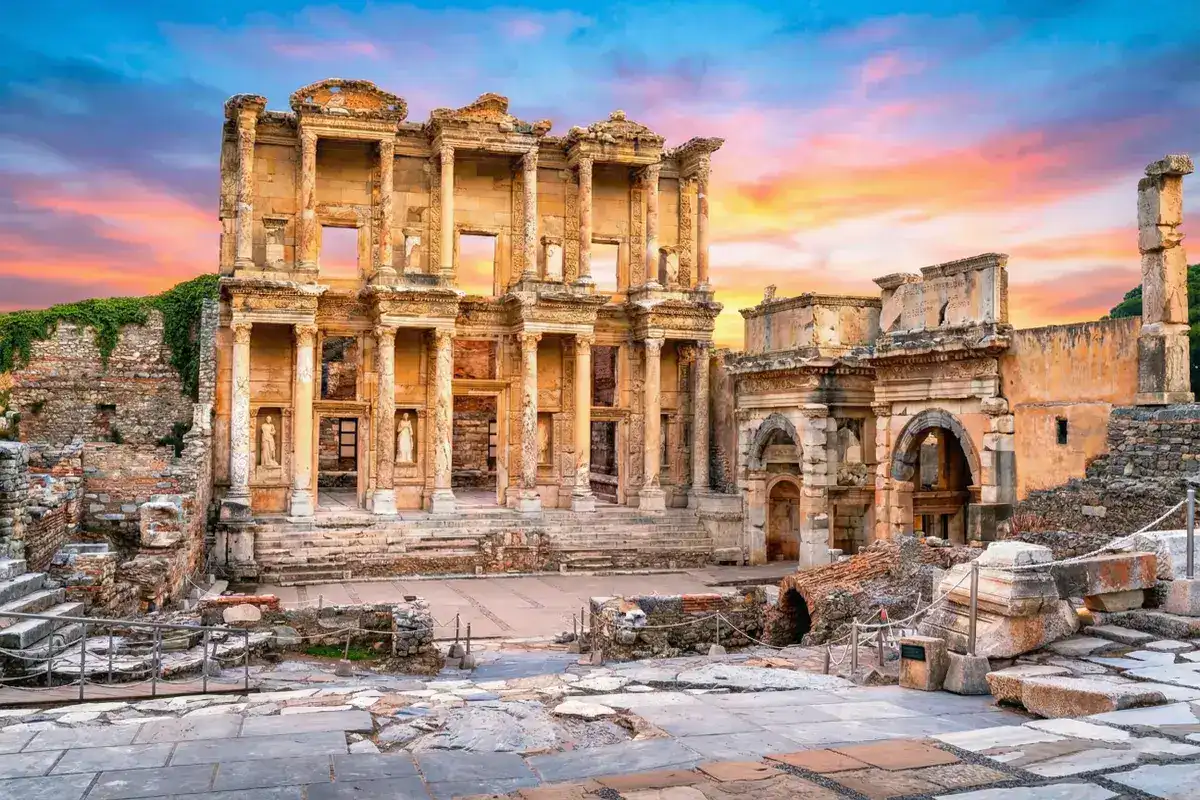
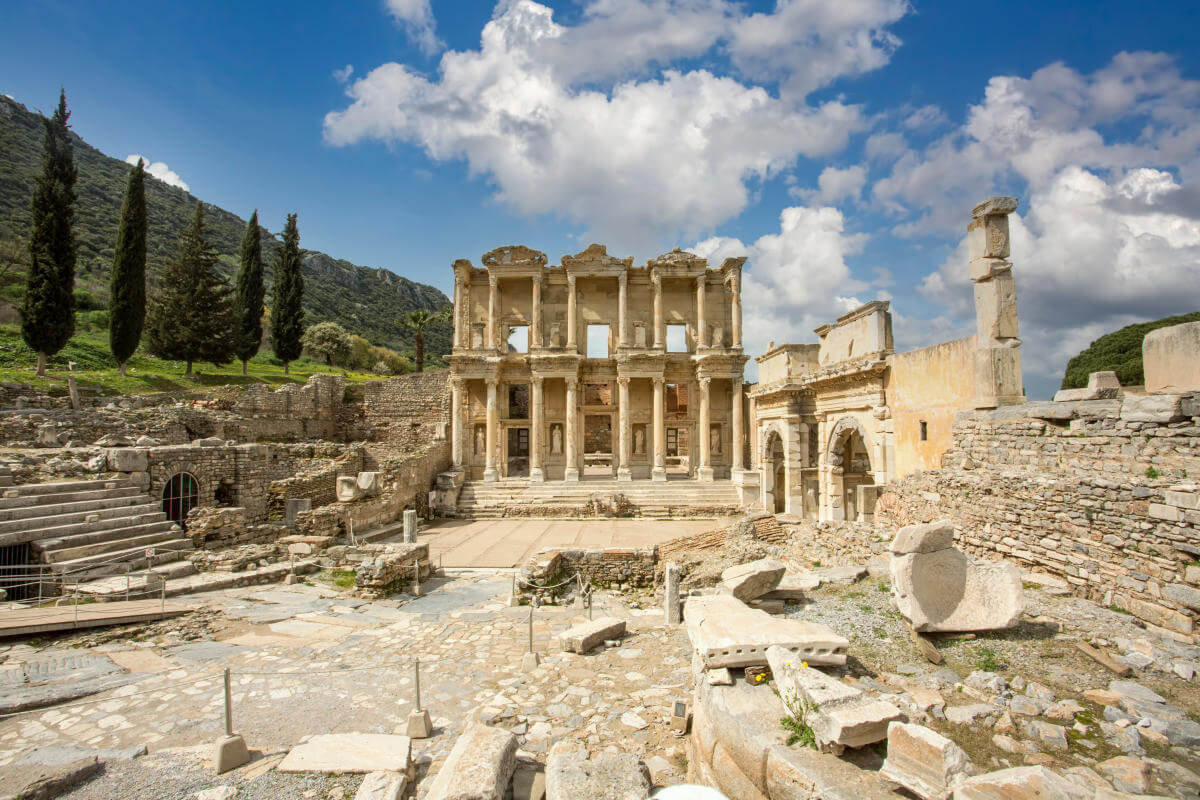
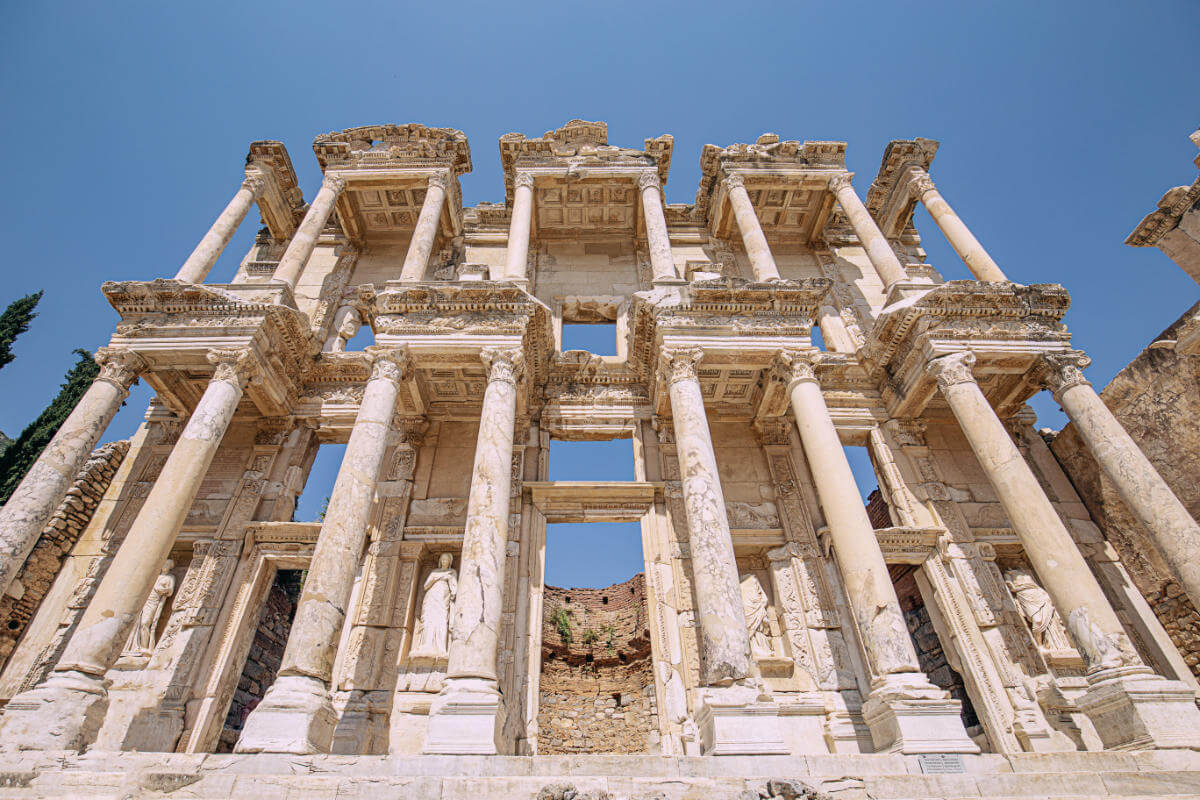
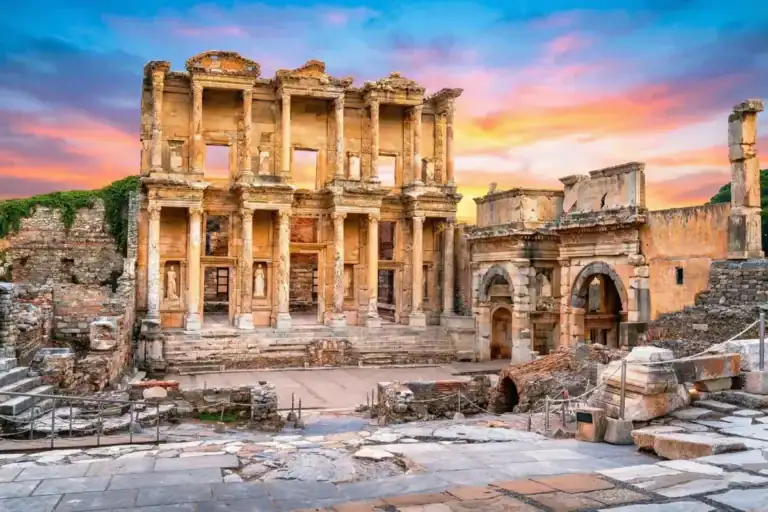
The Library of Celsus is Ephesus’s defining image for good reason. Its restored façade creates one of the most striking Roman streetscapes in Turkey. Built in the second century AD as both a library and monumental tomb, it was designed with visual tricks that make the façade appear larger and deeper than it is.
The plaza in front of the library is often busiest from late morning onward. If photographs matter to you, an early start from Selçuk or Kuşadası is usually the best bet. Late afternoon can also be pleasant, but only if you have enough time before seasonal closing procedures begin.
The Great Theatre
The Great Theatre of Ephesus is a powerful reminder of the city’s scale. It hosted performances, civic events, and public assemblies, and it is associated with the dispute described in the Acts of the Apostles. From the seating area, Harbor Street stretches toward the plain where the ancient port once lay.
The higher seating provides a wider view, but the climb is optional. In hot weather, exposed stone steps and reflected heat can make the theater more demanding than it first appears.
Curetes Street and the Temple of Hadrian
Curetes Street is where a guided explanation can add real value. Look beyond the headline monuments for worn paving stones, inscriptions, column bases, drainage features, and the remains of public buildings. The Temple of Hadrian is among the most photographed structures on the street, but the broader setting is what reveals how civic, religious, and commercial life overlapped.
Practical tip: Starting at the upper gate is not simply about saving energy. It also makes the city’s layout easier to understand, progressing from the upper public areas toward the library, agora, and theater below.
The Ephesus Details Many Visitors Miss
Terrace Houses: the essential add-on for many travelers
The Terrace Houses in Ephesus are the strongest reason to avoid a rushed visit. These hillside residences belonged to affluent families and preserve mosaics, frescoes, room layouts, and domestic systems that bring private Roman life into focus. Covered walkways also offer a useful break from direct sun.
This area commonly has a separate ticket. Admission policies and fees can change, so ask whether the Terrace Houses are included, optional, or excluded when comparing tours. Travelers interested in Pompeii, Roman homes, art conservation, or daily life usually consider the extra entry worthwhile. Those with limited mobility should ask about stairs and walkway conditions before committing.
Public latrines and bath complexes
The ancient latrines and nearby baths are easy to dismiss, yet they explain the practical city behind the monuments. Roman bathhouses were social spaces as well as places for washing, while the latrines show the shared infrastructure that supported a dense urban population. These stops add context that a library-and-theater-only visit misses.
Inscriptions, carvings, and the street itself
Some of Ephesus’s most revealing evidence is underfoot or built into the walls: water channels, game boards, honorary inscriptions, and directional symbols. Keep your pace slow enough to notice them. Large groups often move quickly along Curetes Street, so this is a good point to step aside briefly and look at the details rather than only following the crowd.
What Should You Add Near Ephesus?
Ephesus can stand alone, but the nearby sites turn it into a fuller archaeological and religious-history day. The best additions depend on your interests and available time rather than a need to collect every stop.
House of the Virgin Mary
House of the Virgin Mary is a pilgrimage site on the slopes above Ephesus. It is a quiet, compact visit that many Christian travelers value highly. It is normally reached by road and is not a realistic walk from the archaeological site. Build in driving and entrance time rather than treating it as a five-minute detour.
Basilica of Saint John and Isa Bey Mosque
The Basilica of Saint John sits on Ayasuluk Hill in Selçuk and is traditionally associated with John the Apostle. It gives useful perspective on the Byzantine-era importance of the region. Nearby, Isa Bey Mosque adds the later Seljuk Turkish layer of local history. Their close location makes them a sensible pairing.
Temple of Artemis
The Temple of Artemis was one of the Seven Wonders of the Ancient World, but the surviving remains are limited. Visit for historical importance, not dramatic architecture. A short stop works well when a guide can explain the temple’s former scale and its central role in Ephesian religious and economic life.
How Much Time Do You Need?
| Available time | Best use of it | Who it suits |
|---|---|---|
| About 2 hours | Main route, Library of Celsus, Curetes Street, and Great Theatre | Travelers with tight cruise or transfer schedules |
| 3–4 hours | Main ruins plus Terrace Houses and a more measured pace | Most first-time visitors |
| 5+ hours | Deeper exploration, photography, Terrace Houses, and time for rest breaks | History-focused travelers and families who prefer a slower pace |
| Full day | Ephesus plus House of the Virgin Mary and Selçuk sites | Faith-based and culture-focused visitors |
If you only have half a day, prioritize the main archaeological city and, if it interests you, the Terrace Houses. Avoid trying to add the House of the Virgin Mary, Basilica of Saint John, Temple of Artemis, shopping, and a long lunch unless you have a genuinely flexible schedule.
When Is the Best Time to Visit Ephesus?
April, May, early June, late September, and October are generally the most comfortable periods for walking Ephesus. Summer can still work, but visitors should take the heat seriously: much of the route is exposed, and marble surfaces intensify the sun. A morning entry is the most practical choice from late spring into early fall.
Winter offers a quieter experience and softer light, though rain is possible. Wet marble can be slick, so shoes with grip matter throughout the year. Before finalizing your day, verify the seasonal opening hours and last-entry rules directly with your tour coordinator or official site information, as they can change.
Getting to Ephesus From Izmir, Kuşadası, and Istanbul
From Izmir and Izmir Airport
Izmir Adnan Menderes Airport is the most convenient airport for Ephesus. The road journey to the Ephesus or Selçuk area is typically around 50 to 60 minutes, depending on traffic and the exact pickup point. Izmir works well for travelers arriving by domestic flight or building Ephesus into a broader western Turkey route.
From Kuşadası
Kuşadası is often the most convenient base for cruise passengers and coastal stays. The drive to Ephesus is generally about 25 to 30 minutes. For ship guests, distance is less important than timing: allow for disembarkation, meeting arrangements, traffic, security procedures, and a comfortable return-to-ship buffer.
From Istanbul
A same-day trip from Istanbul is possible with flights to Izmir, but it is a long, coordination-heavy day. It involves airport transfers, domestic flights, ground transportation, site touring, and the return journey. If the schedule allows, an overnight in Izmir, Selçuk, or Kuşadası is usually more comfortable and makes an early Ephesus entry much easier.
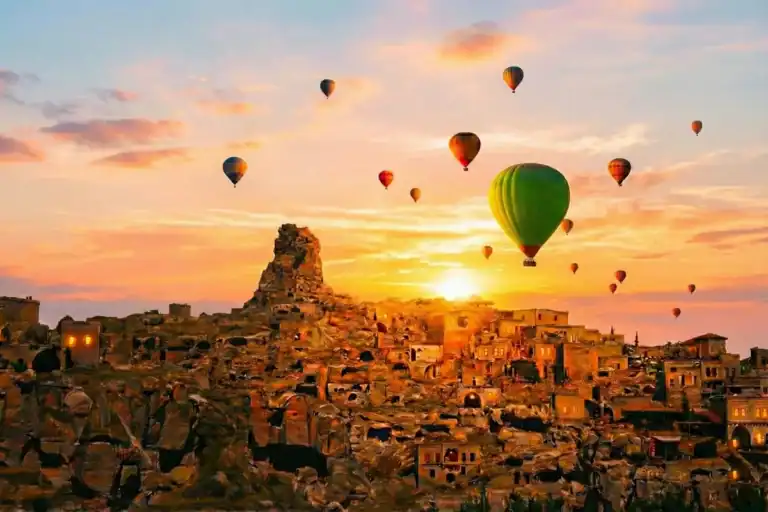
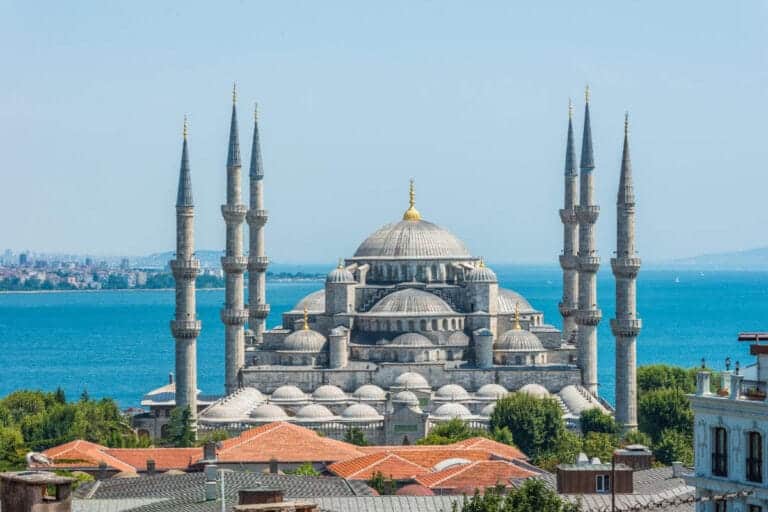
For travelers planning multiple regions, Ephesus often fits well with Pamukkale, Istanbul, and Cappadocia. The Best Turkey Itinerary for 7 Days offers useful route-planning context, while the Pamukkale hot springs guide can help you decide whether that extension suits your pace.
Choose the Right Ephesus Tour Style
The right format depends primarily on where you start, how fixed your timing is, and whether you want a quick overview or a more complete historical day.
- Starting in Izmir: The Ephesus Day Trip from Izmir is a practical fit for travelers based in the city or arriving through Izmir Airport. It is listed from USD 160 for 9 hours.
- Starting in Kuşadası: The Ephesus Guided Day Tour from Kusadasi is listed from USD 160 for 7 hours and can suit travelers staying nearby or coordinating a shore-day schedule.
- Starting in Istanbul with only one day available: The Private Ephesus Day Trip with Flights from Istanbul is listed from USD 470 for 17 hours. It can save time planning separate flights and transfers, but it is still an early, full-day commitment.
- Adding western and southern Turkey highlights: The 5-Day Ephesus, Pamukkale & Antalya Tour from Istanbul is listed from USD 1,048 and makes more sense for travelers who prefer a connected route rather than repeated long day trips.
Starting prices may change. Before booking, verify the current itinerary, pickup point, flight timing where applicable, entrance fees, Terrace Houses access, meals, and how much time is actually allocated inside Ephesus. Cruise travelers should also share their ship’s all-aboard time rather than relying only on the published port hours.
Choose your next step
Recommended Ephesus tours
These verified options are the closest available matches for this article’s destination, route intent, and trip length.
Private Ephesus Day Trip with Flights from Istanbul
A 17 hours Cultural & Heritage Tour route covering Ephesus, Istanbul.
View tour details →
Ephesus Day Trip from Izmir
A 9 hours Cultural & Heritage Tour route covering Ephesus, Izmir.
View tour details →Ephesus Guided Day Tour from Kusadasi
A 7 hours Cultural & Heritage Tour route covering Ephesus.
View tour details →
5-Day Ephesus, Pamukkale & Antalya Tour from Istanbul
A 5 days Cultural & Heritage Tour route covering Ephesus, Pamukkale and 2 more destinations.
View tour details →Common Ephesus Travel Questions
Is Ephesus worth visiting if I have seen Pompeii or Rome?
Yes. Ephesus has a different strength: its monuments connect along a highly walkable urban route, and the Library of Celsus, Great Theatre, and Terrace Houses give a strong picture of both public and private Roman life.
Can I visit Ephesus without a guide?
Yes, independent visits are possible. A guide is most useful if you want the smaller architectural details, Biblical context, and nearby sites explained rather than simply seeing the major structures.
Is Ephesus difficult to walk?
The main route is manageable for many visitors but includes uneven marble, slopes, steps, and little shade. Starting at the upper gate generally reduces uphill walking. Travelers with mobility concerns should discuss the site’s limitations before booking.
Are the Terrace Houses worth the extra ticket?
For most travelers with an interest in Roman homes, mosaics, frescoes, or archaeology, yes. If you have only a very short visit or find stairs difficult, the main site may be the better use of your time.
Make Ephesus a Well-Paced Part of Your Turkey Trip
Ephesus deserves more than a rushed stop between transfers. Give the main city enough time, add the Terrace Houses if Roman daily life interests you, and choose nearby sites based on your priorities rather than trying to see everything. For help matching Ephesus with the right route, pace, and departure city, plan your Turkey trip with One Nation Travel.