
The practical answer: plan at least 4 days for Cappadocia and Pamukkale, and 5 to 6 days if a hot air balloon ride, Ephesus, or a gentler pace matters to you. Start in Cappadocia whenever possible, stay at least two nights, and treat the balloon flight as weather-dependent. Then continue to Pamukkale via Denizli, ideally without trying to fit both destinations into a rushed weekend.
Cappadocia and Pamukkale are two of the most distinctive stops on a first trip to Turkey, but they require more coordination than their photos suggest. Cappadocia is a broad central Anatolian region of valleys, cave-carved sites, and early-morning balloon departures. Pamukkale is a compact but sprawling archaeological and thermal site near Denizli. The key decision is whether you have enough time to protect your Cappadocia balloon morning and still enjoy Pamukkale without arriving exhausted from an overnight transfer.
What to Know Before You Book
- Allow 4 days at a minimum; 5 or 6 days gives you a better chance of rebooking a weather-canceled balloon flight and reduces long transfer days.
- For most first-time visitors, the cleanest sequence is Istanbul → Cappadocia → Pamukkale → Ephesus/Izmir or Istanbul.
- Fly into Kayseri (ASR) or Nevşehir (NAV) for Cappadocia. Kayseri often offers more flight choices, while Nevşehir can be closer to some Cappadocia towns.
- Do not assume every package includes a balloon ride, checked baggage, airport transfers, entrance fees, or Cleopatra’s Pool admission. Compare inclusions line by line.
- April, May, September, and October usually offer the best balance of comfortable touring weather and strong sightseeing conditions.
- Book Cappadocia first if the balloon ride is a priority, because it is the one major experience on this route that can be canceled for weather.
How Many Days Do You Need?
A four-day trip is possible, but it is efficient rather than relaxing. Most travelers are happier with five days, particularly after an international flight or when traveling with children, older relatives, or substantial luggage.
| Time Available | What It Can Realistically Cover | Who It Suits |
|---|---|---|
| 4 days | Two nights in Cappadocia, one night in Pamukkale, plus transfer time | Travelers comfortable with early starts and a tight schedule |
| 5 days | Two or three nights in Cappadocia and one or two nights around Pamukkale | Most first-time visitors; better balloon backup flexibility |
| 6 days or more | Cappadocia, Pamukkale, and Ephesus with less backtracking | Travelers who want archaeology and a more comfortable pace |
A fast but workable four-day route
Arrive in Cappadocia early on Day 1, stay two nights, and schedule the balloon ride for the first available morning. On Day 3, travel toward Denizli and Pamukkale. Use Day 4 for the terraces and Hierapolis-Pamukkale, then continue onward. This works best when domestic flights and transfers line up well; otherwise, the journey can feel dominated by transport.
Why five days is the better balance
With five days, you can spend three nights in Cappadocia or add a second night near Pamukkale. That extra flexibility matters. Balloon flights operate only when aviation and weather conditions allow, and a second morning is not guaranteed if the area is fully booked. A third Cappadocia night also gives you time for valleys, an underground city, and a cave-hotel stay without packing every hour of the day.
Six days if Ephesus is part of the plan
After Pamukkale, continuing west toward Selçuk, Kusadasi, or Izmir makes more sense than returning immediately to Istanbul. This is the logical point to add Ephesus and the House of the Virgin Mary. For route ideas that include these classic stops, see the best Turkey itinerary for 7 days.
Should You Visit Cappadocia or Pamukkale First?
For most travelers, visit Cappadocia first. The main reason is the balloon ride. A canceled balloon flight can disrupt an itinerary if you only have one morning in the region, while Pamukkale’s terraces and ancient ruins can usually be visited at different times of day and in a wider range of weather conditions.
The most practical route is usually Istanbul to Cappadocia by domestic flight, then Cappadocia to Pamukkale, followed by Ephesus/Izmir or a flight back to Istanbul. It avoids unnecessary backtracking and places the most weather-sensitive activity near the start of your route.
Planning tip: Do not schedule your balloon flight for the morning you must leave Cappadocia. Book it for your first or second morning, then keep your departure day free of nonrefundable plans until you know whether it flew.
Getting to Cappadocia and Pamukkale
Flying from Istanbul to Cappadocia
Most visitors fly from Istanbul to Kayseri Erkilet Airport (ASR) or Nevşehir Kapadokya Airport (NAV). Flights are generally about 1 hour and 15 minutes, but door-to-door travel takes longer once airport transfers and hotel check-in are included. Transfers to Göreme, Uçhisar, Ürgüp, Avanos, and Ortahisar often take roughly 45 to 75 minutes depending on the airport and hotel location.
Check the Istanbul airport carefully before booking. Istanbul Airport (IST) and Sabiha Gökçen Airport (SAW) are on different sides of the city. A self-made connection between them can take several hours in traffic, so it is not a good choice for a tight same-day itinerary. Our Istanbul to Cappadocia travel guide explains the airport and transfer choices in more detail.
Overnight buses and train routes
An overnight bus from Istanbul to Cappadocia commonly takes around 10 to 12 hours. It can reduce costs, but it rarely feels economical if it leaves you too tired to enjoy a full touring day. A train to Ankara followed by a road transfer or bus is interesting for rail enthusiasts, but it is not normally the fastest way to reach Cappadocia.
Traveling from Cappadocia to Pamukkale
This is the route segment that deserves the most attention. Flights to Denizli frequently require a connection through Istanbul, which can make the total journey lengthy despite the short flight sectors. Overnight buses to Denizli can save a hotel night but usually take about 9 to 10 hours and are demanding before a full day at Pamukkale.
A private road transfer is more comfortable but involves a long driving day and is best suited to travelers who want a custom pace, planned stops, or the convenience of direct door-to-door coordination. If you choose a packaged route, confirm the exact transport method rather than assuming “Cappadocia and Pamukkale” means a short transfer.
What Is Worth Doing in Cappadocia?
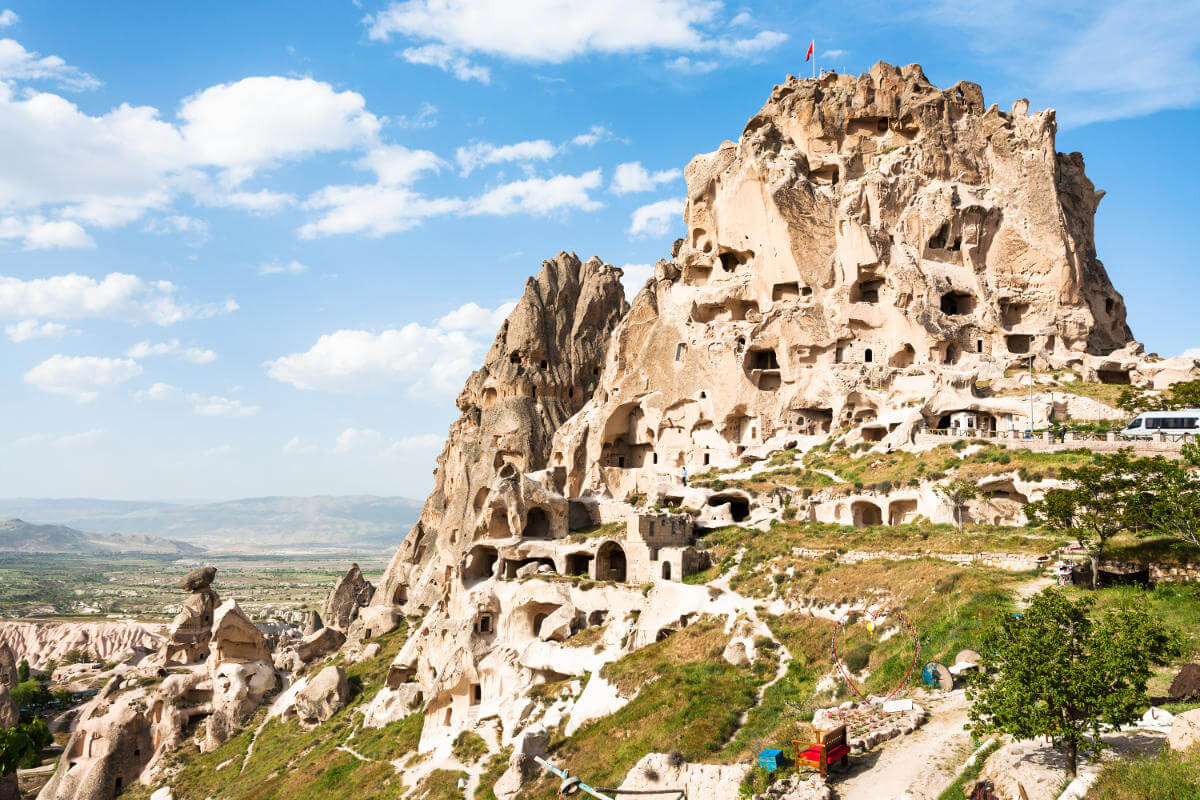
Cappadocia is a region, not a single attraction. Göreme is usually the easiest base for first-time visitors because of its restaurants, viewpoints, and access to valley tours. Uçhisar is quieter and scenic, Ürgüp has more of a hotel-centered feel, and Avanos is a good choice for travelers who prefer a less central base.
Take a sunrise balloon ride, but plan for weather
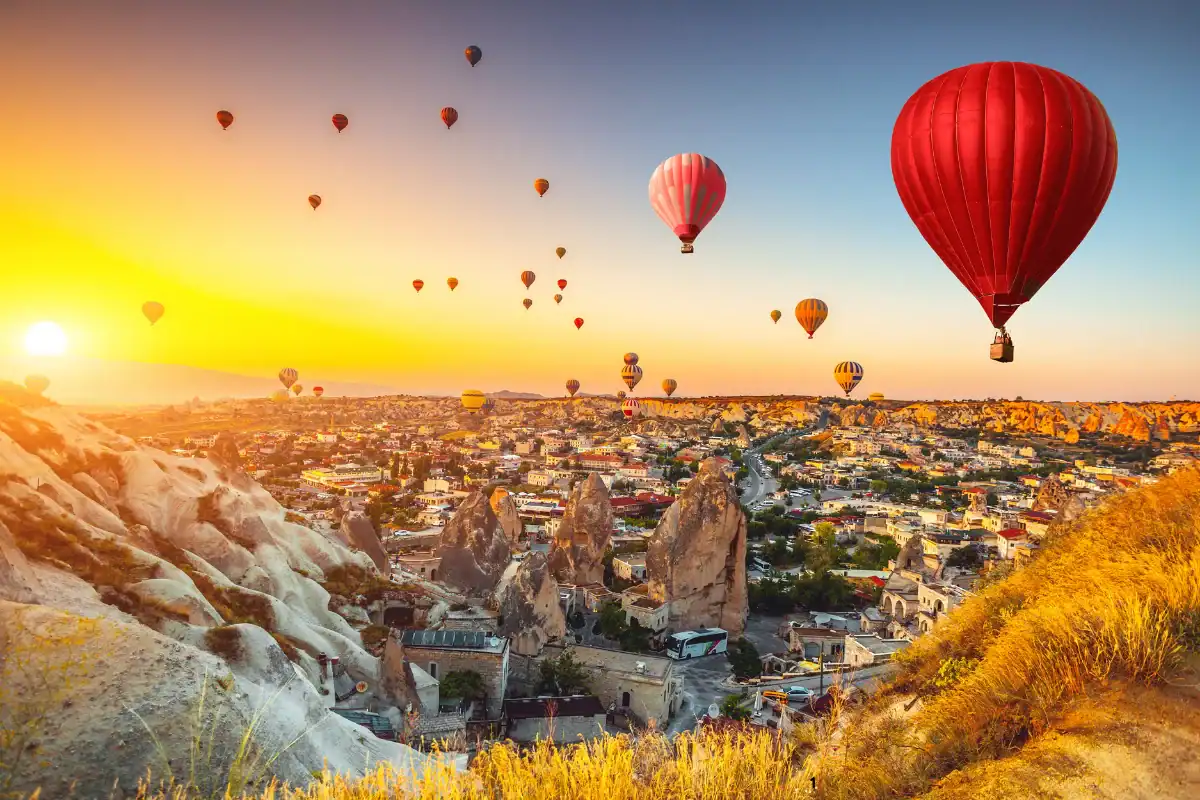
A sunrise balloon flight is the signature experience for many visitors. Pick-up times are before sunrise and shift with the season. Flights operate only with weather and aviation approval, so no company can promise that a particular morning will fly. Before confirming a package, ask whether the balloon, hotel transfers, refreshments, insurance, and rebooking procedures are included.
Travelers focused on this experience can compare a standalone Cappadocia sunrise hot air balloon ride with a longer itinerary that includes touring and accommodation. For a fuller look at timing and common booking mistakes, read this two-day Cappadocia itinerary from Istanbul with a hot air balloon ride.
See valleys, rock-cut churches, and underground spaces
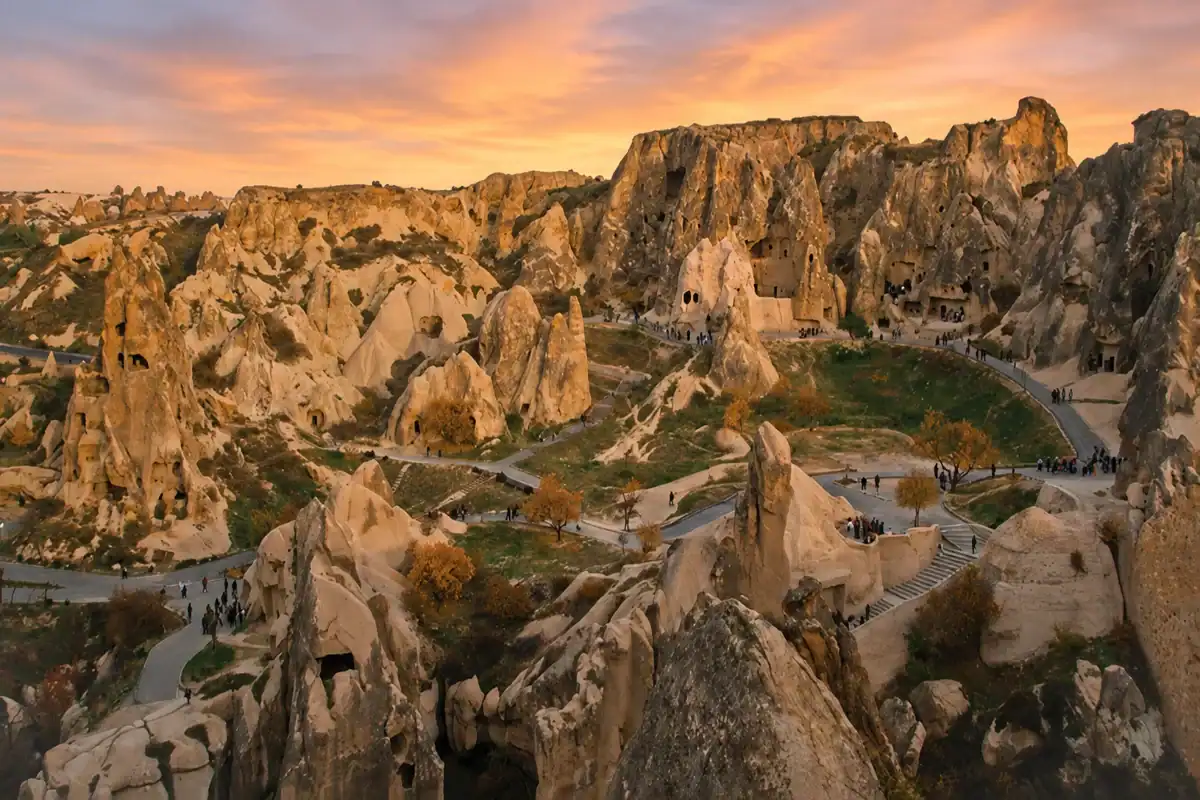
Göreme National Park brings together fairy chimneys, cave dwellings, monastic settlements, and rock-cut churches. A guide can add useful context here, particularly around the frescoes and early Christian heritage that are easy to overlook without explanation.
Make time for Paşabağ Monks Valley, one of the clearest places to see Cappadocia’s mushroom-shaped rock formations. An underground-city visit offers a very different perspective. The passages at a Cappadocia Underground City can be narrow and low, so travelers with claustrophobia or mobility concerns should ask about the route before entering.
Choose a cave hotel based on comfort, not photos alone
Cave hotels range from genuinely carved rooms to stone-built rooms designed in a cave style. Both can be appealing, but practical details matter: stairs, natural light, heating or air-conditioning, bathroom layout, and luggage access can vary significantly. A terrace view is valuable, but it should not come at the expense of a room that is difficult for you to reach or use comfortably.
How to Make the Most of Pamukkale
Pamukkale is more compact than Cappadocia, but the site is larger than many visitors expect. The combination of white mineral terraces, thermal water, and ancient ruins means you should plan for several hours on your feet rather than a quick photo stop.
Walk the white terraces
The Travertines of Pamukkale are formed by mineral-rich water flowing down a white hillside. Visitors must remove their shoes on designated terrace routes, so bring a small bag for footwear and expect wet, uneven surfaces. Water levels vary because flow is managed to help protect the terraces; not every pool will be full at every time of year.
Allow time for Hierapolis and the thermal pool
The ancient city of Hierapolis above the terraces includes a theater, necropolis, baths, gates, and long walking paths with limited shade. In summer, arrive early or visit later in the afternoon. The Cleopatra Antique Pools in Pamukkale are a separate swimming experience with warm mineral water and submerged ancient fragments. Admission is generally separate from the main site entry, so confirm current prices and operating details before your visit.
Still deciding whether this stop is worth the transfer time? The Pamukkale day trip guide offers practical advice on visiting the Cotton Castle efficiently.
Best Time to Visit and What to Pack
April, May, September, and October are usually the strongest months for pairing Cappadocia and Pamukkale. Cappadocia mornings can be cold even when afternoons are warm, while Pamukkale can feel hot underfoot and intensely bright at midday.
- Spring: Comfortable for valley walks and archaeological sites, though balloon flights remain weather-dependent.
- Summer: Good for travelers limited to school-holiday dates, but Pamukkale’s heat and reflected sunlight can be intense. Start outdoor touring early.
- Fall: Often a particularly comfortable period for this route, with pleasant sightseeing temperatures and good photography light.
- Winter: Cappadocia can be striking under snow, but balloon cancellations may be more frequent. Pamukkale is quieter, though the terraces can be cold.
Pack layers for predawn balloon pick-ups, shoes with reliable grip for uneven volcanic paths, swimwear for Cleopatra’s Pool, and a compact day bag. Keep your suitcase manageable: cave hotels and village streets may involve stairs, slopes, or uneven stone paths.

Budgeting Without Costly Surprises
Your final trip cost will depend primarily on domestic-flight timing, hotel standard, balloon inclusion, transport style, and whether you travel privately or in a small group. Rather than comparing only a headline package price, compare what each option actually covers.
- Flights: Domestic fares change with date, baggage allowance, flight time, and demand. Convenient schedules may cost more but save valuable touring time.
- Transfers: Shared shuttles are usually less expensive but can include multiple hotel stops. Private transfers cost more and may suit families or travelers arriving after long-haul flights.
- Hotels: Cave-room type, views, terrace access, and location can create major price differences even within the same town.
- Balloon rides: Prices vary by date, demand, basket size, and included services. Confirm whether the ride is already part of your itinerary.
- Site fees: Museums, archaeological areas, and swimming pools may require separate admission.
Booking check: Before paying, verify every flight sector, baggage allowance, hotel name or category, airport transfer, balloon policy, entrance fee, and meal inclusion. The least expensive listing is not always the least expensive trip once essential extras are added.
Which Route Style Fits You Best?
Choose a short escorted Cappadocia package if time is limited
A two-day Cappadocia plan is a sensible option when you are based in Istanbul and want flights, touring, and the balloon experience arranged around a short window. The 2-Day Cappadocia Adventure with Sunrise Hot Air Balloon Ride starts from USD 840, while the 2-Day Cappadocia Tour from Istanbul by Plane with Hot Air Balloon starts from USD 895. These starting prices may change, so review the current itinerary and inclusions before booking.
Choose three nights if the balloon is your top priority
Three nights create a more sensible buffer for weather and let you see Cappadocia beyond its sunrise views. A private arrangement can be useful for couples, families, or travelers who want more flexibility around sightseeing pace, hotel choice, and airport timing. The Private Cappadocia Tour from Istanbul starts from USD 920 and is best considered when customization matters more than following a fixed group schedule.
Choose a longer westbound route if Pamukkale is non-negotiable
If you want both destinations without managing flights and buses independently, choose an itinerary that explicitly lists the Cappadocia-to-Pamukkale transport plan. Confirm whether it uses flights, an overnight bus, or road travel; this single detail has the greatest effect on how rested you feel at Pamukkale. Travelers who want an additional cultural stop can also consider the 3-Day Cappadocia & Konya Tour from Istanbul, which starts from USD 864.
Before booking any route: verify departure airports, transfer timing, luggage rules, hotel location, balloon inclusion, and what happens if weather prevents balloon operations. Those details matter more than a polished itinerary title.
Choose your next step
Recommended Cappadocia tours
These verified options are the closest available matches for this article’s destination, route intent, and trip length.
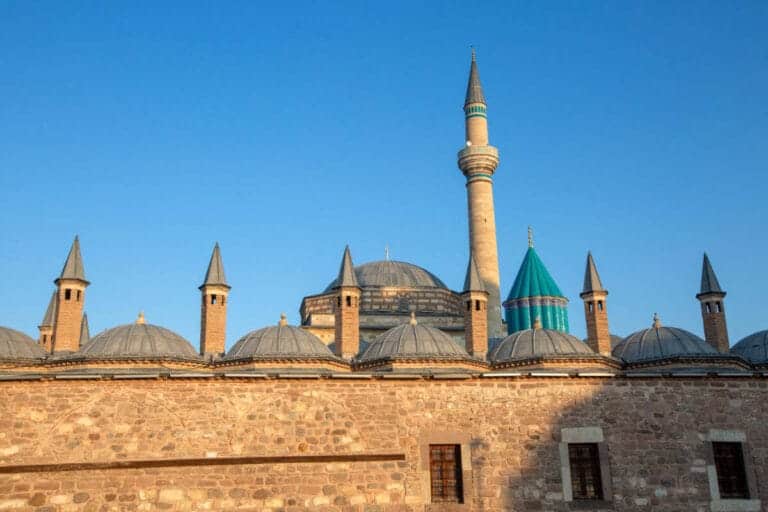
3-Day Cappadocia & Konya Tour from Istanbul
A 3 days Historical & Cultural Tour route covering Cappadocia, Konya and 1 more destination.
View tour details →
2-Day Cappadocia Adventure with Sunrise Hot Air Balloon Ride
A 2 days Historical & Cultural Tour route covering Cappadocia.
View tour details →
2-Day Cappadocia Tour from Istanbul by Plane with Hot Air Balloon
A 2 days Historical & Cultural Tour route covering Cappadocia, Istanbul.
View tour details →
Private Cappadocia Tour from Istanbul (2 Nights / 3 Days)
A 3 days route covering Cappadocia, Istanbul.
View tour details →Common Questions About Cappadocia and Pamukkale
Can Cappadocia and Pamukkale be done in three days?
It is technically possible but not recommended for most travelers. You would have very little margin for delayed flights, balloon cancellations, or the long transfer between destinations. Four days is the practical minimum.
Is it better to stay in Göreme or Uçhisar?
Göreme is usually more convenient for first-time visitors because restaurants, tour pick-ups, and valley access are close by. Uçhisar tends to suit travelers who value wider views and a quieter setting.
Do I need a guide at Pamukkale and Hierapolis?
You can visit independently, but a guide is worthwhile if you want to understand the ruins rather than simply walk the terraces. It is especially helpful for travelers with limited time who need a logical route through the larger Hierapolis site.
Should I book the Cappadocia balloon ride in advance?
Yes, particularly for spring, fall, holidays, and short stays. Advance booking does not guarantee weather clearance, but it gives you a better chance of obtaining a seat if flights operate.
Plan the Route Around the Experiences That Matter Most
The best Cappadocia and Pamukkale trip is not the fastest one. Give Cappadocia at least two nights, schedule the balloon early in your stay, and leave enough time to walk Pamukkale and Hierapolis at a comfortable pace. If you would like help matching flights, hotels, transfers, and sightseeing to your available days, submit your preferences through Plan My Trip.