
The honest answer: Pamukkale is worth visiting if you want an unusual natural landscape paired with meaningful ancient ruins—and you’re prepared for crowds, strong sun, and the fact that not every terrace will be full of water. It is especially rewarding when you allow enough time for Hierapolis, rather than treating the white terraces as a quick photo stop.
Pamukkale is one of Turkey’s most recognizable sights, but it is not a destination that works equally well for every itinerary. The key decision is whether you can give it a relaxed half-day or full day—or whether the travel time required from your starting point will leave you with more transit than sightseeing.
What Matters Most Before You Go
- Pamukkale’s appeal is bigger than the travertines: the ancient spa city of Hierapolis, its theater, necropolis, and thermal bathing options add real depth to the visit.
- Water is managed across the terraces for conservation, so expect a mix of wet and dry areas rather than an uninterrupted hillside of bright blue pools.
- A visit works best in cooler parts of the day. Summer glare and heat can make the exposed white slopes tiring by midday.
- Travelers staying in Izmir, Kuşadası, or nearby Aegean destinations can usually visit more comfortably than those attempting a very long out-and-back journey from Istanbul.
- One day is enough for the main site, but an overnight stay nearby gives you the best chance to experience quieter morning or late-afternoon conditions.
What Pamukkale Is Really Like
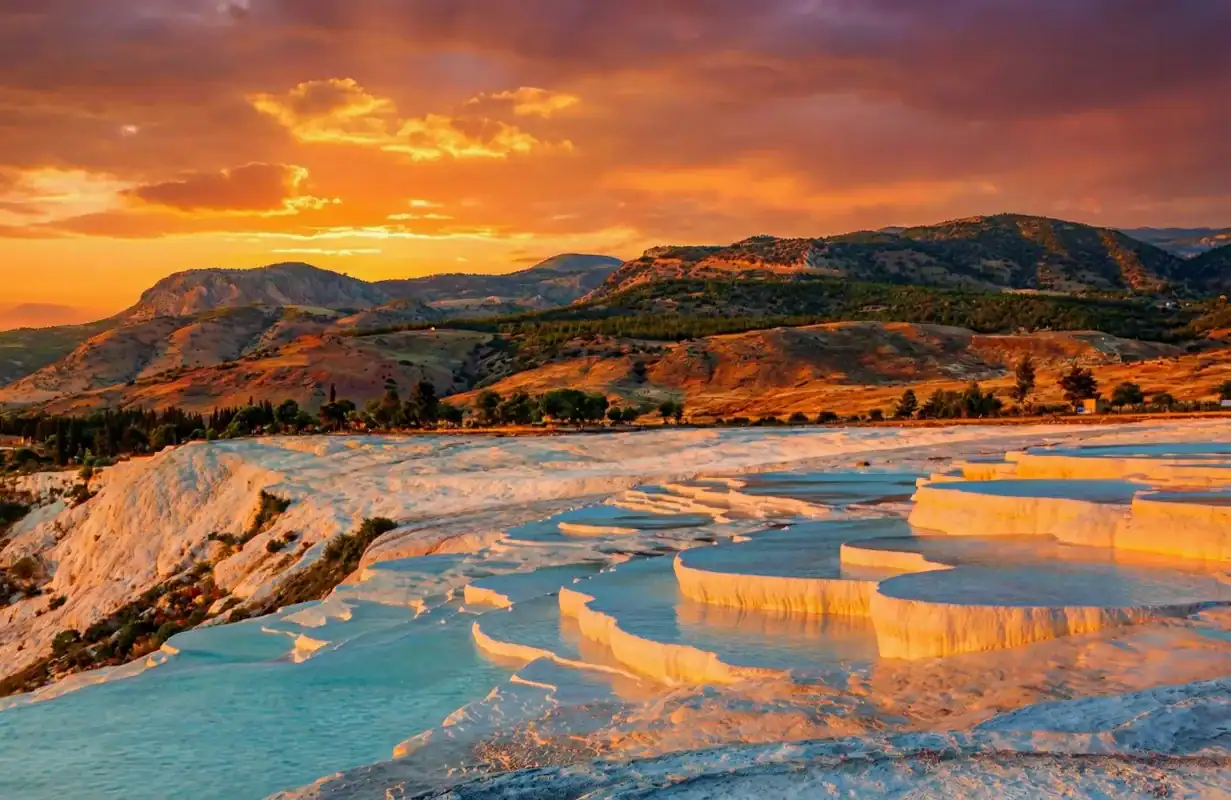
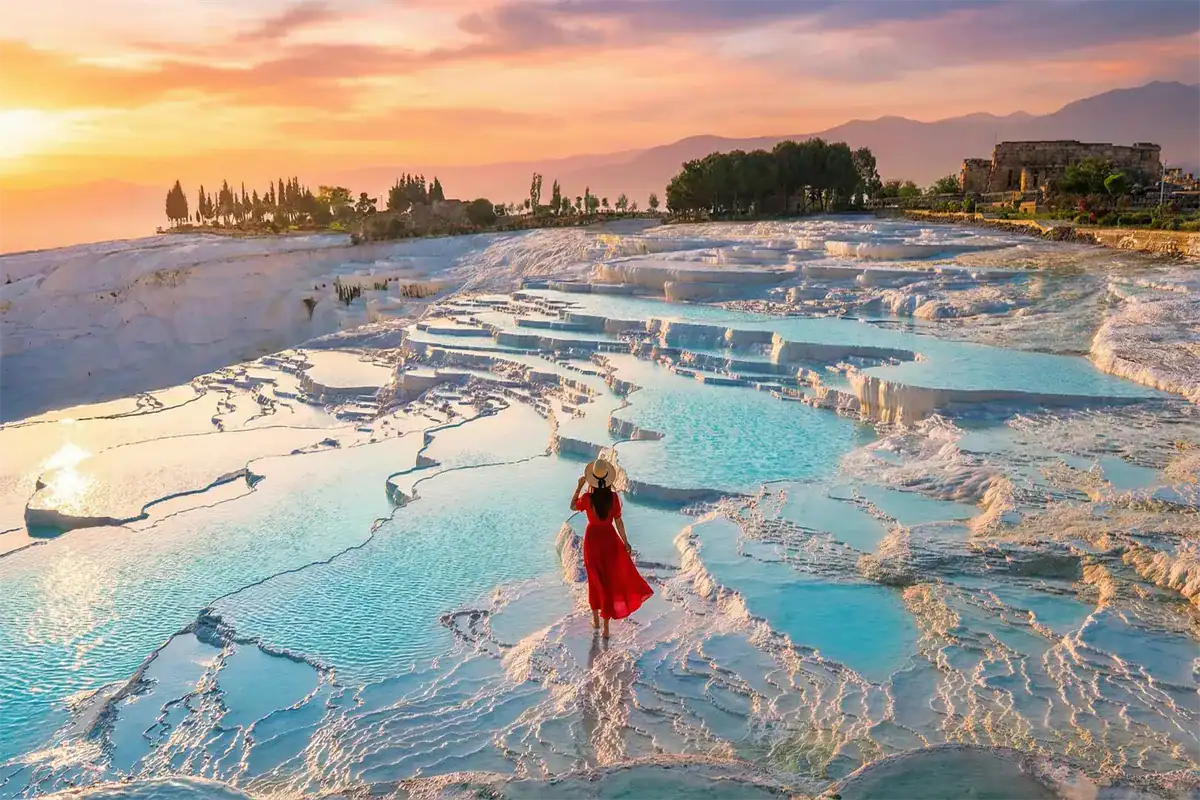
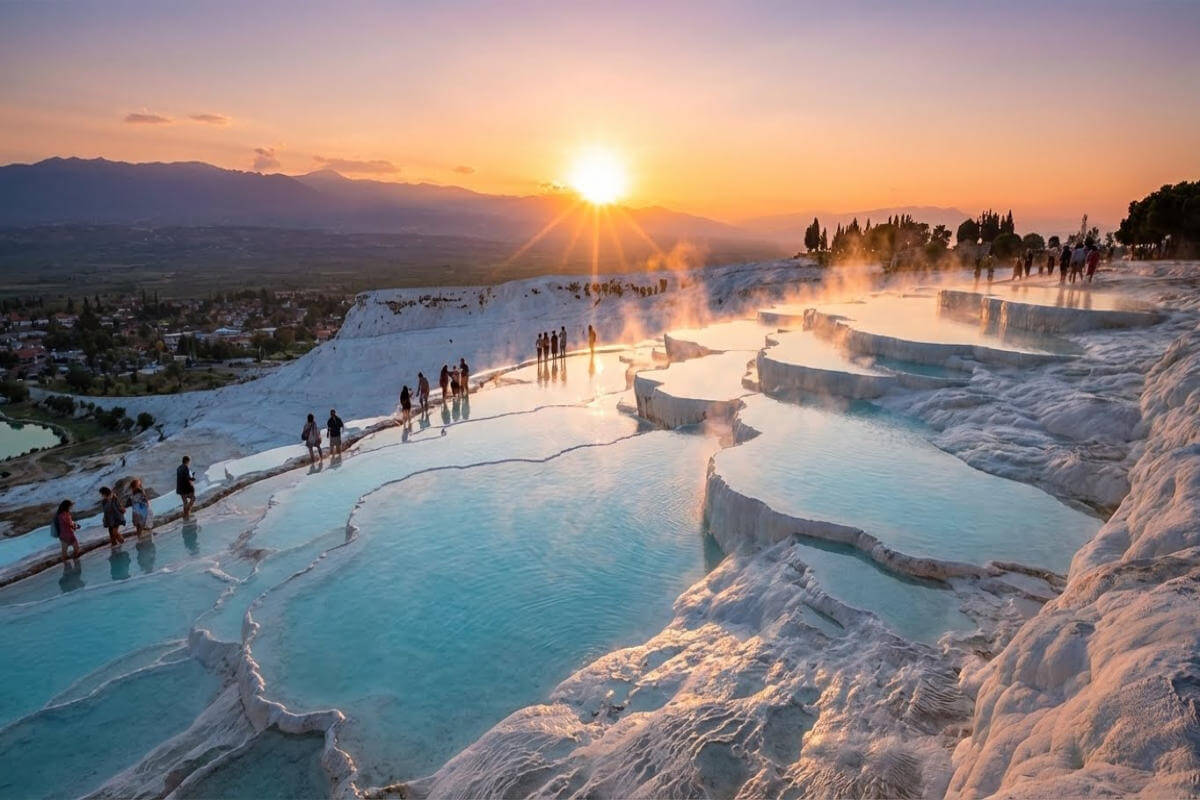
The name Pamukkale means “Cotton Castle,” and from a distance the comparison makes sense: bright white mineral formations spill down the hillside in layered shelves. These terraces were created by calcium-rich thermal water flowing from springs above the site. On a clear day, the contrast between the white stone, blue sky, and green valley can be striking.
Still, it helps to arrive with realistic expectations. The most polished photos often show empty terraces, perfect water levels, and carefully chosen angles. In reality, Pamukkale is a major stop on many Turkey tours. You may share the walking route with day-trippers, school groups, and travelers taking photographs.
Why some terraces are dry
Water does not flow evenly across every formation all year. Authorities manage the water channels to protect the travertines’ color and mineral surface, so some sections may be shallow, dry, or temporarily inaccessible while others have flowing water. This is normal conservation practice, not necessarily a sign that something is wrong with the site.
You can still wade in designated portions of the terrace route when conditions allow, but the protected formations are not a natural swimming complex. Follow the marked paths and current site instructions. Visitors are commonly asked to remove shoes on the white travertine route, both to protect the surface and to avoid bringing grit onto it.
It is more than a photo stop
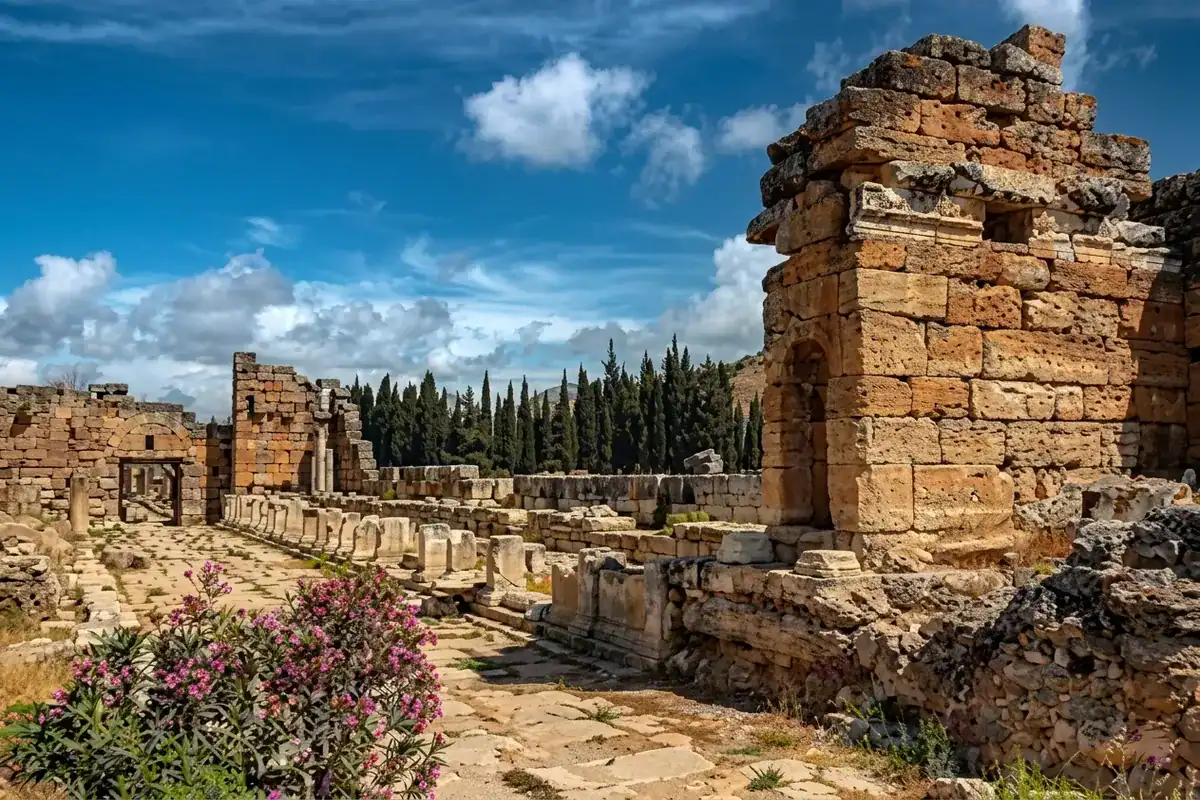
The strongest reason to visit is the combination of landscape and archaeology. Above the terraces, Hierapolis was an important Greco-Roman spa city built around thermal springs. Give yourself time to walk beyond the most crowded downhill terrace route. The large theater, extensive burial grounds, and remnants of baths and civic buildings make the site far more substantial than a quick social-media stop.
If ancient cities are a priority on your trip, the history of Ephesus is a useful companion read when deciding whether to pair Pamukkale with the Aegean coast. The two places offer different experiences: Ephesus feels like an urban Roman city, while Hierapolis is tied closely to healing waters, burial traditions, and the landscape around it.
Why Pamukkale Is Worth the Trip
The travertines are genuinely distinctive
The Travertines of Pamukkale are not just another scenic viewpoint. Their scale, texture, and color make them visually different from almost anywhere else on a typical Turkey itinerary. They are particularly photogenic in the early morning and late afternoon, when the white formations reflect softer light.
Hierapolis adds a full historical dimension
Travelers who only walk the terraces often miss the best part of the visit. The Hierapolis theater is worth the uphill walk for both its preservation and valley views. The necropolis is also unusually extensive, with tombs and sarcophagi stretching along the ancient approaches to the city. A guide can be helpful here, but independent visitors can also have a satisfying visit if they allow time to read signage and explore at their own pace.
Cleopatra’s Pool offers an optional extra
The Cleopatra’s Pool, also called the Antique Pool, is a separate bathing experience within the archaeological area. Warm mineral water flows around submerged ancient architectural fragments, including fallen columns. Admission is usually separate from the main site ticket, so confirm the current bathing fee, opening conditions, changing facilities, and whether towels or lockers are available before you commit to swimming.
It is a fun addition for travelers who enjoy thermal bathing and have extra time. It is not essential for everyone. If your schedule is tight, prioritize the terraces and Hierapolis rather than rushing through both just to fit in a swim.
The Drawbacks: When Pamukkale May Not Be the Right Choice
Pamukkale is worth visiting, but it has real trade-offs. Being clear about them before booking will help you decide whether to make it a highlight or save it for a future trip.
- It can be crowded: The main terrace route is busiest when large day-trip groups arrive. You may need patience for photos and slower walking.
- Summer conditions are demanding: There is limited shade across the open archaeological zone, and sunlight reflects strongly off the white calcium surface.
- It requires walking: The terrain includes uneven ancient paths, gentle climbs, wet surfaces, and long distances between major points of interest.
- The trip can be logistically inefficient: Pamukkale is easy to add from the Aegean coast but can feel rushed when squeezed into a short Istanbul stay.
- It is not a luxury spa resort visit by default: The main attraction is a protected natural and archaeological site. Thermal bathing is only one optional component.
Travelers with limited mobility should review the walking requirements carefully before booking. The site can still be worthwhile, but the terraces, theater, and archaeological paths do not all offer the same level of accessibility. Confirm the day’s route, vehicle access, and practical assistance options with the provider handling your arrangements.
Best Time of Day and Best Season to Visit
For most travelers, timing matters more than chasing a perfect month. The best practical strategy is to arrive as early as possible or stay into the late afternoon, when the light is gentler and many day visitors have moved on.
Morning versus late afternoon
| Timing | Best for | What to consider |
|---|---|---|
| Early morning | Cooler temperatures, calmer photography, a more relaxed start | You need to stay nearby or arrive early enough to avoid losing the morning in transfers. |
| Midday | Travelers on fixed day-trip schedules | Expect stronger glare, more heat in warmer months, and heavier foot traffic. |
| Late afternoon | Softer light, a less rushed atmosphere, sunset-oriented photography | Check current closing times and leave enough time to return safely to your hotel or transport connection. |
Seasonal planning
Spring and fall are generally the most comfortable periods for walking, with milder daytime conditions than peak summer. Summer can still work well if you bring water, sunscreen, sunglasses, and a hat, and avoid treating the visit as a race. In winter, the landscape can look atmospheric, especially with steam rising from warm water, but cold air and wet barefoot walking may not suit everyone.
Practical tip: Pack a small bag with sunglasses, sunscreen, drinking water, a hat, and a pair of easy-to-remove shoes. If you plan to use Cleopatra’s Pool, bring swimwear and confirm the current pool arrangements before arriving.
How Much Time and Money Should You Plan For?
For the terraces and major Hierapolis highlights, plan on at least four to five unhurried hours inside the site. Add more time if you want to swim, photograph the terraces patiently, walk through the necropolis, or visit the museum facilities that may be open during your visit.
Your overall cost depends less on Pamukkale itself than on how you reach it. The main variables are your starting city, transport type, whether accommodation is needed, entrance tickets, meals, guide service, and optional Cleopatra’s Pool admission. Entry prices and operating arrangements can change, so verify them directly before travel rather than relying on older guidebooks or social posts.
For a current overview of thermal-bathing expectations, see The Ultimate Pamukkale Hot Springs Guide. Travelers considering a single-day visit can also compare practical timing in the Pamukkale Day Trip Guide 2026.
Getting to Pamukkale Without Wasting Your Trip
Pamukkale sits near Denizli in southwestern Turkey. It is not a natural add-on to every route, so plan the visit around your existing itinerary rather than forcing it into an already crowded schedule.
From Izmir or Kuşadası
This is often the most sensible day-trip route. Travelers already visiting the Aegean coast can make Pamukkale part of a wider Ephesus, Selçuk, or Kuşadası itinerary without changing hotels. It is still a long day, so look at pickup timing, meal arrangements, entrance fees, and the amount of free time at the site before reserving.
From Istanbul
A Pamukkale visit from Istanbul can work for travelers who have limited time and prefer a coordinated air-and-road itinerary. It is a full day, not a casual excursion. Flight schedules, airport transfers, road travel, and site timing all need to align. If Pamukkale is a major reason for your Turkey trip, an overnight stay or a multi-day route is usually more relaxing than trying to compress everything into a single day.
For route details and the trade-offs between flying, buses, and independent planning, read How to Get to Pamukkale from Istanbul.
From Antalya or Cappadocia
These routes make more sense as part of a multi-day itinerary. From Antalya, Pamukkale can be paired with inland travel toward Cappadocia. From Cappadocia, the distance means travelers should think carefully about overnight transport, pacing, and whether they want to combine Pamukkale with Ephesus rather than make a standalone detour.
Should You Visit Pamukkale as a Day Trip or Stay Overnight?
The right choice comes down to where you are starting, how much you value quiet time at the site, and whether Pamukkale is one stop among many or a personal priority.
Choose a day trip if you are based on the Aegean coast
A day trip is usually the practical choice from Izmir or Kuşadası. The journey is substantial but manageable, and you can see the travertines and Hierapolis in one full day without moving hotels. The verified Pamukkale Day Trip from Izmir is listed from USD 160 for 12 hours; treat that as a starting price and check the tour page for current availability, inclusions, and pickup details.
Choose a coordinated flight day trip only if time is limited
From Istanbul, a day trip is best for travelers who strongly want to see Pamukkale but cannot dedicate an overnight. The verified Pamukkale Day Trip from Istanbul is listed from USD 385 for 16 hours. It can be an efficient option when the day’s connections line up, but it will be long. Confirm flight timing, luggage rules, airport transfers, site entry arrangements, and how much time is actually spent at Pamukkale.
Choose an overnight or multi-day route if experience matters more than speed
An overnight near Pamukkale gives you more flexibility for early or late entry, a swim, and a slower exploration of Hierapolis. A longer route also works well if you want to combine Pamukkale with Cappadocia or Ephesus. The verified 4-Day Pamukkale and Cappadocia Tour from Antalya is listed from USD 570, while the 2-Day Pamukkale & Ephesus Tour from Cappadocia with overnight local bus is listed from USD 360 for a 3-day travel arrangement. Check the transport style carefully: overnight bus travel suits some travelers well and others not at all.
What to verify before booking
- Whether entrance fees, meals, flights, airport transfers, and Cleopatra’s Pool admission are included or paid separately.
- Your pickup point, return timing, and whether the itinerary is suitable for your mobility and comfort level.
- How much independent time is planned at the terraces and Hierapolis.
- Current cancellation terms. For date changes or cancellations, notice must be given at least 5 days before the tour starts; non-refundable flight and bus ticket costs are deducted from the paid balance. With less than 5 days notice, or for a no-show, the full payment is non-refundable.
Choose your next step
Recommended Pamukkale tours
These verified options are the closest available matches for this article’s destination, route intent, and trip length.

Pamukkale Day Trip from Istanbul
A 16 hours Day Trips from Istanbul route covering Pamukkale, Istanbul.
View tour details →
Pamukkale Day Trip from Izmir
A 12 hours Cultural & Heritage Tour route covering Pamukkale, Izmir.
View tour details →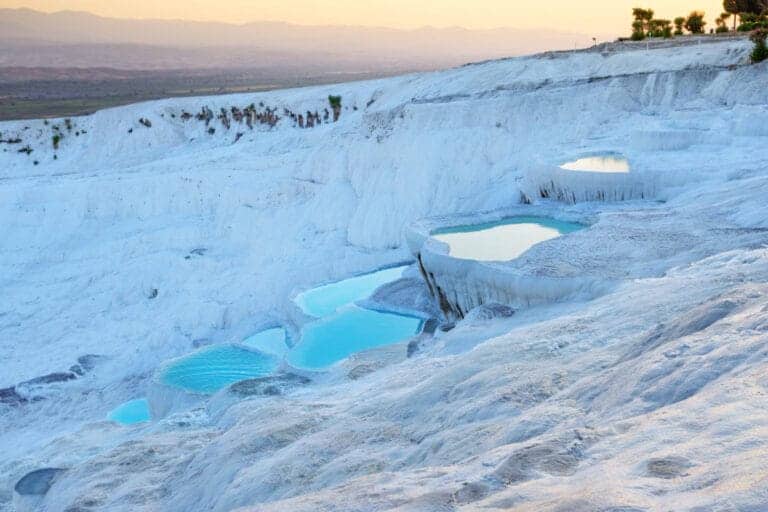
4-Day Pamukkale and Cappadocia Tour from Antalya
A 4 days Cultural & Heritage Tour route covering Pamukkale, Cappadocia and 1 more destination.
View tour details →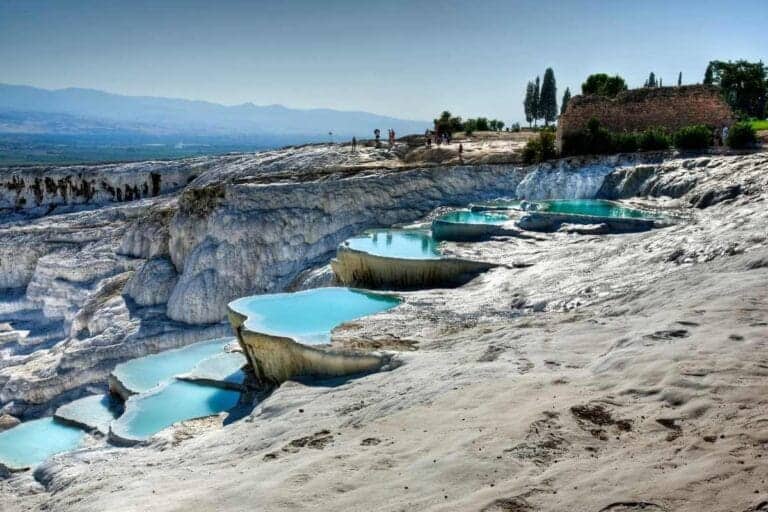
2-Day Pamukkale & Ephesus Tour from Cappadocia (With Overnight Local Bus)
A 3 days Cultural & Heritage Tour route covering Pamukkale, Ephesus and 1 more destination.
View tour details →Common Questions About Visiting Pamukkale
Is one day enough for Pamukkale?
Yes, one full day is enough to see the main travertine route and Hierapolis at a reasonable pace. Add time if you want to swim in Cleopatra’s Pool, visit every archaeological area, or photograph the site in both morning and late-afternoon light.
Can you swim in Pamukkale’s white terraces?
Visitors may be able to wade in designated sections when conditions permit, but the protected travertines are not open for unrestricted swimming. For a full thermal swim, consider Cleopatra’s Pool and confirm the current admission and opening arrangements.
Is Pamukkale better than Cappadocia?
They are very different. Pamukkale is better for travelers drawn to thermal landscapes, Roman ruins, and a one-day sightseeing focus. Cappadocia is better for cave landscapes, hiking, hot-air-balloon experiences, and a slower two- or three-day stay. If you have enough time, they complement each other well.
Do you need a guide at Pamukkale?
No, but a guide can make Hierapolis far more meaningful, especially if you are interested in Roman history, early Christianity, or the purpose of the ancient baths and necropolis. Independent travelers should allow extra time to explore beyond the terrace route.
Final Verdict: Is Pamukkale Worth Visiting?
Yes—Pamukkale is worth visiting when you approach it as both a natural wonder and an archaeological site. It is less satisfying for travelers expecting private blue pools or a quick, crowd-free photo stop. Give it enough time, arrive outside the busiest hours when possible, and include Hierapolis in your plan. That is when Pamukkale earns its place on a Turkey itinerary.
If you would like help choosing the most sensible route from Istanbul, Izmir, Antalya, or Cappadocia, plan your Turkey trip with One Nation Travel and ask for an itinerary that matches your available days and preferred travel pace.