
The quick answer: Gallipoli is best known for its World War I battlefields, cemeteries, and memorials, including Anzac Cove, Lone Pine, Chunuk Bair, The Nek, and the Turkish 57th Regiment Memorial. Most visitors explore the Anzac sector on a guided day trip from Istanbul or a shorter tour from Çanakkale or Eceabat. Allow a full day from Istanbul, wear proper walking shoes, and approach the sites as active places of remembrance.
Gallipoli is a meaningful stop for Australians, New Zealanders, Turks, military-history travelers, and anyone trying to understand the human cost of the First World War. The most important planning choice is simple: decide whether you want a focused battlefield visit or want to continue south toward Troy, Pergamon, Ephesus, or Pamukkale afterward. That decision determines whether a day trip, overnight stay, or multi-day route makes the most sense.
What to Know Before You Go
- The core Anzac battlefield sites are spread across hilly roads and cannot be understood well in a quick stop.
- A day trip from Istanbul is possible, but it is long; travelers staying in Çanakkale or Eceabat have a more relaxed visit.
- Entry to the outdoor memorial areas and cemeteries is generally free, while transport, guiding, meals, and museum visits are the main trip costs.
- Anzac Cove, Lone Pine, Chunuk Bair, The Nek, and the 57th Regiment Memorial make a strong first-time route.
- April 25 is deeply significant but requires advance planning; quieter spring and fall dates are often better for reflective visits.
- Gallipoli combines naturally with the Ancient City of Troy and onward Aegean itineraries.
Why Gallipoli Matters
The Gallipoli Campaign took place between February 1915 and January 1916, when Allied forces attempted to gain control of the Dardanelles and open a sea route to Russia. The campaign involved Ottoman, Australian, New Zealand, British, French, Indian, and other troops, and it ended with an Allied evacuation rather than the intended breakthrough.
For Australia and New Zealand, the landings of April 25, 1915 became central to national remembrance. For Türkiye, Gallipoli is equally important: it is closely associated with Mustafa Kemal, later Atatürk, and with the defense of the Ottoman homeland. A worthwhile visit considers both perspectives. The cemeteries, preserved trenches, inscriptions, and views over the strait make the campaign feel far more immediate than dates in a textbook.
The battlefield landscape is part of the Gallipoli Peninsula. Sites are scattered rather than gathered in a single museum complex, so route planning and knowledgeable interpretation matter.
Essential Gallipoli Battlefields, Memorials, and Cemeteries
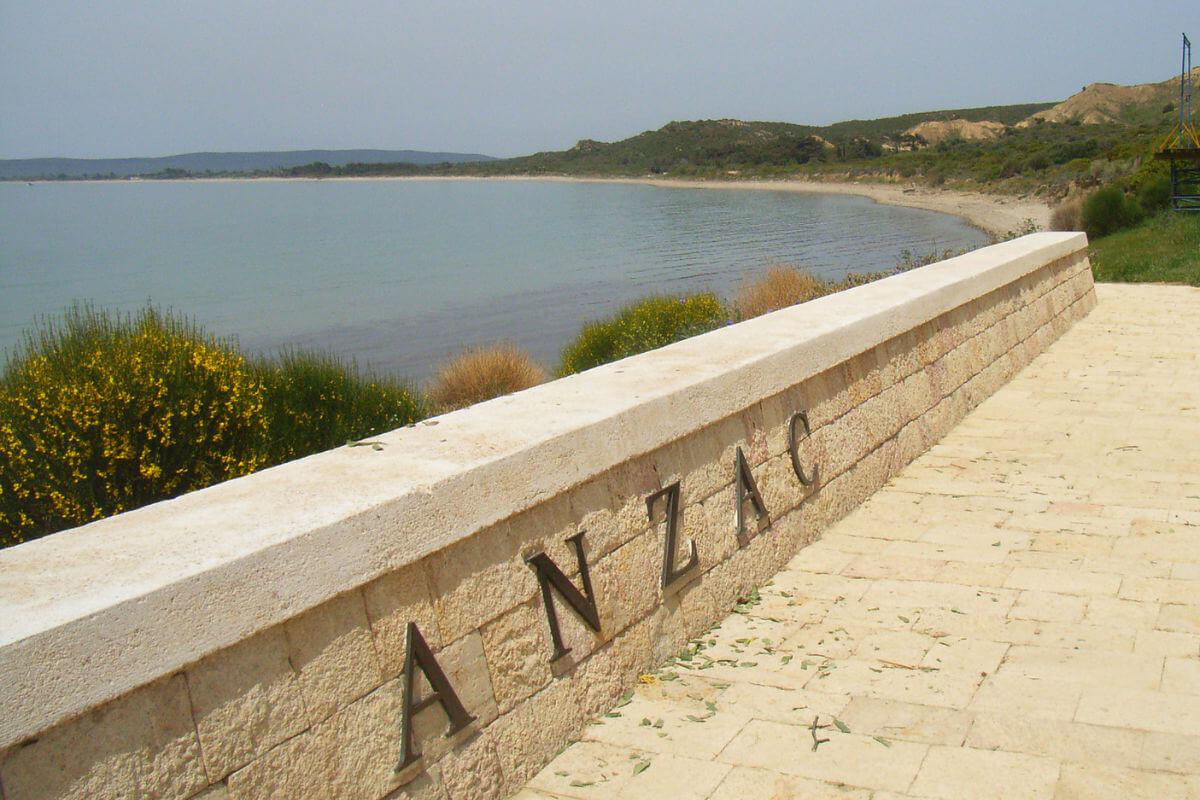
Anzac Cove and the Anzac Commemorative Site
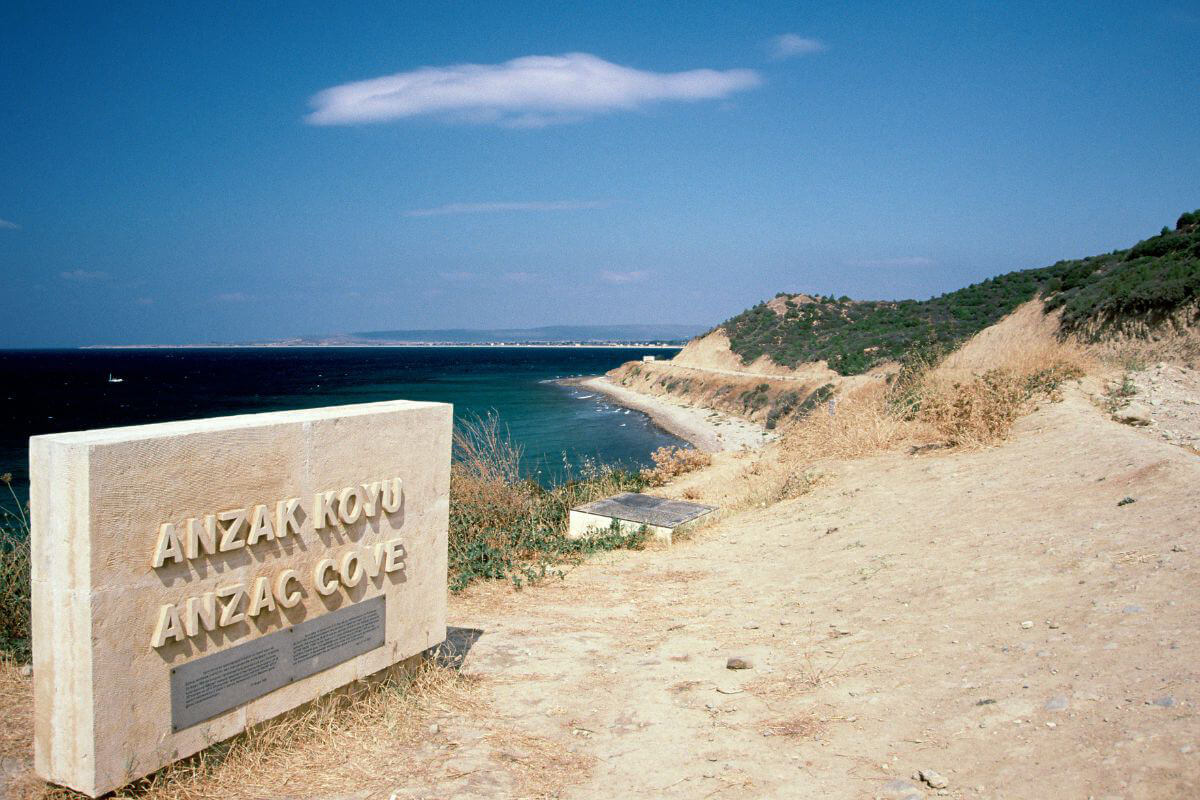
Anzac Cove is the place most international visitors recognize first. Australian and New Zealand troops landed near this narrow beach at dawn on April 25, 1915. The steep terrain behind the shoreline helps explain why the campaign became so difficult so quickly.
Nearby, the Anzac Commemorative Site hosts the annual dawn service. Outside Anzac Day, it is usually a quiet place to pause and take in the coastline. Beach Cemetery is also close by and offers a more personal perspective through the individual graves and inscriptions.
Lone Pine Monument and Cemetery
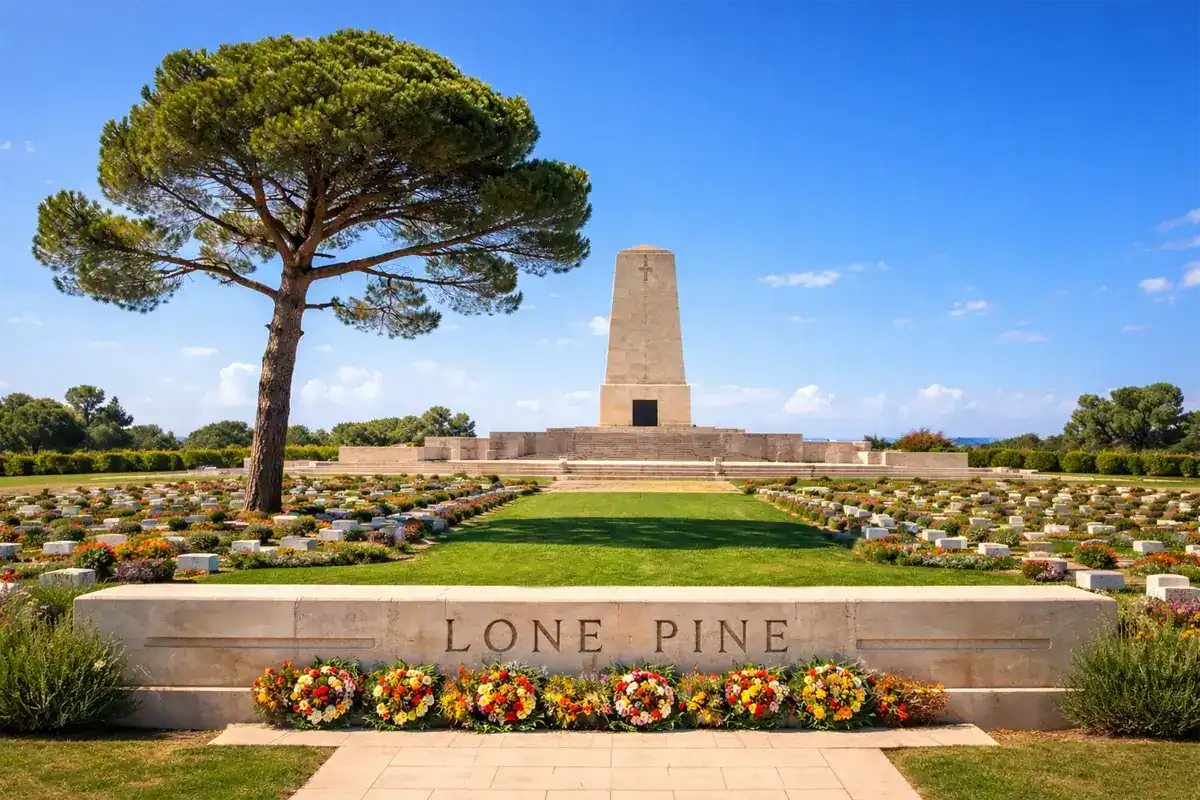
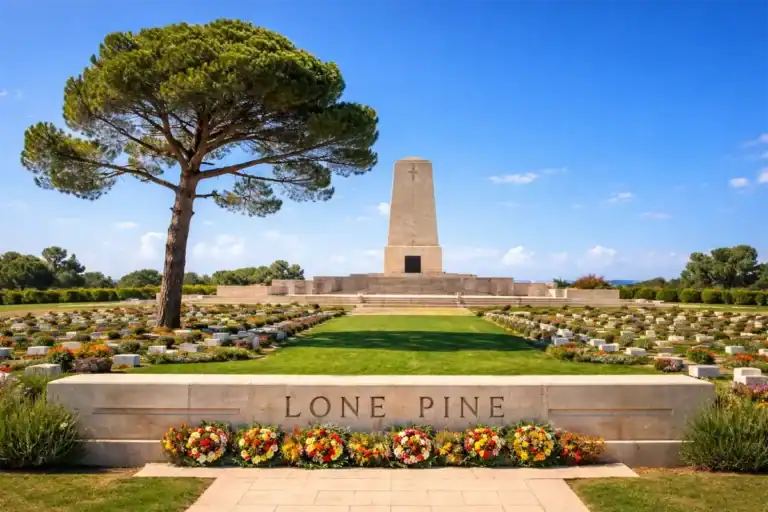
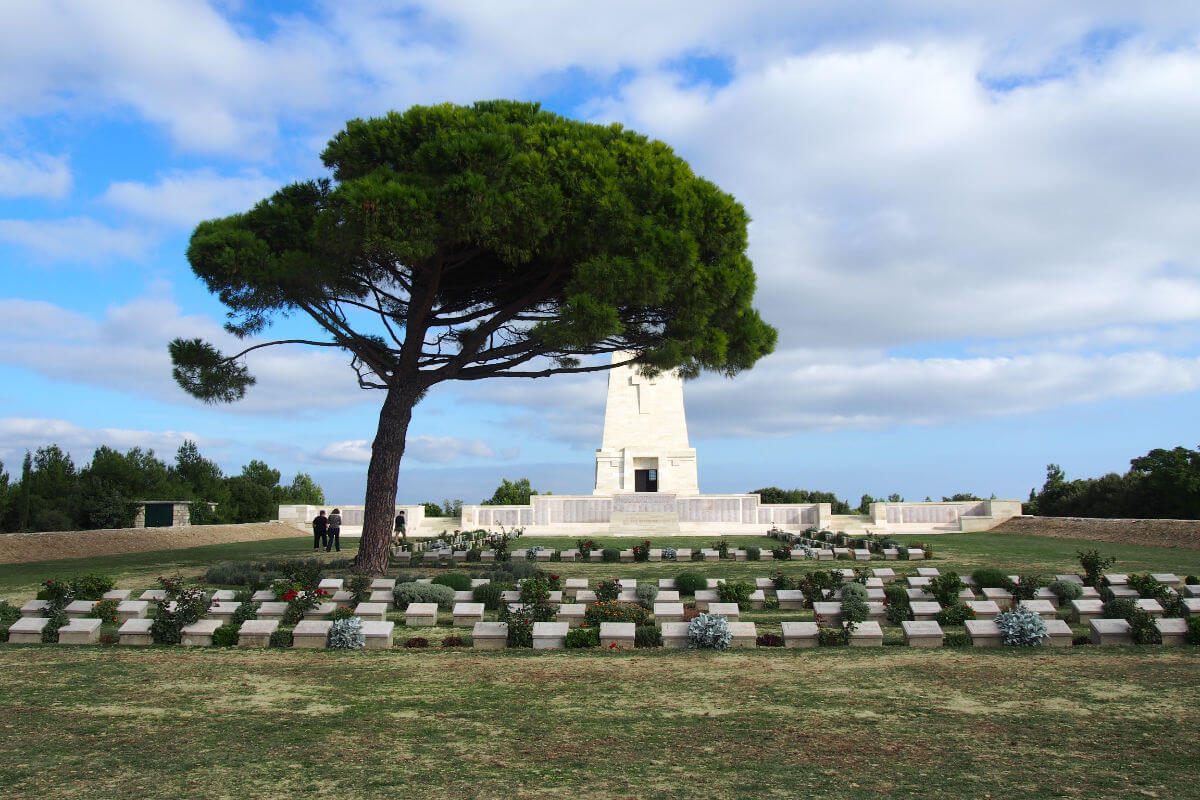
Lone Pine is one of the most powerful stops in the Anzac sector. The August 1915 battle was fierce and costly, and the memorial commemorates Australian and New Zealand servicemen who died in the area and have no known grave. The cemetery and memorial walls make this a place to allow more than a few rushed minutes.
The site is especially useful for understanding how close opposing trenches could be. A guide can help make sense of the ridge lines, attack routes, and the scale of fighting that is not immediately obvious from the modern landscape.
Chunuk Bair and the New Zealand Memorial
Chunuk Bair stands high on the Sari Bair range. New Zealand troops briefly captured the summit in August 1915, gaining a view toward the Dardanelles before Ottoman counterattacks forced them back. The memorial honors New Zealand soldiers with no known grave.
This is one of the best places to see the geography of the campaign. On a clear day, the height and distance between the ridges, beaches, and strait explain why the ground itself shaped every decision.
The Nek
The Nek is a narrow saddle of land associated with the Australian Light Horse attack of August 7, 1915. The fighting lasted only minutes, but casualties were devastating. Many travelers know the site from the final scenes of the film Gallipoli; seeing its confined terrain provides sobering context beyond the film.
57th Regiment Turkish Memorial
The 57th Regiment Memorial honors Ottoman soldiers who fought in the counterattacks around the Anzac area. It is an essential stop, not an optional add-on. Gallipoli is not solely an ANZAC story, and visitors gain a fuller understanding by spending time at both Commonwealth and Turkish memorials.
Ari Burnu Cemetery and the Mehmetçik Memorial
Ari Burnu Cemetery is near Anzac Cove and is known for the words attributed to Atatürk honoring soldiers from abroad who died on Turkish soil. The nearby Respect to Mehmetçik Monument depicts a Turkish soldier carrying a wounded Allied soldier, reflecting acts of humanity remembered amid the conflict.
What Else Is Worth Seeing on the Peninsula?
The central Anzac route is enough for many first-time visitors, but travelers with more time can broaden the experience. The southern Helles sector, for example, tells a different part of the campaign’s story.
- Kabatepe area: Useful as an orientation point before entering the battlefield roads. Museum access, opening hours, and ticket arrangements can change, so confirm details locally before building your schedule around it.
- V Beach and Helles Memorial: At the southern end of the peninsula, these sites focus on British and other Commonwealth landings at Cape Helles. They are best suited to travelers with a second day or a private itinerary.
- Kilitbahir: This historic fortress faces Çanakkale across the Dardanelles and adds earlier Ottoman history to a battlefield-focused route.
- Coastal viewpoints: The peninsula’s beaches, pine-covered slopes, and exposed ridges are part of what makes the visit so affecting. Enjoy them respectfully; this is a memorial landscape, not a theme park.
Practical tip: Don’t try to “collect” every monument in one afternoon. A smaller number of stops, with time to walk the grounds and understand their context, is usually more rewarding than a rushed circuit.
How Long Does a Gallipoli Visit Take?
Your starting point makes the biggest difference. The battlefield route itself can take roughly four to five hours when covering the principal Anzac sites at a sensible pace. From Istanbul, however, the road journey and Dardanelles crossing turn it into a very long day.
| Starting point | Best for | Planning reality |
|---|---|---|
| Istanbul | Travelers with only one open day | Expect an early start and a long return day. Choose this if Gallipoli is a priority and you do not want to change hotels. |
| Çanakkale or Eceabat | Travelers wanting a calmer, more detailed visit | Allows more time on the peninsula and makes it easier to visit Troy before or after Gallipoli. |
| Multi-day west Türkiye route | History and archaeology travelers | Works well when continuing to Troy, Pergamon, Ephesus, and the Aegean coast rather than backtracking to Istanbul. |
If you are traveling independently from Istanbul, ferry timing, driving time, and the location of your accommodation need careful attention. The return trip can become difficult if you reach the crossing late in the afternoon. For detailed route pitfalls and practical transport considerations, read how to travel from Istanbul to Gallipoli, including real costs and return-timing issues.
When Is the Best Time to Visit Gallipoli?
Spring and fall are generally the most comfortable periods for walking between memorials. April through June brings green hills and mild temperatures, while September through November can be pleasant with fewer visitors. Conditions on the ridges can change quickly, so bring a light layer even when the coast feels warm.
Anzac Day on April 25 is the most significant date for Australian and New Zealand visitors. It can also be the most logistically demanding. Accommodation in and around Çanakkale and Eceabat may be limited, road access can be managed differently, and attendance arrangements for commemorations should be verified well ahead of travel. If your aim is quiet reflection rather than a major ceremony, another spring or fall date may suit you better.
Summer visits are possible, but sun exposure can be intense, especially at elevated sites with little shade. Winter can be atmospheric and uncrowded, though rain, wind, and shorter daylight hours call for a more flexible plan.
What Should You Bring and How Should You Behave?
Gallipoli is outdoors, exposed, and uneven underfoot. Comfortable walking shoes with decent grip are more important than dressing up for a tour. Carry water, sun protection, a hat, and a windproof layer. If you are visiting independently, bring snacks as services inside the memorial areas can be limited.
Photography is welcome at many sites, but use good judgment. Keep voices low around graves, memorial services, and groups paying respects. Do not climb on monuments, step into protected areas, or treat cemetery spaces as backdrops for casual photos. Small decisions like these make a real difference at a place of remembrance.
Combining Gallipoli with Troy and the Aegean
Gallipoli pairs naturally with the Ancient City of Troy, on the Asian side of the Dardanelles near Çanakkale. The two places offer very different kinds of history: one is a modern memorial landscape, the other an archaeological site associated with layers of settlement and the Homeric tradition.
For travelers continuing south, the route can lead to the Asclepieion of Pergamon, Ephesus, and Pamukkale. This avoids returning to Istanbul just to head west again and is often the better route logic for travelers with several days in Türkiye.
For broader planning ideas, our Gallipoli travel guide focuses on the battlefield experience, while the Ephesus travel guide can help when you are deciding whether to continue down the Aegean coast. Australian travelers considering a more tailored route may also find this advice on visiting Gallipoli privately from Istanbul useful.
Choose the Right Gallipoli Tour Style
A guided visit is usually the strongest choice for first-time visitors because the battlefield roads, ferry logistics, and historical interpretation are difficult to manage well on your own. The right format depends on your available time and where you are sleeping that night.
- Choose an Istanbul day trip if you have one free day, want transport coordinated, and are comfortable with a long day. Confirm the pickup area, total expected duration, meal arrangements, ferry logistics, and which battlefield sector is covered.
- Choose a Çanakkale or Eceabat departure if you are already near the Dardanelles or plan to stay overnight. It is a better fit for visitors who want less road time and more time at the memorials.
- Choose a two- or three-day route if Troy, Pergamon, or Ephesus are already on your list. This is usually more efficient than treating Gallipoli as a round trip from Istanbul.
- Consider a private arrangement if you have a family connection, specific cemetery or regimental interest, mobility needs, or want to spend longer at selected sites. Ask what level of guiding, vehicle time, and itinerary flexibility is actually included.
Published prices are starting prices and can change. Before booking, verify the exact route, guide language, entrance arrangements where applicable, hotel pickup or meeting point, meals, ferry crossings, and whether the itinerary returns to Istanbul or ends in another city.
Choose your next step
Recommended Gallipoli tours
These verified options are the closest available matches for this article’s destination, route intent, and trip length.
Gallipoli Day Trip from Istanbul
A 18 hours Cultural & Heritage Tour route covering Gallipoli, Istanbul.
View tour details →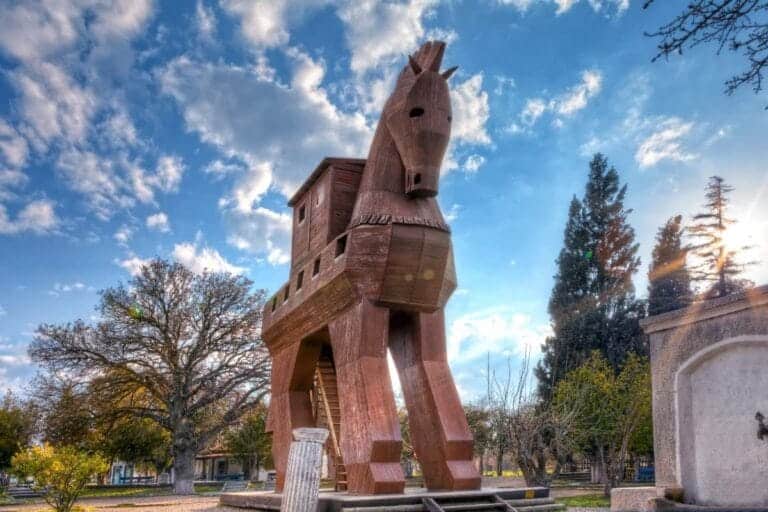
2-Day Gallipoli, Troy & Pergamon Tour (starts from Istanbul and ends in Kusadasi/Izmir)
A 2 days Cultural & Heritage Tour route covering Gallipoli, Troy and 2 more destinations.
View tour details →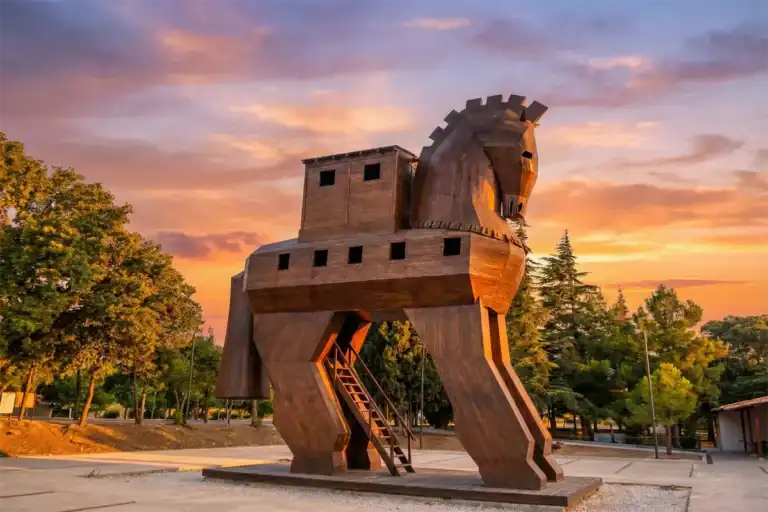
3-Day Gallipoli, Troy, Pergamon & Ephesus Tour from Istanbul
A 3 days Cultural & Heritage Tour route covering Gallipoli, Troy and 2 more destinations.
View tour details →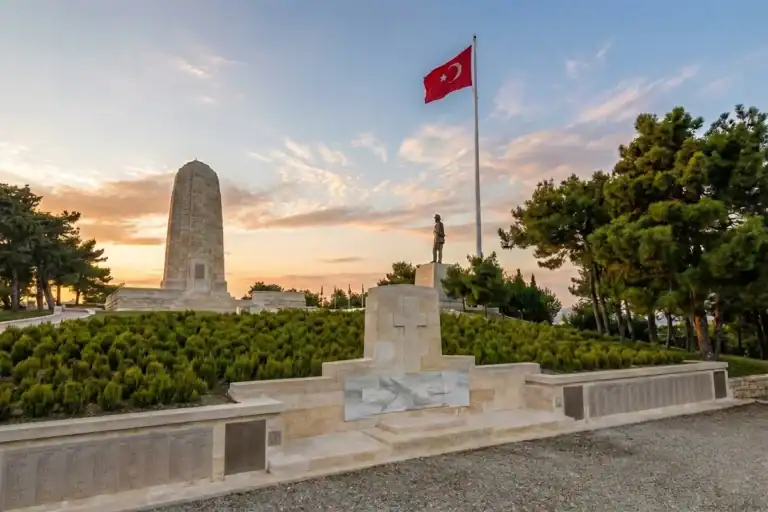
Gallipoli Tour from Canakkale / Eceabat
A 5 hours Gallipoli Tours route covering Gallipoli.
View tour details →Common Questions About Visiting Gallipoli
Can I visit Gallipoli without a guided tour?
Yes, particularly with a rental car and an overnight stay in Çanakkale or Eceabat. However, sites are widely dispersed and the landscape can be hard to interpret without context. Most first-time visitors find a guided visit more useful and less stressful.
Is there an entrance fee for the Gallipoli battlefields?
The principal outdoor memorials, cemeteries, and battlefield areas are generally free to enter. Costs usually come from transportation, guiding, food, accommodation, and any separately ticketed museum facilities.
Can Gallipoli and Troy be done in one day?
It can be done on a tightly planned route, especially when starting near Çanakkale, but it makes for a full schedule. Travelers coming from Istanbul often get more from an overnight stay or a multi-day itinerary.
Is Gallipoli suitable for travelers with limited mobility?
Some memorials can be viewed close to parking areas, but paths and ground conditions vary. Discuss mobility needs before booking so the route, vehicle access, and walking requirements can be considered properly.
Plan a Visit That Gives Gallipoli the Time It Deserves
Gallipoli rewards a thoughtful pace. Whether you come because of an ANZAC family connection, an interest in Ottoman history, or a wider journey through Türkiye, give the sites enough time for their stories to settle in. A well-chosen guide and realistic transport plan can turn a long day into one of the most meaningful parts of your trip.
To coordinate Gallipoli as a day trip, an overnight route with Troy, or a longer Aegean itinerary, plan your trip with One Nation Travel. The team can help match the route to your dates, starting city, interests, and preferred pace.