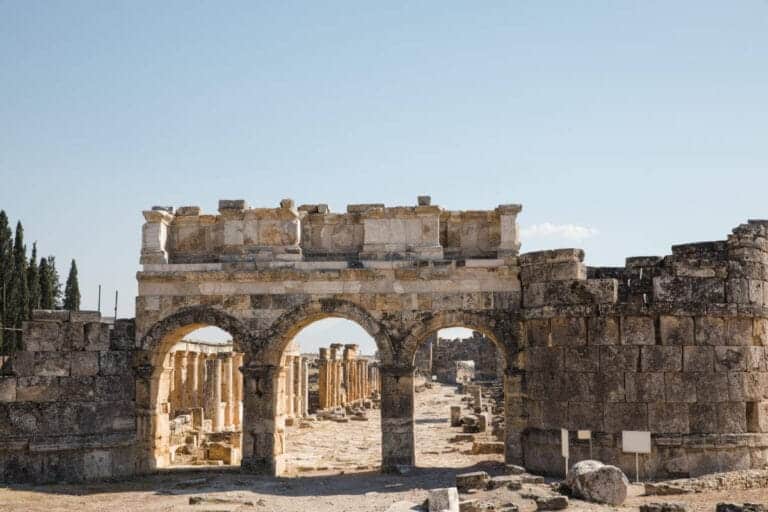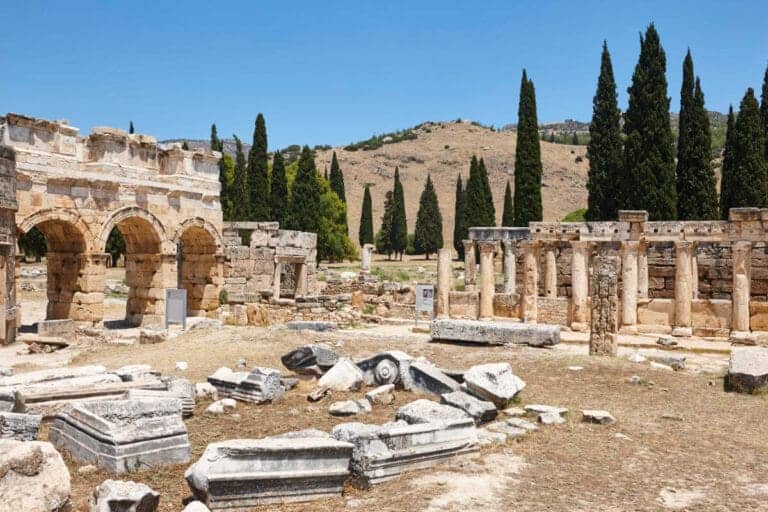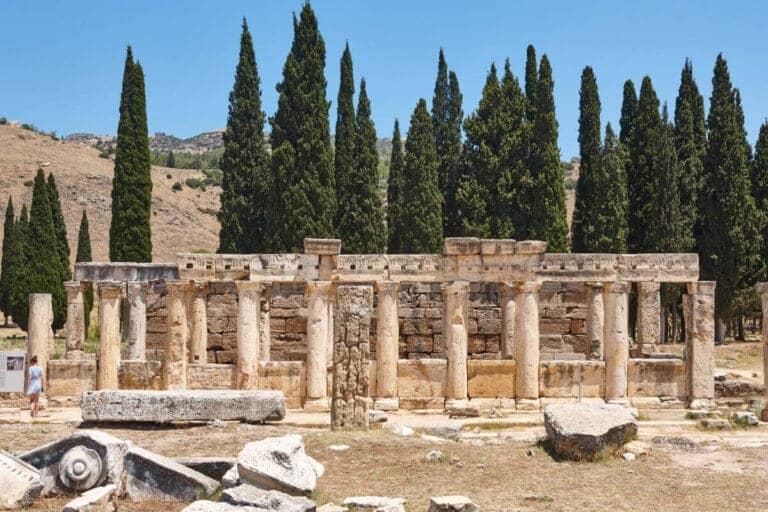
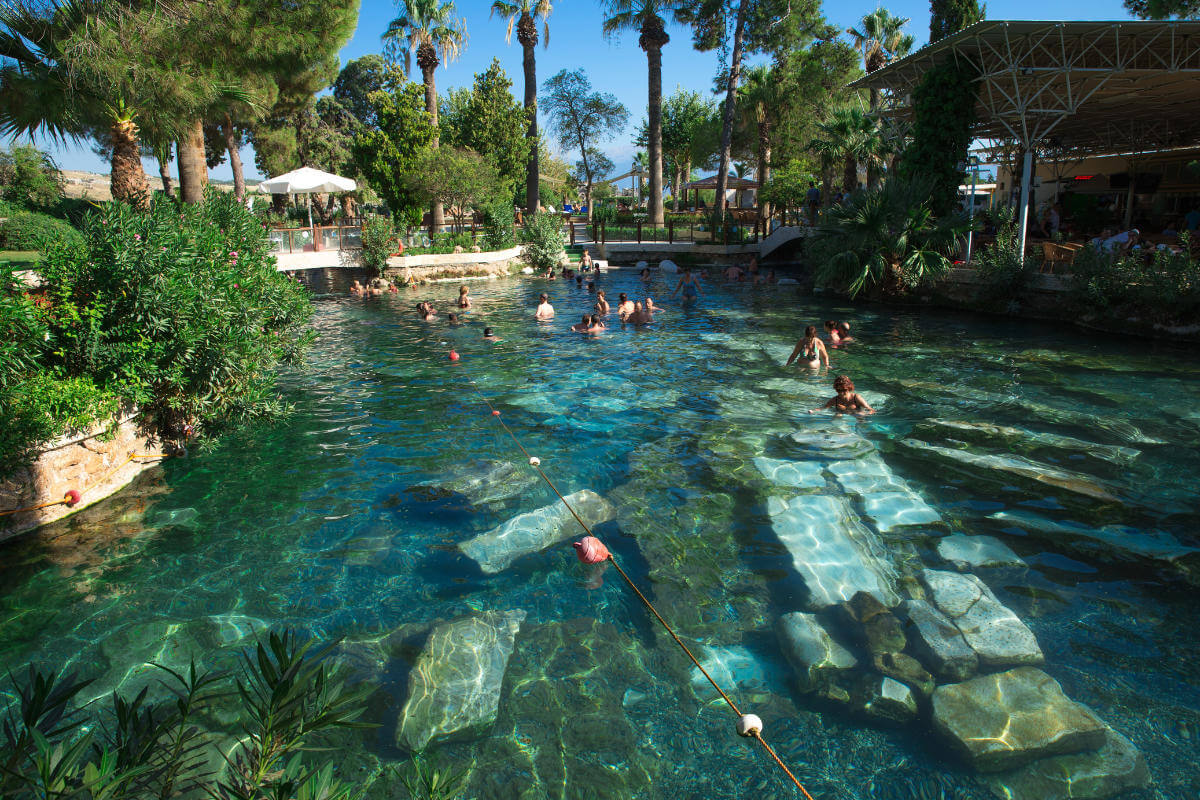
Imagine floating in warm, mineral-rich water while ancient marble columns lie scattered beneath you — remnants of a Roman city that thrived over two thousand years ago. This is the Cleopatra Pool, one of the most extraordinary swimming experiences anywhere in the world, where geology and history merge in a single, shimmering turquoise basin.
A Pool with a Legendary Past
Located within the ancient city of Hierapolis in Turkey’s Denizli province, the Cleopatra Pool draws its water from a natural thermal spring that has been flowing for millennia. The water maintains a steady temperature between 95°F and 100°F (35–38°C) year-round, rich in calcium, sulfate, and carbon dioxide. According to popular legend, the Egyptian queen Cleopatra herself bathed in these waters during a visit to the region, though historians debate whether she ever actually made the journey. What isn’t debatable is that Romans prized Hierapolis as a spa destination — the city was founded around 190 BC and grew into one of the ancient world’s most celebrated healing centers.
A powerful earthquake in the 7th century AD toppled many of the surrounding structures, sending carved columns and stone blocks tumbling into the pool where they remain today, draped in mineral deposits and swaying aquatic plants.
What It Feels Like to Swim Among Ruins
Stepping into the Cleopatra Pool is surreal. Tiny bubbles of naturally carbonated water fizz against your skin as you wade between fluted marble columns half-submerged in the clear, warm current. Sunlight refracts through the water, casting rippling patterns across stone that Roman hands once carved. The depth ranges from about two feet near the edges to roughly ten feet in the center, so both waders and swimmers find their space. The mineral content leaves your skin feeling impossibly smooth — a natural spa treatment that ancient visitors traveled weeks to enjoy.
Practical Tips for Your Visit
The Cleopatra Pool at Pamukkale charges a separate entrance fee from the main Pamukkale travertines site, typically around 130 Turkish Lira per person. Arrive early in the morning — ideally before 9:30 AM — to enjoy the pool before tour groups arrive. Allow at least 45 minutes to an hour for a leisurely soak. Bring a waterproof phone case for photos and water shoes for navigating the uneven stone bottom. The pool is open daily, and the best months to visit are April through June and September through October, when the weather is warm but crowds are manageable.
Floating here, surrounded by fallen columns from a civilization that understood the healing power of these waters two thousand years before modern science confirmed it, you feel something rare — a genuine physical connection to the ancient world. The Cleopatra Pool doesn’t just tell you about history. It lets you immerse yourself in it, quite literally.
Explore Pamukkale with One Nation Travel
Plan the next step
Recommended Tours for Your Pamukkale Visit
Compare tours for Cleopatra Pool at Pamukkale, Turkey by starting point, duration and itinerary. A listed stop can change with local access conditions; check the current program before booking.

Full-Day Pamukkale & Hierapolis Tour from Kuşadası
Pamukkale day itinerary — check pickup details
This full-day tour from Kuşadası takes you to the natural wonder of Pamukkale and the ancient city of Hierapolis. Walk…
View Tour Details
Ephesus & Pamukkale Private Day Tour from Istanbul by Flight
Starts from Istanbul
Visit Ephesus and Pamukkale on a private day tour from Istanbul by flight, with guided ancient ruins, thermal pools, and…
View Tour DetailsPamukkale Day Trip from Istanbul
Starts from Istanbul
Explore Pamukkale’s white travertine terraces and ancient wonders on a day trip from Istanbul, ideal for travelers who enjoy nature…
View Tour Details