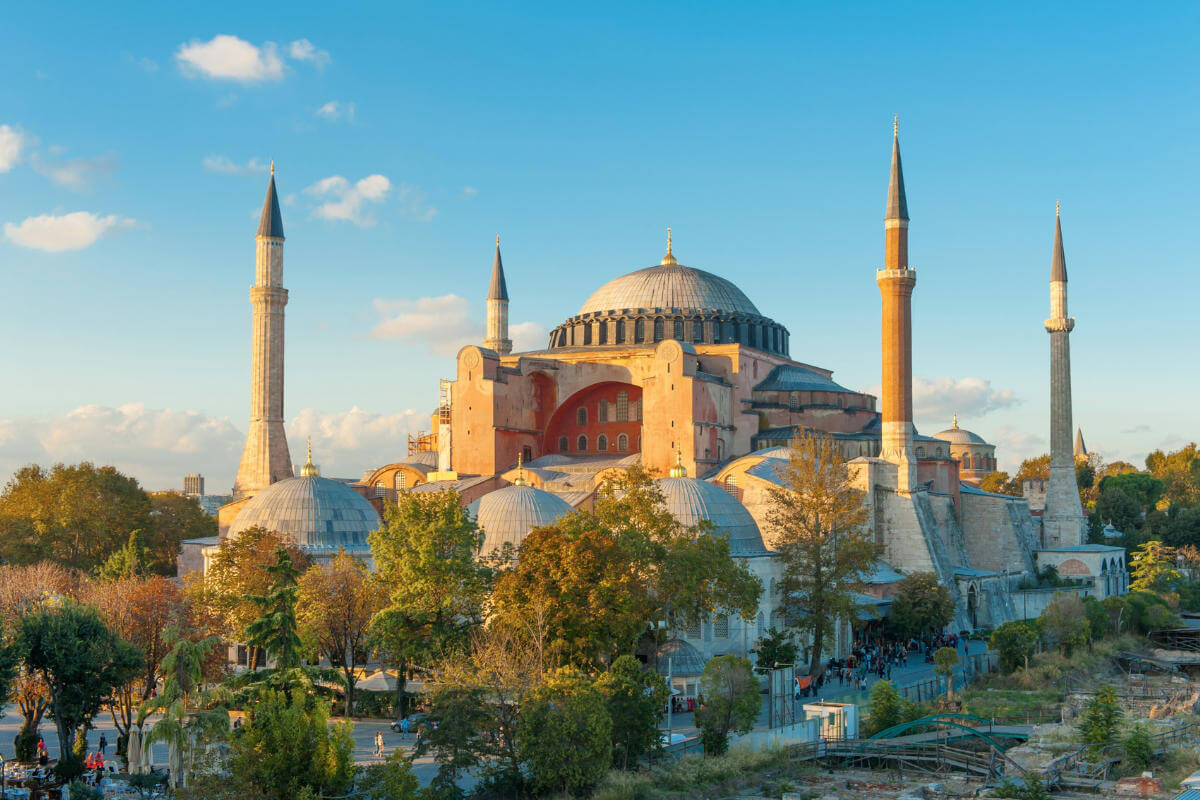
Stand beneath the central dome of Hagia Sophia and look up. Forty meters above you, golden light pours through forty arched windows, and for one disorienting moment, the massive dome appears to float — suspended not by stone and mortar, but by heaven itself. This is the effect Byzantine architects Anthemius of Tralles and Isidorus of Miletus achieved in 537 AD, and nearly 1,500 years later, it still leaves visitors breathless.
A Building That Changed the World — Three Times
Emperor Justinian I commissioned Hagia Sophia as the crown jewel of Constantinople, and when he first entered the completed structure, he reportedly whispered, “Solomon, I have surpassed thee.” For 916 years, it served as the world’s largest cathedral and the spiritual heart of Eastern Orthodox Christianity. When Sultan Mehmed II conquered Istanbul in 1453, he immediately converted the building into a mosque, adding minarets, a mihrab, and sweeping calligraphic medallions. In 1934, Mustafa Kemal Atatürk transformed it into a museum. Then, in 2020, Hagia Sophia reopened as a functioning mosque once again — its third incarnation as a place of active worship.
What to See and Experience Inside
The interior rewards slow, deliberate attention. Start with the Byzantine mosaics — the golden Deësis mosaic in the upper gallery, depicting Christ flanked by the Virgin Mary and John the Baptist, dates to the 13th century. Its faces carry a haunting emotional depth rare in medieval art. Nearby, enormous Ottoman calligraphy roundels bearing the names of Allah, Muhammad, and the early caliphs hang alongside Christian angels with faces partially obscured by plaster from centuries past.
Notice the weeping column near the northwest corner, its copper casing worn smooth by centuries of visitors pressing their thumbs into a small hole, hoping for good fortune. The marble floors, worn to a soft sheen, carry the footsteps of emperors, sultans, and millions of ordinary travelers who came simply to stand in awe.
Practical Tips for Your Visit
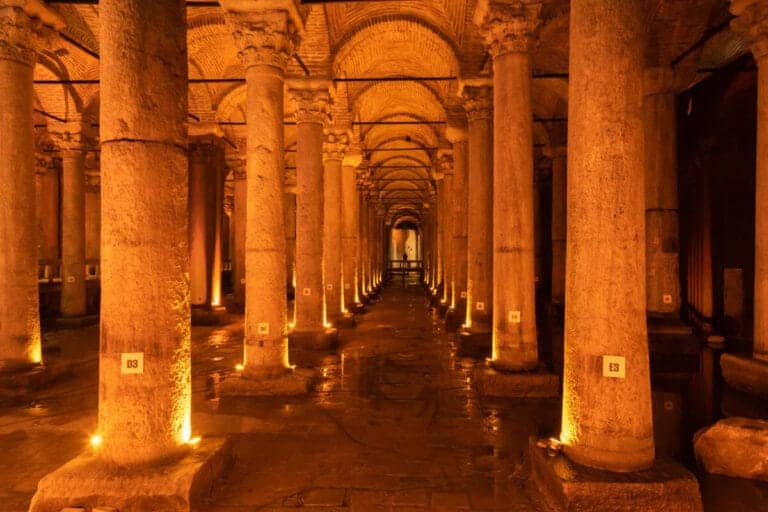
Hagia Sophia is open daily, though prayer times may temporarily restrict tourist access — especially during Friday midday prayers. Early morning, shortly after opening, offers the thinnest crowds and the best light streaming through the eastern windows. Allow at least 60 to 90 minutes. Women should bring a headscarf, and all visitors must remove shoes before entering. Admission is free. The Basilica Cistern and the Blue Mosque sit just minutes away on foot, making it easy to combine all three in a single morning.
Some buildings are admired. Some are studied. Hagia Sophia is felt — in the hush beneath that impossible dome, in the collision of Christian and Islamic art, in the weight of empires that rose and fell around its walls while the structure itself endured. No visit to Istanbul is complete without standing inside it.
Recommended Tours
Hagia Sophia is a sixth-century monument in Istanbul’s Sultanahmet district that has served as an imperial church, an Ottoman mosque, a museum, and today an active mosque. For most international sightseers, the key planning point is that visitor access is separate from worship and may be restricted around prayer times.
Plan your visit at a glance
- Location
- Sultanahmet, Fatih, Istanbul
- Type
- Historic mosque and monument
- Access
- Tourist access may pause during daily prayers and other religious activity; the lower prayer area is managed separately from the visitor route.
- Dress
- Dress modestly for entry to an active mosque; bring a head covering if needed.
What to see at Hagia Sophia
The building is known for the vast central dome, surviving Byzantine mosaics, marble architectural details, Ottoman-era calligraphic roundels, and minarets added after the Ottoman conquest. Its layered appearance reflects the changes in religious and civic use over many centuries.
International visitors using the paid route are generally directed to the upper gallery rather than the main prayer floor. This route is the practical choice for travelers who want to view the interior’s historic features and upper-level mosaics while respecting the building’s continuing religious function.
How to plan a visit
Build in flexibility rather than treating Hagia Sophia as a timed museum visit. Prayer schedules change daily, and access can be adjusted for worship, ceremonies, conservation work, or crowd management. Arriving early in the day or allowing time to return later can make the visit easier.
The site stands in the heart of Sultanahmet, close to the Blue Mosque, the Basilica Cistern, and Topkapı Palace. It works well as part of a walking itinerary, but expect security procedures and potentially busy approaches around the square.
Before you go
- Choose clothing suitable for a functioning mosque, including covered shoulders and knees.
- Keep plans flexible around prayer periods, especially Friday congregational prayer.
- Use the designated visitor entrance and follow staff directions on photography, circulation, and restricted areas.
- Consider the separate Hagia Sophia History and Experience Museum if you want a more structured historical overview; it is located nearby rather than inside the mosque itself.
Confirm current hours, prayer-related closures, ticket rules, restoration conditions, and access requirements shortly before visiting.
Plan the next step
Recommended Tours for Your Istanbul Visit
Compare tours for Hagia Sophia by starting point, duration and itinerary. A listed stop can change with local access conditions; check the current program before booking.
Best of Istanbul Private Guided Tour
Istanbul day itinerary — check pickup details
Discover Istanbul on the Best of Istanbul Private Guided Tour with comfortable logistics, expert planning, and memorable sightseeing. Book your…
View Tour Details
Full-Day Historic Istanbul Tour: Explore the Wonders of the Old City
Istanbul day itinerary — check pickup details
Discover the historic gems of Istanbul's Old City with expert guides, exploring famous landmarks and hidden treasures in a day.
View Tour Details
4-Day Best of Istanbul Tour
Explore Istanbul on this 4-day tour with a private guide, visiting Hagia Sophia, Blue Mosque and the Grand Bazaar, plus…
View Tour Details