
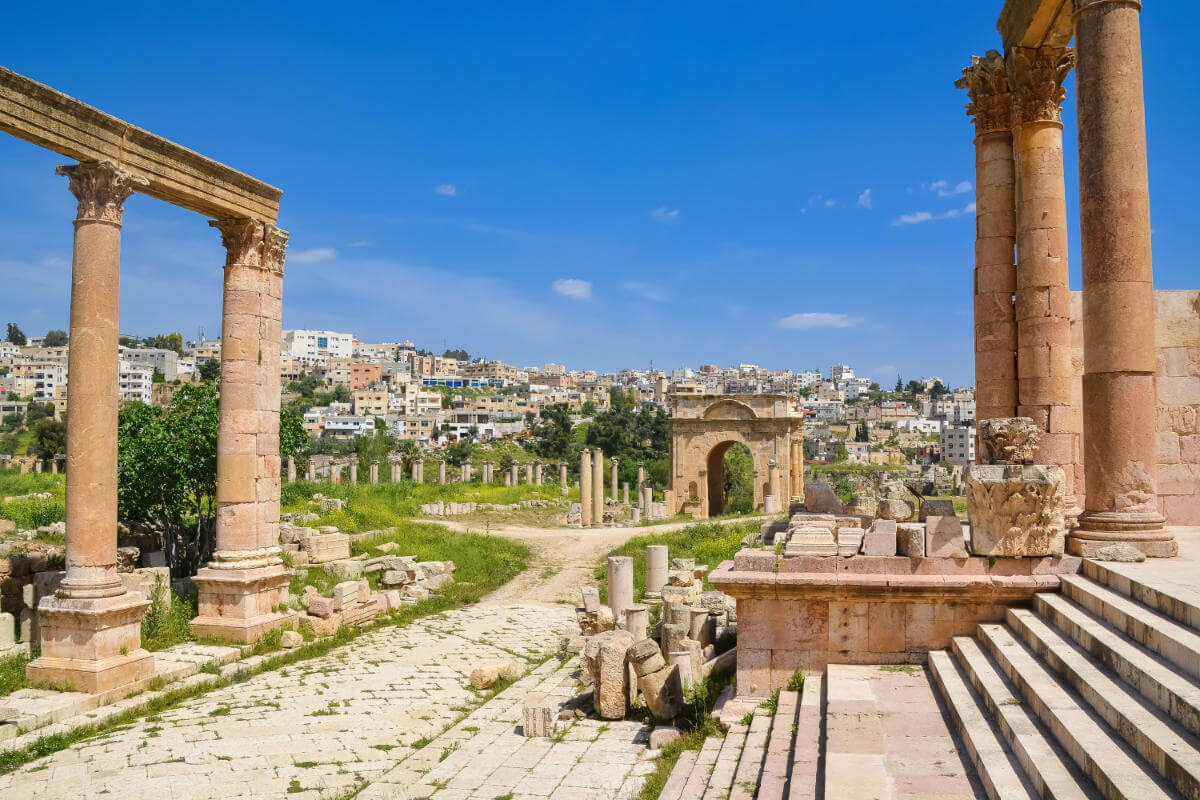
At first light, the columns of Jerash glow honey-gold against the hills of northern Jordan. Footsteps echo across ancient paving stones, the wind moves through ruined temples, and for a moment the modern world feels very far away. Located in Jerash, Jordan, this remarkable archaeological site is one of the best-preserved Roman cities outside Italy—grand, graceful, and alive with stories carved in stone.
Historical and Cultural Context
Known in antiquity as Gerasa, Jerash became part of the Decapolis, a league of ten Greco-Roman cities that flourished under Roman rule. Its golden age began after the Roman conquest of the region in 63 BC, when trade routes brought wealth, architecture, and imperial influence to the city. By the 2nd century AD, Gerasa had grown into a prosperous urban center with theaters, temples, baths, colonnaded streets, and public squares.
The city received a prestigious visit from Emperor Hadrian in AD 129–130, an event commemorated by the monumental Hadrian’s Arch that still stands near the entrance today. Later, Byzantine churches rose among the Roman avenues, and mosaics added a new layer of religious and artistic life. Earthquakes, shifting trade routes, and time eventually quieted the city, but much of its ancient plan survived beneath the sands and soil.
What to See and Experience
Begin at Hadrian’s Arch, then continue toward the Hippodrome, where chariot races once thrilled thousands of spectators. Inside the main archaeological area, the Oval Plaza opens dramatically before you—a sweeping, stone-paved public square framed by elegant Ionic columns.
Walk the Cardo Maximus, the long colonnaded street where wagon ruts are still visible in the stones. Nearby, the Temple of Artemis commands attention with towering columns that seem to shift subtly in the breeze. The South Theater, built in the late 1st century AD, rewards visitors with impressive acoustics; stand at the center of the stage and even a quiet voice carries clearly through the rows.
For travelers exploring Jordan tours, Jerash pairs beautifully with Amman, the capital, located about 30 miles south.
Practical Visitor Tips
The best time to visit is spring, from March to May, or fall, from September to November, when the weather is mild and the light is excellent for photography. Summer can be very hot, so plan an early morning visit if traveling between June and August.
Allow at least 2 to 3 hours to explore comfortably, though history lovers may want half a day. Wear comfortable walking shoes, bring water, and expect uneven stone paths. A knowledgeable guide can make the ruins far more meaningful by connecting temples, streets, and inscriptions to the people who once lived here.
Plan Your Visit to Jerash
Jerash is not simply a collection of ruins; it is a city that still speaks through its columns, theaters, and sun-warmed stones. Visit with time to wander, listen, and imagine the sound of markets, ceremonies, and footsteps from nearly 2,000 years ago.
Related Jordan Tours
Plan the next step
Recommended Tours for Your Jordan Visit
Compare tours for Jerash by starting point, duration and itinerary. A listed stop can change with local access conditions; check the current program before booking.

4-Day Private Jordan Tour: Petra, Wadi Rum & Dead Sea
Discover Petra, Wadi Rum and the Dead Sea on a 4-day private Jordan tour featuring desert landscapes, ancient history and…
View Tour Details
4 Day Jordan Tour from Amman
Discover Jordan's top sites on our 4 Day Jordan Tour from Amman. Visit Petra, Wadi Rum & the Dead Sea.…
View Tour Details
6 Day Jordan Tour from Amman: Petra, Wadi Rum, Dead Sea & Jerash
Explore Jordan from Amman on a guided 6-day journey to Amman's Citadel, Jerash, Madaba, Petra, Wadi Rum and the Dead…
View Tour Details