
The best things to do in Konya center on the Mevlana Museum, Seljuk architecture, traditional food, and the city’s connection to the whirling dervishes. Give the city a full day for its main sights, or stay overnight if you want time for a scheduled sema ceremony and a less hurried look at its historic center. Konya rewards travelers interested in faith, architecture, and everyday Turkish life—not just those passing through on a longer Turkey trip.
Start with the museum, then explore the streets around Alaaddin Hill. Leave room for lunch rather than squeezing Konya into a quick monument stop: its long, thin etli ekmek flatbread is as much a part of a visit as its tiled religious buildings.
📋 Quick Facts
| Best Time to Visit | April–June and September–October for generally comfortable sightseeing weather; December for Mevlana commemorations, with cold conditions and greater demand around event dates. |
| Time Needed | One full day for central sights; two days for a slower visit, a scheduled ceremony, or an excursion outside the city. |
| Difficulty | Easy to moderate. Central sightseeing involves walking, uneven paving, and some slopes around Alaaddin Hill. |
| Must-Bring | Comfortable shoes, layers, sun protection, and modest clothing for religious sites; a scarf is useful for women entering mosques. |
Begin at the Mevlana Museum
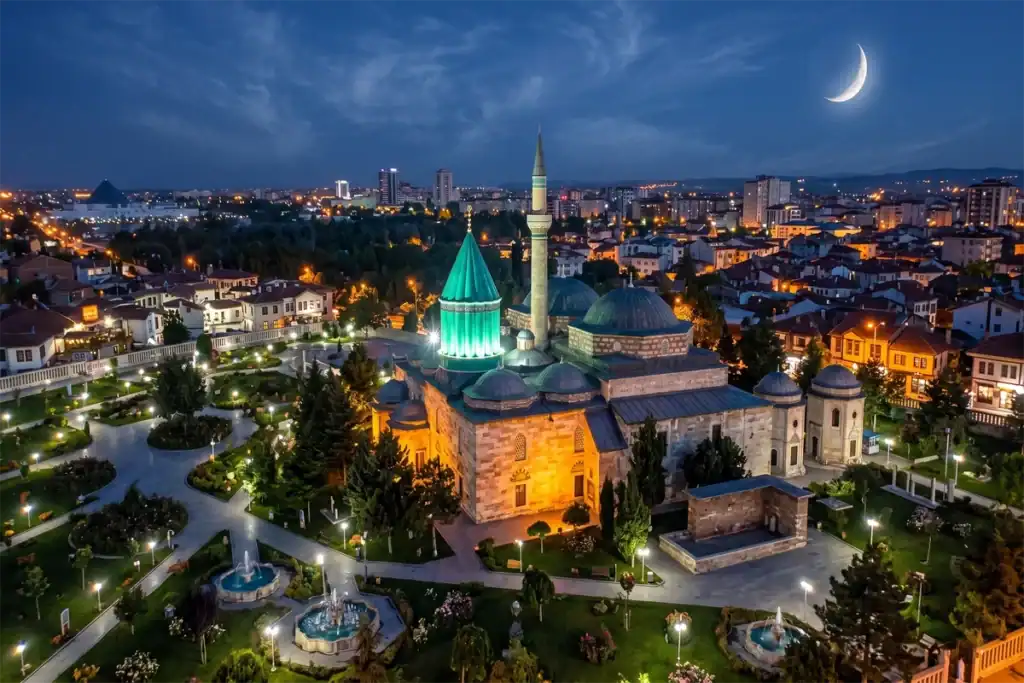
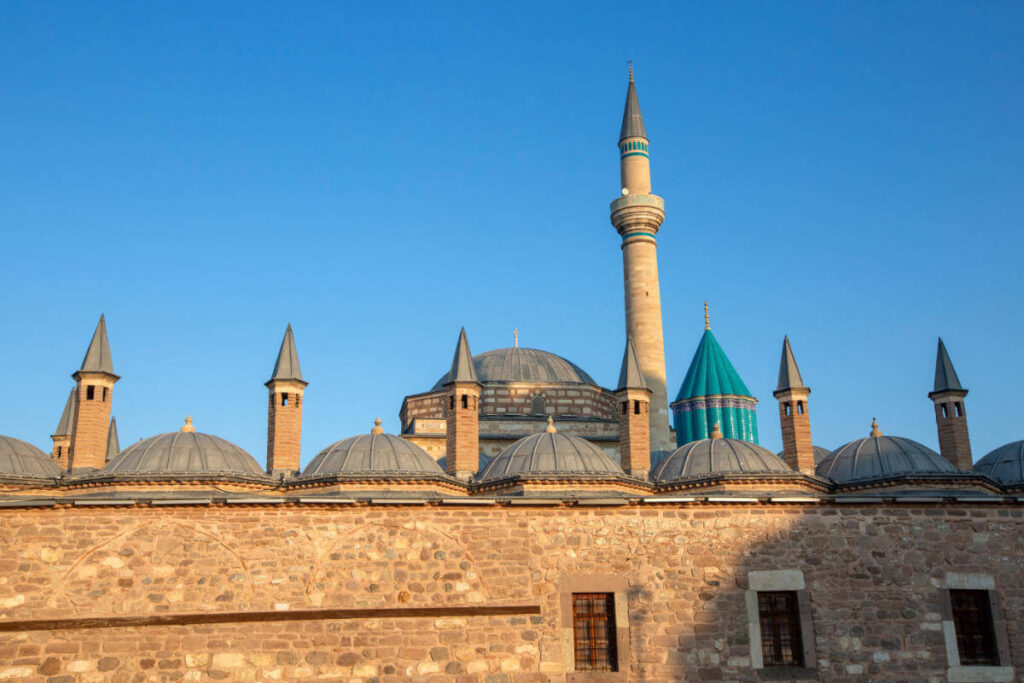
The Mevlana Museum is Konya’s essential first stop. The former dervish lodge contains the tomb of Jalal al-Din Rumi, known in Turkey as Mevlana, whose poetry and teachings helped inspire the Mevlevi tradition. Its distinctive turquoise-tiled dome is the city’s most recognizable landmark.
This isn’t simply an art museum. Many visitors come to pay their respects, so the atmosphere around the tomb can feel devotional even when the courtyard is busy. Move quietly, allow people space, and follow posted photography restrictions.
Look beyond the main tomb chamber. Manuscripts, musical instruments, and displays associated with lodge life help explain the relationship between poetry, spiritual practice, and music. Checking the historical context before entering makes the collection more meaningful, especially if your main familiarity with Rumi comes from English-language quotations.
Allow roughly 60–90 minutes, longer if you enjoy reading displays. Opening arrangements, security procedures, and access to individual rooms can change, so verify current visitor information rather than building a tight schedule around an assumed opening time.
Explore the religious quarter without rushing
Beside the museum, the Sultan Selim Mosque provides an architectural contrast to the former lodge. Its Ottoman design belongs to a different period from the Seljuk monuments elsewhere in Konya. If it’s open to visitors outside prayer times, a short visit helps show how the city developed across successive eras.
Remove your shoes before entering prayer areas and dress modestly. During services, wait rather than treating the mosque as a sightseeing stop that must fit your timetable.
The Mosque and Tomb of Shams-i Tabrizi adds another layer to the story. Shams was a major spiritual influence on Rumi, and the site associated with him is generally a more intimate stop than the main museum. It’s most rewarding when visited for that connection, not as another building to check off a list.
Between these visits, spend time in the surrounding commercial streets. Shops selling sweets, religious books, and everyday goods make this a useful place to observe the city beyond its monuments. Ask permission before photographing shopkeepers or worshippers.
Walk through Konya’s Seljuk architectural heritage
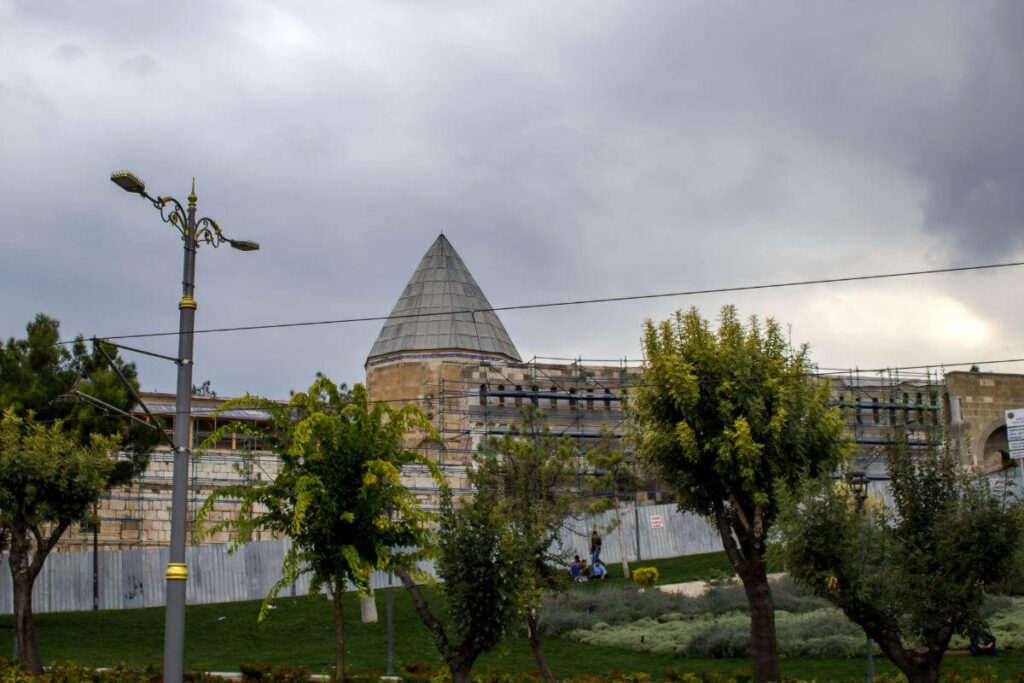
Konya served as the capital of the Seljuk Sultanate of Rum, and its medieval buildings are a major reason to visit. Three stops around the historic center work particularly well together: Karatay Medrese, İnce Minareli Medrese, and Alaaddin Mosque.
Karatay Medrese: make time for the tilework
This former theological school is especially rewarding for travelers who appreciate ceramics and decorative detail. Its surviving tilework and museum collections help explain the sophistication of Seljuk craftsmanship. Rather than moving quickly through, look closely at the geometric patterns, inscriptions, and use of color.
Check current museum hours and exhibition access before visiting. Historic buildings occasionally close for restoration, and an exterior view isn’t a substitute if the tile collection is your main interest.
İnce Minareli Medrese: study the entrance first
The carved stone portal is the highlight here. Its interwoven inscriptions and ornament deserve a few minutes of attention before you enter. The building also offers a different emphasis from Karatay: stone and wood craftsmanship rather than primarily ceramics.
These two former schools are close enough to combine on foot for many visitors. If you’re traveling during summer, visit them before the hottest part of the afternoon or take a proper lunch break between stops.
Alaaddin Hill and Alaaddin Mosque
Alaaddin Hill is a useful geographical anchor for central Konya. The mosque on the hill connects directly to the city’s Seljuk past, while the surrounding park gives you somewhere to pause between museums.
Expect a modest uphill walk rather than a strenuous climb. Access to religious and historic interiors may be restricted during prayer or restoration work. Even when an interior visit isn’t possible, the hill helps you understand the layout of the old center.
Pro Tip
Keep museum visits ahead of open-air walks in your schedule. Indoor attractions have fixed opening hours, while the streets and park around Alaaddin Hill are easier to fit around lunch or a delayed arrival. Confirm museum closure days before deciding which day to spend in Konya.
Attend a sema ceremony with the right expectations
A Mevlevi sema ceremony can be a deeply worthwhile part of a Konya stay. The turning movement is only one element of a ritual involving music, recitation, and a carefully structured sequence. It shouldn’t be approached as a dance performance with continuous action.
Public ceremonies may be scheduled at cultural venues, but dates, locations, admission arrangements, and photography rules require confirmation. Don’t assume that a ceremony takes place every evening or that a same-day tour includes one.
If sema is the main reason for your visit, confirm a suitable event first and plan your overnight stay around it. Arrive early, silence your phone, and follow the venue’s rules about recording and applause.
The annual December commemorations associated with Rumi’s death draw particular interest. They can be meaningful, but they also require more advance planning for event access and accommodation. Winter evenings are cold, so pack for waiting outdoors as well as sitting inside.
Try the food that makes Konya worth a lunch stop
Etli ekmek is the obvious starting point: a very long, thin flatbread topped with finely chopped meat and vegetables, baked in a hot oven. It’s best eaten fresh, making a sit-down lunch a better choice than taking it away for later.
Fırın kebabı, traditionally slow-cooked lamb, is another local specialty. It’s a richer meal, so consider it if you have time for a relaxed lunch rather than a quick break between museums. Portions and serving styles vary; ask how much to order before committing to multiple dishes.
For dessert, look for höşmerim, a regional sweet whose preparation can differ between places. Ayran makes a practical accompaniment to a flatbread lunch, especially on a warm day.
Konya has a comparatively conservative public atmosphere. Alcohol availability varies considerably between restaurants, so check ahead if wine or beer with dinner matters to you. During Ramadan, daytime dining options and evening restaurant demand may also change.
Add Sille if you have a second day
Sille, northwest of central Konya, offers a change of pace through stone-built streets and reminders of the area’s Christian heritage. The historic Aya Elenia Church is a principal point of interest, subject to current opening and restoration arrangements.
Allow half a day for transport, a walk, and a leisurely café stop. A taxi or arranged transfer is usually simpler than trying to fold the excursion into a tightly timed central sightseeing day. Confirm the return journey rather than assuming transport will be waiting when you finish.
Sille is the better addition for a relaxed two-day visit. Çatalhöyük, southeast of Konya, suits travelers with a strong interest in archaeology instead. That Neolithic site requires dedicated transport and realistic expectations: much of its significance comes from archaeological interpretation, not towering visible ruins. Check current visitor access before making the journey.
Fit Konya into your Turkey itinerary
For one full day, visit the Mevlana complex in the morning, stop for a local lunch, then explore the Seljuk buildings around Alaaddin Hill. Add the Shams site if your pace allows. An evening ceremony only belongs in this plan once its schedule is confirmed.
From Istanbul, a flight-based visit involves getting to the departure airport, flying to Konya, and transferring into the center before sightseeing begins. The airport isn’t beside the historic quarter. On a same-day return, keep the evening flexible enough for the drive back, check-in, and possible flight changes.
Konya also works as a stop between Cappadocia and other regions, but those overland legs take several hours. Don’t mistake a route that looks compact on a map for a day with ample sightseeing time. Our guide to choosing the best month for a first Turkey trip can help you balance Konya’s continental weather with conditions elsewhere.
The Private Konya Mevlana Tour from Istanbul with Flights is a relevant option if you want to visit without adding a hotel night in Konya. Its listed duration is 14 hours, with prices from USD 400; confirm the detailed itinerary and flight timing before booking.
For a broader journey, the 5-Day Konya, Cappadocia, Ephesus & Pamukkale Tour, listed from USD 1,030, suits travelers who want Konya included in a multi-region trip. Review the transfer sequence, overnight locations, and time allocated to each stop before choosing it.
Frequently asked questions about visiting Konya
Is one day enough in Konya?
One full day is enough for the principal central sights at a sensible pace. Stay overnight if you want a confirmed evening ceremony, a slower museum visit, or time in Sille.
Can you explore Konya without a guide?
Yes. Much of the historic center can be explored independently on foot, with taxis or public transportation for longer distances. A guide is particularly useful for understanding the relationship between Rumi, the Mevlevi tradition, and the city’s Seljuk history.
What should tourists wear?
Comfortable, modest clothing works well. For mosque visits, cover shoulders and knees; women should bring a head covering. Layers are important because central Anatolian mornings and evenings can be cool even when afternoons are warm.
Konya is most rewarding when you leave space for its quieter stops, not just its famous museum. For help choosing between a day visit and a longer route, ask One Nation Travel to help plan your Turkey itinerary around your interests and available time.
Choose your next step
Recommended Konya tours
These bookable options are the strongest verified matches for this guide. Compare the pace, focus, and current starting price before you choose.
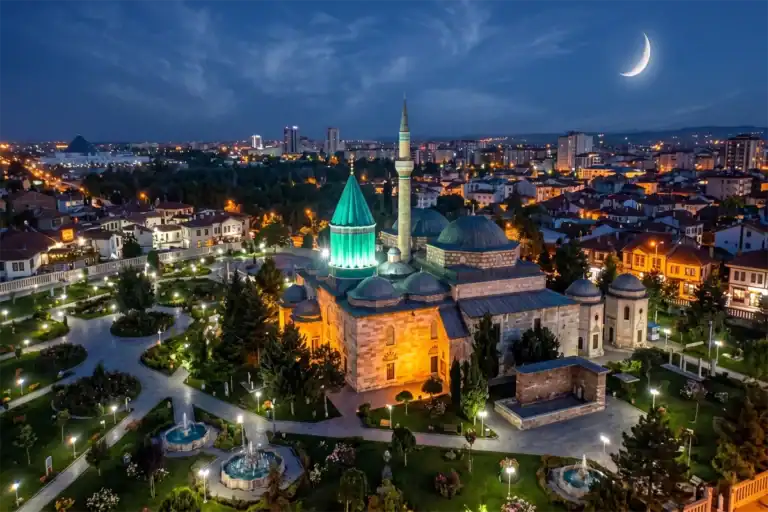
Private Konya Mevlana Tour from Istanbul with Flights
A practical option for travelers who want the main route and logistics planned together.
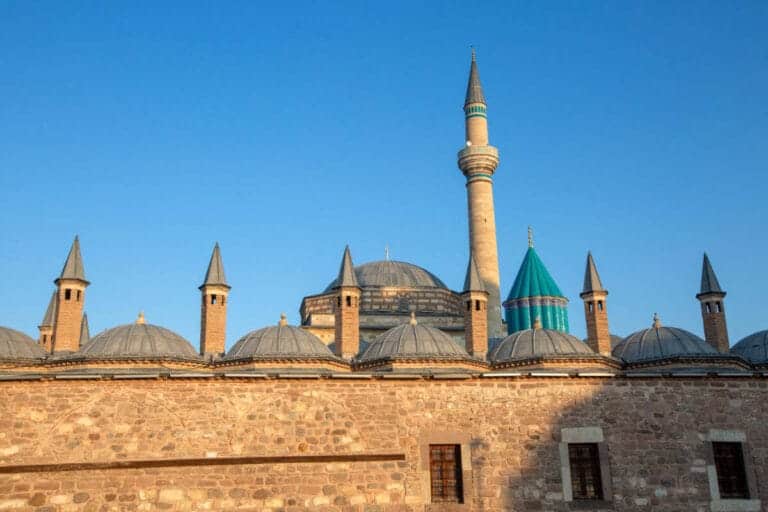
5-Day Konya, Cappadocia, Ephesus & Pamukkale Tour
A practical route for travelers who want to include Turkey Tours with the main logistics planned.