
Turkey is a country of wonders because it combines places that would each justify a separate trip: imperial Istanbul, otherworldly Cappadocia, ancient Roman cities, white mineral terraces, Mediterranean beaches, and battlefields that shaped modern history. For a first visit, the most satisfying route usually links Istanbul, Cappadocia, Ephesus, Pamukkale, and—if time allows—Antalya or the Gallipoli Peninsula.
The key is not trying to see the entire country at once. Turkey is large, and travel days can add up quickly. A focused route lets you experience the country’s contrasts without spending every other day changing hotels. Explore available Turkey tours to compare multi-city itineraries and choose a pace that suits your travel time.
📋 Quick Facts
| Best Time to Visit | April–May and September–October for comfortable sightseeing weather; summer is best for the coast but hot inland. |
| Time Needed | 7–10 days for Istanbul, Cappadocia, Ephesus, and Pamukkale; 12–14 days for a more complete route. |
| Difficulty | Easy to moderate; major sites involve uneven paving, hills, and long walking days. |
| Must-Bring | Comfortable walking shoes, sun protection, a light layer for evenings, and modest clothing for mosque visits. |
Istanbul: Where a Turkey trip should begin
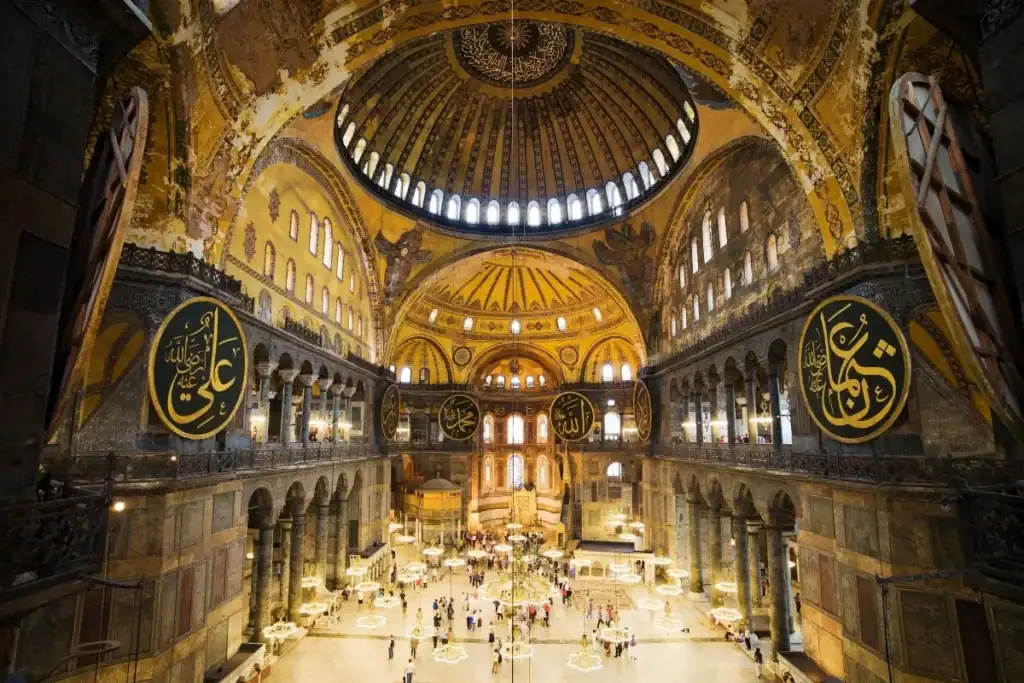
Istanbul is the natural starting point for most first-time visitors. It is Turkey’s largest city, its main international gateway, and a place where Byzantine, Ottoman, and modern life sit side by side. Give it at least three nights if possible. Two nights can cover the highlights, but three allows room for ferry time, markets, neighborhoods, and a slower pace.
Start in Sultanahmet, where Hagia Sophia reveals nearly 1,500 years of changing religious and political history. Across the square, the Blue Mosque remains one of the city’s defining landmarks. These two sites are close together, but allow extra time for security lines, prayer closures, and modest-dress requirements.
Then make time for Topkapi Palace, the longtime residence and administrative center of Ottoman sultans. It is not a quick stop: its courtyards, collections, and views over the Bosphorus deserve at least half a day. A Bosphorus cruise is also one of the most practical ways to understand Istanbul’s geography, with Europe on one shore and Asia on the other.
For detailed planning, see our Istanbul Travel Guide 2026, including practical timing for ferries, neighborhoods, and major sights.
Cappadocia: Valleys, cave dwellings, and sunrise skies

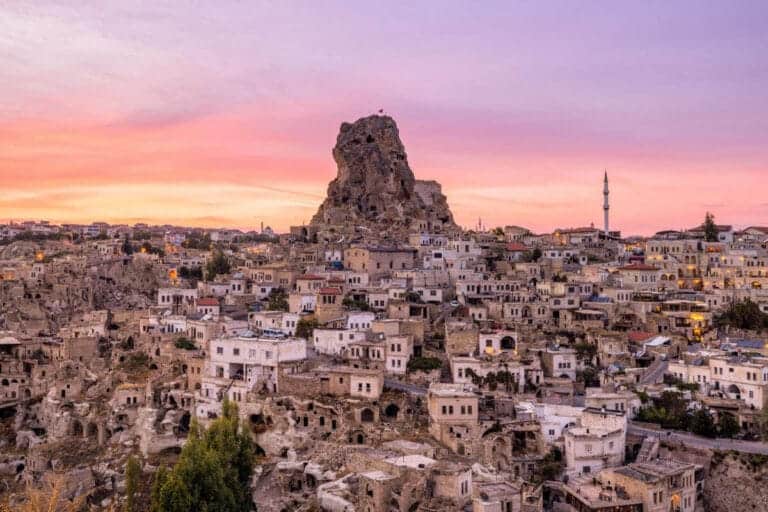
Cappadocia is Turkey’s most distinctive landscape. Wind and water shaped its soft volcanic rock into cones, ridges, valleys, and the famous fairy chimneys. Over centuries, communities carved homes, chapels, storerooms, and defensive shelters into the rock itself.
The region is best explored over two full days, with Göreme as the most convenient base for many visitors. The Göreme Open-Air Museum is an essential stop for its rock-cut churches and painted interiors. It gives useful context to the landscape beyond the viewpoints.
A sunrise hot-air balloon flight is the headline experience, but it should be treated as weather-dependent rather than guaranteed. Flights may be delayed or canceled because of wind conditions. If a balloon ride matters to you, schedule Cappadocia early in your itinerary so there is another morning available if needed. Even from the ground, sunrise over the valleys can be memorable, especially around Göreme, Uçhisar, and the viewpoints near the Fairy Chimneys of Cappadocia.
Pro Tip
Book at least two mornings in Cappadocia if a balloon ride is important to you. Weather cancellations are part of normal flight safety procedures, and travelers who depart the morning after arrival have no flexibility.
Underground cities are another reason Cappadocia feels unlike anywhere else. These multi-level complexes were used as places of refuge, with narrow passages, ventilation shafts, storage areas, and heavy stone doors. They can be physically demanding for travelers with claustrophobia or limited mobility, so ask about the route and depth before joining a visit. Our guide to Cappadocia’s underground cities explains what to expect below ground.
Ephesus: A Roman city that still feels legible
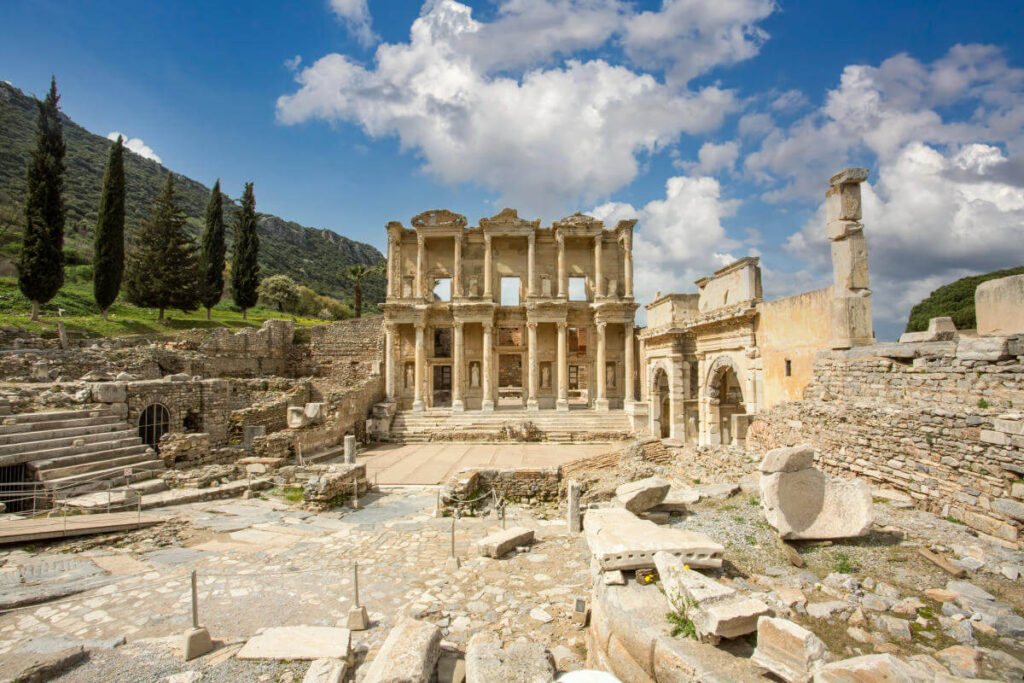
Near the Aegean coast, Ephesus is one of the most rewarding ancient sites in the eastern Mediterranean. Its scale is impressive, but its real strength is how clearly visitors can understand the structure of a Roman city: broad streets, public fountains, baths, shops, homes, temples, and civic buildings.
Walk downhill through the ruins toward the beautifully reconstructed façade of the Library of Celsus. From there, continue to the Great Theatre, which once held tens of thousands of spectators. Morning is generally the best time to visit, particularly from late spring through early fall, when the site has little shade and afternoon heat can become tiring.
Ephesus pairs well with the surrounding Selçuk area, where travelers can add the Basilica of Saint John, the remains of the Temple of Artemis, or the House of the Virgin Mary depending on their interests. It is an ideal stop for travelers who want more than a quick photo stop at ancient ruins and appreciate historical context.
Pamukkale: White terraces and the ruins of Hierapolis
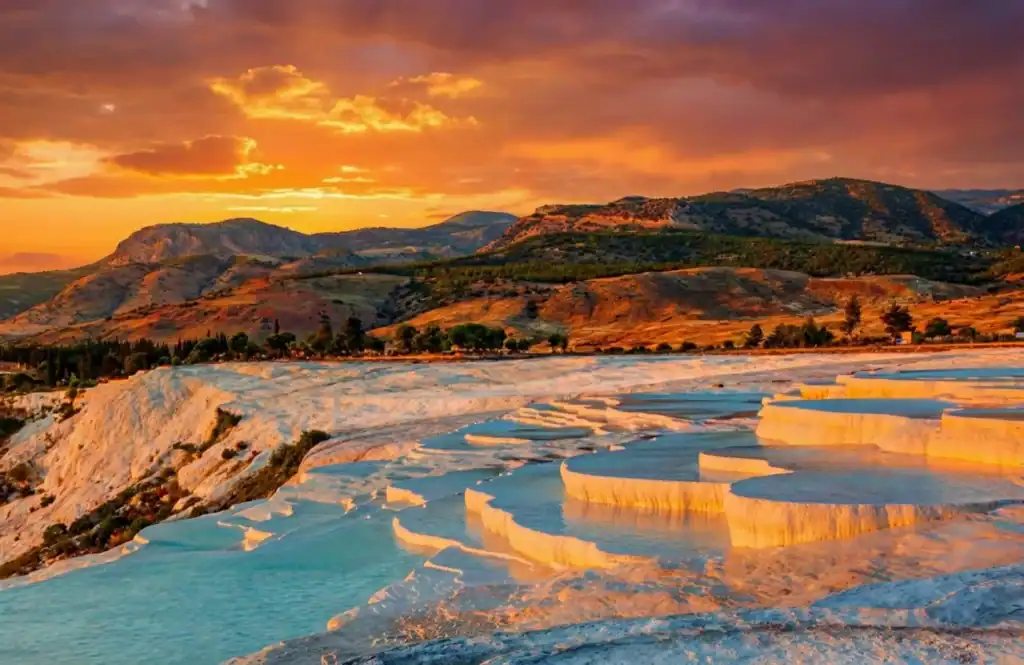
Pamukkale is famous for its bright white travertine terraces, formed as mineral-rich thermal water flows down a hillside. The name translates roughly as “cotton castle,” but the appeal is not only visual. Above the terraces lies ancient Hierapolis, a Roman spa city with extensive ruins, a theater, and one of Anatolia’s largest ancient necropolises.
This combination of geology and archaeology is why Pamukkale deserves more than a rushed stop. The Hierapolis-Pamukkale archaeological area reveals how thermal waters shaped settlement here for centuries. Plan for bright sun, a fair amount of uphill walking, and security rules that may require visitors to remove shoes in designated sections of the terraces.
Travelers sometimes expect every terrace to be filled with deep blue water as in edited promotional photos. Water levels and access areas vary by season, conservation work, and site management. The landscape is still striking, but it is best appreciated as a protected natural and archaeological area rather than a swimming complex.
Antalya: Ancient sites with a Mediterranean break
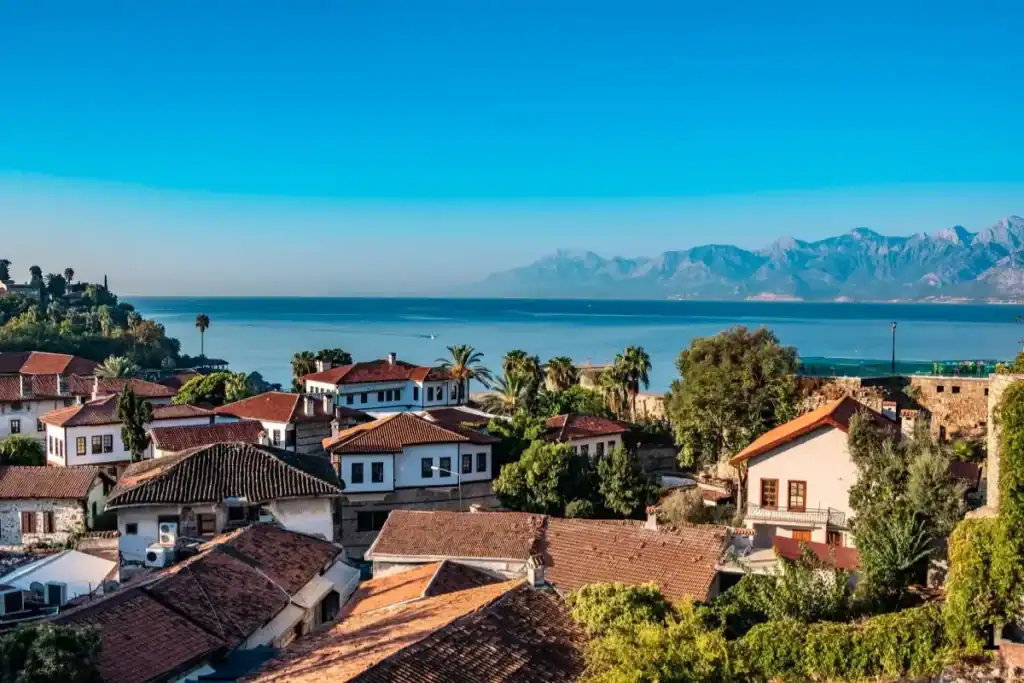
For travelers with 10 days or more, Antalya adds a welcome coastal change of pace after inland sightseeing. The city is a useful base for beaches, Roman sites, waterfalls, and the old quarter of Kaleiçi. It also works especially well for families or travelers who want their Turkey itinerary to include downtime as well as museums and monuments.
Beyond the city center, the region offers some of Turkey’s most accessible classical remains. Aspendos Ancient Theater is renowned for its remarkable preservation, while Perge gives visitors a broader view of a Roman-era city with colonnaded streets, gates, and public buildings. Summer visitors should plan outdoor sites early in the day, then reserve the hottest afternoon hours for lunch, a museum, or the beach.
Gallipoli and Troy: History that needs time and context
Turkey’s northwest tells a different story from the Aegean and Mediterranean coasts. The Gallipoli Peninsula is a place of remembrance for the First World War, deeply significant to Turkish, Australian, New Zealand, British, and other visitors. Memorials, cemeteries, and preserved landscape sites are spread across the peninsula, so guided interpretation is especially valuable here.
Nearby, the Ancient City of Troy offers a different kind of historical puzzle. The site contains layers of settlement built over thousands of years, linking archaeology with the stories associated with Homer’s Iliad. It may not have the instantly recognizable streetscape of Ephesus, but it is compelling for travelers interested in the relationship between myth, excavation, and real places.
Choosing the right Turkey route
The best route depends on your available time and how much moving between hotels you enjoy. Domestic flights make long distances manageable, while overland travel can be rewarding but takes longer than travelers often expect.
| Trip Length | Recommended Route | Best For | Watch Out For |
|---|---|---|---|
| 5–6 days | Istanbul + Cappadocia | First-time visitors with limited vacation time | Little room for delays or a third destination |
| 7–8 days | Istanbul + Cappadocia + Ephesus/Pamukkale | A balanced introduction to cities, landscapes, and antiquity | Requires efficient flight and transfer planning |
| 10–12 days | Istanbul + Cappadocia + Ephesus + Pamukkale + Antalya or Gallipoli | Travelers seeking a fuller national overview | More hotel changes and longer road segments |
| 14 days | Istanbul + Gallipoli/Troy + Pergamon + Ephesus + Pamukkale + Antalya + Cappadocia | Travelers who want the major highlights without rushing every site | Needs a logical one-way route rather than backtracking |
A well-paced option is the 10-Day Best of Turkey: Istanbul, Pamukkale, Ephesus, Cappadocia, which focuses on the country’s best-known cultural and natural landmarks. If you have more time and want to include the Aegean archaeological route, Mediterranean coast, and Gallipoli, consider the 14-Day Best of Turkey Tour.
A few practical mistakes to avoid
First, don’t underestimate distances. Istanbul, Cappadocia, and the Aegean coast are not neighboring day trips. Flights often make sense for long hops, while road travel is better for connecting places such as Ephesus, Pamukkale, Antalya, Gallipoli, Troy, and Pergamon.
Second, don’t schedule only one night in Cappadocia if a balloon flight is a priority. Third, pack for different climates. Istanbul can be rainy or cool in spring and fall; Cappadocia evenings are often chilly even after warm days; and Antalya can be very hot in midsummer.
Finally, give major sites the time they need. Trying to combine Ephesus and Pamukkale in one rushed day is possible in limited circumstances, but it often turns two excellent visits into a long transfer with little time on the ground. A better Turkey trip is usually one with fewer stops and more time to understand each place.
Pro Tip
For a multi-city route, confirm the airports, hotel locations, domestic flight baggage rules, and transfer timing before booking. A low airfare can become inconvenient if it uses an airport far from your hotel or leaves too little time for connections.
Plan a Turkey trip that fits your pace
Turkey rewards travelers who combine its headline sights with realistic travel timing. A first itinerary built around Istanbul, Cappadocia, Ephesus, and Pamukkale gives you a strong introduction; Antalya, Gallipoli, Troy, Konya, or Ankara can be added according to your interests and available days.
If you’d like help matching destinations, flights, hotel nights, and touring days to your schedule, use One Nation Travel’s custom Turkey trip planning form. We can help coordinate an itinerary that makes sense from arrival to departure.