
Short answer: The seven stops that make an Ephesus visit most rewarding are the Library of Celsus, Great Theatre, Terrace Houses, Temple of Hadrian, Curetes Street, Temple of Artemis, and the House of the Virgin Mary with the Basilica of Saint John. Allow 2–3 hours for the main ruins, or most of a day if you add nearby sites. Start early, wear shoes with grip, and check current admission details before you go.
Ephesus suits travelers who want to see more than a famous façade: the surviving streets and buildings make the layout of a major ancient city unusually easy to read. The main planning decision is where to start. From Izmir or Kusadasi, you can spend a day exploring the ruins without domestic-flight logistics; from Istanbul, a day trip is possible but much longer.
Key Takeaways
- Set aside at least 2–3 hours for the main archaeological site; plan 3–4 hours if you want to include the Terrace Houses.
- Walking downhill from the upper entrance to the lower gate is a practical way to follow the city’s main route, but coordinate transportation between the entrances.
- The Terrace Houses are especially worthwhile for Roman mosaics, painted walls, and domestic architecture. Check whether their admission is separate.
- Starting from Izmir or Kusadasi generally makes for a less demanding day than traveling from Istanbul. The Istanbul option combines flights and sightseeing into a long day.
- Much of the site is exposed, and the stone paving can be uneven or slippery. Start early when possible, bring water and sun protection, and wear sturdy shoes.
Why Ephesus Is Worth More Than a Quick Photo Stop
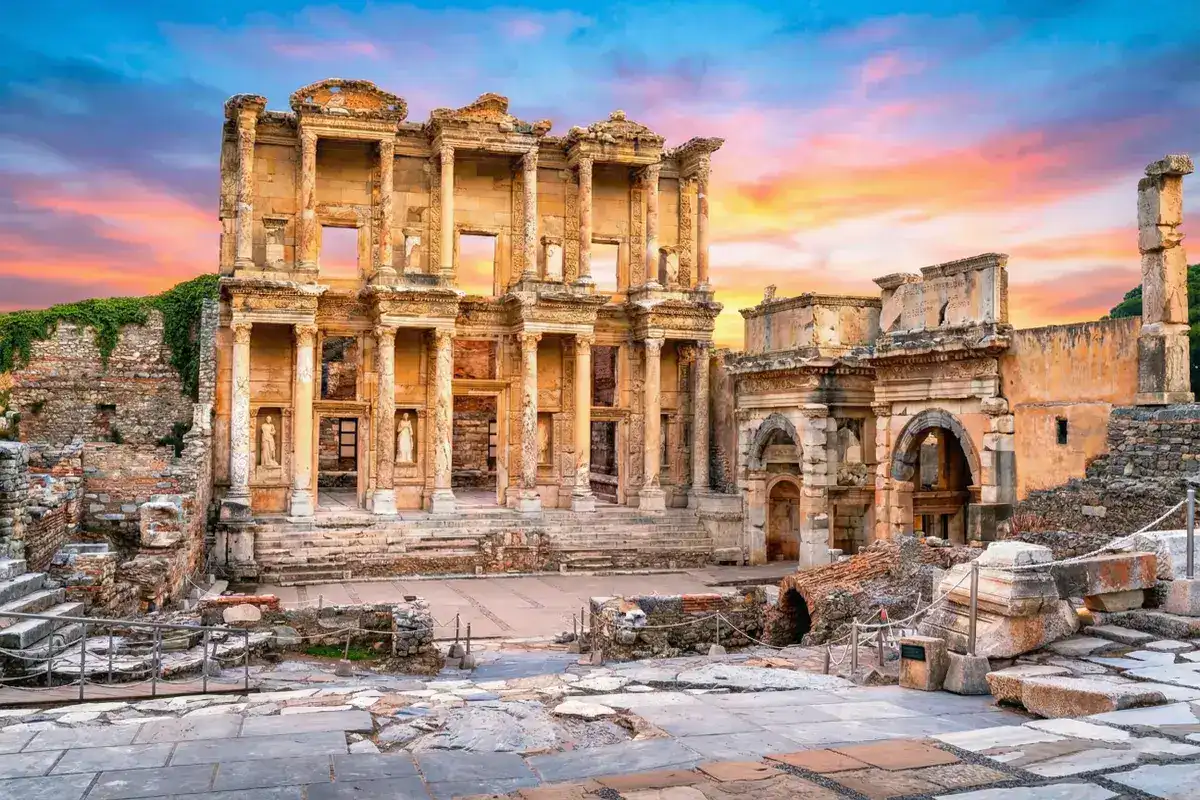
At Ephesus, the arrangement of the surviving buildings does much of the explaining. As you follow the streets, you pass public monuments, shops, fountains, baths, residential areas, and a large theater. The city feels less like a collection of isolated ruins and more like a place where people moved between work, civic life, worship, and home.
The site is near Selçuk, and many visitors pair it with the House of the Virgin Mary, the Basilica of Saint John, or the Temple of Artemis. Those additions can turn a focused visit into most of a day, so decide beforehand whether your priority is time inside the ancient city or a broader look at the area.
For context on Ephesus’s Greek, Roman, and early Christian periods, read The History of Ephesus: From Ancient Greece to Roman Glory.
7 Ephesus Ruins and Historic Sites to See
1. Library of Celsus
The Library of Celsus is the site’s best-known landmark. Its two-level façade, with columns, niches, and statues, gives a strong impression of the city’s former wealth. Built in the second century CE in honor of Tiberius Julius Celsus Polemaeanus, it also served as his tomb.
Take a moment to notice where the library stands along Curetes Street, not just the decorated front. The setting helps explain how the building fitted into the city’s public life. If photographs matter to you, morning light is often gentler on the façade than the harsher light later in the day.
2. Great Theatre
The Great Theatre of Ephesus is a striking stop near the lower end of the site. Built into the hillside, it hosted performances and public gatherings. Its scale becomes easier to appreciate when you look across the seating tiers and then toward the route leading away from the theater.
If you enter at the upper gate, the theater makes a natural finish to the main walk. It is also associated with events described in the Acts of the Apostles, a connection that gives the site added meaning for some visitors.
3. Terrace Houses
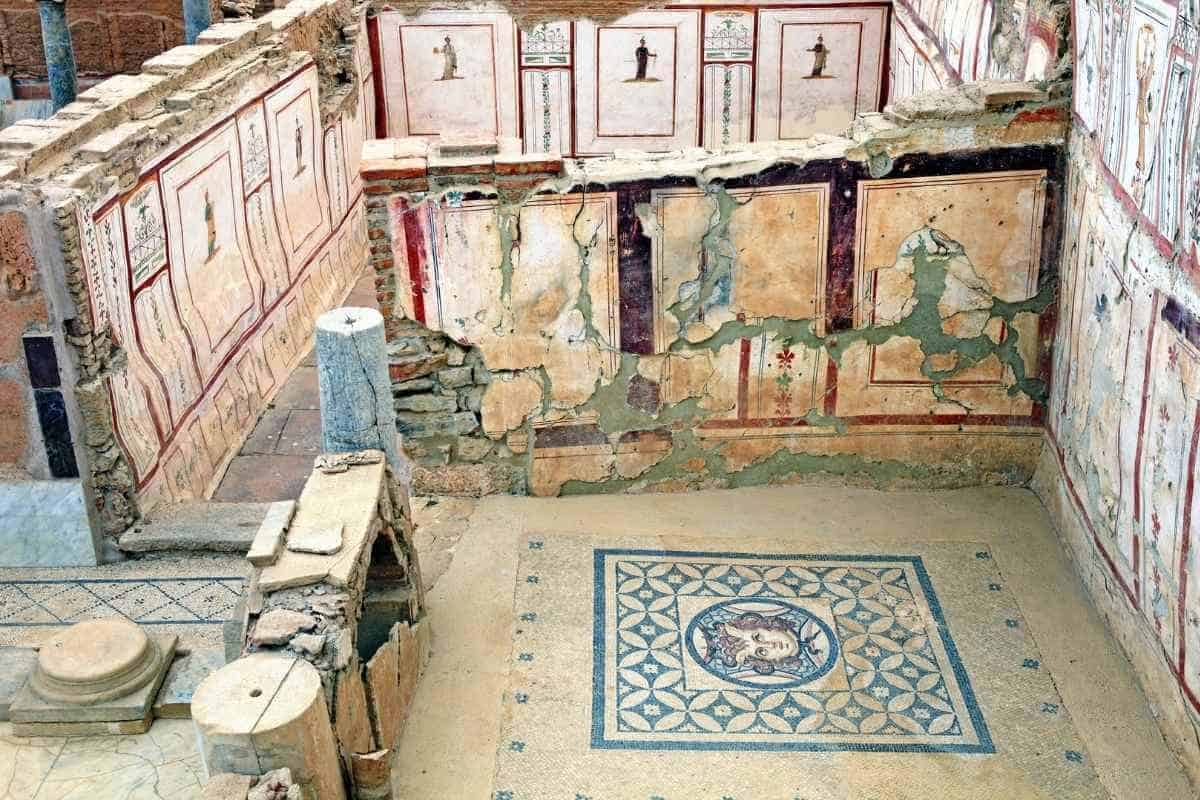
The Terrace Houses show a more private side of Roman Ephesus. Beneath a protective roof, visitors can see residential spaces with mosaics, painted walls, courtyards, and evidence of water and heating systems. They add detail that the monumental streets alone can’t provide.
Allow extra time for this section, which includes stairs. Admission may be separate from the main site ticket, so check current ticket arrangements before you set your budget. It’s a particularly good addition for travelers interested in archaeology, art, or how people lived at home.
4. Temple of Hadrian
The Temple of Hadrian is a smaller monument along Curetes Street, but its decorated arch and relief work reward a closer look. It’s easy to pass quickly while following the larger landmarks. A guide can help explain details that aren’t obvious at first glance; independent visitors may want to pause and read the site information rather than treating it as a photo stop.
5. Curetes Street and its public buildings
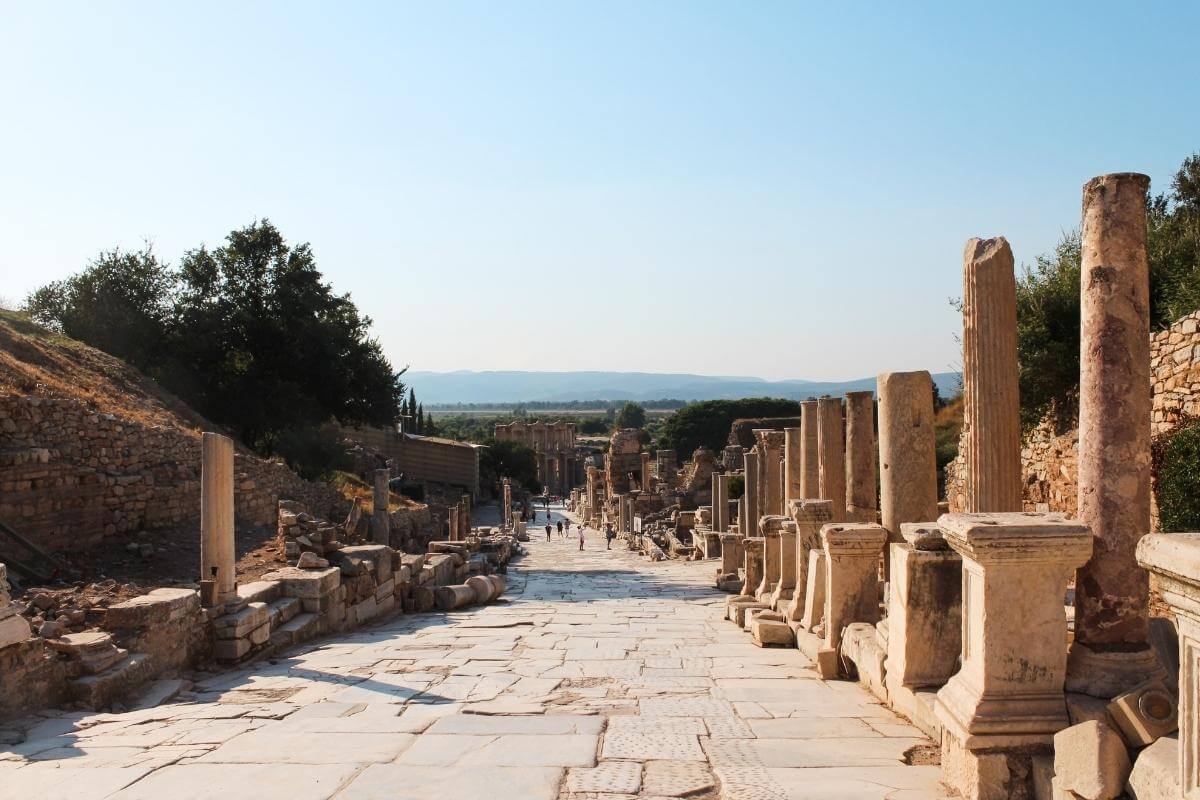
Curetes Street ties much of the visit together. This sloping marble avenue passes fountains, memorials, temples, civic buildings, and the Terrace Houses. Give yourself time to look down side streets and at the surviving details along the route; moving too quickly from one famous monument to the next can make the city harder to understand.
The stone paving is uneven and can be slippery, especially underfoot in smooth-soled shoes. The route also involves slopes, so take your time, particularly in hot weather or if you have mobility concerns.
6. Temple of Artemis
The Temple of Artemis is outside the main archaeological site, near Selçuk. It was once one of the Seven Wonders of the Ancient World, but little of the original sanctuary remains visible today. Visitors generally see a standing column and consider the site for its historical importance rather than the amount of surviving structure.
It makes sense if you’re already visiting Selçuk and want a fuller picture of the area’s ancient religious history. If time is tight, most travelers will get more from an extra stretch inside the main ruins.
7. House of the Virgin Mary and Basilica of Saint John
The House of the Virgin Mary, on Mount Koressos above Ephesus, is a separate stop from the ancient city. It’s a place of pilgrimage for Christians and Muslims and has a quieter atmosphere than the main ruins. Check its admission and transport arrangements separately.
In Selçuk, the Basilica of Saint John adds a Byzantine and Christian chapter to the visit. The remains stand over the traditional burial place of St. John the Apostle, and the site offers broad views. Combining both places with Ephesus is possible, but allow enough time rather than squeezing them into an already rushed schedule.
How Much Time Should You Allow?
For the main ruins, plan at least 2–3 hours at a comfortable pace. Add roughly another hour or more for the Terrace Houses, depending on your interest and pace. If you also want the House of the Virgin Mary and Selçuk-area landmarks, plan for most of a day and arrange transportation between stops.
| Visit plan | Useful time allowance | Best suited to |
|---|---|---|
| Main Ephesus ruins | 2–3 hours | First-time visitors with a focused schedule |
| Main ruins and Terrace Houses | 3–4 hours | Travelers interested in archaeology and Roman domestic life |
| Ephesus plus House of the Virgin Mary and Selçuk | Most of a day | Visitors interested in religious and Byzantine history |
| Ephesus and Pamukkale | Usually better as an overnight or longer itinerary | Travelers who want time at both major sites |
Plan the Route, Weather, and Entry Details
Which entrance should you use?
Many visitors enter at the upper gate and walk downhill toward the lower gate and Great Theatre. This route follows the main sightseeing sequence and avoids making the entire visit an uphill walk. The practical catch is transportation: if your driver or guide meets you at one entrance, agree in advance where you’ll finish and how you’ll reconnect.
Starting at the lower gate reverses the walk and means more uphill effort. It may still be the sensible choice if your transport plan calls for it, but consider the heat, your walking pace, and any mobility needs before choosing.
What should you bring?
- Walking shoes with reliable grip for uneven, sometimes slippery paving
- Water, a hat, and sunscreen; much of the route has limited shade
- A light layer for a cool morning or a shoulder-season visit
- A payment method for personal expenses and any optional admissions not included in your arrangement
Practical tip: The temperature in town won’t tell you how exposed the ruins will feel. Starting early can make a big difference on a long outdoor route, particularly in warmer months.
When is a comfortable time to visit?
Spring and fall are often comfortable seasons for a walking-focused visit, but conditions and visitor numbers vary by date. Summer visits can work well if you start early and plan carefully for sun and water. In winter, expect cooler conditions and be especially cautious on wet stone, which can be slippery.
For broader seasonal planning, see When Is the Best Month for Your First Turkey Trip? and Complete Turkey Travel Guide 2026.
Ticket categories, opening hours, and access arrangements can change. Before you go, verify current entry rules and whether the Terrace Houses or other sites require separate admission. Don’t assume that a tour price includes every ticket, meal, or optional stop: check the booking details for the specific arrangement.
Choosing the Best Way to Visit Ephesus
Your starting point matters more than the distance on a map. Consider where you’ll sleep the night before, how much time you want inside the ruins, and whether you’re comfortable coordinating flights or multiple stops.
From Izmir: a practical choice for an Aegean stay
If you’re already based in Izmir, a road-based day trip avoids domestic-flight logistics. The Ephesus Day Trip from Izmir is listed from USD 160 for 9 hours. Confirm the planned stops, pickup details, admission arrangements, and how much time is allocated at the archaeological site.
From Kusadasi: convenient for a coastal stay or cruise call
Kusadasi is a useful base for travelers staying nearby or arriving by cruise. The Ephesus Guided Day Tour from Kusadasi is listed from USD 160 and lasts 7 hours. Cruise passengers should check the pickup and return timing against the ship’s all-aboard time, and confirm what the tour price includes.
From Istanbul: possible, but expect a long day
A same-day visit can suit travelers with limited time who don’t want to change hotels. The Ephesus Day Trip from Istanbul is listed from USD 324 for 15 hours. It involves flight-day coordination as well as sightseeing, so verify the flight arrangements, transfers, site time, and included admissions before booking. It’s efficient, but not the relaxed option.
Adding Pamukkale: consider staying overnight
Pamukkale pairs well with Ephesus, but trying to see both in one day can leave little time at either. A two-day itinerary is more suitable if you want to explore the ruins rather than rush through them. The 2-Day Private Ephesus & Pamukkale Tour from Istanbul by Flight is listed from USD 959. Confirm flight schedules, hotel arrangements, admissions, and the walking expectations for each day.
Prices are starting references and may change. Compare the exact booking details, including transport, guide arrangements, accommodation where applicable, and admissions, rather than assuming two similarly named tours include the same services. One Nation Travel coordinates bookings and customer support; experienced local guides, drivers, and selected local providers deliver services, and assignments may vary by destination, day, or tour segment.
For cancellations or date changes, notice must be given at least 5 days before the tour starts; non-refundable flight and bus ticket costs are deducted from the paid balance; with less than 5 days notice, or for a no-show, the full payment is non-refundable.
Choose your next step
Recommended Ephesus tours
These verified options are the closest available matches for this article’s destination, route intent, and trip length.

2-Day Private Ephesus & Pamukkale Tour from Istanbul by Flight
A 2 days Cultural & Heritage Tour route covering Ephesus, Pamukkale and 1 more destination.
View tour details →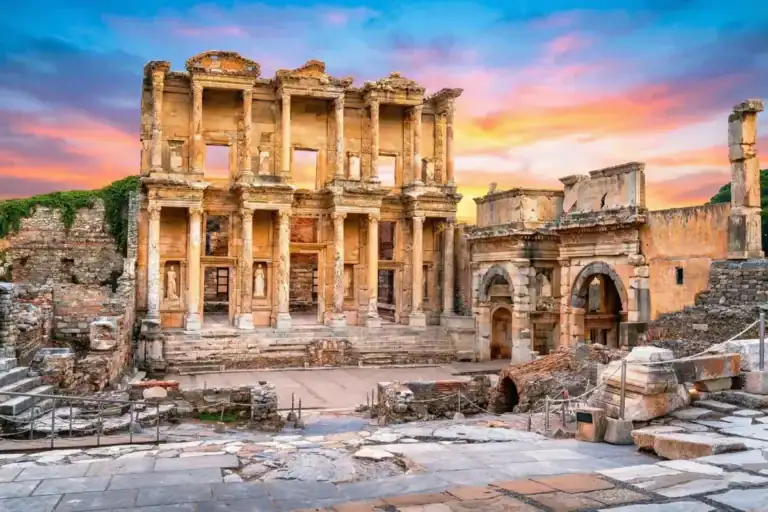
Ephesus Day Trip from Istanbul
A 15 hours Cultural & Heritage Tour route covering Ephesus, Istanbul.
View tour details →
Ephesus Day Trip from Izmir
A 9 hours Cultural & Heritage Tour route covering Ephesus, Izmir.
View tour details →
2-Day Ephesus & Pamukkale Tour from Istanbul with Flights
A 2 days Historical & Cultural Tour route covering Ephesus, Pamukkale and 1 more destination.
View tour details →Frequently Asked Questions About Ephesus
Is a guide worth it at Ephesus?
A guide can add useful context to the city’s layout, public buildings, inscriptions, and Terrace Houses. Independent visits are also workable if you’re comfortable exploring at your own pace and allow time to read site information.
Is the House of the Virgin Mary included in Ephesus admission?
It’s a separate site outside the main archaeological area. Check current admission arrangements and your tour inclusions rather than assuming it’s covered by the Ephesus ticket.
Is Ephesus accessible for wheelchairs or strollers?
The full route can be challenging because of uneven paving, slopes, stairs, and long distances. Discuss mobility requirements before booking, and ask which sections and entrances are practical for your needs.
Can I see Ephesus and Pamukkale in one day?
It may be possible in a tightly scheduled itinerary, but substantial travel and walking can make the day rushed. An overnight plan gives you more time at both sites.
Make Ephesus a Comfortable, Well-Paced Stop
For most travelers, the best plan is to start early, give the main ruins at least 2–3 hours, and add the Terrace Houses only if their art and domestic history interest you. Choose a departure point that matches where you’re staying, and check transport, admission, and walking details before booking. If you’re combining Ephesus with other parts of Turkey, share your dates and priorities through the Plan My Trip form to discuss a route that fits your pace.