
The short version: Pamukkale’s essential attractions are the white Travertines of Pamukkale, the ruins of Hierapolis, and the warm antique pool commonly called Cleopatra’s Pool. Plan at least half a day for the terraces and ruins, or a full day if you want a slower visit, a museum stop, and time in the thermal water.
Pamukkale, in southwestern Turkey, is one of those places where the headline attraction is real: bright white mineral terraces spill down a hillside beneath an ancient Roman spa city. The main planning decision is whether to visit quickly from Izmir, Kusadasi, or Istanbul, or stay overnight and experience the site before the busiest part of the day.
What to Know Before Visiting Pamukkale
- The travertines, Hierapolis ruins, and the antique pool are all in the same broad archaeological area, but they require different amounts of time and walking.
- Visitors must remove their shoes in designated terrace areas; bring a small bag for sandals and expect wet, uneven surfaces.
- A full day is the best choice for travelers who want both the terraces and Hierapolis without rushing, especially in warm weather.
- The antique pool is generally a separate paid experience from site admission, so confirm current pricing and opening arrangements before your visit.
- Spring and fall are usually the most comfortable seasons for walking outdoors. Summer visits are easier early or late in the day.
- From Istanbul, a flight-based tour or an overnight plan is usually more practical than attempting independent same-day road travel.
Why Pamukkale Is Worth the Trip
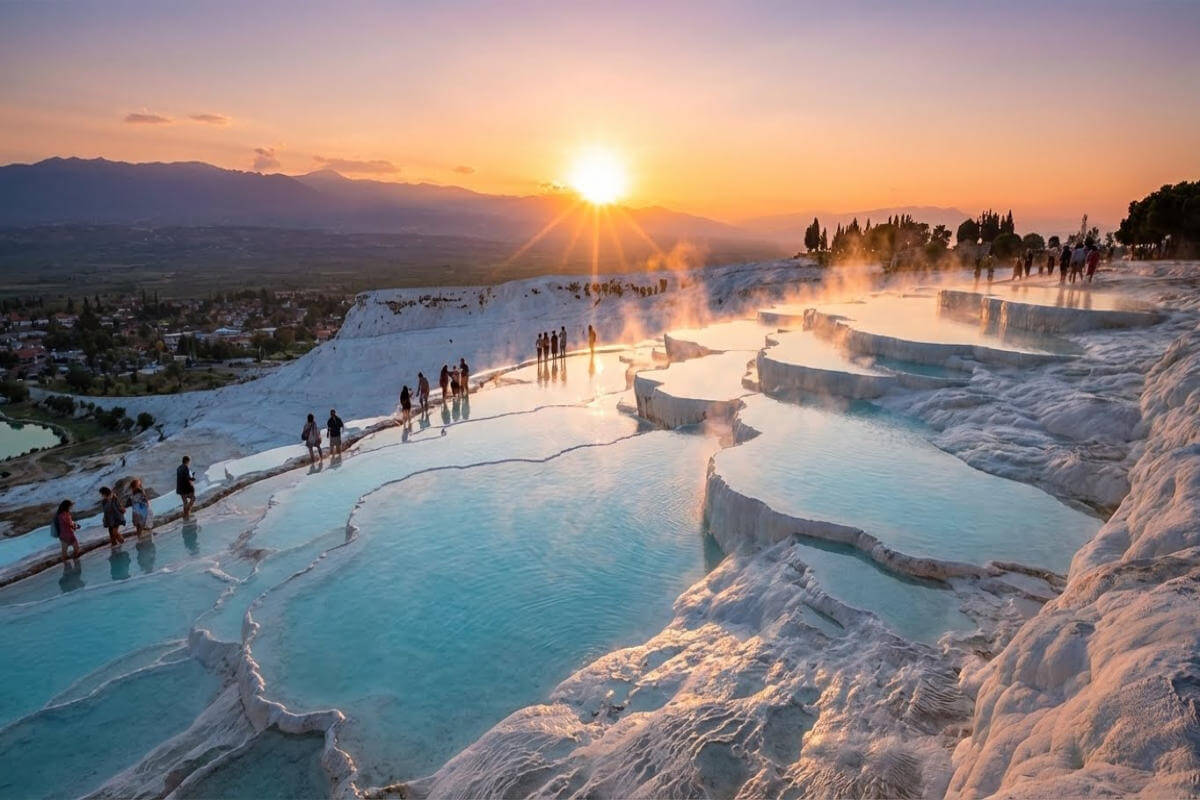
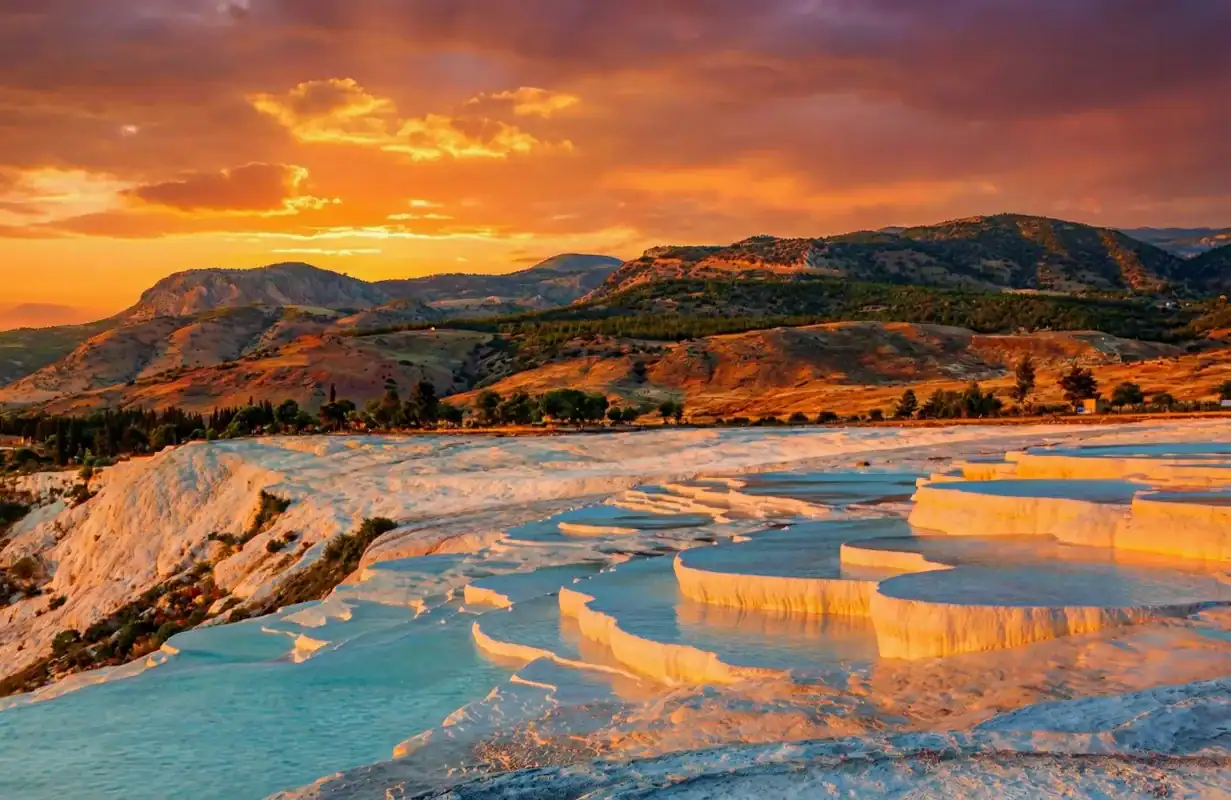
Pamukkale means “cotton castle” in Turkish, a fitting name for its pale terraces formed by mineral-rich thermal water. The water leaves calcium deposits as it flows down the slope, creating shallow basins and rippled white shelves. The appearance changes with sunlight, water flow, season, and the number of people visiting, so photos can look very different from one day to the next.
What makes Pamukkale more than a scenic stop is its connection to Hierapolis, an ancient Greco-Roman and Byzantine spa city built above the terraces. Together, Pamukkale and Hierapolis form a UNESCO-listed landscape where a natural thermal phenomenon and substantial archaeological remains sit side by side.
For travelers deciding how to prioritize their time, Pamukkale works especially well if you enjoy a mix of scenery and ancient history. If your interest is primarily photography, the terraces may be enough. If you are interested in Roman urban life, early Christianity, or ancient bathing culture, allow time for the wider Hierapolis site.
Top Attractions in Pamukkale
Walk the White Travertine Terraces
The Travertines of Pamukkale are the site’s most recognizable feature. Visitors follow designated routes across sections of the white hillside, where water runs through selected channels and pools. Conditions vary: some basins may be full, while others are dry for conservation or water-management reasons.
You will normally need to go barefoot on the terraces. This rule helps protect the mineral surface, and it also means the ground can feel slippery, rough, warm, or cool depending on the spot. Wear clothing that is easy to manage, carry a small bag for shoes, and avoid relying on the terraces for a long soak. The pools are shallow and are not intended as a swimming area.
Practical tip: Bring water, sun protection, and a towel or light cover-up if you plan to put your feet in the flowing water. The white ground reflects sunlight strongly, even on days that do not feel especially hot.
Explore Ancient Hierapolis
Above the terraces, Hierapolis rewards travelers who keep walking after the photo stops. Founded in the Hellenistic period and developed under Roman rule, the city became known for its thermal springs and religious importance.
The ruins are spread across a large, open area. A relaxed visit can include the main streets, baths, temples, city gates, and broad views over the Denizli plain. The terrain is more extensive than many first-time visitors expect, so comfortable walking shoes are important once you leave the barefoot terrace route.
See the Roman Theatre
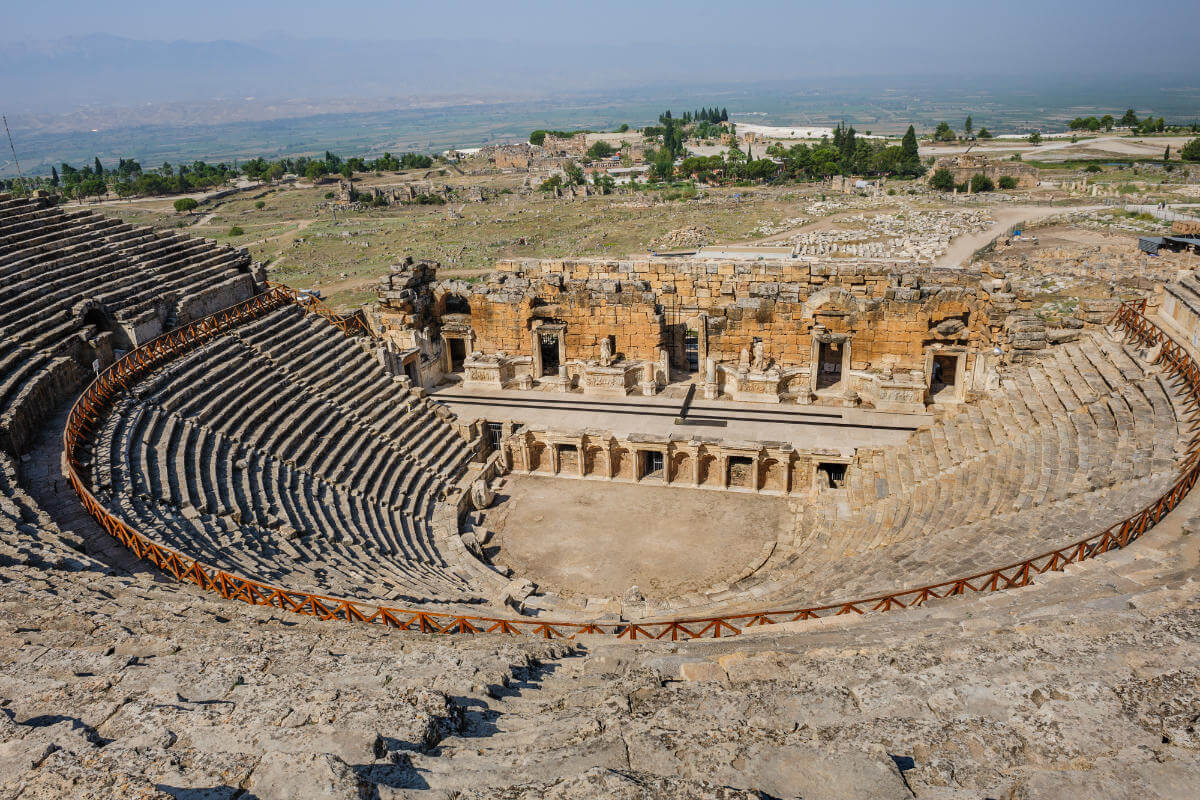
The restored theatre is one of Hierapolis’s most impressive structures. Its high seating position offers wide views, while the stage building preserves elaborate reliefs and architectural details. It is worth the uphill walk for travelers who enjoy ancient architecture, but it can be challenging in midday heat or for anyone with limited mobility.
Visit the theatre earlier in the day if possible. You will have cooler conditions for the climb and better light on the stonework than during the harshest afternoon sun.
Walk Through the Necropolis
The Necropolis of Hierapolis is one of the largest surviving burial grounds in Anatolia. It contains sarcophagi, tombs, and funerary monuments that reflect the city’s long life as a healing center. People came to Hierapolis for its waters, and some remained there through illness and old age, leaving an unusually substantial archaeological record.
This section is particularly worthwhile for history-minded visitors, but it is easy to skip if you are short on time. If you have only a few hours, prioritize the terraces, central ruins, and theatre first.
Thermal Water Experiences: What You Can and Cannot Do
Cleopatra’s Antique Pool
The Cleopatra Antique Pools in Pamukkale, also called the Antique Pool, is a thermal swimming pool near the Hierapolis ruins. Warm mineral water flows around submerged columns and stone fragments, creating a memorable setting that is very different from the shallow terrace channels.
The pool is often associated with Cleopatra, though the popular name should not be taken as proof that she bathed there. What is certain is that thermal bathing was central to Hierapolis’s identity for centuries.
Swimming is optional and typically involves an additional admission charge. Before you commit, verify the current fee, operating hours, changing facilities, locker availability, and any health guidance displayed on site. The water is warm rather than hot, but travelers with medical concerns, young children, or sensitivity to mineral water should use sensible caution.
Natural Pools and Thermal Hotels
You may see shallow flowing water on the travertines, but swimming in the natural terrace basins is not permitted. The designated antique pool is the appropriate choice for a bathing experience within the archaeological area.
There are also thermal properties around Pamukkale and nearby Karahayit. These can suit travelers who want a slower wellness-focused stay, but they are a different experience from visiting the UNESCO site itself. If thermal bathing is a priority, confirm whether your chosen property has its own pool, what water temperature it offers, and whether use is included in the room rate.
Don’t Miss the Hierapolis Archaeology Museum
The Hierapolis Archaeology Museum occupies part of the former Roman bath complex. It is a useful stop for travelers who want context for the ruins rather than simply a walk through them. Displays commonly include sculpture, sarcophagi, inscriptions, and finds from Hierapolis and the surrounding region.
The museum is most valuable after you have seen at least some of the site. You will recognize the architectural fragments, burial customs, and spa culture more easily once you have walked among the baths, streets, and tombs. If your schedule is tight, allow your guide or local site map to help you decide whether the museum fits before closing time.
Best Time to Visit Pamukkale
Pamukkale is open-air, bright, and exposed, so timing matters as much as itinerary choice. April through June and September through October are generally the most comfortable periods for walking. Days are often milder than peak summer, although weather can still change and popular dates remain busy.
| Travel period | What to expect | Best approach |
|---|---|---|
| Spring | Comfortable walking weather and greener scenery | Good for a full ruins-and-terraces day |
| Summer | Strong sun, high heat, and more visitors | Arrive early, take breaks, and save long walks for later |
| Fall | Milder conditions and pleasant light | One of the best seasons for photography and archaeology |
| Winter | Cooler weather and potentially quieter conditions | Bring layers and check local weather before setting out |
Early morning is the strongest choice for travelers who want cooler temperatures and a calmer start. Late afternoon can also be attractive for softer light, but do not leave all major sightseeing until late in the day; the Hierapolis complex is large, and site access schedules can vary by season.
For more seasonal bathing advice, see The Ultimate Pamukkale Hot Springs Guide.
How to Get to Pamukkale
Pamukkale is near Denizli, and most visitors arrive by road transfer after reaching Denizli or a nearby regional hub. The best route depends on where your trip begins and how much time you want to spend at the site.
From Izmir or Kusadasi
Izmir and Kusadasi are common starting points for a day trip because they can be paired naturally with the Aegean coast and Ephesus. A guided day tour removes the need to coordinate transfers, site timing, and return transport after a long day of walking.
Travelers staying near Kusadasi should expect a full day away from their hotel. It is a good option when Pamukkale is one part of a larger western Turkey itinerary, rather than the only destination on the trip.
From Istanbul
From Istanbul, Pamukkale is best handled with a flight-based itinerary, an overnight stay, or a multi-day route that continues toward Ephesus or Cappadocia. A same-day visit can be efficient when transfers and flight timing line up, but it makes for a long day and leaves little room for delays or a relaxed swim.
Travelers comparing transport options can use How to Get to Pamukkale from Istanbul for a fuller route breakdown.
Independent Visit or Organized Tour?
An independent visit works well for travelers with an overnight stay in Pamukkale or Denizli, flexible schedules, and confidence arranging local transfers. An organized trip is often better for short stays, travelers arriving from Istanbul, or anyone combining Pamukkale with Ephesus.
Choose the Pamukkale Visit That Fits Your Trip
The right format depends less on budget alone and more on your available time, starting city, and tolerance for long travel days.
- Choose a day trip from Izmir if you are based in the Aegean region and want a straightforward full-day excursion focused on Pamukkale and Hierapolis.
- Choose a day trip from Istanbul if your time is limited and you are comfortable with an early start, air travel coordination, and a tightly structured day.
- Choose a two- or three-day itinerary if Ephesus is also on your list. This reduces backtracking and gives you more time at both major sites.
- Stay overnight independently if you value slower pacing, want to photograph the terraces near opening or closing, or plan to use a thermal pool without watching the clock.
Before booking, verify the departure point, transfer arrangements, flight or bus details where applicable, meal inclusions, accommodation on multi-day programs, attraction admissions, and whether the antique pool is included or paid separately. Starting prices can change with travel date and availability.
Current options include the Pamukkale Day Trip from Istanbul, listed from USD 385 for 16 hours, and the Pamukkale & Hierapolis Full-Day Tour from Izmir, listed from USD 129 for 13 hours. For travelers combining two major sites, the 2-Day Pamukkale & Ephesus Tour from Istanbul with Flights starts from USD 470. Check the tour page for the current itinerary and inclusions before reserving.
Choose your next step
Recommended Pamukkale tours
These verified options are the closest available matches for this article’s destination, route intent, and trip length.

Pamukkale Day Trip from Istanbul
A 16 hours Day Trips from Istanbul route covering Pamukkale, Istanbul.
View tour details →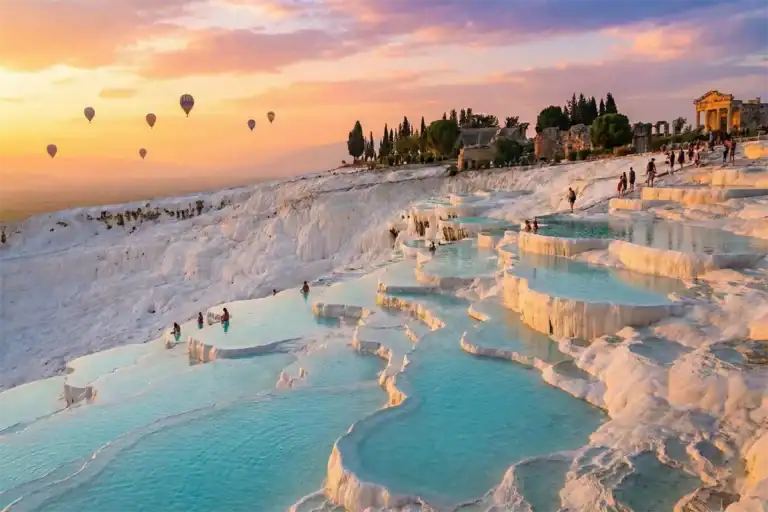
2-Day Pamukkale & Ephesus Tour from Istanbul with Flights
A 2 days Historical & Cultural Tour route covering Pamukkale, Ephesus and 1 more destination.
View tour details →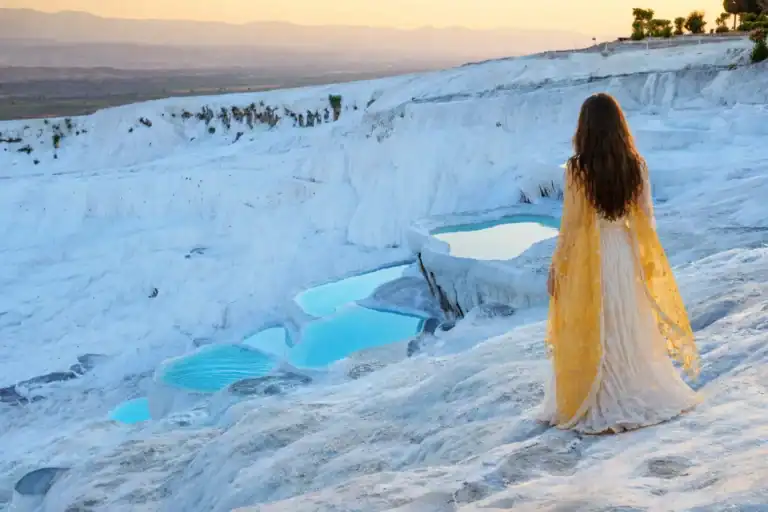
Pamukkale & Hierapolis Full-Day Tour from Izmir
A 13 hours Cultural & Heritage Tour route covering Pamukkale, Izmir.
View tour details →3-Day Pamukkale & Ephesus Tour from Izmir
A 3 days Cultural & Heritage Tour route covering Pamukkale, Ephesus and 1 more destination.
View tour details →Common Pamukkale Questions
How much time do you need in Pamukkale?
Allow at least four to six hours for the terraces and main Hierapolis highlights. A full day is better if you want to visit the museum, walk through the necropolis, swim in the antique pool, and take breaks during warm weather.
Can you swim in Pamukkale’s travertines?
No. Swimming in the natural travertine basins is not allowed. Visitors may walk barefoot through designated shallow-water areas, while the Antique Pool is the main paid swimming option inside the archaeological zone.
Is Cleopatra’s Pool worth the extra cost?
It is worth considering if you enjoy thermal bathing and have enough time for a relaxed stop. Skip it if your priority is archaeology, photography, or fitting both Pamukkale and Ephesus into a short itinerary.
What should you wear to Pamukkale?
Wear comfortable walking shoes for Hierapolis, bring a small bag for footwear on the travertines, and pack sun protection. A swimsuit and towel are useful only if you plan to use the Antique Pool or another thermal facility.
Plan a Pamukkale Visit Without Rushing the Highlights
Pamukkale is most rewarding when you treat it as more than a quick photo stop. Walk the terraces carefully, leave time for Hierapolis, and decide in advance whether the Antique Pool fits your day. If you are building a larger route, Pamukkale pairs particularly well with Ephesus, as outlined in this Pamukkale Day Trip Guide 2026 and the Best Turkey Itinerary for 7 Days.
For help choosing the right route, departure city, and pace for your travel dates, plan your Turkey trip with One Nation Travel.