
For most Americans visiting established tourism routes, the practical risk of being affected by a war in Turkey in 2026 is low. Turkey is a large country with a functioning tourism infrastructure, and its main visitor areas—such as Istanbul, Cappadocia, the Aegean coast, and Antalya—are far from the areas most affected by regional security tensions.
That said, Turkey sits in a complicated neighborhood and has active security concerns near parts of its southern and southeastern borders. Travelers should make route decisions based on current official advisories, avoid border regions unless they have a specific reason and up-to-date local guidance, and leave flexibility in their plans for occasional transport or aviation changes. For a typical vacation booked through Turkey Tours, the sensible approach is awareness—not alarm.
📋 Quick Facts
| Best Time to Visit | April–May and September–October for comfortable sightseeing weather and fewer peak-summer pressures. |
| Time Needed | At least 6–8 days for Istanbul, Cappadocia, and one additional region. |
| Difficulty | Easy to moderate on established routes; allow more planning if traveling independently between regions. |
| Must-Bring | Travel insurance details, copies of passport information, a charged phone, and modest clothing for mosque visits. |
Why “war risk” needs context in Turkey

Headlines about the Middle East can make the entire region appear uniformly unsafe, but geography matters. Turkey shares borders with countries facing different political and security conditions. A situation near Syria, Iraq, or Iran does not automatically affect a trip hundreds of miles away in Istanbul, Cappadocia, Ephesus, Pamukkale, or the Mediterranean coast.
Turkey’s visitor circuit is spread across western and central Anatolia. A traveler touring the Hagia Sophia, flying to Cappadocia, and continuing to the Aegean is following a well-established domestic route used by international and Turkish travelers alike. These places should not be treated as interchangeable with remote border areas.
The more accurate question is not, “Is Turkey at war?” It is: “Does my exact route pass through an area affected by a current security event, transport disruption, or official travel warning?” For most standard itineraries, the answer is no. Still, conditions can change, which is why travelers should check official guidance shortly before departure rather than relying on a social-media post or an old news report.
Areas that deserve extra caution
Turkey’s southern and southeastern border provinces require a different level of caution than its major tourism centers. Travelers should not casually add locations near the Syrian or Iraqi borders to a vacation itinerary simply because they are geographically within Turkey. Security conditions, road access, and local restrictions can change more quickly in these areas.
There is also a practical distinction between a countrywide concern and a localized one. A demonstration in one district, a weather-related airport delay, or a temporary security measure may affect a small area without disrupting a broader trip. If an event occurs during your travels, follow instructions from local authorities, your hotel, airline, or tour coordinator; avoid gathering crowds; and do not travel toward an incident to see what is happening.
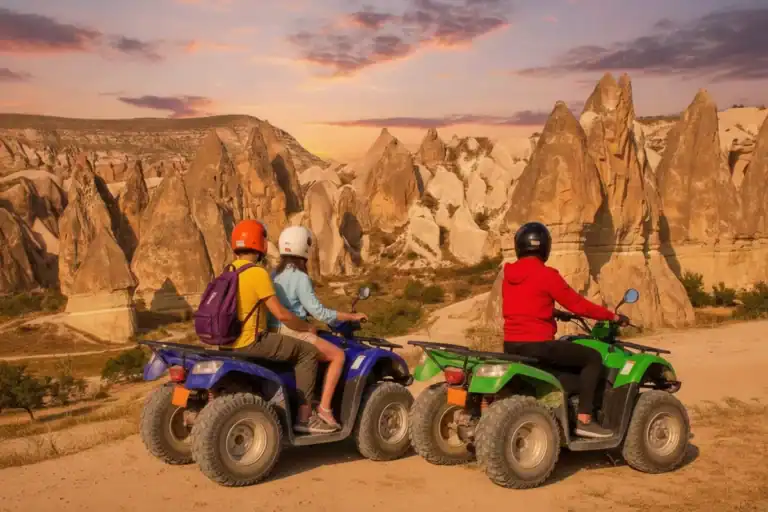
For travelers who want archaeological and cultural sites without placing themselves near sensitive border regions, western and central Turkey offer a broad choice of routes. The cave landscapes and rock-cut churches around Cappadocia, the ruins around Ephesus, and the coast around Antalya are far more logical additions to a first trip.
Pro Tip
Schedule your most important activity—such as a Cappadocia balloon flight or a full-day Istanbul visit—early in the trip when possible. If a weather delay, flight adjustment, or other disruption occurs, you will have room to reschedule instead of losing the experience completely.
What daily safety feels like on the main tourist route

On a normal trip, the issues travelers are more likely to encounter are ordinary travel problems: airport delays, traffic, misplaced belongings, uneven pavements, heat, or an overambitious itinerary. In busy areas, use the same habits you would in any major international city: keep valuables secure, use licensed transportation or prearranged transfers, and be cautious around crowded transit points and popular shopping streets.
Turkey also experiences occasional demonstrations, particularly in large cities. Most visitors will never encounter one, but the rule is straightforward: do not participate, do not linger to photograph confrontations, and choose another street or neighborhood if a gathering is forming. Political events can become unpredictable even when they begin peacefully.
Americans should also respect local customs and laws. Dress modestly when entering mosques, carry identification as required, and avoid making assumptions about what can be photographed around military, police, government, or transport facilities. These are simple precautions, but they prevent many avoidable complications.
How to plan a lower-stress Turkey trip in 2026
A well-paced itinerary reduces exposure to the kinds of disruptions that matter most in real travel. Avoid trying to cover Istanbul, Cappadocia, Pamukkale, Ephesus, Antalya, and Gallipoli in four or five days. Too many domestic transfers leave little room if a flight shifts or a road journey takes longer than expected.
For a first visit, a route combining Istanbul, Cappadocia, and the Aegean region is a strong balance of history, scenery, and manageable travel logistics. A structured itinerary such as the 7-Day Best of Turkey: Istanbul, Cappadocia & Ephesus can be a practical choice for travelers who prefer confirmed transport connections and sightseeing coordination rather than arranging every domestic leg independently.
If you have more time, choose depth over distance. Spend three or four nights in Istanbul, two or three nights in Cappadocia, then add the Aegean or Mediterranean. Antalya works especially well for travelers who want ancient sites and coastal downtime in the same stop, while the Ephesus area suits travelers focused on Greco-Roman history.
For detailed route logic, see our guide to the best 6-day Turkey itinerary. It explains the trade-off between adding Ephesus or Antalya, rather than treating both as easy add-ons to a short trip.
Check these items before you book and again before you fly

Good preparation is more useful than trying to predict every geopolitical development. Use this short pre-departure check:
| What to check | Why it matters | Practical action |
|---|---|---|
| Official government travel advisory | Advice can be updated for specific provinces or border zones. | Read the advisory for Turkey shortly before booking and again 48–72 hours before departure. |
| Airline flight status | Regional events can occasionally affect routing, timing, or airport operations. | Download your airline app and confirm your flight the day before travel. |
| Travel insurance coverage | Policies vary widely on cancellation, interruptions, medical care, and security-related events. | Read the policy wording, especially exclusions and assistance procedures. |
| Route and hotel locations | Not all places within Turkey carry the same practical considerations. | Keep leisure travel focused on established visitor regions unless you have a specific purpose elsewhere. |
| Flexible time in the itinerary | Missed connections are more disruptive on tightly packed schedules. | Build buffer time before international departures and between major domestic legs. |
Travel insurance is especially important if your trip includes several domestic flights, nonrefundable hotels, or an onward connection to another country. It should be chosen for medical support and trip interruption protection, not as a substitute for checking current conditions.
Should you cancel a Turkey trip because of regional tensions?
Not automatically. A decision to cancel should be based on official guidance for your precise route, confirmed transport availability, your personal comfort level, and any medical or family considerations—not on broad headlines alone. Turkey’s main tourism regions are geographically and operationally distinct from the country’s most sensitive borders.
If you are anxious about independent connections, a planned itinerary can remove several moving parts: airport transfers, domestic transport timing, accommodation coordination, and locally guided sightseeing. Travelers choosing between travel styles may find our comparison of group tours and private tours in Turkey useful. A group tour can offer a straightforward fixed route, while a private arrangement may be better for families, travelers with mobility needs, or anyone who wants a slower schedule.
The bottom line is simple: Turkey remains a realistic vacation choice in 2026 for travelers following mainstream routes and making informed decisions. Keep your plans geographically sensible, leave a little flexibility, and verify current information close to departure.
If you would like help building a route that matches your available time, travel style, and current practical considerations, plan your Turkey trip with One Nation Travel.
Frequently Asked Questions
Is Istanbul safe to visit if there is tension elsewhere in the region?
In most cases, regional tension does not directly affect daily tourism in Istanbul. It is far from Turkey’s southern border areas and remains a major international transport and tourism hub. Still, check official travel advice before departure and avoid demonstrations or large political gatherings if you encounter them.
Are domestic flights in Turkey likely to be affected by regional events?
Most domestic flights operate normally, but schedules can change for many reasons, including weather, airline operations, and wider regional aviation conditions. Booking sensible connection times and monitoring your airline app are the best ways to reduce stress.
Which parts of Turkey are best for a first-time visitor concerned about safety?
Istanbul, Cappadocia, the Aegean coast around Ephesus and İzmir, Pamukkale, and Antalya are the usual choices for a first visit. They have established visitor infrastructure and are well away from the southeastern border areas that require greater caution.
Should I register my trip with the U.S. government?
Enrollment in the U.S. Department of State’s Smart Traveler Enrollment Program can be a sensible optional precaution for Americans traveling abroad. It helps the embassy contact you in certain emergencies and provides a way to receive official updates.
What should I do if the security situation changes while I am in Turkey?
Follow local authority instructions, monitor your embassy’s official updates, and contact your airline or travel provider about confirmed changes to transport. Avoid crowds, demonstrations, border travel, and speculation on social media. Most importantly, make decisions based on verified local information rather than rumors.