
 16 Days
Travel Guide · FAQ
Frequently Asked Questions About Pamukkale
Pamukkale's white travertine terraces and the ancient ruins of Hierapolis sit in Turkey's southwest, about a four-hour drive from the coast. Here's what you need to know before you go: timing, tickets, getting there, and how long to stay.
18 questions answered
Updated June 2026
By licensed local experts
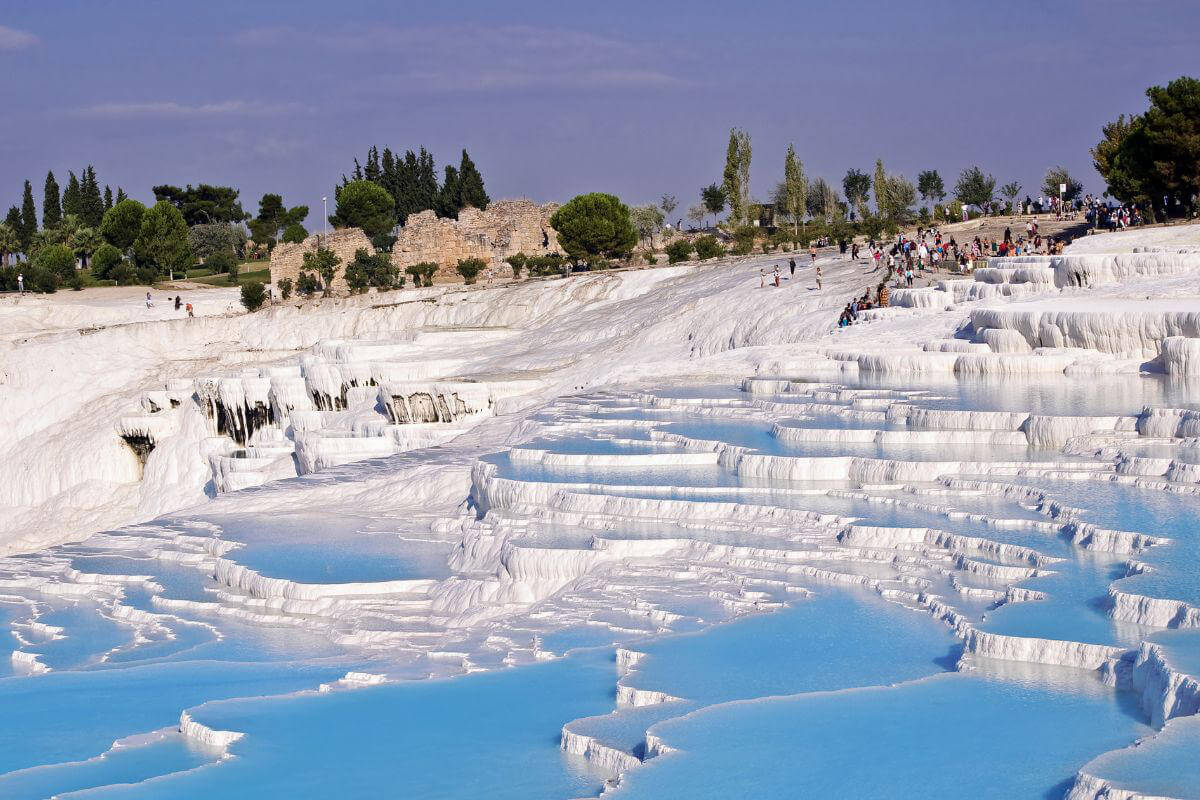
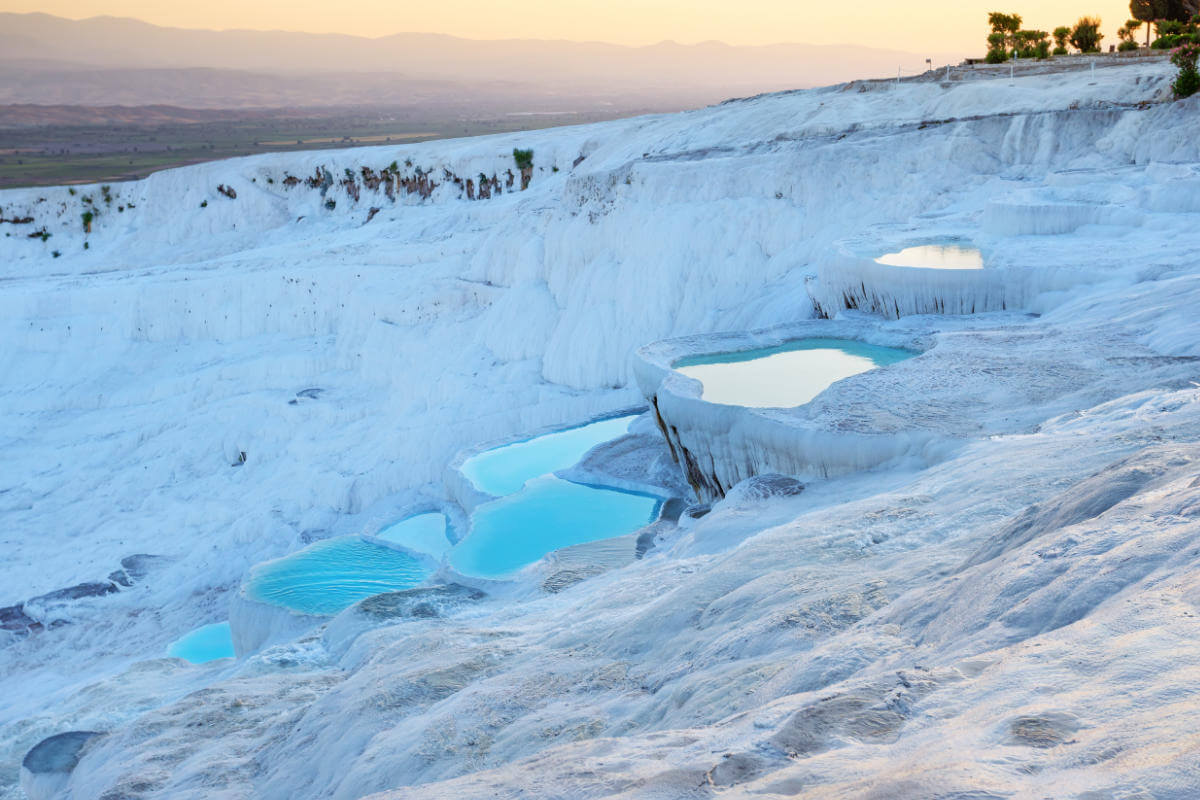
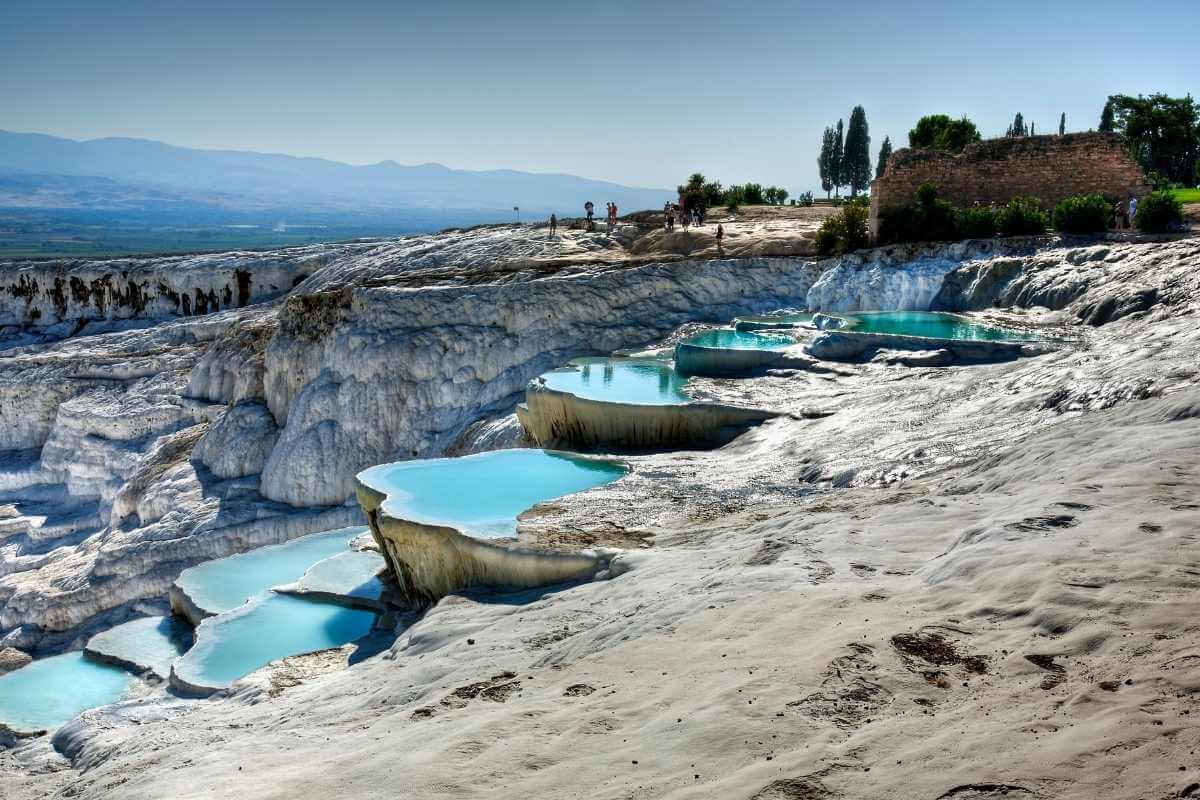
Pamukkale is a series of white travertine terraces in southwest Turkey, formed over thousands of years by calcium-rich thermal water flowing down the hillside, with the Greco-Roman ruins of Hierapolis sitting right on top. The name means "cotton castle" in Turkish. It's a UNESCO World Heritage Site, and the bright white pools against the blue sky are what draw most visitors.
The best months are April to early June and September to October, when daytime temperatures sit around 20-28°C and the crowds thin out. July and August get hot, often above 35°C, and the site gets busy with midday tour groups. Winter is quiet and the terraces stay open, but it can be cold and rainy. We usually suggest arriving early morning or late afternoon for softer light and fewer people.
One full day is enough to see the travertine terraces, Hierapolis, and the Cleopatra Pool at a relaxed pace; many travelers do it as a long day trip or an overnight stop. If you want to swim, explore the ancient theatre, and watch sunset over the pools without rushing, plan a one-night stay. Most of our guests fold Pamukkale into a multi-day route alongside Ephesus.
The fastest way is to fly from Istanbul to Denizli Çardak Airport (about 75 minutes), then drive roughly 65 km (one hour) to Pamukkale. There are also overnight buses (around 10-11 hours) and trains via İzmir. Because Pamukkale pairs naturally with Ephesus, many people book a combined trip like our 2-day Ephesus & Pamukkale tour by flight, which handles the transfers for you.
Pamukkale is about 190 km from Ephesus, roughly a three-hour drive east. This is why the two are almost always visited together on the same trip. If you're self-driving, the road through Aydın and Nazilli is straightforward; on a guided tour the drive is broken up with a stop and runs comfortably between the two sites in a single morning.
Entry to the Pamukkale-Hierapolis site costs about $30-35 per person in 2026, and the Cleopatra Antique Pool is a separate ticket of roughly $15 if you want to swim. The Museum Pass Turkey doesn't always cover Pamukkale, so check before relying on it. A guided day tour with transport, lunch, and a guide typically runs higher but saves you the logistics.
Yes. You can wade and sit in the shallow travertine pools along the marked path (shoes must come off to protect the surface), and you can swim in the Cleopatra Antique Pool, a warm thermal pool scattered with submerged Roman columns, for an extra fee of about $15. The terrace water is usually ankle to shin deep and not all pools hold water year-round.
Pamukkale is very safe, with low crime and a well-managed, walkable site; the main things to watch are slippery wet travertine and the strong summer sun. You walk the terraces barefoot, so move slowly on the wet ridges. Bring water, sunscreen, and a hat in summer, and keep an eye on children near the deeper pools. Tap water is fine for washing but stick to bottled for drinking.
Right above the travertines lies Hierapolis, an extensive Roman spa city with a large theatre, a necropolis, colonnaded streets, and a small archaeology museum. Don't skip the well-preserved theatre, which seated around 12,000 people. You can easily spend two to three hours wandering the ruins, and the walk from the terraces up into the old city takes just a few minutes.
A guided tour makes sense for most travelers because Pamukkale is far from the major cities and pairs best with Ephesus, so a tour handles the long transfers, tickets, and timing in one go. Independent travel works if you've rented a car or have time to spare. We sell several routes that combine both sites; you can compare them on our Pamukkale tours page to find the right length for your trip.
Yes, you must walk the white travertine terraces barefoot to protect the calcium surface, and it's enforced by site wardens. The ground is uneven and a bit slippery where water flows, so go slowly. Bring a small bag for your shoes and socks, since you'll carry them the whole way across. Most of our guests find the texture rough but manageable.
Most travelers stay in Pamukkale village, right at the base of the terraces, where small hotels run about $40-90 a night, or in nearby Karahayıt for thermal spa hotels. Karahayıt sits about 5 km north and is known for its red mineral springs. We usually recommend the village if you want to walk to the entrance early.
One full day is enough to see the white terraces, the ancient city of Hierapolis, and the Antique Pool, since most visitors cover everything in about 4-5 hours. If you're coming from Ephesus or Antalya, plan a long day or stay overnight to catch the terraces at sunrise. Our Ephesus and Pamukkale day tour by flight fits both sites into a single day.
Walking barefoot up the travertine terraces from the south (lower) gate takes about 30-45 minutes at an easy pace, covering roughly 600-800 meters of gentle slope. The water-filled pools slow you down, which is part of the fun. If you prefer to skip the climb, enter from the north or south top gates and walk down instead.
Local spots around Pamukkale village serve Aegean and Turkish staples like gözleme (stuffed flatbread), grilled lamb şiş, and fresh trout from the Denizli region, with mains usually $5-12. Many guesthouses do a generous Turkish breakfast spread included with the room. Denizli is also known for its spicy köfte, so try those if you see them on a menu.
The Antique Pool, often called Cleopatra's Pool, is a warm thermal spring where you swim among submerged Roman columns, with a separate entry fee of about $8-10 on top of the site ticket. The water sits around 36°C year-round. It gets busy by midday, so we suggest going first thing or in the late afternoon.
Pamukkale is about 235 km from Antalya, roughly a 3-hour drive or bus ride through the mountains. Direct buses run from Antalya's main terminal a few times daily, and most travelers combine it with Ephesus on a multi-day route. Our 7-day Antalya, Pamukkale, Ephesus and Cappadocia tour handles all the transfers for you.
Yes, and sunset is one of the best times, since the travertines glow orange and the crowds thin out before the gates close, usually around 9 PM in summer and earlier in winter. The terraces stay open later than many people expect. Check the seasonal closing time at the gate, as it shifts with daylight hours through the year.


Still have questions about Pamukkale?
Our travel experts have planned thousands of Pamukkale trips. Ask us anything — we reply within 2–4 hours.