
 3 Days
Travel Guide · FAQ
Frequently Asked Questions About Petra
Petra is Jordan's most famous archaeological site, a 2,000-year-old Nabataean city carved into rose-colored sandstone. Here are straight answers to the questions our guests ask most before they visit, from ticket prices to how many days you'll need.
18 questions answered
Updated June 2026
Prepared by travel specialists
A one-day adult ticket to Petra costs 50 JOD (about $70), with two-day tickets at 55 JOD and three-day at 60 JOD. If you hold the Jordan Pass (from 70 JOD), Petra entry is included plus your visa fee is waived. The pass pays for itself fast if you're staying more than three nights in Jordan.
The best months to visit Petra are March to May and September to November, when daytime temperatures sit around 20-28°C and the long walk through the site is comfortable. Summer (June-August) regularly tops 35°C with little shade, and winter nights get cold with occasional rain. Spring is our personal favorite for the mild light.
Most visitors need one full day to see the highlights, but we recommend two days to reach the Monastery and the High Place of Sacrifice without rushing. A single day covers the Siq, the Treasury, the Royal Tombs and the Roman colonnade. The second day lets you climb the quieter trails and avoid the midday crowds.
Yes, Petra is very safe for tourists, and Jordan is one of the more stable countries in the region with low crime against visitors. The main risks are practical ones: heat, dehydration, and uneven rocky paths. Wear good shoes, carry water, and watch your footing on the steep stairs up to the Monastery.
Petra sits in the town of Wadi Musa, about 240 km south of Amman, roughly a 3-hour drive on the Desert Highway. The JETT bus runs daily from Amman for around 12 JOD each way, taking about 4 hours. Many of our guests come by private transfer or pair Petra with Wadi Rum and the Dead Sea.
The top sights are the Treasury (Al-Khazneh) at the end of the Siq, the Monastery (Ad-Deir) after an 800-step climb, the Royal Tombs, the Roman Theater and the High Place of Sacrifice. The Treasury is the iconic facade everyone photographs. The Monastery is bigger and far less crowded, so it's well worth the climb.
From the visitor center to the Treasury is about 2 km through the narrow Siq canyon, mostly flat and shaded. Reaching the Monastery adds another 4 km plus 800 stone steps, so a full visit can mean 8-10 km of walking. The terrain is rocky and uneven, so closed walking shoes matter more than fashion here.
Stay in Wadi Musa, the town built around the Petra entrance, where hotels range from budget guesthouses (25-40 JOD) to comfortable mid-range and a few luxury options near the gate. Staying close means you can be at the Siq by 8 AM before the tour groups arrive. We always recommend at least one early start.
Try mansaf, Jordan's national dish of lamb cooked in fermented yogurt over rice, along with maqluba, mezze plates and fresh flatbread. Restaurants in Wadi Musa serve hearty Jordanian and Levantine food, and many offer set dinners for 10-20 JOD. Inside Petra itself, drinks and snacks are sold but prices run higher, so carry your own water.
Petra by Night runs Monday, Wednesday and Thursday evenings, costing about 17 JOD on top of your day ticket, and lights the Siq and Treasury with around 1,500 candles. It's a quiet, atmospheric walk with traditional Bedouin music, though it's more about mood than sightseeing. We suggest it as an add-on, not a replacement for your daytime visit.
Wear comfortable closed walking shoes, light breathable clothing in summer, and layers in winter when mornings drop to around 5–10°C. Bring a hat, sunglasses, and sunscreen, since most of the site has no shade. In the cooler months from December to February, pack a warm jacket for the early start and a light rain layer, as flash floods can close parts of the site after heavy rain.
Petra is challenging for limited mobility, but the first stretch from the visitor center through the Siq to the Treasury is doable, about 2 km on mostly flat, sometimes cobbled ground. Horse-drawn carriages run the Siq for an extra fee. Beyond the Treasury the paths get rocky and steep, and reaching the Monastery means around 800 steps, so most visitors with mobility issues focus on the lower main trail.
Bring at least 2–3 liters of water per person in summer, when temperatures inside the canyon can pass 38°C, and around 1.5 liters in cooler months. There are a few small kiosks and stalls inside selling drinks at marked-up prices, so we recommend starting with a full bottle. You'll be walking 8 km or more over uneven ground, so don't underestimate how much you'll need.
The short horse ride from the entrance to the start of the Siq is included in your ticket, but you'll be asked for a tip of around 5 JOD. Donkeys to the Monastery cost roughly 15–25 JOD return after bargaining. Many guests prefer to walk, and we'd ask you to use animals that look well cared for, or skip them, as conditions vary a lot between operators.
Start at 6 AM when the gate opens, walk the Siq to the Treasury before the crowds, then continue to the Royal Tombs and the Colonnaded Street by mid-morning. Save the climb to the Monastery for early afternoon when the upper trail catches shade. With a single full day you can cover the main highlights at a steady pace, but you'll be walking around 8–10 km.
A guide isn't required, as the main trail is easy to follow and well signed, but a licensed guide for around 50–100 JOD for a half day brings the Nabataean history and carvings to life. You can hire one at the visitor center. For the main route most independent travelers do fine alone, though a guide is genuinely useful for the side trails and lesser-known tombs.
Mobile signal is patchy inside Petra, working near the entrance and around the Treasury but dropping out in the deeper canyons and on the high trails to the Monastery and High Place of Sacrifice. There's free Wi-Fi at the visitor center. We'd suggest downloading an offline map and telling someone your route before you head to the more remote parts of the site.
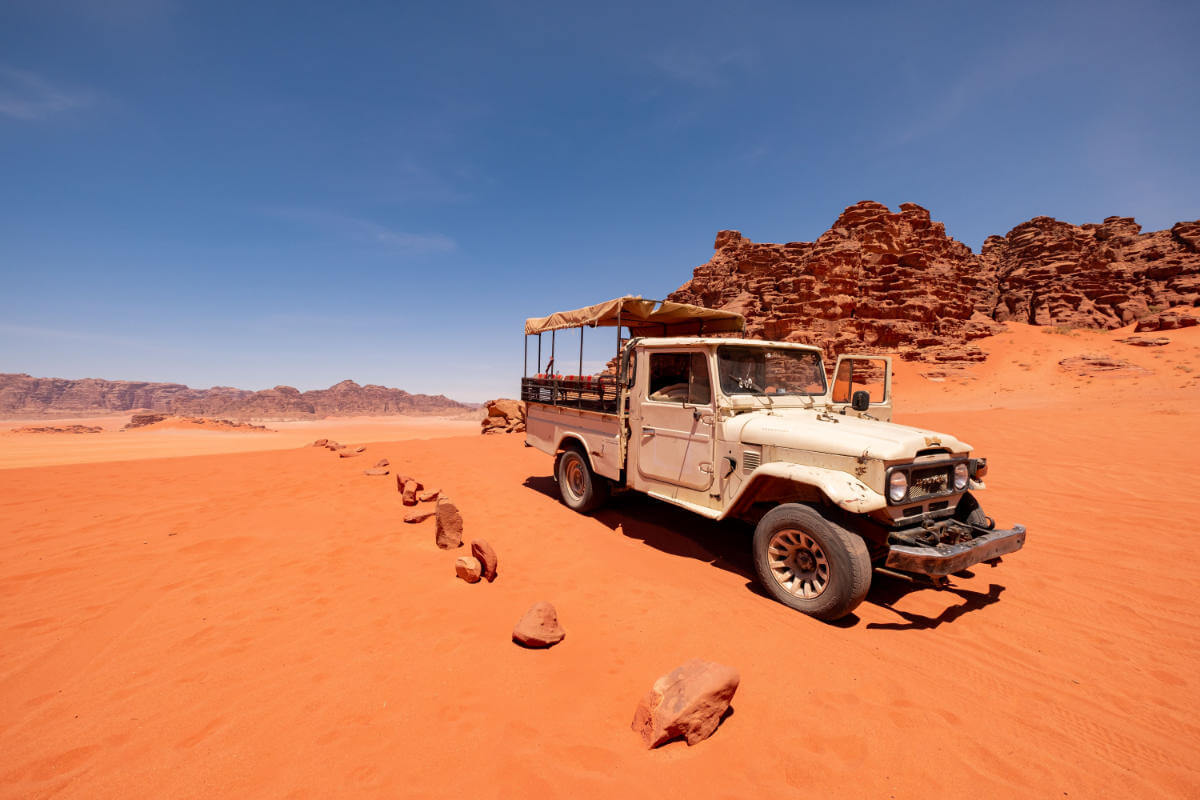
Yes, Wadi Rum sits about 120 km south of Petra, roughly a 1.5–2 hour drive, so the two pair naturally over two or three days. Many visitors do Petra first, then overnight in a Wadi Rum desert camp. From Wadi Rum it's another hour or so to Aqaba on the Red Sea, which makes a logical southern Jordan loop.

Still have questions about Petra?
Ask a booking question through the published contact channels. Replies follow the stated business hours; tour availability, providers, price and inclusions are confirmed in writing.