
Short answer: The main tourist traps to watch for in Turkey are taxi fare disputes, unsolicited bar invitations, unclear restaurant bills, high-pressure shopping, supposed antiquities, unfavorable currency conversion, ATM interference, unofficial guides, and misleading tour or balloon offers. Before paying, confirm the total, currency, provider, and inclusions. Walk away from pressure; a high price alone isn’t proof of a scam.
This advice is especially useful if you’re visiting Istanbul or Cappadocia, where independent sightseeing often sits alongside prebooked activities. The key decision is whether an arrangement is clear and verifiable—not whether a stranger is friendly or a shop is busy. Confirm anything that could disrupt your onward plans, such as a pickup or balloon flight, in writing.
Key Takeaways
- For taxis, confirm the meter or agreed transfer price before setting off; keep the route and driver details available.
- Read menus and bills, ask about extras, and confirm the full cost of food priced by weight before it’s prepared.
- Choose your own bars, shops, and guides rather than following unsolicited recommendations or pressure.
- Keep your card in sight, check the currency on the terminal, and decline help from strangers at ATMs.
- For tours and balloon flights, verify who provides the service, what’s included, and what happens if conditions change.
1. Taxi overcharging, detours, and banknote confusion
A taxi dispute can begin with a driver refusing to use the meter, changing a quoted price after your bags are loaded, or claiming you handed over a smaller banknote. These situations can be more stressful when you’re tired, unfamiliar with the route, or leaving a major transport hub.
For a metered ride, ask whether the meter will be used and check that it starts. An app estimate isn’t necessarily a fixed fare. Ask how tolls or other legitimate charges are handled. Traffic, one-way streets, and road closures can affect both the route and total, so a detour isn’t automatically evidence of dishonesty.
Follow the broad route on your phone, and ask calmly if something seems wrong. If you feel unsafe, request a stop in a safe, public place instead of arguing in a moving vehicle. When paying cash, state the denomination as you hand it over and wait for your change.
For a prebooked transfer, save the agreed price, meeting point, and coordinator’s contact details. If a driver or pickup arrangement doesn’t match your confirmation, check with the booking contact before handing over luggage or paying extra. Don’t rely on a name sign alone to resolve a mismatch.
2. The “Let’s have a drink” bar invitation
A stranger may strike up a conversation and suggest a particular bar. In some reported scams, the bill later includes drinks you didn’t order, charges for other people, or unexplained fees, followed by pressure to pay.
The simplest precaution is to choose your own venue rather than follow someone you’ve just met to a place they insist on. When you visit a bar independently, check prices before ordering, keep your drink in sight, and agree how shared items will be paid for. Don’t leave a card behind the counter unless you understand why it’s needed and how it will be returned.
If a bill is disputed, prioritize getting somewhere safe. Don’t go with anyone to an ATM to settle it. If you’re threatened or prevented from leaving, seek help when you can do so safely; Turkey’s emergency number is 112. Keep receipts and transaction records afterward rather than prolonging a confrontation to gather evidence.
3. Restaurant menu changes and unrequested extras
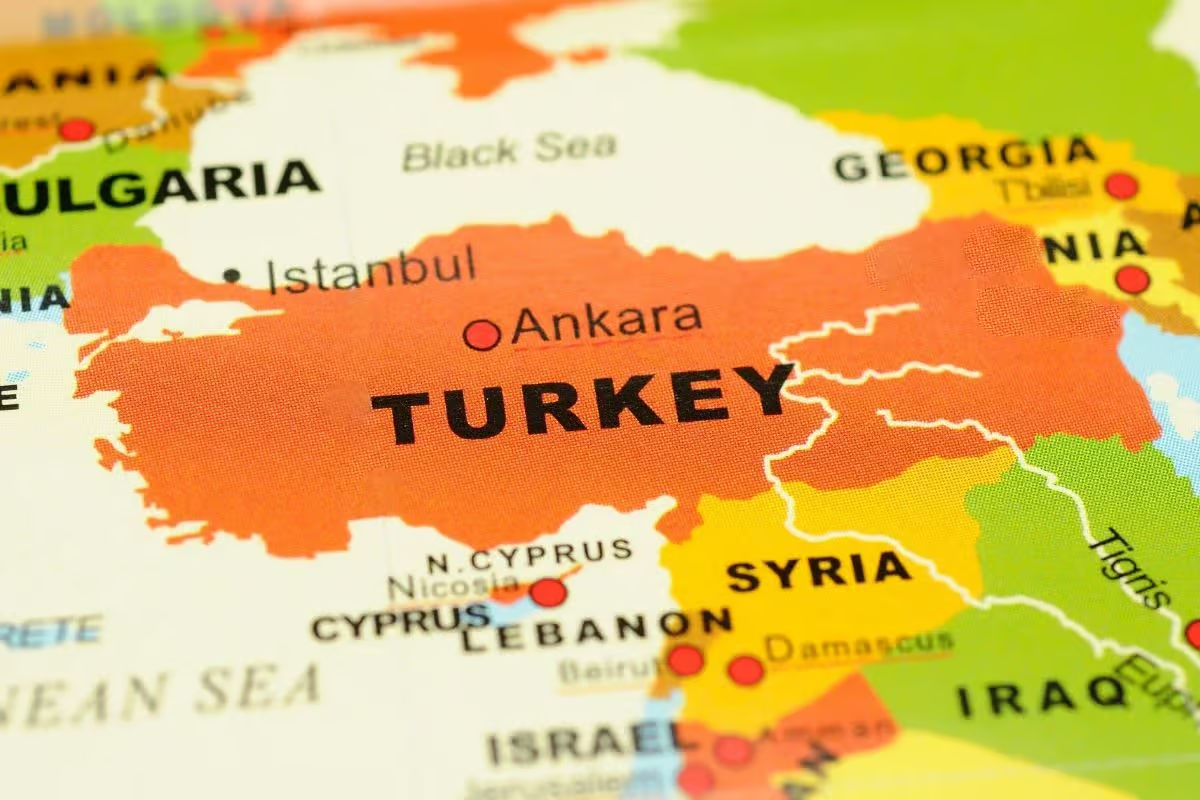
A restaurant with a view of a landmark may charge more than one on a side street. The warning sign isn’t a high price by itself; it’s a charge that wasn’t disclosed or differs from what you agreed to order.
Water, bread, meze, and other items placed on the table aren’t necessarily complimentary. Ask whether they cost extra before accepting them. For fish or meat priced by weight, confirm the unit price, expected portion weight, and approximate total before the kitchen prepares it. A reasonable-looking price per unit can still produce a surprising bill for a large serving.
- Read the priced menu before ordering; photograph it if you want a record.
- Ask whether service charges or other fees will be added.
- Confirm the price of specials, substitutions, and anything without a listed amount.
- Compare the itemized bill with your order before paying.
If something doesn’t match, point to the specific item and ask for an explanation. It may be an error rather than a deliberate charge. If staff won’t explain prices before you order, choose another restaurant.
4. Helpful strangers steering you into shops
Near the Grand Bazaar and Spice Bazaar, unsolicited directions can turn into a detour to a carpet, leather, jewelry, or ceramics shop. Someone may also claim that an attraction is closed and offer to take you somewhere else.
Check a closure with entrance staff or official information, rather than relying on a stranger who is steering you toward a business. A referral or commission arrangement isn’t automatically fraudulent, but you don’t have to follow it. Tea or a product demonstration doesn’t obligate you to buy.
For a substantial purchase, step outside and compare alternatives before deciding. Get the item description, total price, shipping and insurance charges, delivery timing, and return terms in writing. Ask who handles damage or a mismatch after delivery. A low purchase price can become expensive when shipping and potential import charges are included.
A useful boundary: “Thank you, but I’m not buying today.” You don’t owe anyone a negotiation or a detailed explanation.
5. Fake antiquities and “excavation finds”
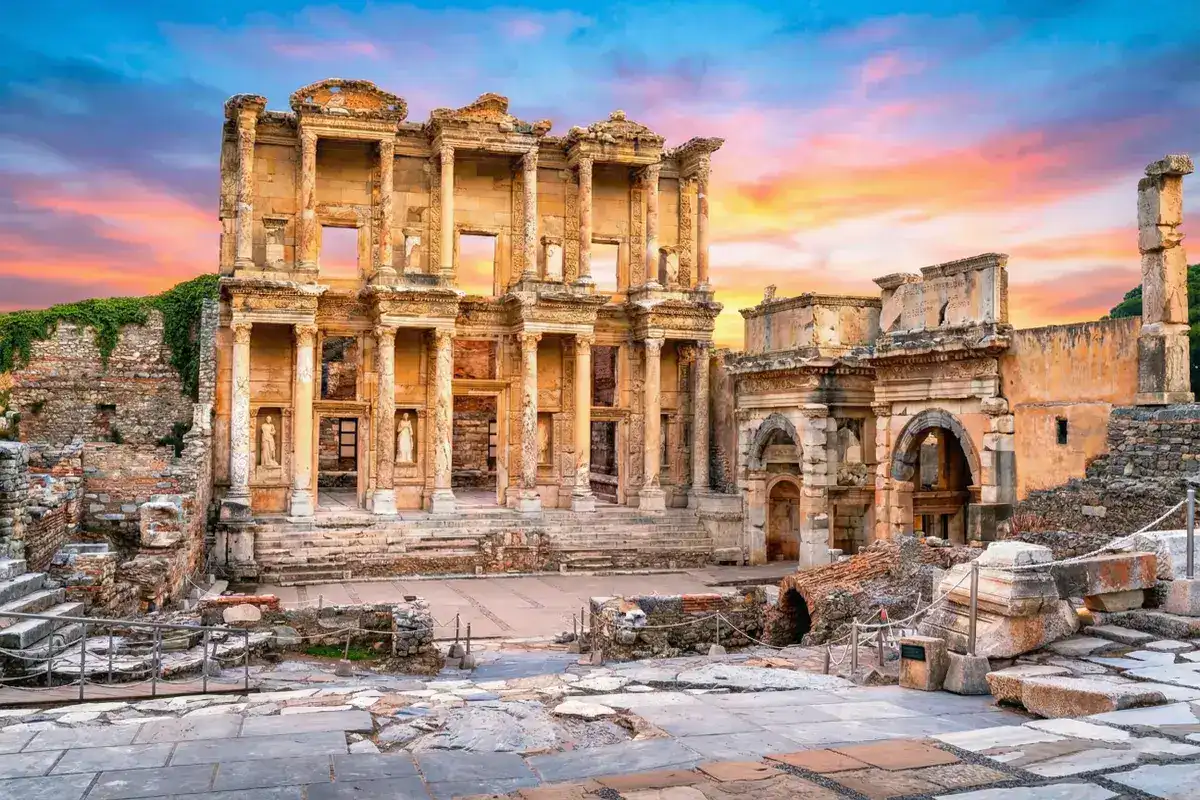
Near archaeological sites such as Ephesus, a seller may offer an “ancient” coin or an object supposedly found nearby. It could be a reproduction sold at an inflated price—or genuine cultural property subject to restrictions.
A receipt or verbal assurance doesn’t prove that an object can legally be exported. Avoid buying supposed excavation finds, and don’t accept advice about hiding an object in your luggage. Small size doesn’t make a legal risk disappear. Contemporary souvenirs from established retailers are a simpler choice. If you’re considering a collectible with possible historical significance, verify the rules before buying, not on departure day.
6. Card terminal errors and currency conversion
Before tapping or entering your PIN, check the amount and currency on the payment terminal. Keep your card in view and request a receipt for significant purchases.
If a merchant says a payment failed, check the terminal result and your banking app before trying again. A pending authorization doesn’t always mean a completed charge. Keep receipts if a second attempt is necessary, and contact your card issuer if duplicate charges settle.
A terminal may offer to convert a Turkish-lira purchase into U.S. dollars or your home currency. This is called dynamic currency conversion. It isn’t automatically fraud, but the offered rate can make a purchase more expensive. For an item priced in lira, choosing lira and declining the terminal’s conversion usually leaves the exchange to your card provider. Your bank may still charge foreign-transaction fees.
For a travel service quoted in U.S. dollars, confirm the billing currency and conversion method before authorizing payment; don’t assume every transaction should be converted to lira. See these Turkey travel tips for other practical payment and transport preparations.
7. Unsolicited help at an ATM
Someone offering to change the ATM language, retrieve a retained card, or explain an error may be trying to see your PIN or distract you. Use a well-lit machine, preferably one operated by a bank and near a branch when practical.
Shield the keypad, stop if someone crowds you, and never reveal your PIN or hand your card to a stranger. If the machine retains your card, freeze it through your banking app if possible and contact your issuer using a known number or the app. Verify the ATM operator through official banking channels rather than trusting a phone number on a sticker.
Read withdrawal fees and conversion offers before accepting. These charges aren’t necessarily scams, but they can make a small withdrawal poor value. Keep a backup card separately in case the first one is retained or compromised.
8. Unofficial guides and “skip-the-line” offers

Outside attractions such as Hagia Sophia Grand Mosque and Topkapi Palace Museum, an immediate guiding offer can sound convenient. Before agreeing, establish who sells the service, who will guide you, and exactly what the price includes.
“Skip the line” may refer only to the ticket-purchase line, not security screening or every entrance queue. Access rules, opening arrangements, and worship schedules can affect a visit. Be skeptical of a promise of unrestricted entry unless the seller explains the limits clearly.
Use official ticket channels or an established booking service that provides written confirmation. Ask whether admission, additional sections, guiding, and transportation are included. A third-party booking service isn’t inherently suspicious; what matters is knowing who holds your reservation, who delivers each service, and whom to contact if plans change.
For broader booking checks, read our advice on how to choose a Turkey tour company.
9. Cappadocia balloon and day-tour pressure
A seller promising a “guaranteed” hot-air-balloon departure deserves scrutiny. Flights depend on weather and aviation authorization; a reservation can’t override a safety decision. Before paying, confirm the operating provider, flight area, pickup arrangements, advertised duration, and inclusions. Ask what happens if the flight is canceled, including whether rebooking is possible, whether it depends on available space, and how any applicable refund is calculated.
A canceled balloon flight is different from voluntarily canceling your whole trip. Allowing more mornings in Cappadocia creates more possible opportunities, but neither a flight nor a rebooking is guaranteed. Don’t assume a canceled ride can move to your departure morning. Check pickup and expected return against hotel checkout, airport transfer, and onward-flight requirements.
For day tours, compare the actual stops rather than relying on a color-coded route name. Verify entrance fees, meals, shopping stops, walking demands, and whether transport is shared or private. If an itinerary includes a Cappadocia underground city, ask about stairs and narrow passages if you have mobility concerns or claustrophobia.
What Should You Arrange Before You Arrive?
Prebooking is most useful when uncertainty could disrupt the next part of your trip. You can leave markets and casual meals flexible while confirming time-sensitive activities, transfers, and intercity connections. The right format depends on how much planning you want to handle yourself.
| Option | Best fit | Trade-off and checks |
|---|---|---|
| Independent sightseeing | Travelers comfortable arranging tickets and local transport. | Offers flexibility, but you manage queues, connections, and changes. Verify entry arrangements and a backup transport option. |
| Scheduled group tour | Visitors who want organized sightseeing at a shared-tour price. | Follows a set timetable and may use shared pickups. Check pickup coverage, entrances, meals, shopping stops, and free time. |
| Private tour | Families or couples who need a more adaptable pace. | Usually costs more. Confirm which services are private and how much route flexibility is included. |
| Overnight-bus package | Budget-conscious travelers comfortable sleeping on a bus. | Count travel nights separately from sightseeing days. Check hotel nights, luggage arrangements, and arrival-day logistics. |
Compare the full cost, not just the headline price: flights, transfers, admission, meals, and balloon flights can change the total. Our group-versus-private tour comparison explains the pacing trade-offs.
One Nation Travel is a TÜRSAB Class A travel agency (A-6073) that handles planning, booking, customer support, and coordination. Experienced local guides, drivers, and selected local providers deliver listed services; assignments may vary by destination, day, or tour segment. For cancellation or date changes, notice must be given at least 5 days before the tour starts; non-refundable flight and bus ticket costs are deducted from the paid balance; with less than 5 days notice, or for a no-show, the full payment is non-refundable.
Check the individual booking details for the exact itinerary, inclusions, and arrangements that apply to your dates.
Choose your next step
Recommended Turkey tours
These verified options are the closest available matches for this article’s destination, route intent, and trip length.

2-Day Cappadocia Adventure with Sunrise Hot Air Balloon Ride
A 2 days Historical & Cultural Tour route covering Cappadocia.
View tour details →
3-Day Cappadocia & Konya Tour from Istanbul
A 3 days Historical & Cultural Tour route covering Cappadocia, Konya and 1 more destination.
View tour details →
2-Day Cappadocia Tour from Istanbul by Plane with Hot Air Balloon
A 2 days Historical & Cultural Tour route covering Cappadocia, Istanbul.
View tour details →
4-Day Cappadocia Tour from Istanbul by Bus (1 Night Hotel, 2 Nights Bus)
A 2 days Historical & Cultural Tour route covering Cappadocia, Istanbul.
View tour details →Questions Travelers Often Ask
What should I do after a suspicious card charge?
Save the receipt, booking confirmation, messages, and screenshots showing the agreed price. Contact your card issuer promptly and explain whether you suspect an unauthorized transaction or dispute a service. Freeze the card immediately if its details may be compromised. A refund or charge reversal isn’t guaranteed.
How can I check an unexpected tour pickup?
Contact the agency through the number or messaging details on your original confirmation. Ask the coordinator to verify the driver, vehicle, and change before handing over luggage, paying extra, or going elsewhere.
Are expensive services automatically scams?
No. Prices can vary by location, service level, season, and what’s included. The better warning signs are a changed price, unexplained fees, pressure, refusal to provide written terms, or an unclear provider.
Stay alert without spending your trip worried
Before committing money, identify the provider, confirm the total and currency, and make sure you understand what’s included. Walk away from pressure, not from every friendly conversation. Written arrangements make it easier to resolve mismatches, but use the same judgment when eating out, shopping, and arranging independent transport.
If you’d rather have key logistics coordinated before departure, plan your Turkey trip with One Nation Travel. Share your dates, priorities, and preferred pace so the team can help coordinate suitable arrangements with selected local providers.