
The practical answer: Yes, you can enjoy the water at Pamukkale, but not everywhere. Visitors may wade barefoot in designated shallow sections of the white travertines. For a proper swim, the main option is Cleopatra’s Antique Pool, a separate thermal pool within the ancient Hierapolis area. Protected terraces are for walking and viewing, not swimming or climbing freely.
Pamukkale can be confusing on arrival because the photos suggest an enormous natural swimming complex. In reality, access is carefully managed to protect the mineral formations. The key decision is simple: if swimming is a priority, allow time and budget for Cleopatra’s Pool; if you mainly want the white terraces, a barefoot wade and a walk through Hierapolis may be enough.
What to Know Before You Go
- You can wade barefoot in designated shallow travertine channels, but full swimming on the white terraces is not allowed.
- Cleopatra’s Antique Pool is the main place for a full thermal swim and usually requires a separate admission payment beyond site entry.
- Bring swimwear, a towel, sun protection, and a small bag for your shoes; shoes are removed on the travertines.
- Early morning and late afternoon are generally more comfortable for photos, heat, and crowd levels than midday.
- Give Pamukkale and Hierapolis at least half a day if you want to walk the ruins and swim without rushing.
- Confirm current entry fees, pool availability, and seasonal hours shortly before travel, as site operations and Turkish-lira prices can change.
Where Can You Swim in Pamukkale?
Cleopatra’s Antique Pool: the real swimming option
Cleopatra’s Pool, also called the Antique Pool, is where travelers can properly swim in warm mineral water. It sits near the archaeological remains of Hierapolis and is known for its submerged stone fragments and columns. The water is comfortably warm rather than hot, and the pool has both shallower edges and deeper areas.
It is a memorable stop for travelers who enjoy swimming, thermal baths, or Roman-era history. It is less appealing for anyone who dislikes crowded pools, is pressed for time, or simply wants to concentrate on the terraces and ruins. The pool can get busy in the middle of the day, particularly when larger day tours arrive.
Pool admission is typically separate from the main Pamukkale and Hierapolis entrance. Exact prices, opening times, locker arrangements, and access rules can change, so verify them at the official entrance or with your tour coordinator before committing to a swim.
The shallow travertine channels
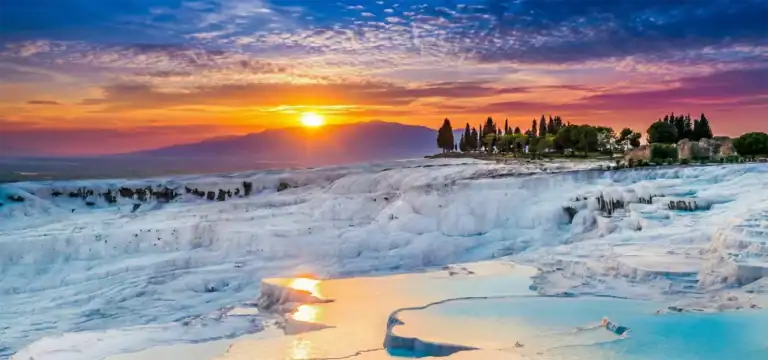
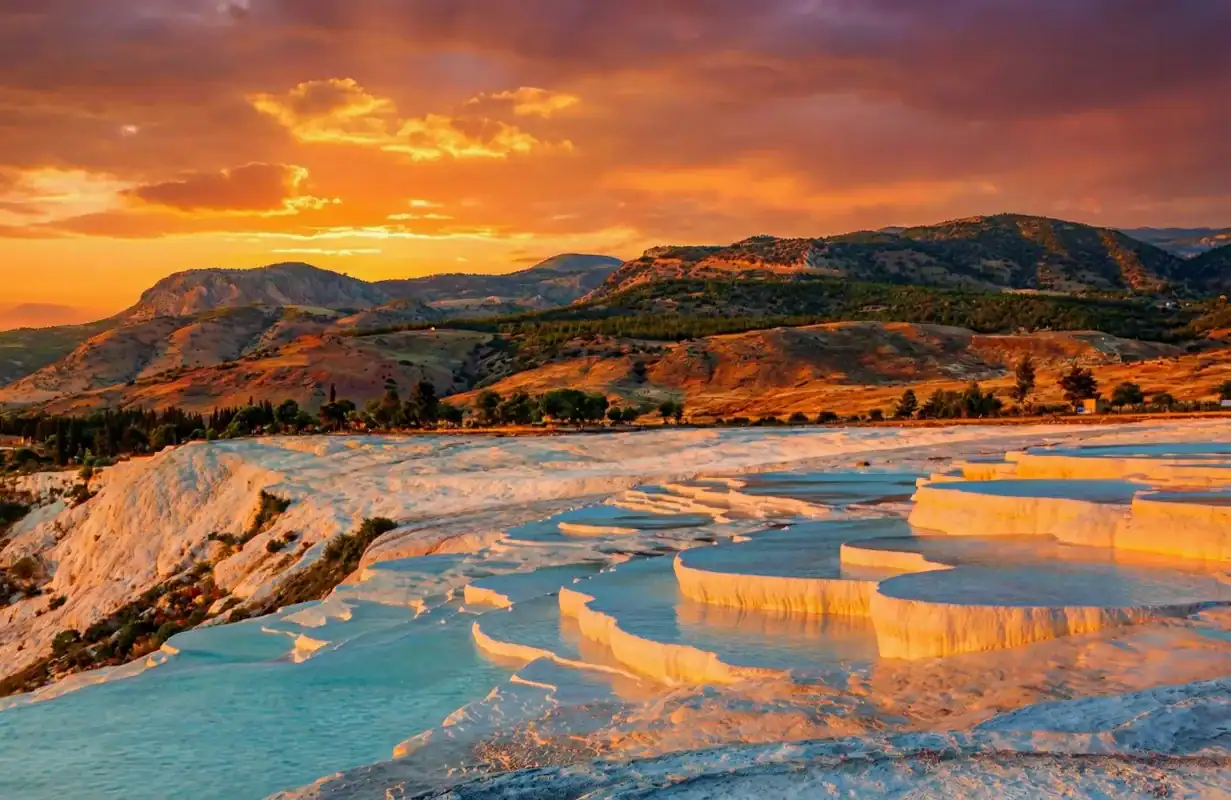
The famous white slopes are formed by mineral-rich thermal water depositing calcium over thousands of years. In some designated areas, visitors can walk barefoot through shallow flowing water or stand in small pools. This is wading, not swimming: the water is generally ankle- to knee-deep, and access may shift as conservation teams rotate wet and dry sections.
The best approach is to enjoy the water where it is permitted, take your photos, and keep moving slowly. The surface can be smooth, uneven, and slippery in places. Never assume every pool in a photograph is open for entry; barriers and signs on site always take priority.
Protected areas are not bathing areas
Much of the travertine landscape is protected because the mineral surface is fragile. Swimming, jumping, using inflatable items, or walking outside marked routes can damage the formations and may lead to intervention by site staff. The rules are there for a reason: Pamukkale’s white appearance depends on the flow of mineral water and careful visitor management.
What Is Pamukkale, and Why Is the Water So Special?
Pamukkale means “Cotton Castle” in Turkish. Its bright white terraces appear like frozen cascades, but they are made of travertine, a mineral deposited by thermal spring water. Above the slopes is ancient Hierapolis, once a major Greco-Roman spa settlement where visitors came to bathe, recover, trade, and worship.
The combination of geology and archaeology is what makes the site more than a photo stop. Allow time to see the ancient streets, baths, theater, and the extensive Necropolis of Hierapolis. Travelers who only walk the lower terraces often miss how much of the experience is on the plateau above them.
For a deeper look at the area’s thermal-water experience, see The Ultimate Pamukkale Hot Springs Guide.
Is It Safe to Swim and Walk at Pamukkale?
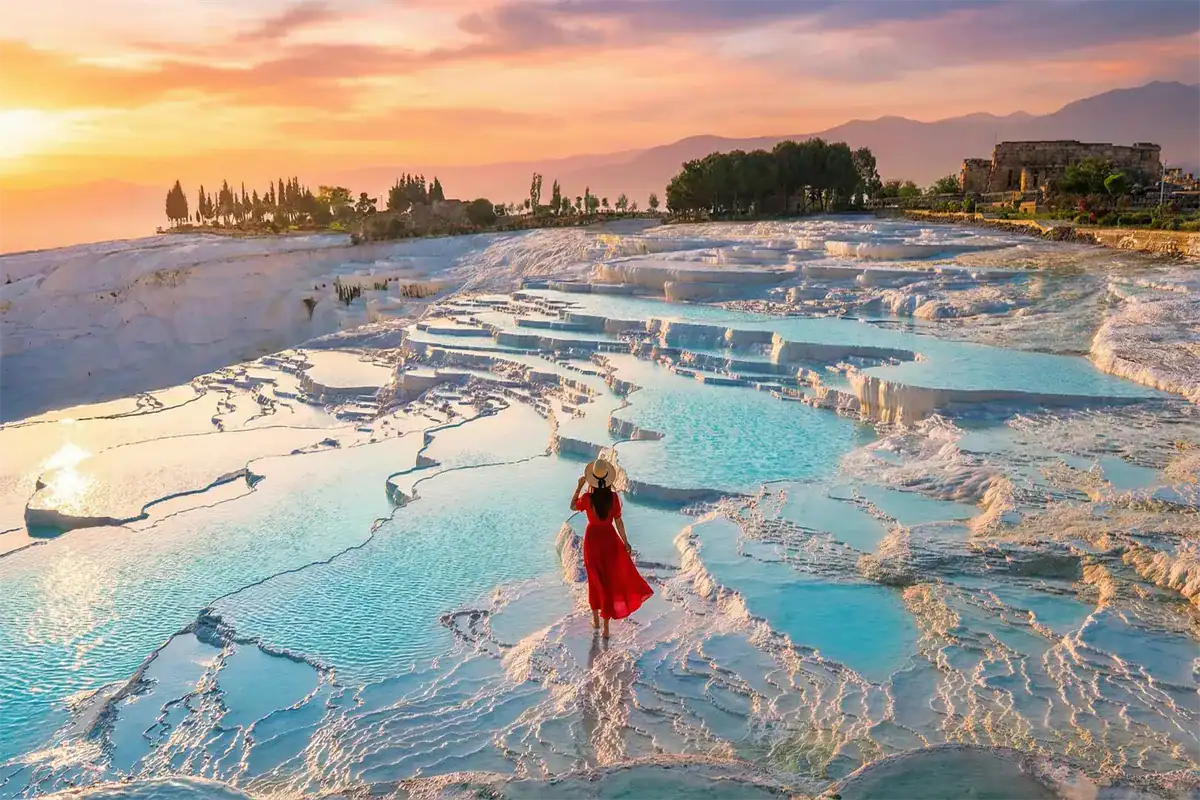
For most healthy travelers, wading and swimming are straightforward when approached sensibly. The bigger issue is not the water itself but the footing. Travertine can be slick, and Cleopatra’s Pool has uneven submerged surfaces. Move slowly, avoid running, and be particularly attentive if you are carrying a phone, camera, or child.
- Walk flat-footed: Wet travertine can be surprisingly slippery, especially on slopes and polished-looking sections.
- Watch the underwater footing: Cleopatra’s Pool has uneven stone surfaces and deeper areas.
- Keep children close: The shallow terrace water is easy to enjoy, but the antique pool requires active supervision.
- Limit heat exposure: Drink water, take breaks in shade, and do not stay in warm water longer than feels comfortable.
- Use your own medical judgment: Travelers who are pregnant, prone to overheating, or managing heart or circulation conditions should ask a medical professional for personal advice before using thermal pools.
Practical tip: Pamukkale’s white surface reflects strong sunlight. A hat, sunglasses, and sunscreen matter even on days that do not feel especially hot.
What Should You Wear and Pack?
Wear clothing that is easy to change out of and bring a swimsuit if Cleopatra’s Pool is on your list. Travelers who arrive already wearing swimwear under their clothes save time, especially on a tightly scheduled day trip.
- Swimsuit and a lightweight towel
- Flip-flops or slip-on shoes for paths outside the travertines
- A small tote or day bag to carry your shoes while barefoot
- Sun protection and drinking water
- A change of dry clothes for the return journey
- A waterproof pouch or dry bag for your phone and valuables
Shoes must be removed on the white travertines. Do not plan on wearing water shoes there, even if you would normally use them for rocky or wet surfaces. The barefoot requirement helps protect the mineral deposits from dirt, abrasion, and damage.
When Is the Best Time to Visit Pamukkale?
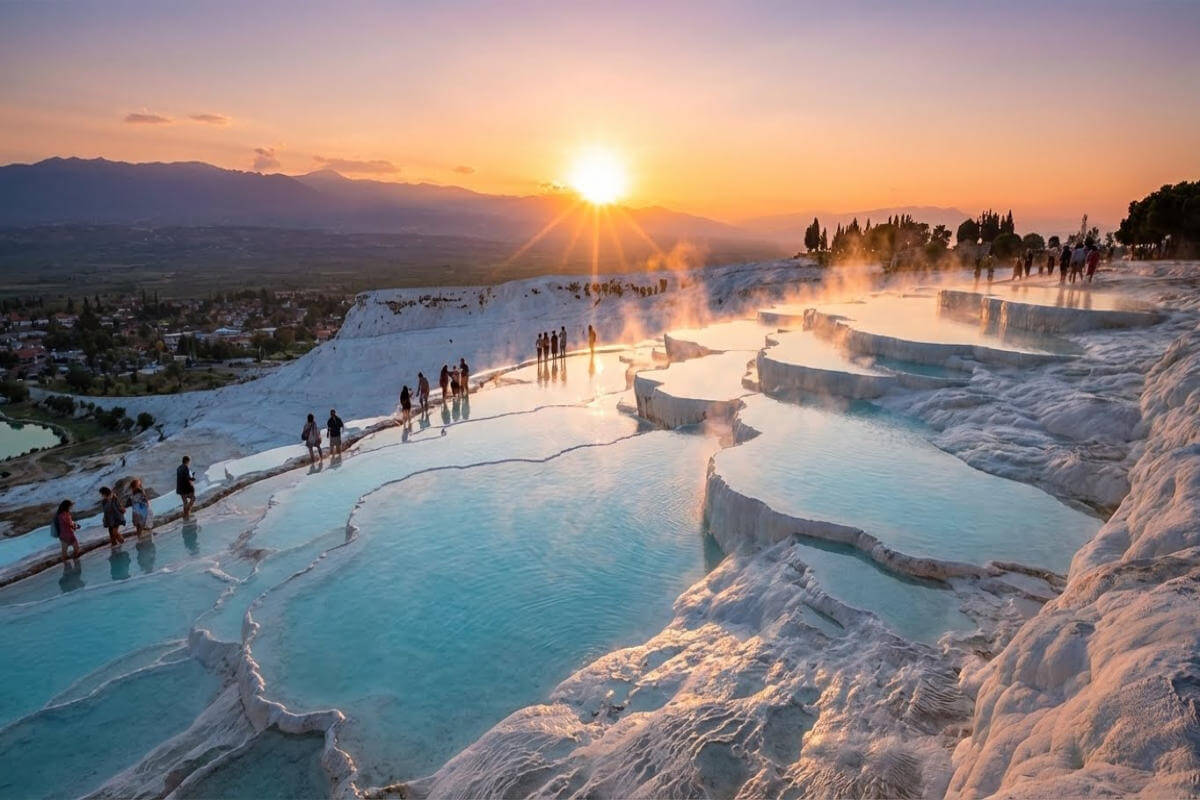
Spring and fall are usually the easiest seasons for balancing comfortable walking weather with daylight and site access. Summer brings longer days but also stronger heat, glare from the white ground, and busier midday conditions. Winter can be atmospheric, particularly around thermal water, but cooler temperatures mean you will want warm layers for after swimming.
For the best balance of space and light, aim for early morning or later afternoon. The exact opening hours vary by season, so do not build a travel day around a fixed online time without checking close to departure.
| Timing choice | Best for | What to consider |
|---|---|---|
| Early morning | Cooler walking, quieter photos, swimming before crowds build | Requires an overnight stay nearby or an early arrival plan |
| Midday | Most convenient for standard group routes | More heat, glare, and potentially heavier visitor traffic |
| Late afternoon | Softer light and a slower terrace walk | Leave enough time for Hierapolis and check closing hours |
| Winter visit | Cool-weather thermal swimming and fewer visitors | Shorter daylight and weather-sensitive travel plans |
If you are visiting Turkey in autumn, our Turkey weather in October guide can help with broader packing and route decisions.
How Much Does It Cost to Swim in Pamukkale?
There are usually two costs to consider: the main admission for Pamukkale and Hierapolis, and an additional charge if you want to enter Cleopatra’s Pool. Prices are set locally in Turkish lira and can change, so it is better to treat old dollar, USD, or social-media figures as rough reference points rather than a booking budget.
Before travel, confirm:
- Current Pamukkale and Hierapolis admission pricing
- Whether Cleopatra’s Pool has a separate swim or entry charge
- Whether your chosen tour includes site admission, pool admission, or neither
- Accepted payment methods at the pool and entrance gates
- Seasonal opening hours and the final entry time
It is also worth separating “included transportation” from “included admissions” when comparing tours. A lower advertised starting price can still leave you paying entrance fees, optional pool access, meals, or personal expenses separately.
Should You Visit Independently or Choose a Planned Day Trip?
Your best choice depends on where you are starting, how much time you have, and whether swimming is the main goal. Pamukkale is easy to appreciate independently if you are already staying nearby and can arrive early. It becomes more complicated when you are trying to fit flights, airport transfers, site entry, and return travel into one day from Istanbul or another distant city.
Independent visit: best for flexible travelers nearby
Independent travel works well if you are staying in Pamukkale, Denizli, Selçuk, Kuşadası, or another nearby stop with enough time to move at your own pace. You can prioritize the pool, spend longer in Hierapolis, and leave when you are ready. The trade-off is that you manage transfers, tickets, timing, and any last-mile transport yourself.
Day trip: best when logistics matter more than flexibility
A planned day trip is useful for travelers who want transport coordination and a clear schedule, particularly from Istanbul or Izmir. The Pamukkale Day Trip from Istanbul is listed from USD 385 and lasts 16 hours, which makes it a practical but long travel day. From the Aegean coast, the Pamukkale Day Trip from Izmir is listed from USD 160 and lasts 12 hours.
Multi-day route: best for combining Pamukkale with major sights
Pairing Pamukkale with Ephesus often makes more sense than returning to Istanbul immediately after a short visit. Travelers moving from Antalya can also consider the 4-Day Pamukkale and Cappadocia Tour from Antalya, listed from USD 570. Those continuing from Cappadocia toward western Turkey may prefer the Pamukkale and Ephesus route from Cappadocia, listed from USD 360 and involving overnight local bus travel.
Before booking, verify the precise pickup point, hotel nights, transport type, admission inclusions, pool time, and whether the day’s sequence leaves enough time for swimming. Starting prices may change, and Cleopatra’s Pool access should not be assumed unless it is specifically listed.
For route planning from Istanbul, read How to Get to Pamukkale from Istanbul. Travelers building a wider itinerary may also find the 7-day Turkey itinerary useful for deciding whether Pamukkale deserves an overnight stop.
Choose your next step
Recommended Pamukkale tours
These verified options are the closest available matches for this article’s destination, route intent, and trip length.

Pamukkale Day Trip from Istanbul
A 16 hours Day Trips from Istanbul route covering Pamukkale, Istanbul.
View tour details →
Pamukkale Day Trip from Izmir
A 12 hours Cultural & Heritage Tour route covering Pamukkale, Izmir.
View tour details →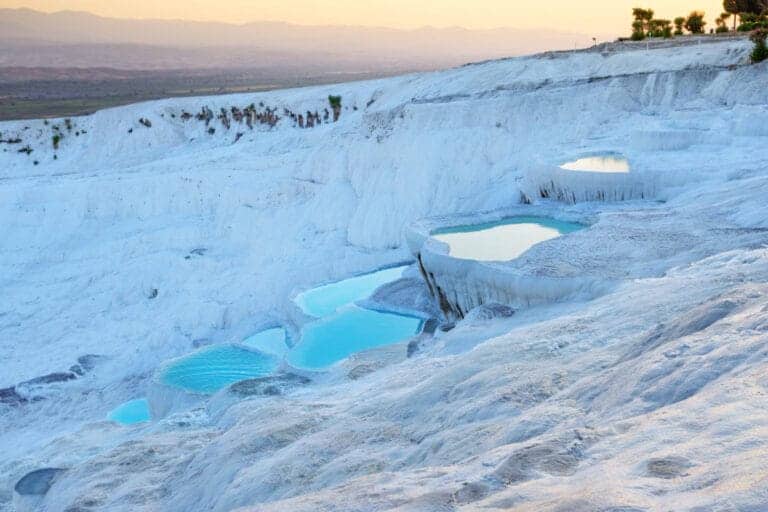
4-Day Pamukkale and Cappadocia Tour from Antalya
A 4 days Cultural & Heritage Tour route covering Pamukkale, Cappadocia and 1 more destination.
View tour details →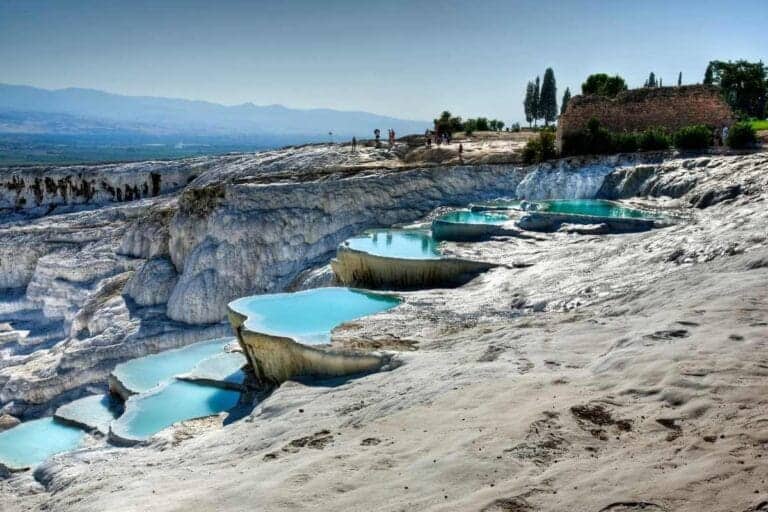
2-Day Pamukkale & Ephesus Tour from Cappadocia (With Overnight Local Bus)
A 3 days Cultural & Heritage Tour route covering Pamukkale, Ephesus and 1 more destination.
View tour details →Common Pamukkale Swimming Questions
Can you swim in the white terraces at Pamukkale?
No. You may wade barefoot in designated shallow sections, but swimming in the travertine terraces is not permitted. For a full swim, use Cleopatra’s Antique Pool.
Is Cleopatra’s Pool worth paying extra for?
It is usually worth it if you enjoy swimming and have enough time. The combination of warm mineral water and ancient submerged remains is distinctive. Skip it if you are on a rushed schedule or prefer to spend your visit walking Hierapolis.
How long should I allow for Pamukkale?
Plan on at least three to four hours for the terraces, Hierapolis, and a swim. Half a day is more comfortable, especially if you want lunch, photos, or time at Cleopatra’s Pool.
Can you visit Pamukkale with children?
Yes. Children often enjoy the shallow water, but adults should stay close on slippery travertines and around the deeper parts of Cleopatra’s Pool.
Make Time for the Water and the Ruins
Pamukkale is best treated as both a natural landmark and an ancient spa city. Walk the designated terraces barefoot, give yourself time for Hierapolis, and add Cleopatra’s Pool if a thermal swim is part of the experience you want. Trying to squeeze everything into a rushed stop is the most common planning mistake.
If you would like help matching Pamukkale with Istanbul, Ephesus, Antalya, or Cappadocia without losing days to awkward transfers, share your dates and travel priorities through Plan My Trip. One Nation Travel can help coordinate a route that suits your pace and the parts of Turkey you most want to see.