
Ephesus is one of the best-preserved ancient cities in the Mediterranean, offering travelers a direct window into Greco-Roman life. To truly experience this UNESCO World Heritage site, visitors should prioritize the Library of Celsus, the massive Great Theatre, and the spiritual House of Virgin Mary, ideally visiting between April and May or September and October for milder weather. A standard visit requires at least 2-3 hours of walking through the marble streets to fully appreciate the architectural mastery and historical significance.

Introduction: Walking Through History
Imagine walking the same marble streets where Mark Antony and Cleopatra once strolled—welcome to Ephesus, the ancient world’s best-kept time capsule. Located near Selçuk in modern-day Turkey, Ephesus was once a bustling trade center and a pivotal city for early Christianity.
Based on One Nation Travel’s years of operating tours in the Aegean region, we know that Ephesus isn’t just a collection of old stones; it is an immersive experience. From the intricate mosaics of the wealthy elite to the acoustic marvels of its theater, every corner tells a story. Whether you are a history buff or a casual traveler, this guide covers the essential stops you simply cannot miss.
The 7 Must-See Ruins of Ephesus
1. The Library of Celsus
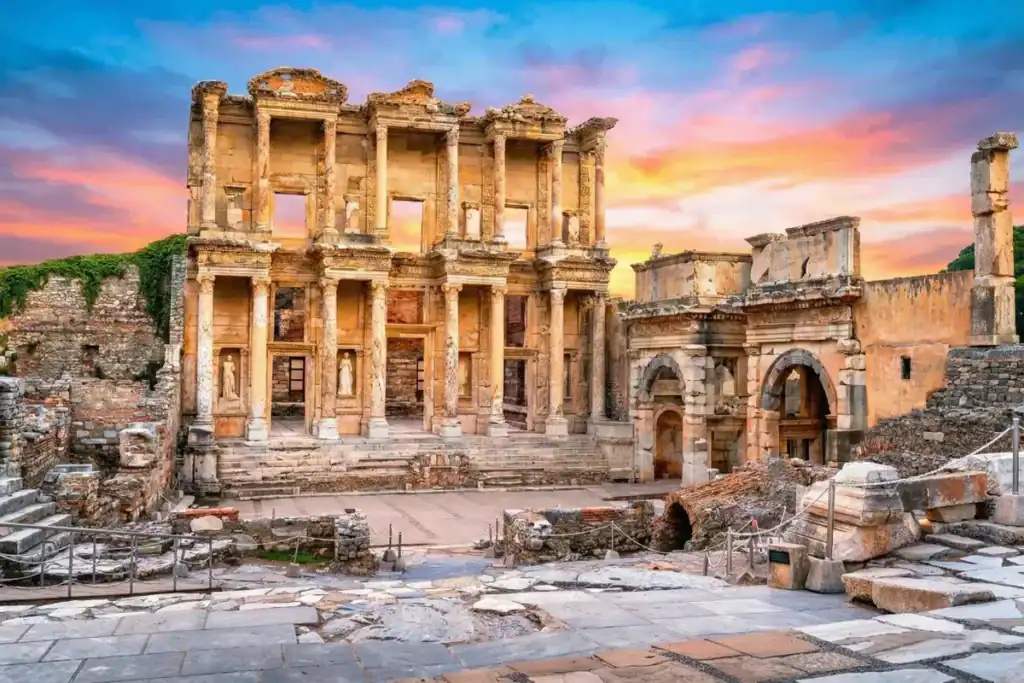
Undoubtedly the most iconic structure in Ephesus, the Library of Celsus stands as a testament to the city’s intellectual wealth. Built in the 2nd century AD to honor the senator Tiberius Julius Celsus Polemaeanus, its double-walled facade was designed to preserve over 12,000 scrolls from temperature extremes.
- Pro Tip: The facade faces east, making the morning light perfect for photography.
2. The Great Theatre
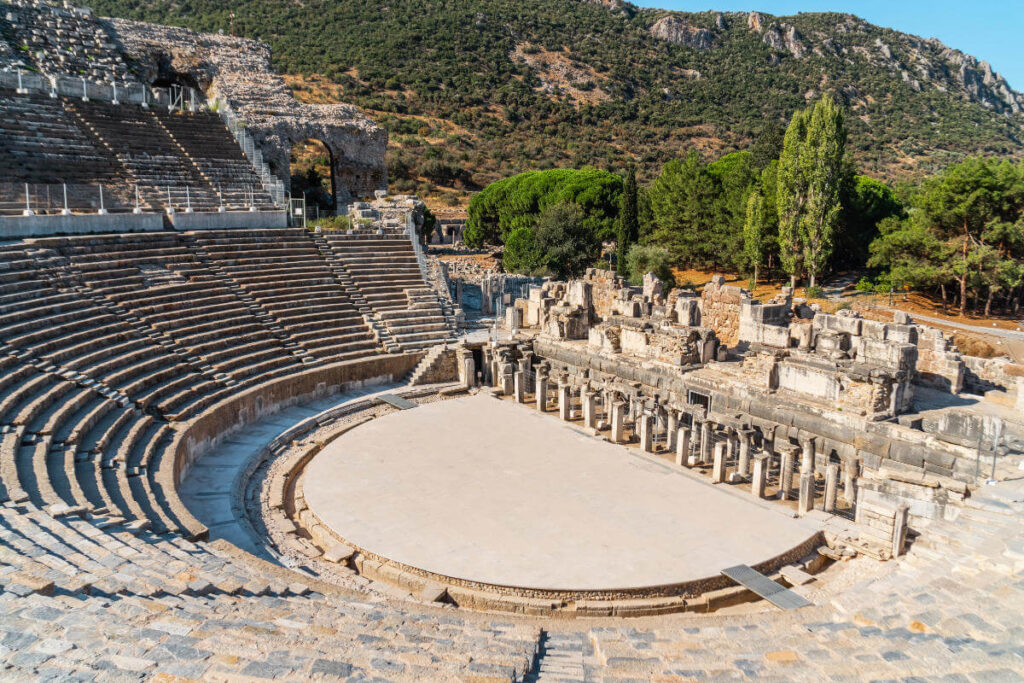
Carved into the slope of Panayir Hill, this colossal theatre could seat 25,000 spectators. It was the stage for gladiator fights, plays, and significant political and religious discussions, including the preaching of St. Paul against the cult of Artemis.
- Capacity: 25,000 people
- Key Feature: Exceptional acoustics that still function today.
3. The Terrace Houses
Often called “the houses of the rich,” these covered excavations reveal how the Ephesian elite lived. The Terrace Houses feature incredibly preserved wall frescoes and floor mosaics, along with advanced heating systems (hypocausts) that rival modern technology. Note that this section usually requires a separate entry ticket, but our expert guides highly recommend it.
4. The Temple of Artemis
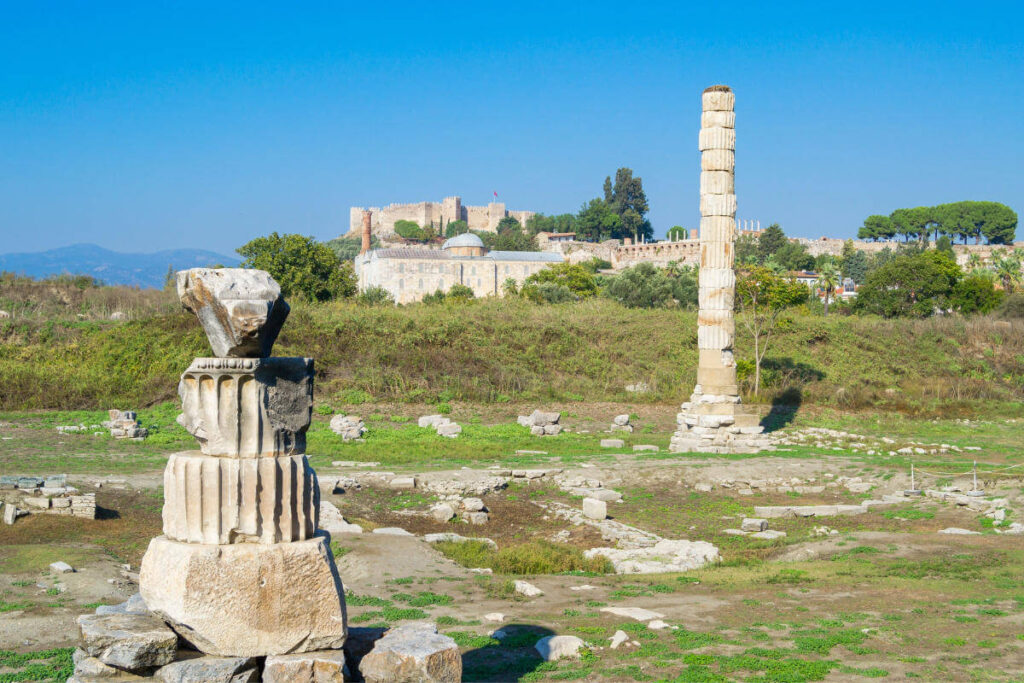
Although only a single column remains standing today, the Temple of Artemis was once one of the Seven Wonders of the Ancient World. It was a massive structure, four times larger than the Parthenon in Athens, dedicated to the goddess of the hunt and wild nature.
5. The Temple of Hadrian
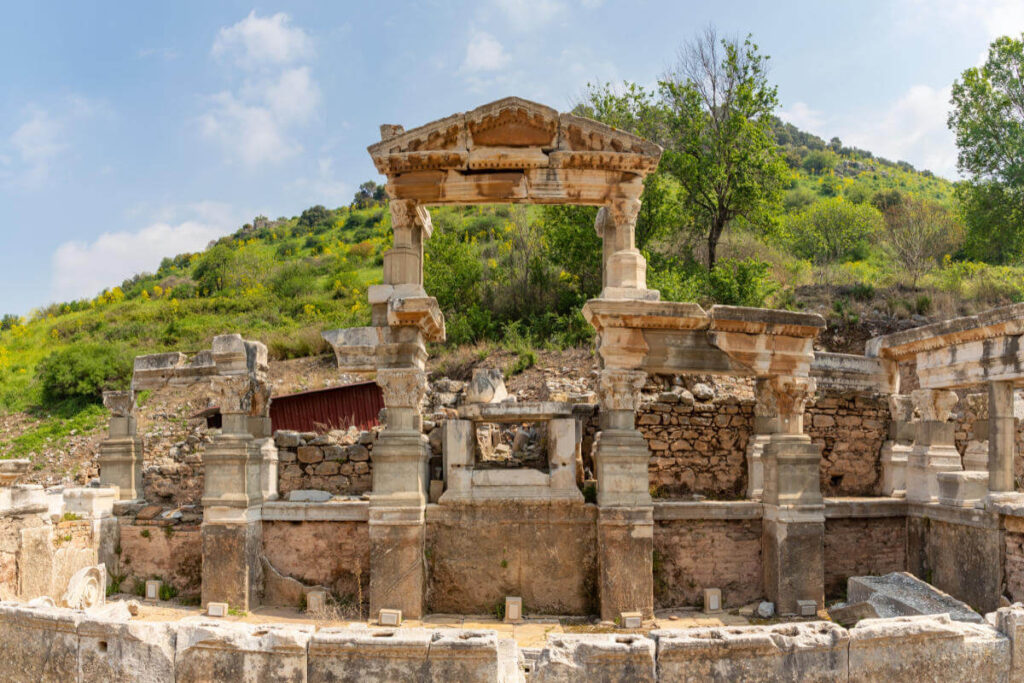
This small but stunning temple on Curetes Street is famous for its intricate reliefs. The archway features the head of Tyche (goddess of fortune) and Medusa, meant to ward off evil spirits. It remains one of the most photogenic spots on the main thoroughfare.
6. The House of Virgin Mary
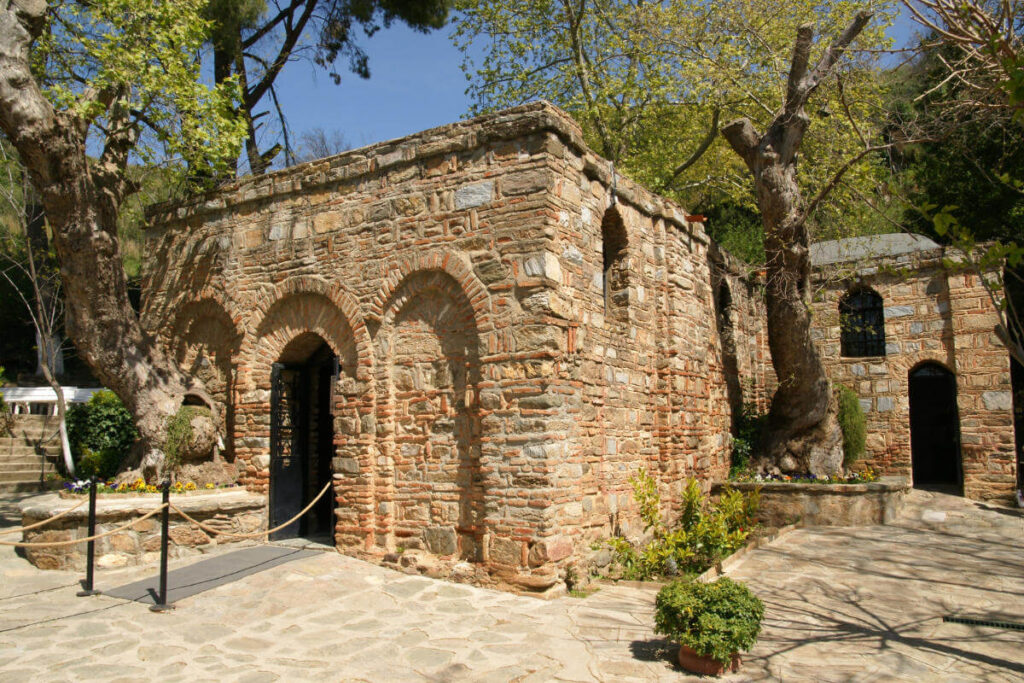
Located on Mt. Koressos, high above the ruins of Ephesus, the House of Virgin Mary is believed to be the final residence of Mary, the mother of Jesus. It is a site of pilgrimage for both Christians and Muslims and offers a serene, spiritual atmosphere distinct from the bustling city ruins below.
7. The Basilica of St. John
While technically outside the main archaeological site in nearby Selçuk, this basilica is integral to Ephesus’s history. Built by Emperor Justinian over the believed burial site of St. John the Apostle, it was once one of the largest cathedrals in the Byzantine Empire.
Practical Information for Visitors
- Best Time to Visit: Spring (April-May) and Autumn (September-October) offer comfortable temperatures. Summer can be extremely hot with little shade.
- What to Wear: Comfortable walking shoes are non-negotiable as the marble streets are slippery and uneven. A hat and sunscreen are essential.
- Getting There: Most travelers base themselves in Kusadasi or Izmir. One Nation Travel provides seamless transfers and guided options from these hubs.
Ephesus vs. Hierapolis (Pamukkale): A Quick Comparison
| Feature | Ephesus | Hierapolis (Pamukkale) |
| Main Draw | Urban ruins, Library, Biblical history | Thermal pools, Necropolis, Theatre |
| Walking Required | High (Marble streets) | Moderate (Travertines & Ruins) |
| Best For | History & Architecture buffs | Nature & Spa lovers |
| Vibe | Bustling Ancient City | Relaxing Natural Wonder |
Top Recommended Turkey Tours
3-Day Gallipoli, Troy, and Ephesus Tour from Istanbul
Perfect for history enthusiasts, this tour connects the legendary battlefields of WWI Gallipoli and the mythological city of Troy with the Roman grandeur of Ephesus. You will traverse the Aegean coast, exploring three distinct eras of history in one seamless journey, including transportation and guided sightseeing. Explore Ancient Legends and Book
4-Day Cappadocia & Ephesus Tour from Istanbul with Flights
Combine Turkey’s two most iconic destinations in one efficient trip. This package utilizes domestic flights to maximize your time, allowing you to wander the marble streets of Ephesus one day and marvel at the fairy chimneys of Cappadocia the next. It includes airport transfers, flights, and expert guides. View Flight Inclusive Package
4-Day Gallipoli, Troy, Pergamon, Pamukkale & Ephesus Tour
This comprehensive Aegean loop is designed for travelers who want to see it all. Beyond Ephesus, you will visit the healing center of Pergamon and the white travertines of Pamukkale. It’s an intensive 4-day adventure that covers the most significant archaeological sites in Western Turkey. See Full Itinerary and Book
5-Day Pamukkale, Ephesus, and Cappadocia Tour
Experience the “Golden Triangle” of Turkish tourism. This 5-day itinerary offers a relaxed pace to explore the white terraces of Pamukkale, the ancient ruins of Ephesus, and the magical landscapes of Cappadocia. With flights included, this is our top recommendation for first-time visitors seeking a complete experience. Plan Your 5-Day Adventure
Frequently Asked Questions (FAQ)
How much time do I need to visit Ephesus?
You should plan to spend at least 2 to 3 hours inside the ancient city. This allows enough time to walk from the upper gate to the lower gate and see the major highlights without rushing.
Is the House of Virgin Mary included in the Ephesus ticket?
No, the House of Virgin Mary is a separate site located a few kilometers away and requires a separate entry fee. Most guided tours, however, include visits to both sites in their itinerary.
Can I visit Ephesus on a day trip from Istanbul?
Yes, it is very easy to visit Ephesus on a day trip from Istanbul via a short 1-hour flight to Izmir. One Nation Travel organizes daily tours that include flights, airport transfers, and guided sightseeing for a hassle-free experience.
Is Ephesus accessible for wheelchairs or strollers?
Ephesus is partially accessible, but the original marble streets are uneven, slippery, and hilly. Visitors with mobility issues can access the lower part of the city near the Great Theatre, but traversing the entire site from the upper gate is difficult.
Do I need a tour guide for Ephesus?
While you can walk through alone, hiring a guide is highly recommended to understand the context of the ruins. Without a guide, you might miss the fascinating details of the Terrace Houses, the latrines, and the historical significance of the Library.
Conclusion
Ephesus is more than just a tourist destination; it is a journey into the foundations of Western civilization. Whether you are marveling at the Library of Celsus or feeling the spiritual peace at the House of Virgin Mary, a trip here is unforgettable.
Ready to walk through history? Let us handle the logistics so you can focus on the experience. Explore our Turkey Tour Packages and book your adventure today.