Menu
Travel Guide · FAQ

Frequently Asked Questions About Pamukkale

Plan a visit to Pamukkale’s white travertines and the ancient city of Hierapolis near Denizli. These answers explain entrances, tickets, the Antique Pool, travel time and how to fit the site into a Turkey itinerary.

21 questions answered Updated September 2026 Prepared by travel specialists
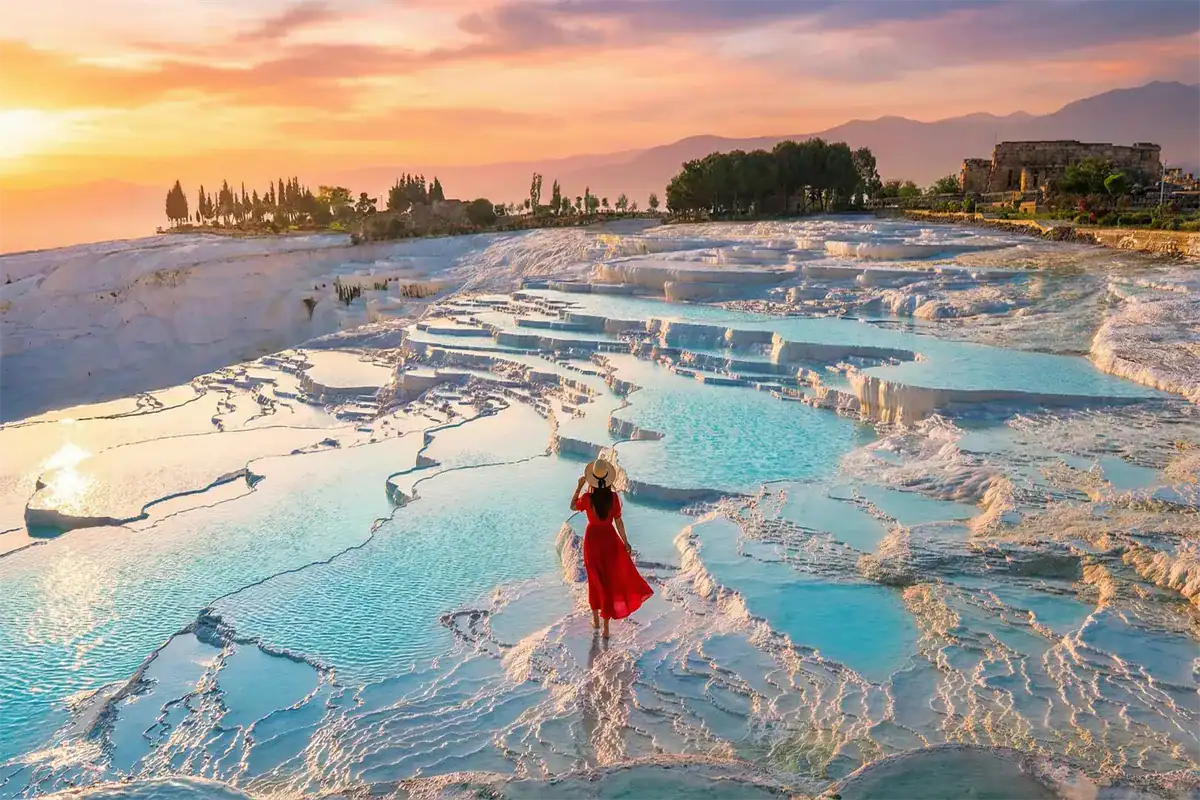
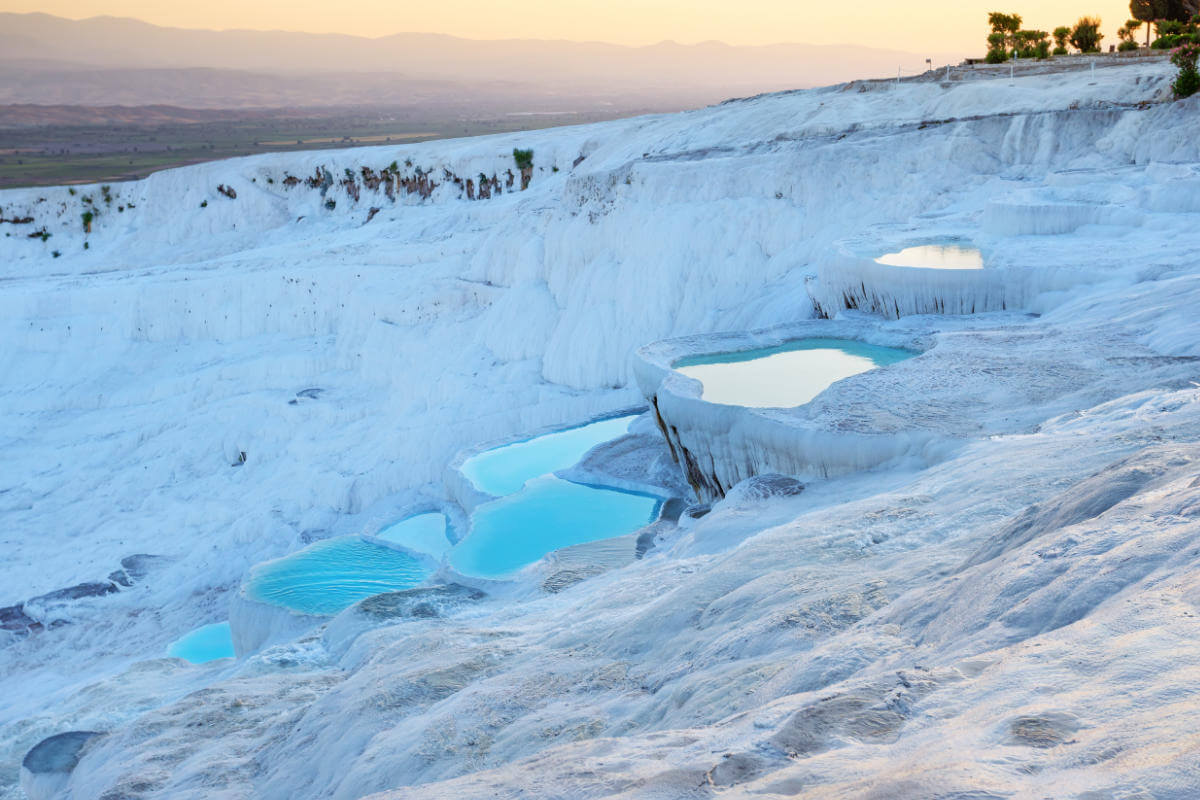
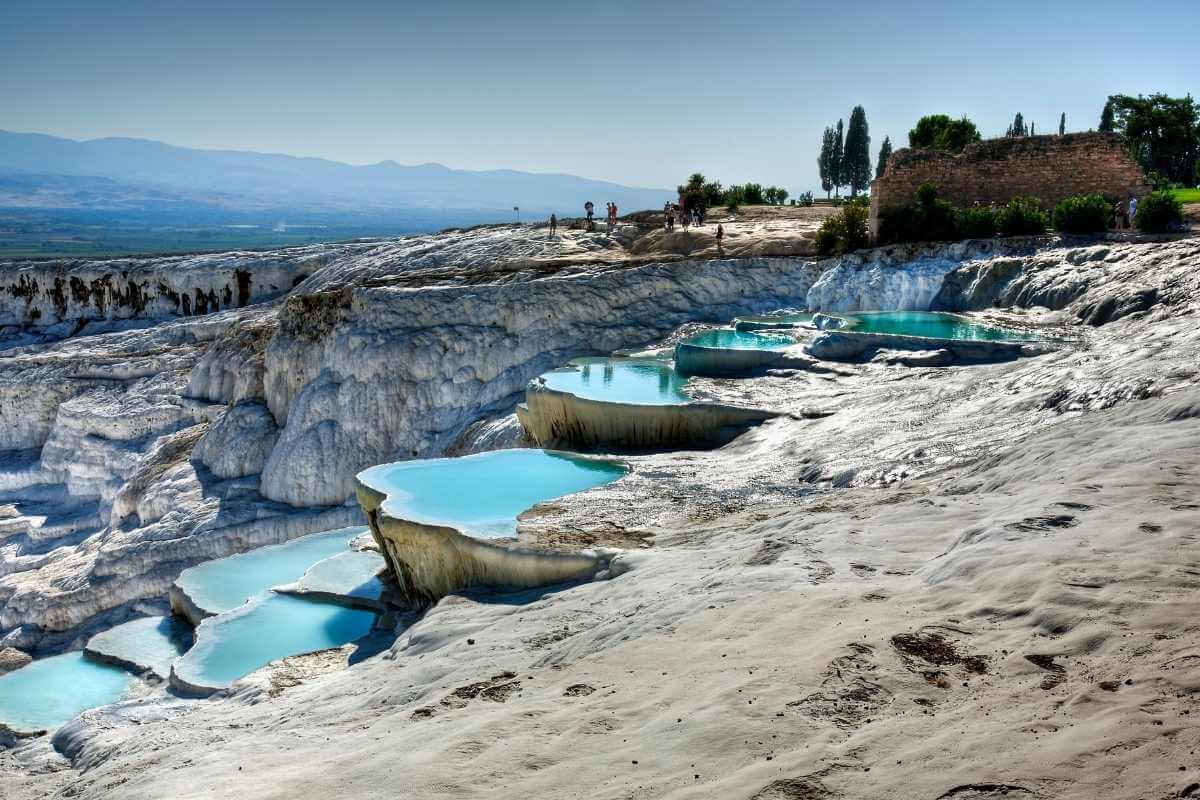
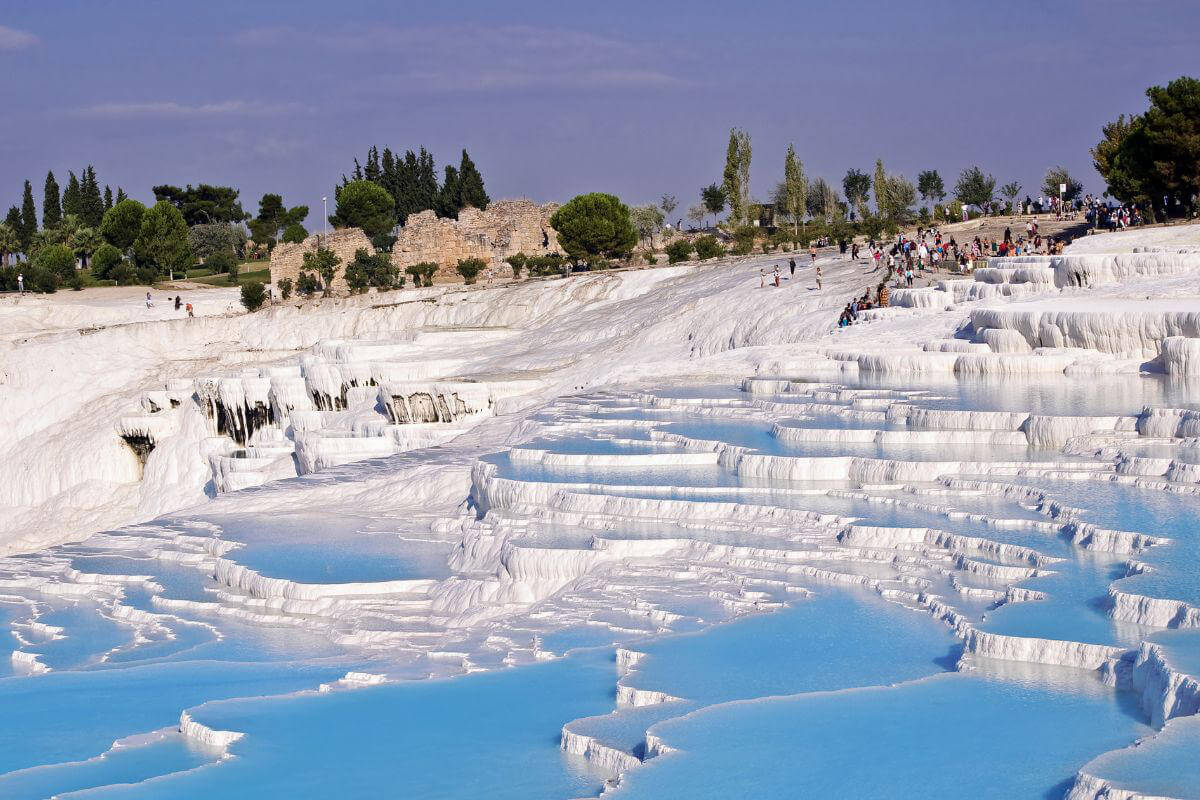
Pamukkale is a hillside of white travertine terraces formed by mineral-rich thermal water near Denizli in southwestern Türkiye. Hierapolis, an ancient spa city, stands above the terraces. The landscape and ruins form one UNESCO World Heritage property; a visit combines natural scenery with Roman streets, a theatre and archaeological remains.
Spring and autumn are useful choices for walking the terraces and ruins. Summer afternoons can be intensely hot with limited shade; winter can bring cold weather and rain. Choose an early or later visit within the permitted entrance hours, and check the forecast. Our Pamukkale seasonal guide compares the months.
Allow roughly half a day for the terraces and the main Hierapolis ruins, with longer for the museum, theatre and any available pool session. One night nearby gives you more flexibility around opening times. Travel from another city is additional: a full sightseeing day is very different from a day that also includes a long transfer.
Flying to Denizli Çardak Airport is a practical option from Istanbul; you then need a separate road transfer to Pamukkale. Check flight schedules and allow for airport procedures as well as the drive. Overnight coaches are another option. Compare Pamukkale itineraries by actual departure city, transport and inclusions.
Allow approximately three hours of road travel between the Selçuk/Ephesus area and Pamukkale, depending on the route, traffic and stops. The transfer needs its own place in your itinerary. An overnight between the two sites gives more sightseeing time than trying to fit both archaeological visits and all transport into one day.
The Ministry ticket listing lists Hierapolis and the Pamukkale travertines at 30 EUR for the standard visitor ticket, checked on 27 September 2026. Check the official checkout for your visit date and eligibility. Pool admission and other extras should be checked separately; a tour includes only the services listed in its itinerary.
Terrace access is for walking and shallow wading only where wardens permit it; the travertines are not swimming pools. The Antique Pool is a separate facility. Check its current operation, admission and swimming rules before planning around it. Water is managed across the terraces, so photographs of completely filled pools do not describe every visit.
Plan for slippery wet surfaces, rough barefoot walking, heat and limited shade. Follow the marked route, keep children close, carry drinking water and take breaks. Check current official travel advice before your trip and follow on-site instructions. Visitors who cannot walk barefoot comfortably should plan a route through Hierapolis with suitable assistance.
Hierapolis includes the theatre, ancient streets, baths, tombs and other archaeological remains above the terraces. The archaeology museum adds context when open. Distances across the site are greater than the terrace photographs suggest, so choose your priorities and leave time for the return to your pickup point.
Independent travel works well if you can arrange the transfers and entrance logistics. A guided trip can help with transport and understanding Hierapolis. Compare the actual sightseeing time, departure point, tickets, meals and optional activities on each Pamukkale tour; these inclusions are not identical across itineraries.
Remove footwear on the travertine walking areas where instructed, and carry it in a bag. Wear shoes again on the permitted paths through Hierapolis. Move slowly over wet ridges and follow closures. If barefoot walking is unsuitable for you, ask about a route that avoids the terrace slope rather than assuming water shoes are allowed.
Pamukkale village is convenient for the lower pedestrian entrance and a short stay focused on the site. Karahayıt is another base for thermal-hotel stays, but usually requires transport to Hierapolis. Check the exact hotel location, entrance you plan to use and transfer arrangements; room prices and spa access vary by property.
Some itineraries combine them in one long day, but the road transfer leaves less time at each site. Check the published itinerary, flight times and included stops before choosing one. For a less hurried visit to both archaeological sites, allow two days and an overnight. Pool time should not be assumed on a tightly timed tour.
The uphill barefoot route starts at the lower entrance by Pamukkale village; it is different from the upper South Gate. Allow extra time for photos, wet surfaces and breaks instead of relying on a fixed walking time. Confirm your entry gate and pickup point in advance, especially if you intend to enter and leave at different gates.
Look for Denizli kebabı, regional dishes and simple Turkish meals in Pamukkale village or Denizli. Menus and opening hours vary, and a tour lunch may be a set menu. Tell the provider about dietary requirements before booking; do not assume every stop can accommodate them without advance notice.
Cleopatra’s Pool, also called the Antique Pool, is a thermal bathing facility within the Hierapolis area. On 27 September 2026 the Turkish official Hierapolis visitor page stated that the pool was open, while the English version still carried an older closure notice. Confirm swimming availability and the separate charge for your date before making it the purpose of your trip.
From Antalya, allow a substantial road journey each way; a day trip is a long outing, not a short local excursion. Ask the operator for the pickup time, driving time, sightseeing time and return estimate. Independent bus journeys may involve Denizli and an onward connection to Pamukkale; check the actual service before booking.
A sunset visit depends on the season, the gate being used and the current access rules. Night-museum operation, where offered, does not automatically mean the barefoot terrace route or pool is open. Check the official Hierapolis visitor page for closing and last-entry times, and arrange your return transport before entering.
Hierapolis-Pamukkale participates in the Ministry museum-pass system. Check the current MuseumPass Türkiye conditions and the included-site list for the exact pass you are buying. Do not confuse tourist MuseumPass products with the domestic Müzekart. Swimming, transport and special sessions may have separate conditions or charges.
The barefoot terrace slope is not a wheelchair route. Hierapolis has long distances, uneven ground and slopes, so discuss the entry gate, vehicle access, accessible facilities and walking limits before visiting. A photograph of a level terrace does not establish step-free access throughout the site.
Bring sun protection, drinking water, a footwear bag and shoes for the ruins. Add swimwear and a towel only if a pool session is confirmed. Water distribution and visitor access are managed to protect the site; some terraces may be dry or closed, so stay within the marked visiting area.

Still have questions about Pamukkale?

Ask a booking question through the published contact channels. Replies follow the stated business hours; tour availability, providers, price and inclusions are confirmed in writing.