
The practical answer: yes—Ephesus is worth visiting if you enjoy ancient history, architecture, archaeology, or early Christian sites. It is one of Turkey’s most rewarding ruins, but it needs planning: allow at least two to four hours inside, arrive early in warm weather, and decide whether context from a guide is worth more to you than complete flexibility.
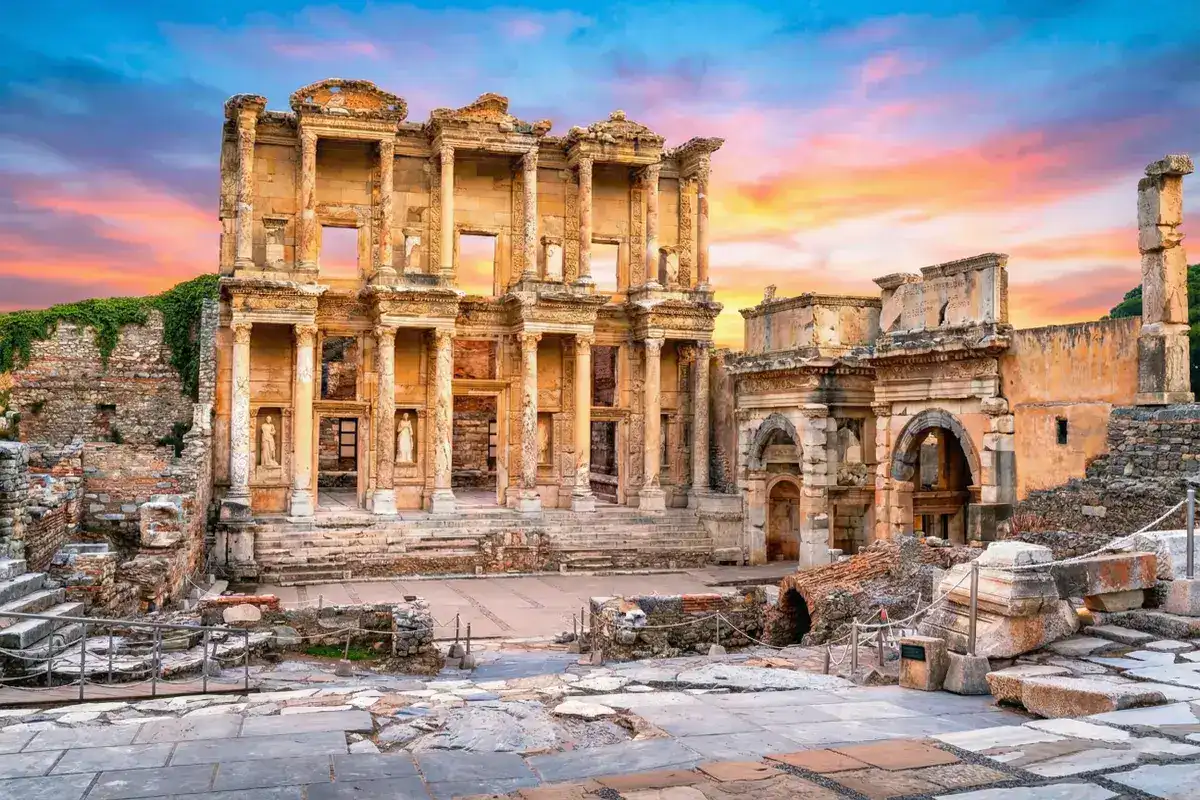
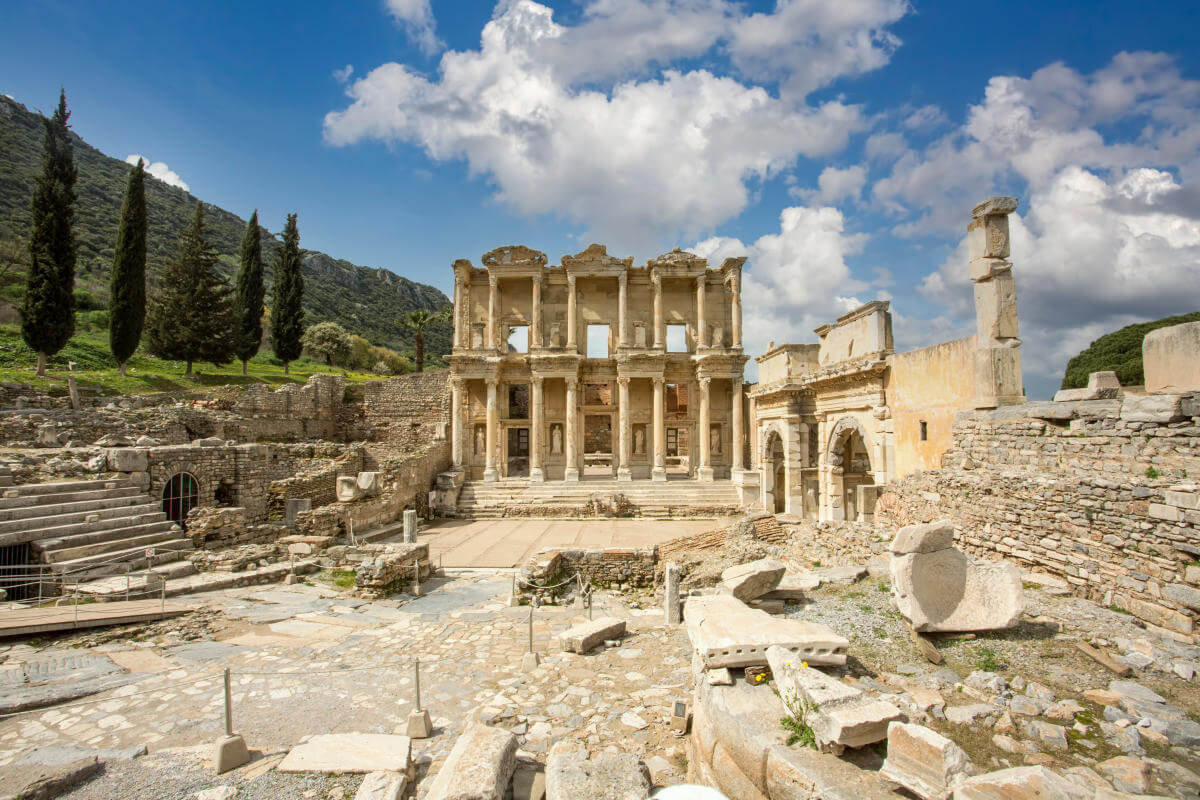
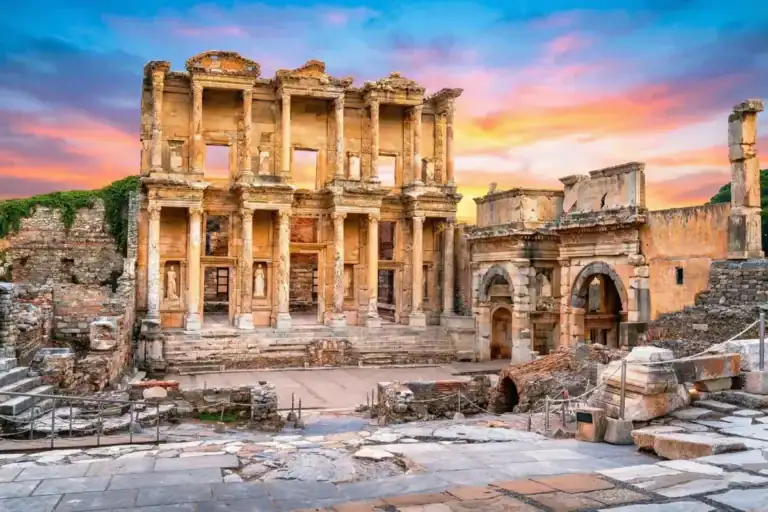
Ephesus is not a quick photo stop. Its scale becomes clear as you walk downhill along marble streets past public fountains, temples, homes, shops, baths, and the imposing façade of the Library of Celsus. For travelers deciding whether to make room for it in a Turkey itinerary, the bigger question is usually not “Is it good?” but “How should I visit it without turning the day into a rushed transfer?”
What to Know Before You Go
- Plan on two to four hours for the archaeological site itself; add more time for the Terrace Houses and nearby Selçuk sights.
- A guide is optional, but especially valuable for first-time visitors who want to understand what they are seeing beyond the major monuments.
- Summer heat and limited shade can make the site demanding. An early start is usually the best choice.
- Entrance fees, optional-site charges, hours, and access arrangements can change, so verify them close to your travel date.
- Most visitors reach Ephesus from İzmir, Kuşadası, or Selçuk. It can be done from Istanbul in a long day, but an overnight western-Turkey route is more relaxed.
- The Terrace Houses are a worthwhile add-on for many history-minded travelers, but they are not essential for visitors short on time or traveling with young children.
Why Ephesus Earns a Place on a Turkey Itinerary
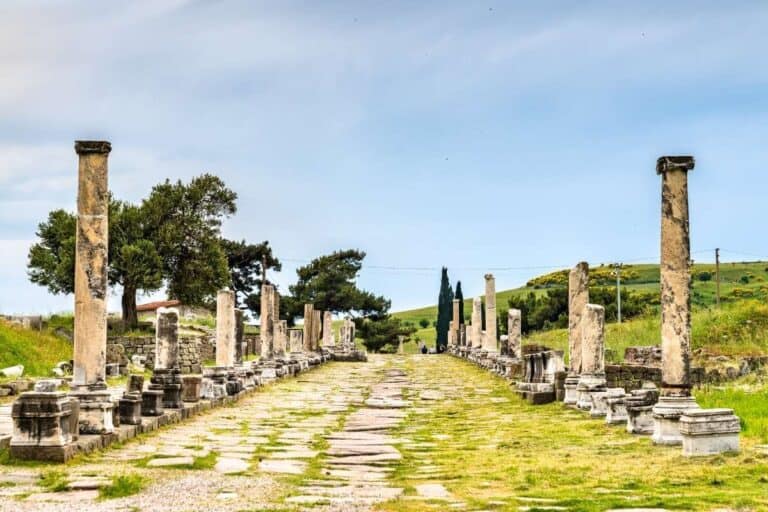
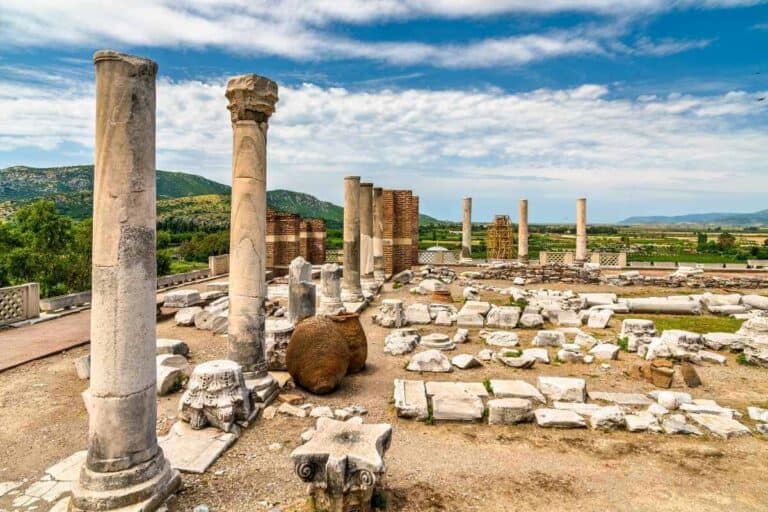
Ephesus Ancient City Ruins in Turkey is one of the Mediterranean’s most extensive and readable ancient urban sites. Unlike a site where isolated columns require a great deal of imagination, Ephesus still reveals the structure of a working Roman city: ceremonial avenues, commercial areas, civic buildings, religious spaces, water systems, residences, and entertainment venues.
The experience has a natural progression. Many visitors enter from the upper gate and walk downhill toward the lower section, passing the Curetes Street, the Temple of Hadrian, public latrines, and the famous Library of Celsus. The route culminates near the vast Great Theatre of Ephesus, which gives a useful sense of the city’s former scale and importance.
What makes it different from other ruins?
Ephesus works well even for travelers who do not consider themselves archaeology specialists. Its landmarks are visually strong, the route is easy to follow, and the city’s role in Greek, Roman, and early Christian history gives the visit several layers. The Library of Celsus is the headline image, but the details often leave the deeper impression: worn wheel ruts, water channels, inscriptions, marble paving, and the remains of homes that once looked down over the city.
For a fuller historical background before you arrive, read The History of Ephesus: From Ancient Greece to Roman Glory. Travelers who want a site-by-site checklist can also use the Ephesus Travel Guide: 7 Ruins You Must See.
How Long Do You Need at Ephesus?
For most visitors, the right answer is not a single number. Your ideal visit depends on whether you want the essential monuments, plan to enter the Terrace Houses, are traveling during hot weather, or are combining Ephesus with religious and cultural sites around Selçuk.
| Time available | What it suits | What you can realistically do |
|---|---|---|
| About 2 hours | Travelers with limited time | Walk the main route, see the Library of Celsus and Great Theatre, and take photographs without lingering too long. |
| 3 to 4 hours | Most first-time visitors | Explore the main city at a comfortable pace, pause at key structures, and add the Terrace Houses if they are open and of interest. |
| Half day or longer | History, faith, and culture-focused travelers | Pair Ephesus with the Terrace Houses, the House of the Virgin Mary, and sites in Selçuk such as Isa Bey Mosque or the Basilica of Saint John. |
Do not confuse the time inside the archaeological site with the total day length. Hotel pickups, traffic, lunch, shopping stops, transfers between gates, and visits outside the ancient city can substantially extend the schedule. This is particularly important for cruise passengers and travelers arriving from Istanbul by air.
Is the Terrace Houses add-on worth it?
For many visitors, yes. The Terrace Houses in Ephesus show how affluent residents lived, with preserved mosaics, frescoes, and sophisticated domestic layouts. They add a more personal, residential perspective to a site otherwise dominated by public buildings.
However, they are not the right choice for every traveler. Access involves additional walking and stairs, and the visit requires an extra ticket. If you have only two hours, are managing mobility concerns, or simply prefer grand public monuments to household archaeology, focus on the main route instead. Check current access conditions, ticket rules, and the availability of any separate entry before you go.
Can You Visit Ephesus Without a Guide?
Yes. Independent visitors can buy admission and follow the signed route through the site. If you like moving at your own pace, stopping for photographs, and reading up beforehand, a self-guided visit can be satisfying. Downloading a reliable map or audio guide and knowing the major landmarks in advance will make a noticeable difference.
The downside is that Ephesus has a great deal of visual information but limited context on the ground. Without explanation, it is easy to admire the Library of Celsus while missing why it was rebuilt, overlook the civic purpose of smaller structures, or walk past the evidence of ordinary daily life without recognizing it.
When a guide is most useful
- First-time visitors: A guide can connect the city’s buildings into a clear narrative instead of a collection of ruins.
- Families and mixed-interest groups: A paced explanation often keeps the visit more engaging than independent reading.
- Travelers with a tight schedule: Guided routing can help you prioritize the right highlights and avoid backtracking.
- History and faith travelers: Context around Roman urban life, early Christianity, and nearby sacred sites adds depth.
- Private groups: A private format can be a better fit when you want more time for photography, accessibility needs, or specific interests.
A guide is not a requirement, and it is not automatically the best value for everyone. Independent travelers who enjoy research can have an excellent day on their own. The key is to choose deliberately rather than arriving with no route, no water, and no sense of how long the site will take.
Best Time to Visit Ephesus
Spring and fall are generally the most comfortable seasons for walking Ephesus. April through June and September through October often offer milder conditions than peak summer, though weather can vary from year to year. Summer brings longer daylight but also stronger heat, more direct sun, and heavier visitor numbers.
If July or August is the only time you can travel, treat the first part of the day as your sightseeing window. Aim to be at the entrance early, carry water, wear sun protection, and use shoes with secure grip. The marble surfaces can be uneven, polished by countless footsteps, and tiring in sandals with poor support.
Practical tip: Start early rather than saving Ephesus for the middle of a hot afternoon. You will have cooler walking conditions, better light on key façades, and more time to decide whether the Terrace Houses or nearby Selçuk sites deserve an add-on.
Winter can be a rewarding quieter-season option, especially for travelers who prioritize fewer crowds over beach weather. Rain, cooler temperatures, and shorter daylight can affect the pace, so check the forecast and current operating hours shortly before the visit.
Planning the Route: İzmir, Kuşadası, Selçuk, or Istanbul?
Selçuk is the town closest to the archaeological site and is the most logical base for travelers who want an unhurried visit. It also makes it easy to combine Ephesus with the Basilica of Saint John, Isa Bey Mosque, and other local sights.
İzmir works well for travelers using a larger city as a base or arriving through the region’s main airport. A day trip from İzmir gives enough time for Ephesus when transfers are planned carefully. From the coast, Kuşadası is another common starting point, particularly for cruise travelers and those staying at a resort area.
Visiting from Istanbul is possible, but it is a long day once airport transfers, flights, ground transport, the visit itself, and return timing are included. It can make sense for travelers with only a few days in Turkey who are determined not to miss Ephesus. If you have more flexibility, consider making it part of a route through western Turkey or combining it with Pamukkale and Antalya. For broader itinerary ideas, see Best 6-Day Turkey Itinerary (2026): Istanbul, Cappadocia, Ephesus or Antalya? and Best Turkey Itinerary for 7 Days: Istanbul, Cappadocia, Ephesus & Pamukkale.
Which Ephesus Visit Style Fits You Best?
Choose an independent visit if flexibility matters most
This is the right fit if you are staying in Selçuk, İzmir, or Kuşadası; enjoy planning your own day; and are comfortable arranging transfers and tickets. Build in more time than you think you need, especially if you want the Terrace Houses or nearby sights. Before setting out, verify current opening hours, which entrance best suits your route, ticket arrangements, and how you will return from the exit gate.
Choose a guided day trip if you want context and coordinated logistics
A guided option is often the better choice for travelers based in İzmir or Kuşadası, first-time visitors, and anyone who prefers not to manage the transport-and-timing details. The verified Ephesus Day Trip from Izmir and Ephesus Guided Day Tour from Kusadasi are both listed from USD 160. Confirm the day’s meeting point, inclusions, entrance-ticket arrangements, pace, and any optional stops before booking.
Choose a private or multi-day format when your time is limited or your interests are specific
If Istanbul is your only base, a flight-based option can save planning effort, but expect a full day. The Private Ephesus Day Trip with Flights from Istanbul is listed from USD 470 for 17 hours. Travelers who want to continue through western Turkey may prefer a route that includes Pamukkale and Antalya, such as the 5-Day Ephesus, Pamukkale & Antalya Tour from Istanbul, listed from USD 1,048.
Starting prices can change. Compare the actual route, accommodation nights where applicable, flight or transfer arrangements, guide format, meals, entrance fees, and free time—not just the headline price. If you need to cancel or change dates, notice must be given at least 5 days before the tour starts; non-refundable flight and bus ticket costs are deducted from the paid balance. With less than 5 days notice, or for a no-show, the full payment is non-refundable.
Choose your next step
Recommended Ephesus tours
These verified options are the closest available matches for this article’s destination, route intent, and trip length.
Private Ephesus Day Trip with Flights from Istanbul
A 17 hours Cultural & Heritage Tour route covering Ephesus, Istanbul.
View tour details →
Ephesus Day Trip from Izmir
A 9 hours Cultural & Heritage Tour route covering Ephesus, Izmir.
View tour details →Ephesus Guided Day Tour from Kusadasi
A 7 hours Cultural & Heritage Tour route covering Ephesus.
View tour details →
5-Day Ephesus, Pamukkale & Antalya Tour from Istanbul
A 5 days Cultural & Heritage Tour route covering Ephesus, Pamukkale and 2 more destinations.
View tour details →Common Ephesus Questions
Is Ephesus suitable for travelers with limited mobility?
It depends on individual needs. The site has uneven ancient paving, slopes, steps, and long walking distances, so it can be challenging. Discuss mobility requirements before booking a guided visit, and ask about route adjustments, vehicle access, and whether the Terrace Houses are realistic for your group.
Do I need to book Ephesus tickets in advance?
Advance planning is sensible during busy travel periods, but the best ticket method can change. Check current official ticket information, opening hours, and whether separate admission applies to optional areas such as the Terrace Houses close to your visit date.
What should I wear at Ephesus?
Wear comfortable walking shoes with good grip, breathable clothing, a hat, and sun protection. Carry water, particularly from late spring through early fall. If combining the day with the House of the Virgin Mary or active mosques in Selçuk, modest clothing is a considerate choice.
Can Ephesus be combined with Şirince?
Yes, many travelers combine the ruins with Şirince when their schedule allows. It is best treated as a slower full-day plan rather than an add-on squeezed into a short Ephesus visit. Read about planning costs and cellar choices in The Real Cost of a Şirince Wine Tasting in 2026.
Final Recommendation
Ephesus is worth visiting for most travelers to Turkey, particularly if you can give it enough time to be more than a rushed walk to the Library of Celsus. Choose an independent visit if you value freedom and have a practical base nearby; choose a guided format when historical context, transfers, and efficient pacing matter more.
If you would like help choosing the best Ephesus route around your arrival city, available days, and preferred travel pace, plan your Turkey trip with One Nation Travel.