
Short answer: Yes, Egypt is safe for American tourists in 2026. The U.S. State Department rates Egypt Level 3 overall, but that rating is driven by remote border zones — not the Nile Valley tourist corridor. Cairo, Luxor, Aswan, and the Red Sea resorts see millions of visitors annually with strong, visible security. Book with a licensed operator, skip the Sinai interior and Libyan border, and your actual risk is low.
Every week our team fields the same question from American travelers, usually phrased something like: “My family thinks I’m crazy for booking Egypt — should I be worried?” It’s a fair question. Headlines about the Middle East rarely distinguish between a border region 400 miles from anything you’d visit and the well-patrolled route between the Pyramids of Giza and a Nile cruise dock in Aswan.
This guide gives you the honest picture: what the advisories actually say, where the real risks are (spoiler: it’s mostly scams and traffic, not violence), and the practical decisions — private guide or group, cruise or flights, where to stay — that make the biggest difference to how safe your trip feels on the ground.
What Does the U.S. State Department Actually Say About Egypt?
Egypt carries a Level 3: Reconsider Travel advisory, but the details matter far more than the number. The advisory is built around specific zones: the North Sinai governorate, the Western Desert near the Libyan border, and areas within roughly 30 miles of the Sudan border. These are places no tourist itinerary goes — there’s nothing there to see, and licensed operators aren’t permitted to take you there anyway.
The places Americans actually visit — Cairo, Giza, Luxor, Aswan, Alexandria, and the Nile cruise corridor between Luxor and Aswan — sit inside what Egypt treats as a protected tourism economy. Tourism accounts for a significant slice of Egypt’s GDP, and the government polices it accordingly. You’ll notice tourist police at every major monument, checkpoints on intercity roads, and security screening at hotel entrances. Some travelers find the visible security jarring at first; most tell us it’s reassuring within a day or two.
For a deeper breakdown of how to read advisories without overreacting, see our guide on how to interpret Egypt travel warnings — it walks through the difference between country-level ratings and the specific regions they reference.
Which Parts of Egypt Are Safe for Tourists?
The Nile Valley corridor: Cairo, Luxor, Aswan
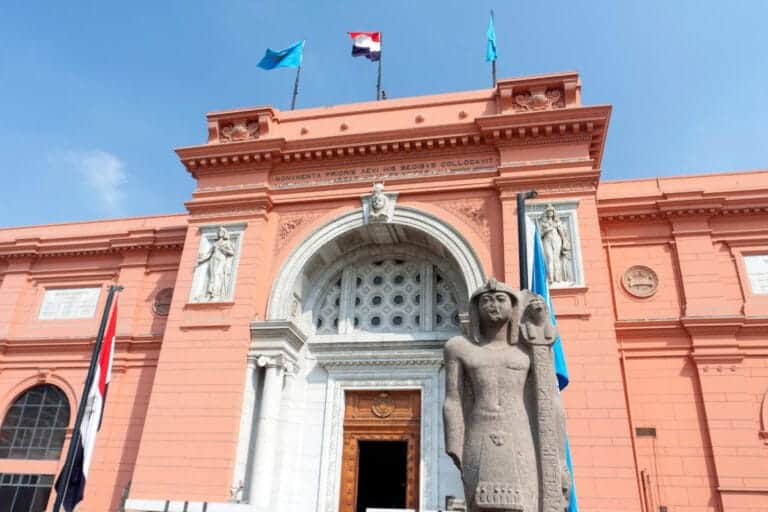
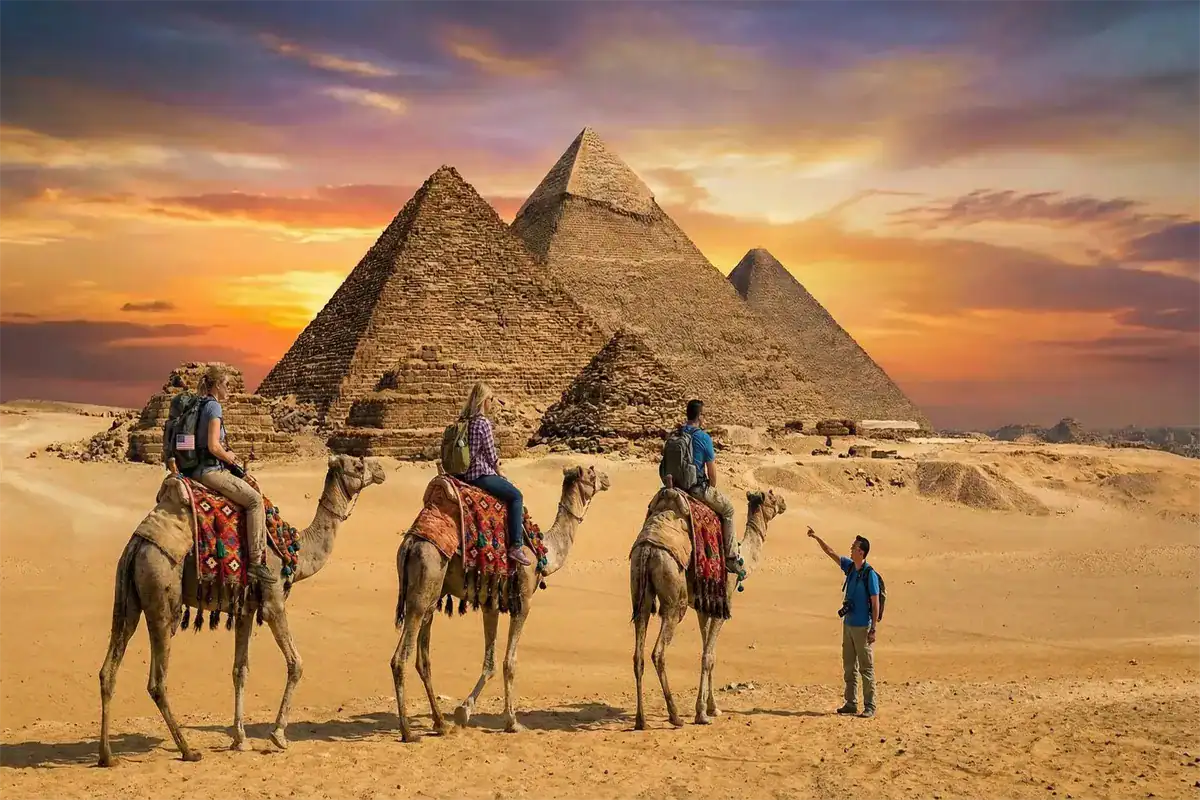
This is where 90% of American itineraries run, and it’s the most heavily secured travel corridor in the country. In Cairo, the Egyptian Museum, the Giza plateau, the Saqqara Necropolis, and the Khan El Khalili Bazaar all operate with dedicated tourist police. In Luxor, the Valley of the Kings, Karnak Temple, and Luxor Temple are controlled sites with ticketed entry and screening.
Aswan and Abu Simbel
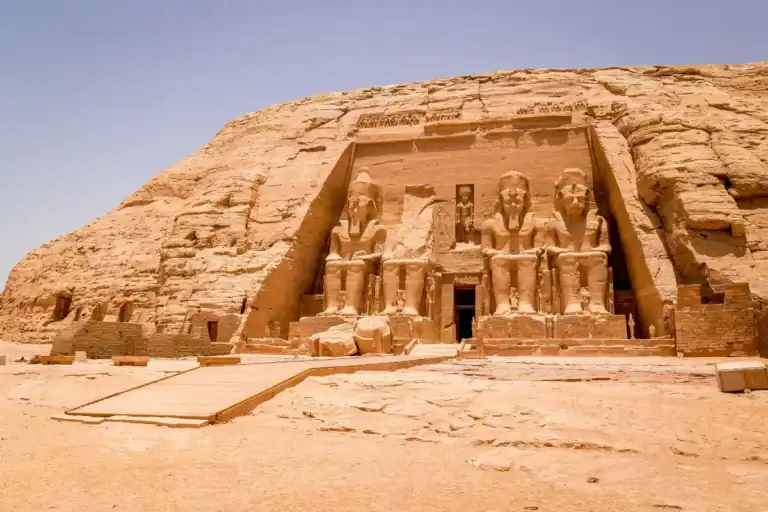
Aswan is arguably the most relaxed city on the tourist route — slower pace, less hassle, and beautiful river scenery. The Philae Temple and Aswan High Dam are standard stops. The Abu Simbel Temples sit near the Sudan border on the map, but the site itself is a secured enclave reached by a 45-minute flight or an escorted road convoy from Aswan — it has run safely for decades and is absolutely worth the early wake-up call.
Nile cruises
A cruise between Luxor and Aswan is one of the most controlled environments in Egyptian tourism: you sleep, eat, and travel on the same vessel, and shore excursions like the Temple of Edfu and Temple of Kom Ombo are guided from dock to gate. For nervous first-timers, we often recommend building the trip around the cruise for exactly this reason.
Where not to go
- North Sinai — off-limits, no tourist infrastructure
- Western Desert near Libya — restricted zone
- Sudan border areas (except the secured Abu Simbel site)
What Are the Real Risks American Tourists Face?

Here’s the honest part most safety articles skip: the risks you’ll actually encounter in Egypt aren’t dramatic. In years of arranging Egypt trips, the incidents our travelers report fall into three unglamorous categories.
1. Scams and aggressive selling
This is the number one complaint, by a wide margin. Expect “free” camel photos at Giza that suddenly cost $20 to end, taxi drivers whose meters are “broken,” and self-appointed “guides” who attach themselves to you at temple entrances. None of it is dangerous — it’s exhausting. Travelers with a licensed guide report almost none of this, because touts don’t approach escorted groups. It’s genuinely the single biggest quality-of-trip difference between independent and guided travel in Egypt.
2. Traffic and road safety
Cairo traffic is chaotic, and road accident rates in Egypt are high compared to the U.S. This is the strongest argument against self-driving (which we’d advise against entirely) and long overnight buses. Domestic flights between Cairo and Luxor or Aswan take about an hour, cost relatively little when bundled into a package, and remove the riskiest part of Egyptian travel from your itinerary.
3. Stomach issues
The classic “Pharaoh’s revenge” affects a meaningful share of visitors. Stick to bottled water (including for brushing teeth), eat fruit you can peel, and be selective with street food in your first days. Pack loperamide and rehydration salts — pharmacies in Egypt are excellent and cheap, but it’s nice not to need one at 2 a.m.
Operator insight: Of the issues travelers actually contact us about mid-trip, roughly eight in ten are logistics or health-related — a delayed EgyptAir flight, an upset stomach, a lost phone. Security concerns almost never come up once people are on the ground. The gap between pre-trip anxiety and on-the-ground reality is bigger in Egypt than almost any destination we handle.
Is Egypt Safe for Solo Travelers and Women?
Yes, with realistic expectations. Thousands of American women travel Egypt every year, solo and in groups. Violent crime against tourists is rare. What women do report is verbal harassment — comments, staring, persistent vendors — particularly in crowded Cairo streets and markets.
Practical adjustments that make a real difference:
- Dress modestly — covered shoulders and knees reduces attention noticeably, and it’s required in mosques anyway
- Use Uber or Careem in Cairo instead of street taxis; both work well and remove fare negotiation entirely
- Consider a private guide — solo female travelers consistently tell us this transformed their experience, both for comfort and for how much more they actually learned at the sites
- Firm “la, shukran” (no, thank you) and keep walking — polite persistence from vendors ends when you stop engaging
If you’re weighing your options, our comparison of private vs. group tours in Egypt covers which format suits solo travelers best.
How Do You Travel Safely Around Egypt?
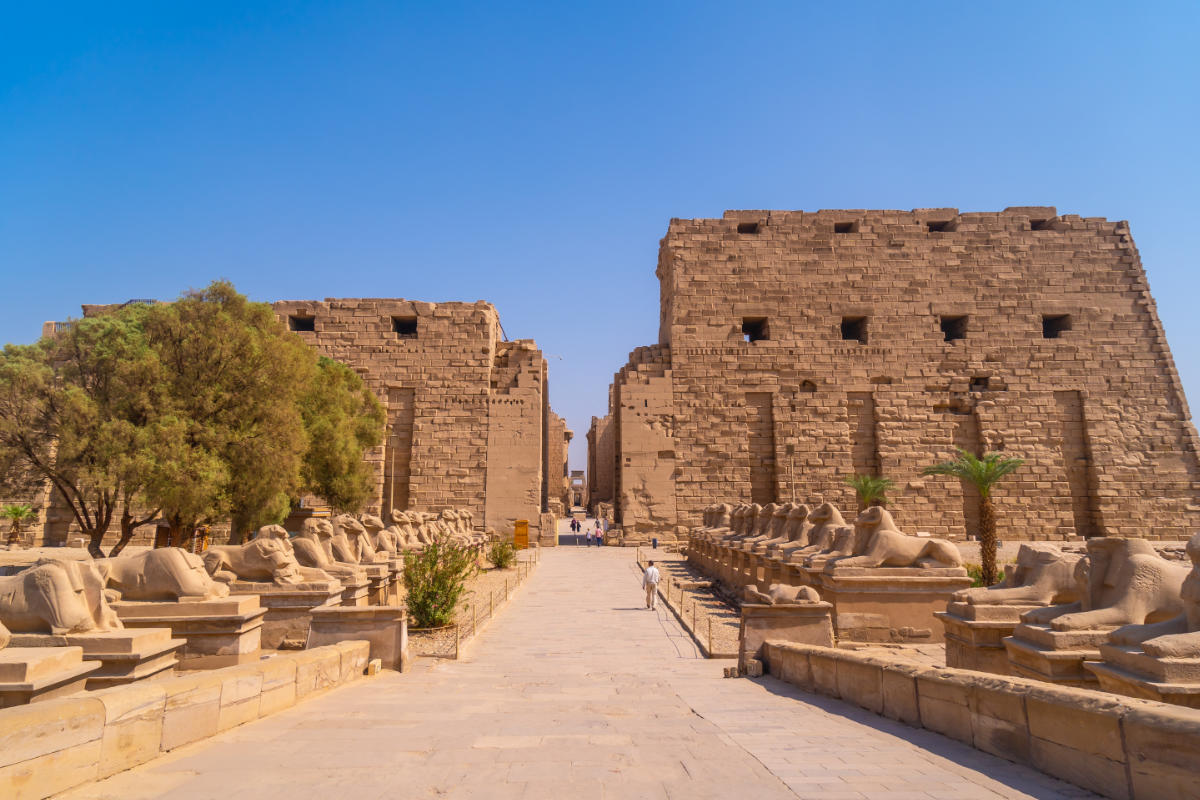
Cairo to Luxor and Aswan: fly, don’t drive
The Cairo–Luxor flight takes about 1 hour; Cairo–Aswan about 1 hour 25 minutes. The train alternative takes 9–13 hours. Every quality Egypt package uses domestic flights for this leg, and it’s worth confirming before you book — some budget packages quietly substitute overnight trains to cut costs. Our breakdown of what Americans really pay for an Egypt tour explains where those cost differences hide.
Within cities
Private transfers arranged through your operator or hotel are the standard for tourists. In Cairo, ride-hailing apps are a reliable backup. Avoid the metro during rush hour and unmarked taxis at the airport — official transfer desks and pre-arranged pickups exist for a reason. Cairo International (CAI) arrivals can be hectic; a pre-booked meet-and-greet with visa assistance saves 30–45 minutes and a lot of first-night stress.
Timing your trip
Season affects safety in one underrated way: heat. From June through August, Luxor and Aswan regularly exceed 104°F (40°C), and heat exhaustion sends more tourists to clinics than anything else. October through April is the sweet spot — comfortable sightseeing weather, though December–January is peak season with peak prices. Shoulder months (October–November, March–April) balance weather and cost best. Not sure how long to plan? See how many days you need in Egypt for itinerary lengths from 3 to 14 days.
Practical Safety Tips for Americans Visiting Egypt
- Enroll in STEP (Smart Traveler Enrollment Program) so the U.S. Embassy in Cairo can reach you with alerts
- Buy travel insurance with medical evacuation — private hospitals in Cairo are good, but coverage is cheap peace of mind
- Get your visa on arrival — $25 USD cash at Cairo airport, or apply online in advance; bring crisp bills
- Carry small cash — Egyptian pounds for tips (baksheesh is expected everywhere: restroom attendants, porters, drivers)
- Photograph nothing military — bridges, checkpoints, and government buildings are off-limits for photos and police do enforce it
- Keep your passport locked at the hotel and carry a photocopy; you’ll need the original only for domestic flights and some sites
- Verify your operator is licensed — Egypt requires guides to hold government licenses; a real operator will confirm this without hesitation. Our guide to choosing an Egypt tour company as an American lists the questions worth asking before you pay a deposit
Tip: Tipping small and often is the local rhythm. Budget roughly $10–15 per person per day in small bills for baksheesh across a typical touring day. It smooths nearly every interaction.
Recommended Egypt Tours for First-Time American Visitors
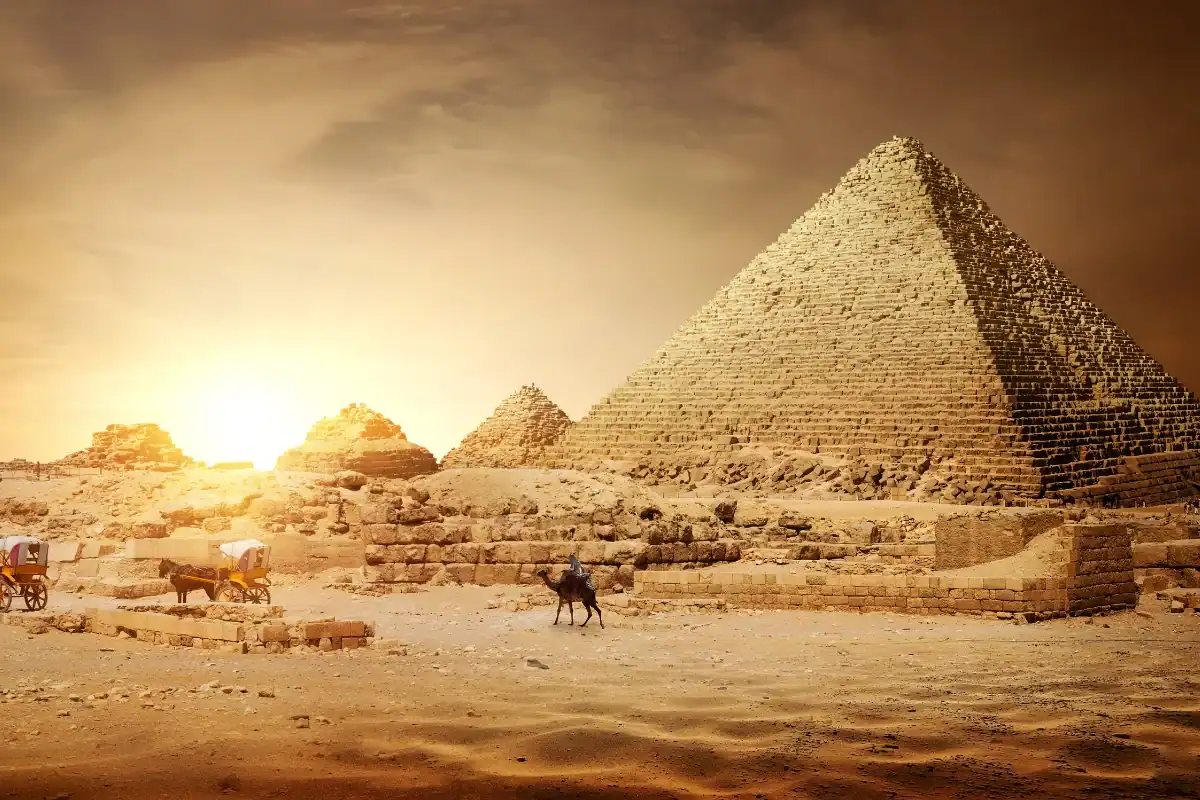
The single most effective safety decision you can make is booking a structured itinerary with licensed guides and pre-arranged transfers. These are the packages our American travelers book most, all bookable through our Egypt tours from the USA collection:
8-Day Egypt Tour with Nile Cruise, Cairo & Flights — from $2,270
The classic first-timer route done right: Cairo’s pyramids and museum, then domestic flights (no overnight trains) to a 4-night Nile cruise covering Luxor, Edfu, Kom Ombo, and Aswan. Fully escorted from airport arrival onward.
9-Day Best of Egypt Tour with 4-Night Nile Cruise — from $2,580
Adds breathing room to the 8-day formula — a slower pace matters more than people expect in Egypt’s heat, especially for travelers over 50 or families with kids.
5-Day Nile Cruise from Cairo by Flight — from $1,199
The most budget-friendly way to do the Luxor–Aswan corridor with flights included. Good for travelers combining Egypt with another destination or working with limited vacation days.
8-Day Private Egypt Tour with Nile Cruise — from $1,940
A private guide and vehicle throughout — the format solo travelers and couples with safety concerns choose most often, and often barely more expensive than a small group.
Frequently Asked Questions
Is Egypt safe for American tourists right now?
Yes. The main tourist corridor — Cairo, Giza, Luxor, Aswan, and the Nile cruise route — is heavily secured and hosts millions of visitors annually. The U.S. Level 3 advisory is driven by remote border regions that no tourist itinerary includes.
Is Cairo safe to walk around?
Central tourist districts like Zamalek, downtown near the museum, and Khan El Khalili are fine to walk in daytime with normal city awareness. Expect vendor attention rather than crime. At night, use Uber or Careem rather than walking unfamiliar neighborhoods.
Is it safe for a woman to travel to Egypt alone?
Yes — violent crime against tourists is rare. Solo women should expect verbal harassment in crowded areas, dress modestly, use ride-hailing apps, and strongly consider a private guide, which most solo female travelers say made the biggest difference to their comfort.
Are Nile cruises safe?
Nile cruises are among the safest ways to see Egypt. You travel, sleep, and eat on one vessel along a fixed Luxor–Aswan route, with guided shore excursions at each temple stop and security screening at every dock.
Should I avoid the Sinai Peninsula?
Avoid the North Sinai interior entirely — it’s under a Do Not Travel advisory. Sharm El Sheikh, the resort zone at the southern tip, operates as a secured enclave with direct flights, and is treated separately from the interior by most advisories.
The Bottom Line
Egypt’s reputation problem is bigger than its safety problem. The country runs one of the most heavily protected tourism corridors in the world, and the real hazards Americans face there — pushy vendors, Cairo traffic, an ambitious buffet — are managed with a licensed guide, domestic flights, and basic common sense. Meanwhile, the payoff is standing inside the Great Pyramid of Cheops or watching sunrise hit Abu Simbel — experiences no headline anxiety should cost you.
If you’d like a route built around your comfort level — private guide, specific hotels, cruise category, pacing — tell us what you have in mind through our Plan My Trip page and we’ll put together an itinerary with real prices and no obligation.